offshoreheavy-displacementcircumnavigatorvalue

Tayana 37

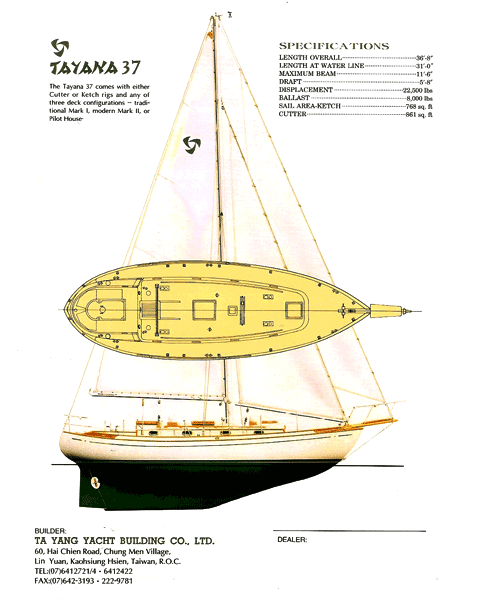
Ta Yang Yacht Building Co. · 1976 · Cutter rig

Tayana 37
LOA36.67'
Beam11.5'
Draft5.67'
Displ.11.3t
Rigcutter
Hullfiberglass

Bluewater Evidence · Bluewater Capable

60% confidence

Regarded as one of the holy trinity of affordable American bluewater cruisers alongside the Westsail 32 and Valiant 40. Named third-party reviewers back the general reputation directly: Charles Doane (2019) calls it one of 'the more popular bluewater cruisers ever built' with 'a particularly strong reputation as an offshore boat,' and Richard Sherwood's 1994 Field Guide review is corroborating. No single named skipper or boat with a completed ocean passage is documented in current sources, so this stops short of the proven tier despite the strong reputation. Colm Walker has entered his Tayana 37, Mo Chuisle, as a provisional competitor in the 2026 Golden Globe Race (not yet run), which at minimum confirms the design meets that race's individual class approval for solo offshore suitability. See the Passage Evidence entry below.

Passage Evidence

Mo Chuisle· Colm Walker2026

2026 Golden Globe Race (solo, non-stop circumnavigation attempt)

Provisional entrant. Race has not yet started; no result yet.

Source: Golden Globe Race - Colm Walker skipper profile

History

The Tayana 37 is a Robert Perry design built in Taiwan by Ta Yang Yacht Building Co., one of the most respected Asian boatbuilders of the 1970s and 1980s. The design was commissioned by Will Eckert of Flying Dutchman Yachts, working with C.T. Chen of Ta Yang, and quickly became one of the most popular offshore bluewater cruisers ever built, with 588 hulls completed and the design still available to special order decades later.

The Tayana 37 is often cited alongside the Westsail 32 and Valiant 40 as the holy trinity of affordable American bluewater cruising. It offers more space, speed, and build quality than the Westsail while being considerably less expensive than the Valiant.

Design & Construction

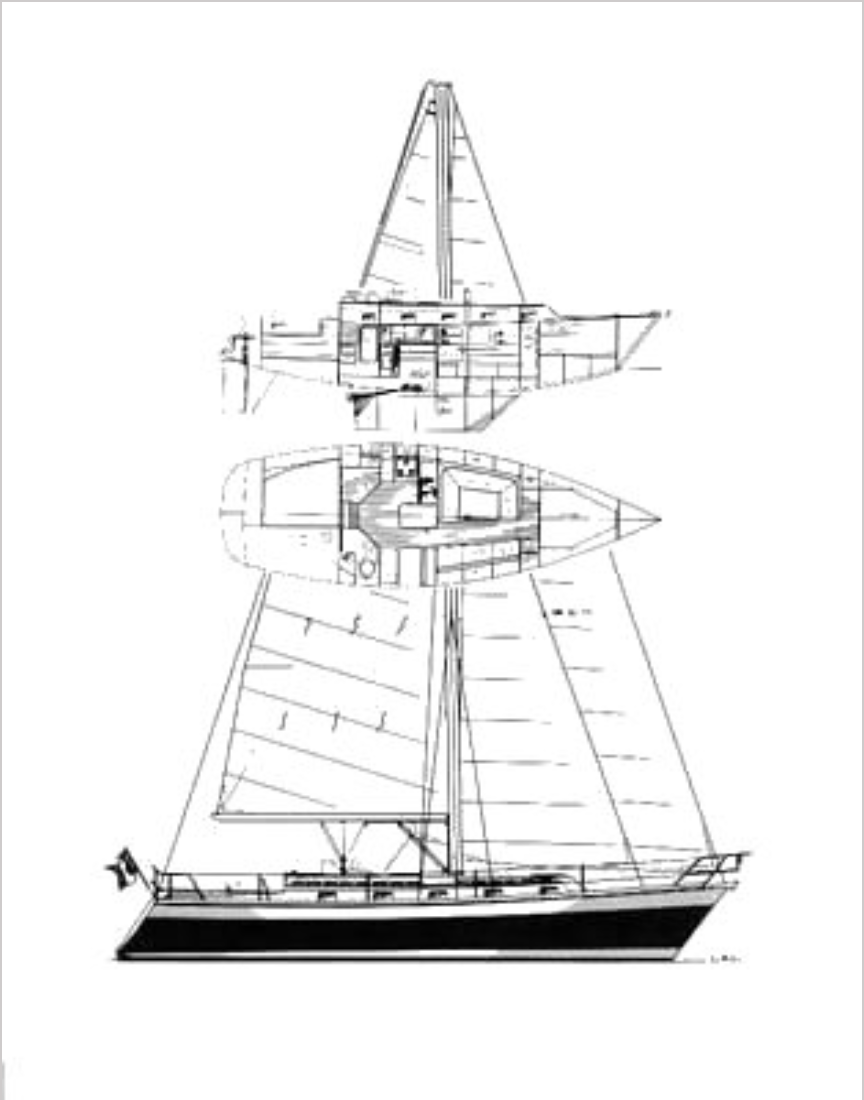
Perry drew a traditional double-ended hull with a full keel for the Tayana 37, giving it excellent directional stability and a comfortable motion offshore. The stern is a canoe shape reminiscent of the Westsail, but the hull sections are finer and the displacement, while heavy, is better proportioned to the waterline length.

Taiwanese construction quality on these boats is exceptional. The hand-laid fiberglass hulls are thick and solid, joinery is first-class teak throughout, and hardware choices were robust. Many owners report that the Tayana 37 feels better built than American production boats of the same era costing significantly more.

The cutter rig gives excellent options for headsail configuration. Most examples have been fitted with roller furling on both the jib and staysail, and the sail plan is well-suited to short-handed passagemaking.

Offshore Performance

At 22,500 lbs, the Tayana 37 is a heavy boat, and its performance reflects that. Upwind in a chop, 4-5 knots is typical. Off the wind in a good breeze, the boat moves well and its motion is extremely comfortable. The full keel tracks beautifully, and many owners cross oceans with just an autopilot and minimal sail adjustments for days at a time.

The Tayana 37 is not a racer, but reviewers who have sailed it back this up in their own words. Charles Doane wrote in 2019 that it “sails remarkably well and can serve effectively as both a coastal and bluewater cruiser,” adding that it has “a particularly strong reputation as an offshore boat” and that “reportedly at any given time there are more Tayana 37s out there wandering the globe than any other single type of sailboat.” Richard Sherwood’s 1994 review called it “typical of the many high-performance designs built today that retain a traditional appearance.” The combination of build quality, offshore comfort, and price-to-value ratio has made it a perennial favourite among those who actually go offshore.

Known Issues

  • Teak decks: Many examples have original teak decks that are reaching end of life. Replacement or removal and re-nonskid is a significant expense.
  • Chainplate leaks: The deck-mounted chainplates are a known leak source. Inspect and re-bed as needed.
  • Fuel and water tanks: Original tanks are often aluminum and may have corrosion issues. Inspect carefully.
  • Transmission: Some early examples have outdated transmission designs. Verify operation and parts availability.
  • Weight distribution: The heavy full keel means the boat is slow to accelerate but the momentum carries it through chop well.

Verdict

The Tayana 37 combines a proven offshore record with the maintenance demands of an older boat. Condition, equipment, and the quality of past refits matter more than the model name when comparing individual examples.
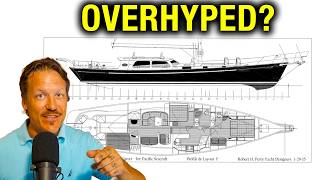

What sailing channels say about the Tayana 37, quoted from video transcripts with a link to the exact moment. Opinions belong to the speakers; the written review above stays independent of them.

recommends

"The Tayana 37 is a little bit different: it has a long keel - Perry went back to his Alberg roots, building something indestructible, but he cut away the forefoot so it points better than an older design... and it is huge inside."

Sailing Zingaro

Robert Perry: The Greatest Cruising Boat Designer? | Sailing Truth Show

▶ watch at 23:37
recommends

"I love those boats. Tayana 37 pilot house is like one of the neatest boats. It's kind of like the Sirius - the Sirius is the next evolution of that boat... Beautiful boats, bro. There's something about the Taiwanese boats from that era."

Sailing Zingaro

The Dumbest Things I've Done at Sea (90,000 Miles of Mistakes) | Sailing Truth Show

▶ watch at 79:32
discusses

On modern power needs versus older full-keel cruisers: "When you go to fit 12,200 watts of solar, the condo will win again, because you just can't do that on a Tayana."

Lady K Sailing

BEST Bluewater Are NOT What You Think! Ep 325 - Lady K Sailing

▶ watch at 9:13
  1. [1]Reviewbluewaterboats.org- Directly fetched 2026-09-09 (T2.19 re-research). Confirms LOA (36'8" excl. bowsprit), LWL, beam, draft, displacement, sail area (cutter, 861 sq ft), and 588 hulls built (Tayana Owners Association figure). Its own 7,340 lb ballast figure differs from sailboatdata.com's and Wikipedia's agreeing 8,000 lb; the latter two are used here, and this conflict is disclosed rather than silently dropped.
  2. [2]Specificationssailboatdata.com - Tayana 37- Directly fetched 2026-09-09 (T2.19 re-research), primary source for the corrected LOA/LWL/beam/draft/displacement/ballast/sail-area figures and the 1976 first-built year and 588-hull count.
  3. [3]SpecificationsTayana 37 - Wikipedia- Directly fetched 2026-09-09. Independently agrees with sailboatdata.com on every dimension (both ultimately cite sailboatdata.com as a reference); also the source of three named reviewer quotes (Sherwood 1994, Doane 2019, Knauth 2012) used in the body, and confirms the design 'remained available for orders in 2020,' contradicting the file's prior year_end: 1996.
  4. [4]SpecificationsGolden Globe Race - Colm Walker skipper profile- Official race profile: Tayana 37 Mo Chuisle, a provisional entrant for the 2026 race (not yet run). Re-checked 2026-09-09, unchanged; its own spec table matches sailboatdata.com's figures exactly.
See something wrong? Suggest a correction

Corrections need evidence: a link or citation we can check. Sourced suggestions get reviewed and credited in the entry's change notes if applied.

Owner knowledge counts: name the boat and year so we can attribute it.