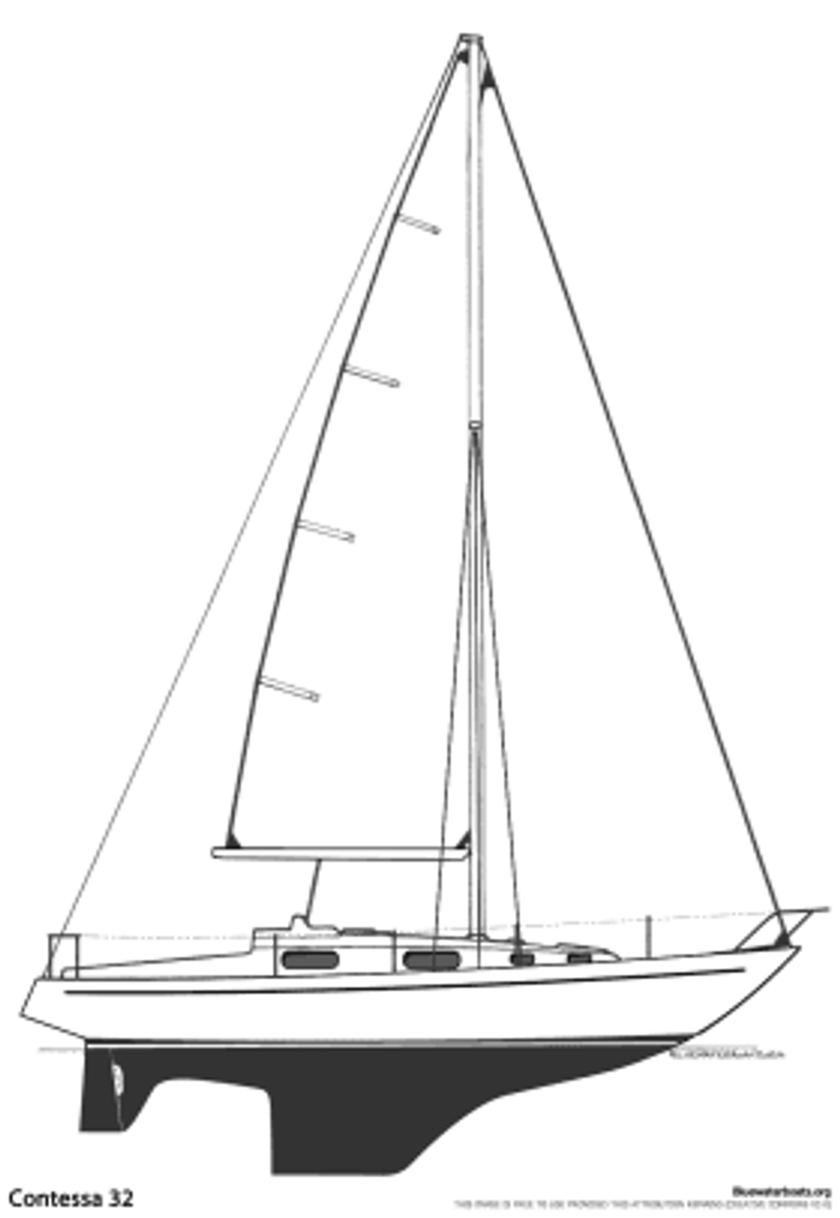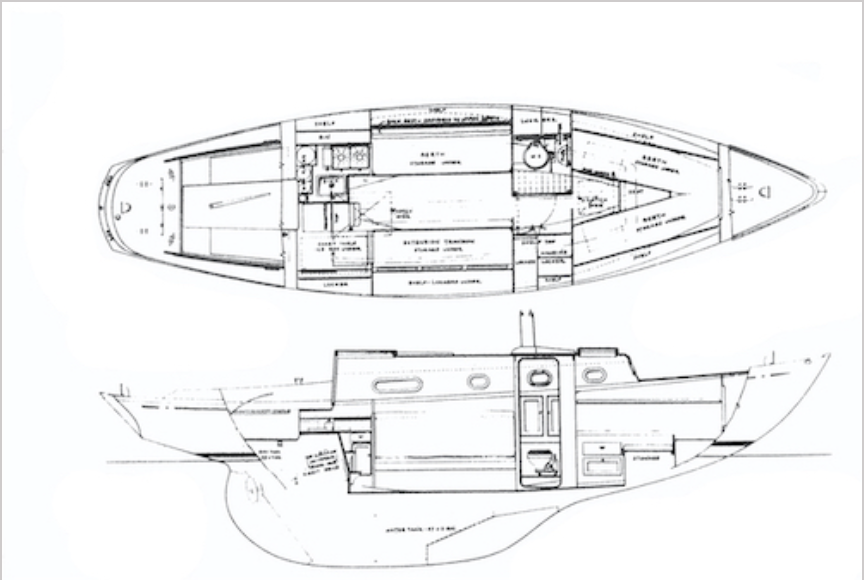
Overview
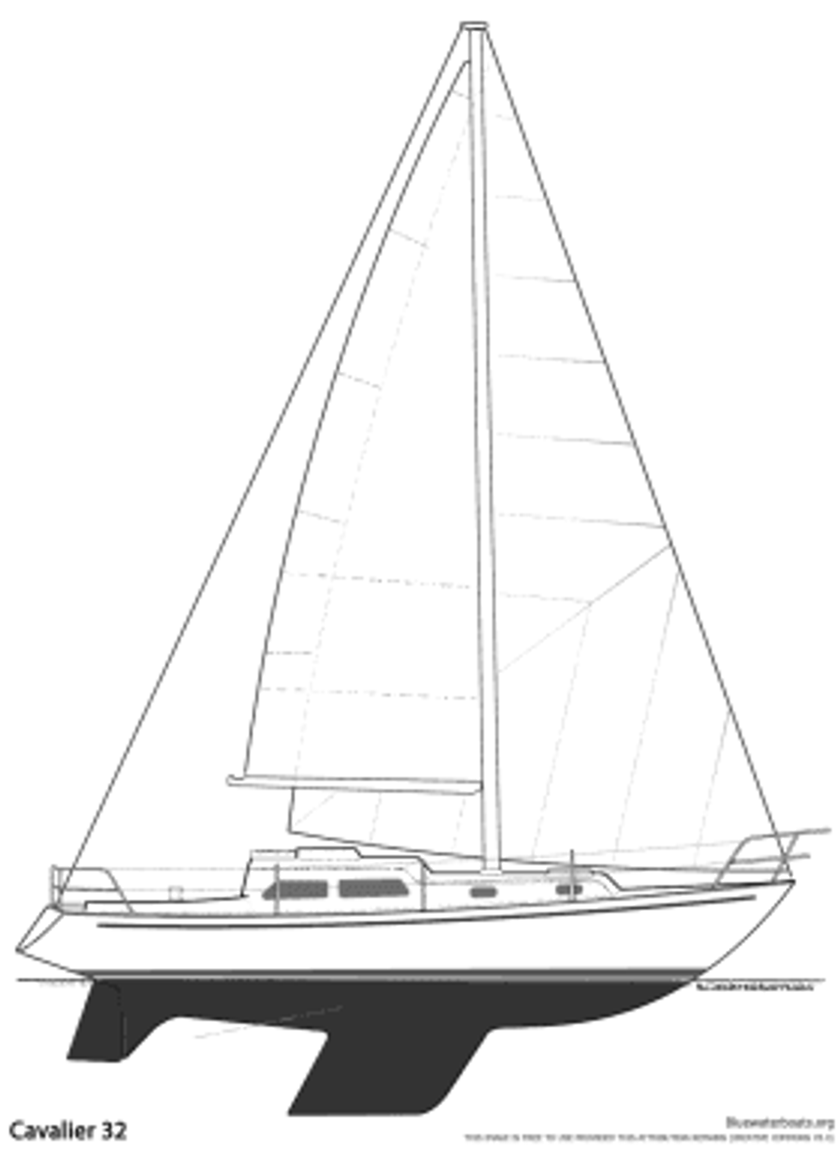
New Zealand sailors know her simply as the “Cav32,” and among the country’s production cruisers she’s held onto a reputation as one of the most capable ever built there. Sea Spray magazine took the first production hull sailing in July 1971 and came away impressed on two fronts: a genuinely spacious interior that could berth eight, and on-the-water manners the magazine described as fast, responsive, and tightly close-winded with strong acceleration.
She built her name as a half-ton ocean racer before settling into a second life as a cruising boat, with owners reporting extensive South Pacific voyaging and, per less well-documented accounts, circumnavigations. No named skipper or vessel backing a specific circumnavigation turned up in this research pass, so that claim is noted rather than treated as established fact.
History
Bob Salthouse drew the design in 1969, and the prototype debuted at the 1970 Auckland Boat Show as a dual-purpose hull, meant to race competitively both inshore and offshore while still carrying family-scale cruising accommodation. The concept found buyers fast: 14 boats were already sold by the time the first hull launched in July 1971.
The Cavalier 32 launched Cavalier Yachts itself, a new partnership between John Salthouse and boatbuilder Peter K. Smith that would go on, at its 1970s peak, to become the largest production boatbuilder in Oceania. Not long after introduction, the rig was shortened, a shorter mast and boom, to bring the boat under the half-ton racing rule, and the Cav32 went on to rack up a strong run of class wins through the mid-1970s.
New Zealand production ran to 99 hulls before Prime Minister Muldoon’s 20 percent boat tax gutted the country’s boatbuilding export industry. Cavalier exported the molds to Australia and Japan, where a comparable number of hulls were subsequently built; the Australian boats carried a taller rig, about 1.5 meters more mast and boom, along with some layout changes from the New Zealand original.
Construction
The Cav32 was an early adopter of cored fiberglass construction, and the resulting hull is notably strong: hand-laid GRP over an end-grain balsa core. Working in from the outside, the layup runs gel coat, 1oz mat, 10oz cloth, two layers of 2oz mat, then the balsa core itself (19mm in the bilge, thinning to 13mm above the waterline), followed by another 2oz mat and a 24oz woven roving layer for impact resistance.
Deck hardware is backed in wood and glassed over rather than simply bolted through a bare laminate. The hull-to-deck joint is epoxy-bonded, then mechanically fastened, Monel rivets every 6 inches and stainless bolts every 12, and glassed over into a gusset as thick as the hull itself.
Under Sail
Set against modern lightweight racer-cruisers, the Cav32 reads as a substantial all-rounder, particularly strong in heavy air and downwind work; her roughly 50 percent ballast ratio lets her carry full sail well past the point where lighter boats need a reef. Sea Spray’s original test crew found her notably stiff under load: “when a gust hits, the boat accelerates forward and does not lay on her ear and fight to round into the wind.” They also noted quick, controlled downwind manners without a tendency to broach, summing her up across the board: “At all angles of sailing the boat is superb. When ghosting she carries her way and makes miles; in the fresh she is truly exhilarating.”
Owners describe her as well balanced and easy to singlehand, with light steering at the helm in most conditions.
Buyers Notes
Strong original construction has let the Cav32 age well, but a few areas deserve particular attention on a survey. Peter Smith’s own New Zealand-built boats reportedly took particular care to avoid osmosis; boats built later under license elsewhere have a more mixed reputation on that front, so hull moisture readings are worth confirming regardless of build origin.
Getting the most from her close-winded upwind performance means sailing with high rig tension, and some owners have pushed that too far, leading to fatigue. Inspect wire terminals, rigging screws, chainplates, and the mast and its fittings closely. Check where the hull meets the bulkheads, especially the main bulkhead, for any sign of movement, and examine the chainplate knees, well engineered on this boat but also carrying real load. On the rudder, look for wear in the shaft keyway (loose play at the tiller is the tell) and for a pinkish powder or paste on the stock, a sign of zinc leaching from certain bronze alloys in saltwater.
Original engines were commonly a single-cylinder Yanmar YSE, 12hp, modest by today’s standards but adequate when paired with a properly sized prop rather than a folding racing prop. Used boats trade fairly actively in both Australia and New Zealand, ranging from original condition to extensively refitted, so equipment and condition vary a lot between individual listings.
Links, References and Further Reading
» TradeABoat, Oct 2004 (p52-53), second-hand keelers review, “Cavalier 32, Tough & Seaworthy” by Andrew Fagan.» Boating World, Jan 1993 (p132-133), “Buying Second Hand, Cavalier 32” by John Wellsford.» Sea Spray, Jul 1971 (p27-31), Boat Test, “The Dashing Cavalier” by Staff.» Wikipedia, Cavalier Yachts