Overview
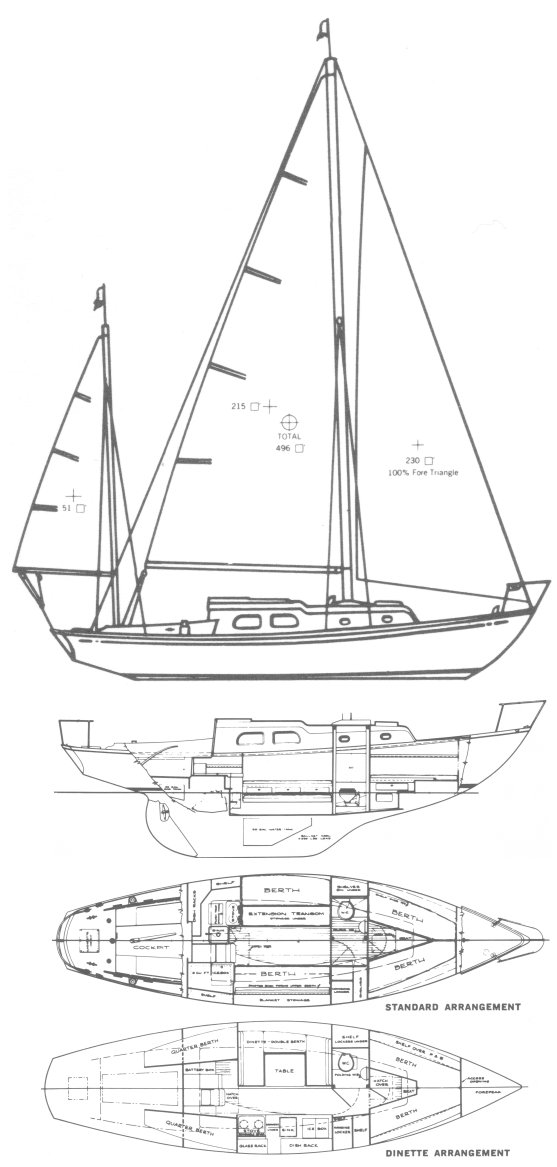
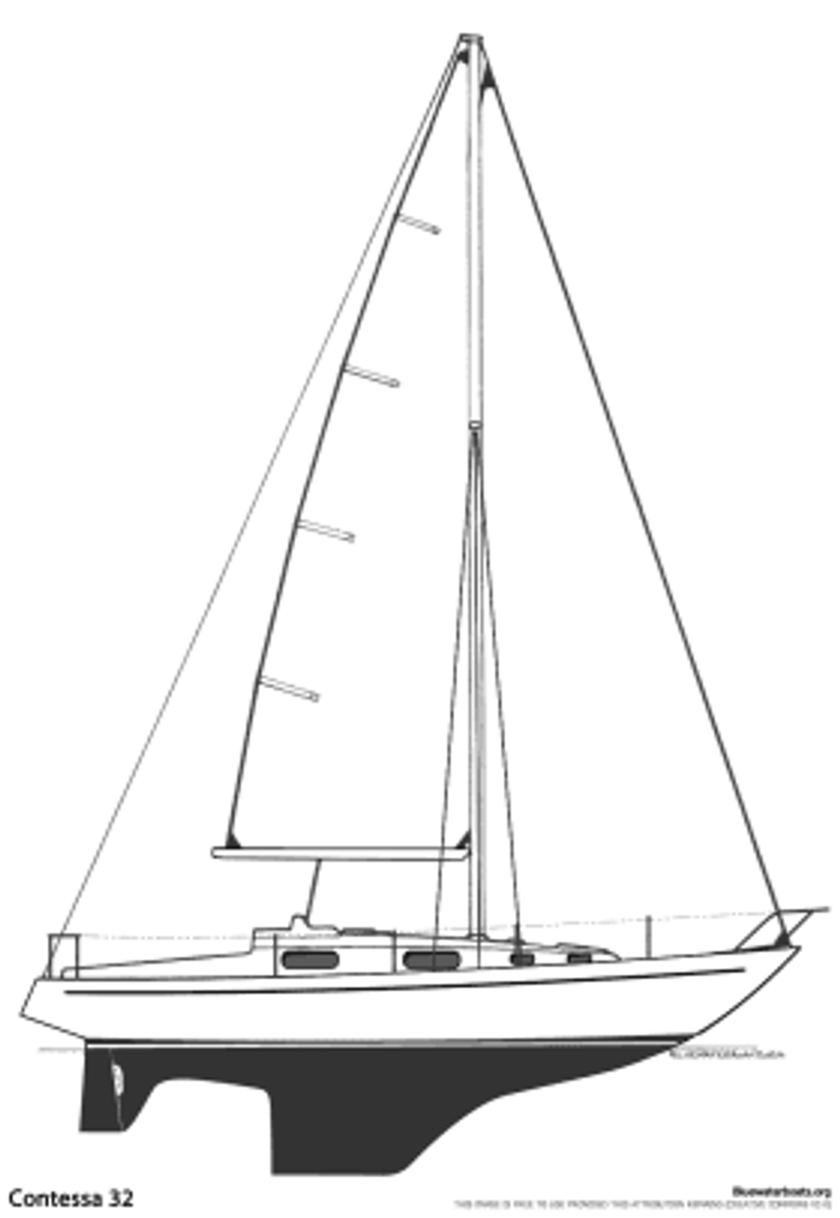
Released in 1971, the Contessa 32 is a sea-kindly cruiser-racer with a genuinely proven bluewater record, built by Jeremy Rogers in Lymington, England as the successful big sister to the smaller Contessa 26. Designed, like the 26, by David Sadler, she blends a traditional narrow-beamed, heavily ballasted English cutter-style hull with a fin keel and skeg, a novel combination for its era. Over 700 were built in the UK and 87 more in Canada, and the design has continued in limited production since.
History
The Contessa 26’s success after Jeremy Rogers Boatyard’s 1966 switch from wood to fiberglass drove customer demand for something larger. Rogers and Sadler designed the 32 to replicate the 26’s seaworthiness and racing success just as IOR rules were reshaping hull design; they kept the narrow beam and generous ballast that gave the 26 its stability rather than chasing speed at stability’s expense, a self-righting characteristic that would prove decisive a few years later. The first hull, Contessa Catherine, owned by Sadler himself, found immediate racing success; the second, Rogers’ own Red Herring, won her class at that year’s Cowes Week. The boat won Boat of the Show honors and orders poured in. Production continued until the 1983 recession closed the Rogers yard; Rogers bought back the molds a decade later and resumed limited production in 1996. J. J. Taylor built 87 more under license in Ontario, Canada, from 1973 until the yard closed in 1990, using a hull and deck shipped from Britain to create Canadian molds; those boats differ mainly in a modified, fiberglass-lined interior versus the UK boats’ wood finish.
Design and Construction
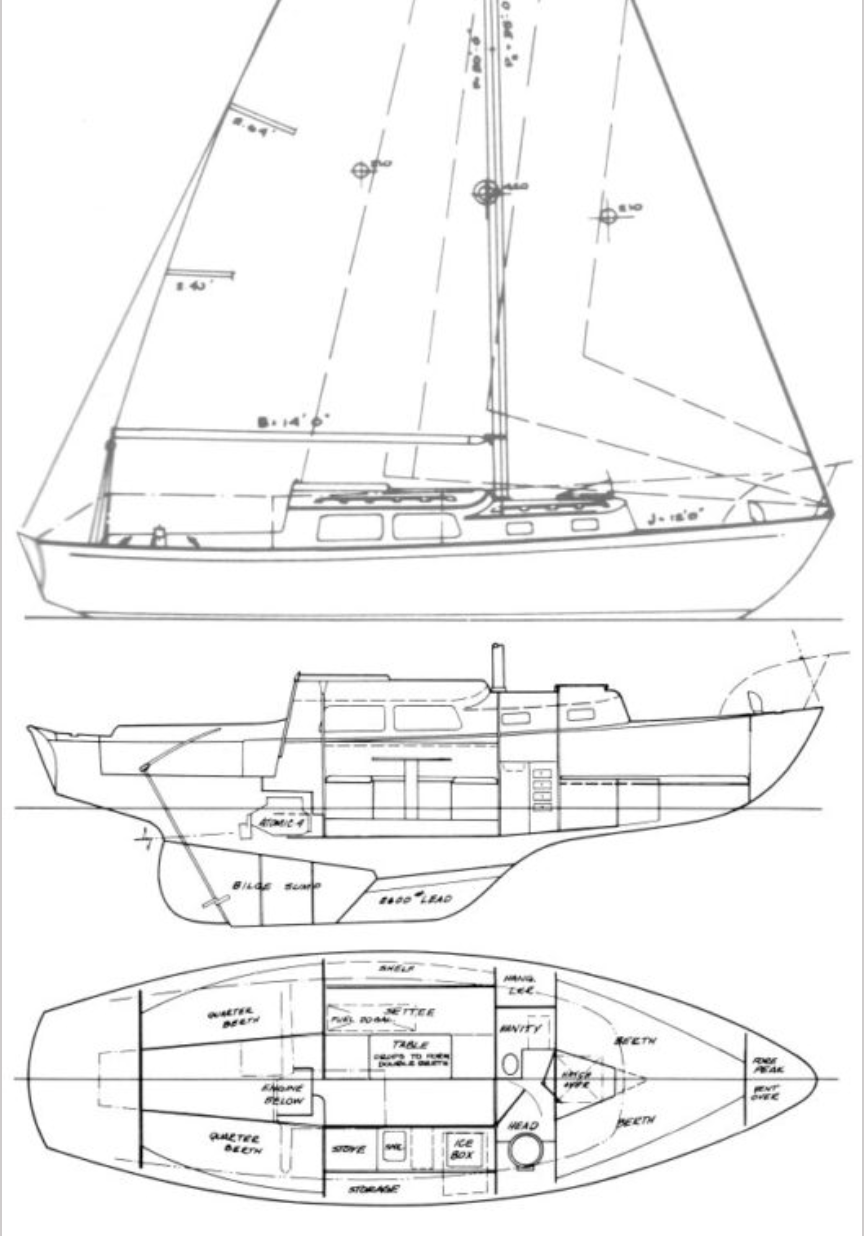
Below the waterline she carries a moderate fin keel blended into the hull for full-keel-like lateral stability, a skeg-hung solid-fiberglass rudder, and a deep forefoot, with internal lead ballast running to nearly half of total displacement. The hull and deck on UK boats are solid GRP; Canadian boats use a balsa-cored deck instead, trading some flex resistance for reduced rot and delamination risk. Both meet Lloyd’s hull standards, and the keel-stepped mast avoids the sagging problems some deck-stepped rigs develop. Low freeboard and a low cabin profile cut wind resistance at some cost to headroom, a tradeoff shared with the smaller 26.
Under Sail
Owners consistently describe a forgiving, responsive helm and genuinely strong windward performance, with a sea-kindly motion that John Kretschmer affectionately summed up as “a submarine with sails,” a nod to how wet she runs. With ballast near 50 percent of displacement, she carries full sail comfortably up to around 25 knots, conditions that have other boats reefing hard. Her defining moment came in the 1979 Fastnet Race: Assent, owned by Willy Ker and sailed by his son Alan, was the only boat in the smallest class of 58 entrants to finish a storm that killed 15 sailors and remains one of the most studied disasters in offshore racing history, a result widely credited to the design’s positive stability and self-righting behavior.
Buyers Notes
Leaky hatches and a leaky bilge water-tank inspection plate are common, worth checking directly on survey. Repowered boats, particularly those fitted with the three-cylinder Yanmar diesel, tend to be more desirable than originally engined examples. Most used boats surface in the UK. The active class association and Jeremy Rogers’ own yard are both strong resources for current model-specific knowledge.