Overview
Grahame Shannon identifies the Coast 34 as his first fiberglass design, drawn in 1978 while he worked with the Bruce Roberts Design Group. The same basic design appears under several names, including Roberts 341, Passage 34, and Westcoast 35. Production as the Coast 34 began around 1980 in British Columbia.
The earlier record combined the 1978 plan date with production data and credited only Shannon. The updated attribution keeps Shannon’s authorship visible while also recording the Bruce Roberts office and plan name under which the design was sold.
Production Boat and Plan-Built Variants
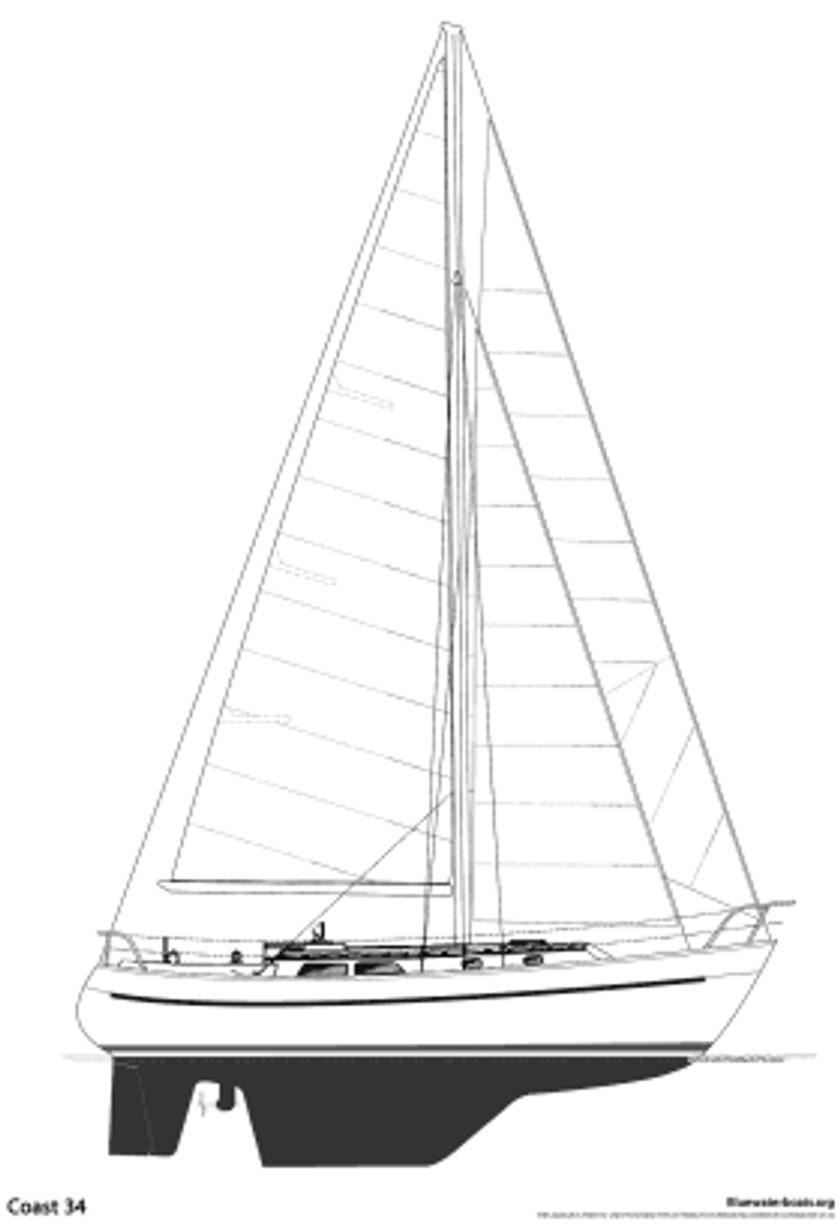
The SailboatData figures for the production Coast 34 are 34 feet 4 inches overall, 28 feet 8 inches on the waterline, 11 feet 6 inches of beam, and 5 feet 6 inches of draft. Displacement is 15,750 pounds with 6,400 pounds of ballast and 625 square feet of reported sail area. A five-foot shoal draft is also listed.
The standard record shows a fin keel and skeg-mounted rudder. This corrects the prior page’s implication that every Coast 34 had the same encapsulated long-keel arrangement. Plan-built Roberts 341 examples and semi-custom boats can differ, and the owners’ material lists both sloop and cutter rigs. The cutter remains the headline rig with sloop recorded as a variant.
Several British Columbia yards and finishers participated. Clearwater Marine is often identified as the first production builder, followed by businesses associated with Cape, Windward, Marquis, and Randle. Home-completed hulls and boats built directly from plans add another layer of variation.
How Many Were Built?
The total is unresolved. The archived review estimates more than 100 across production and home-built boats. A Cruising World evaluation preserved by the owners’ group said about 35 had been built by 1993. Other modern summaries say more than 50. These figures may count different names and construction paths, so the page does not publish one total as fact.
Under Sail
The production ratios describe a moderate-to-heavy cruiser with enough sail area for reasonable performance. The fin keel and skeg rudder should turn and work to windward more readily than a full-keel double-ender, while the canoe stern and moderate waterline keep the traditional appearance.
The archived review supplies specific claims about five knots in ten knots of breeze, carrying working sail to twenty knots, and tacking angles that widen sharply in rough water. Those figures trace to owner reports rather than a published test table. The 1993 Cruising World evaluation involved hull 30, Tether, and is a better model-specific test source, but the preserved extract currently available is incomplete.
Construction and Accommodation
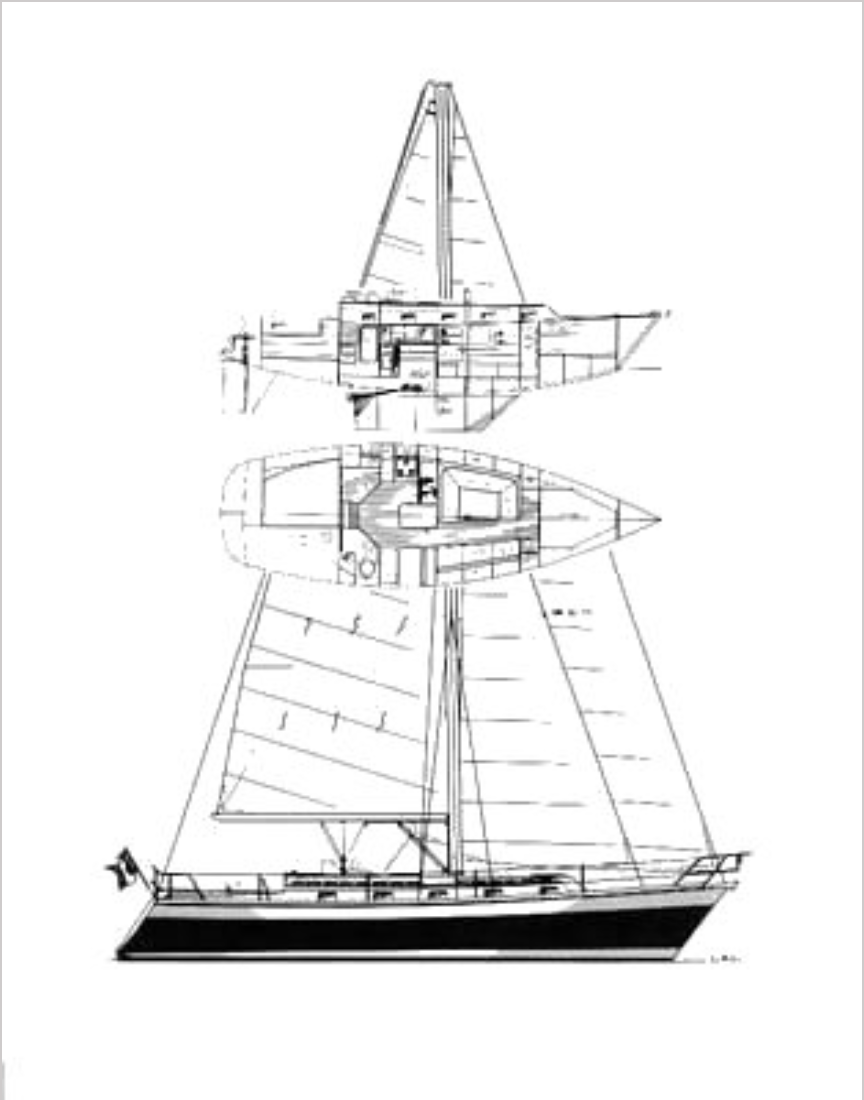
SailboatData describes a fiberglass hull with Airex core, while the archived review says solid glass below the waterline and foam core above it and in the deck. The interior was commonly arranged with a forward berth, head and locker area, opposing saloon settees, galley aft to port, and a quarter berth and navigation area to starboard. Pilothouse and alternate interiors also exist.
The design’s beam, freeboard, and cockpit lockers create useful living and storage volume. They can also encourage overloading. Some finished boats displaced more than the class figure, and added machinery can make engine access tight.
What to Inspect
First establish whether the boat is a production Coast 34, a semi-custom hull, or a plan-built Roberts 341. Identify the yard and finisher where possible. Confirm keel shape, ballast installation, rudder support, rig, draft, and actual displacement rather than copying class data onto a variant.
Moisture-test cored areas around deck and hull penetrations. Inspect chainplates, mast support, keel attachment or encapsulation, skeg and rudder, engine beds, shaft alignment, and all owner-completed bulkhead bonds and systems. No named ocean passage is currently attached to this record. The capable rating is a design assessment with limited confidence because build paths vary so widely.