Overview
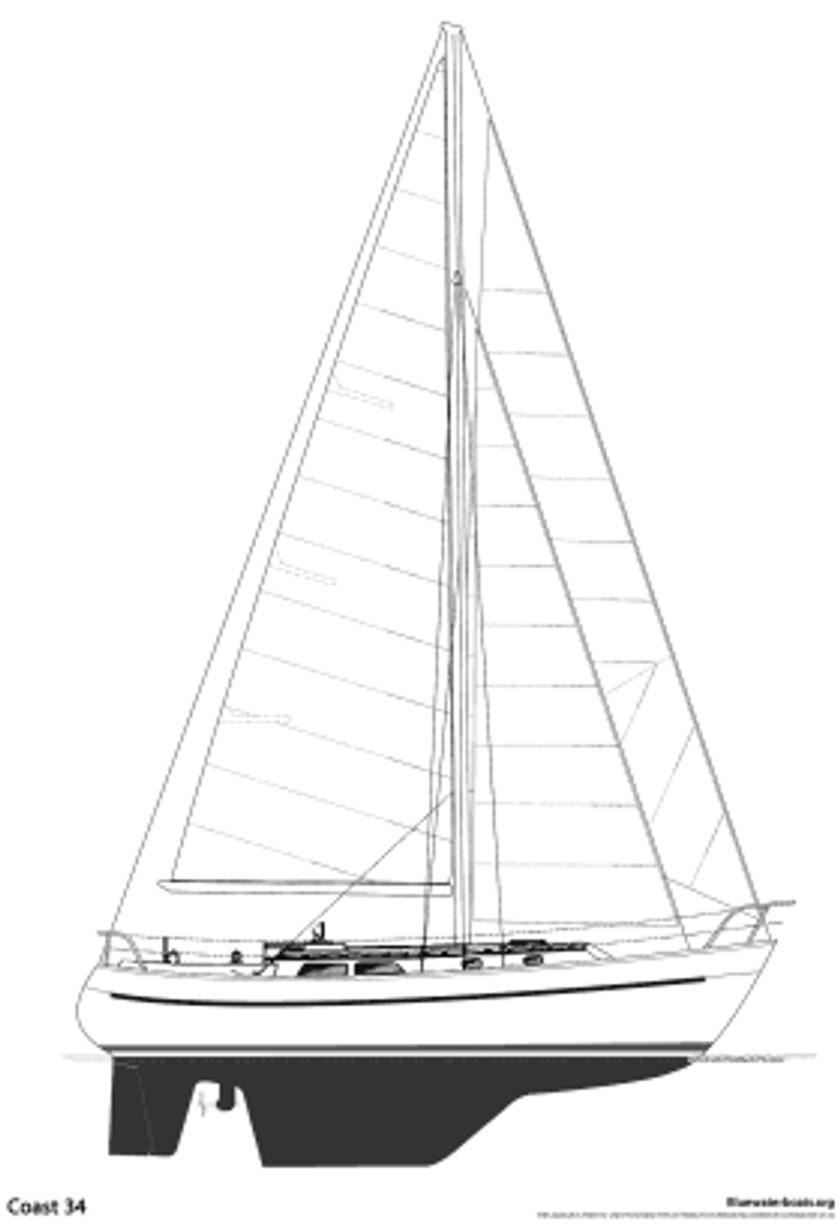
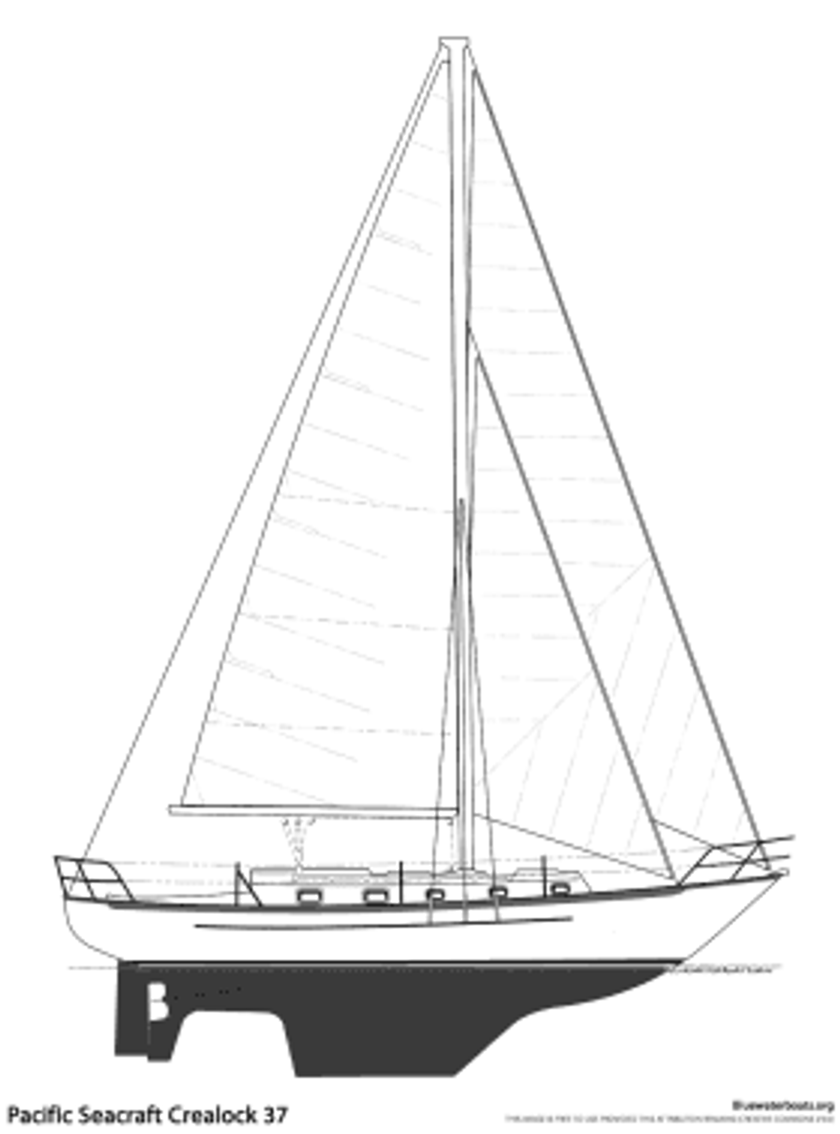
Think of the Crealock 34 as the follow-up act to Pacific Seacraft’s celebrated Crealock 37. In 1980, not long after acquiring the 37’s molds from the failed Cruising Consultants, the company asked designer Bill Crealock for a smaller companion boat. That design, marketed as the “Voyagemaker,” reached the water in 1984 and marked the start of what became a long, productive partnership between Pacific Seacraft and Crealock.
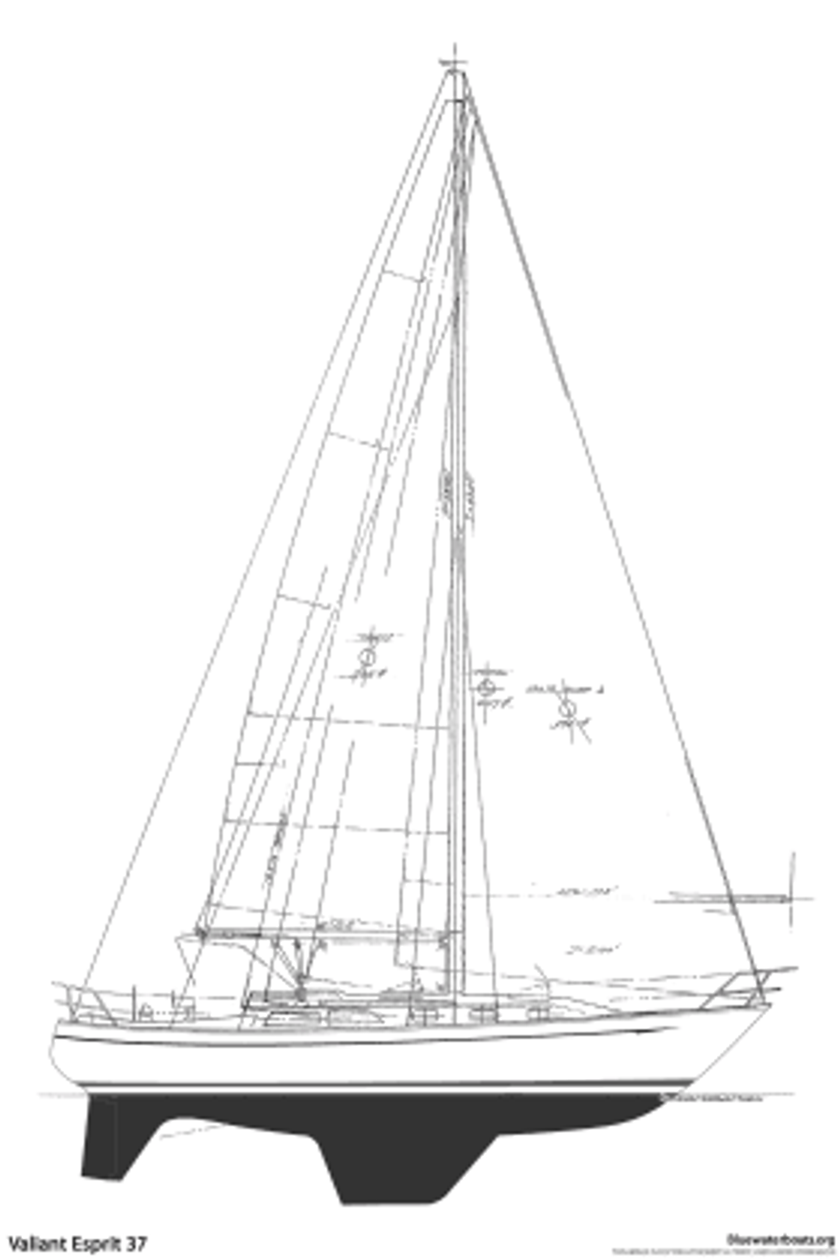
Given the shared designer, it’s no surprise the two boats look like siblings, graceful lines built around the same priorities: safety and comfort first. She’s a tough, seakindly boat, well suited to a cruising couple headed offshore.
Layout and Configuration
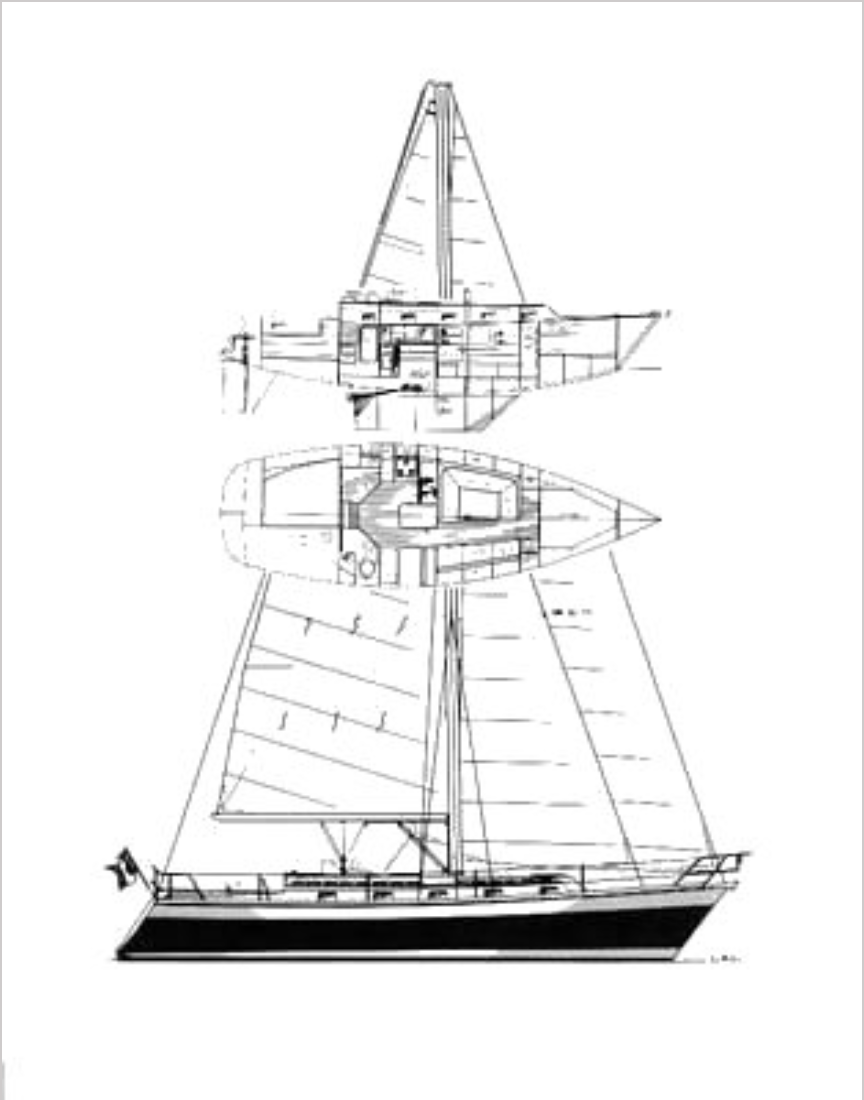
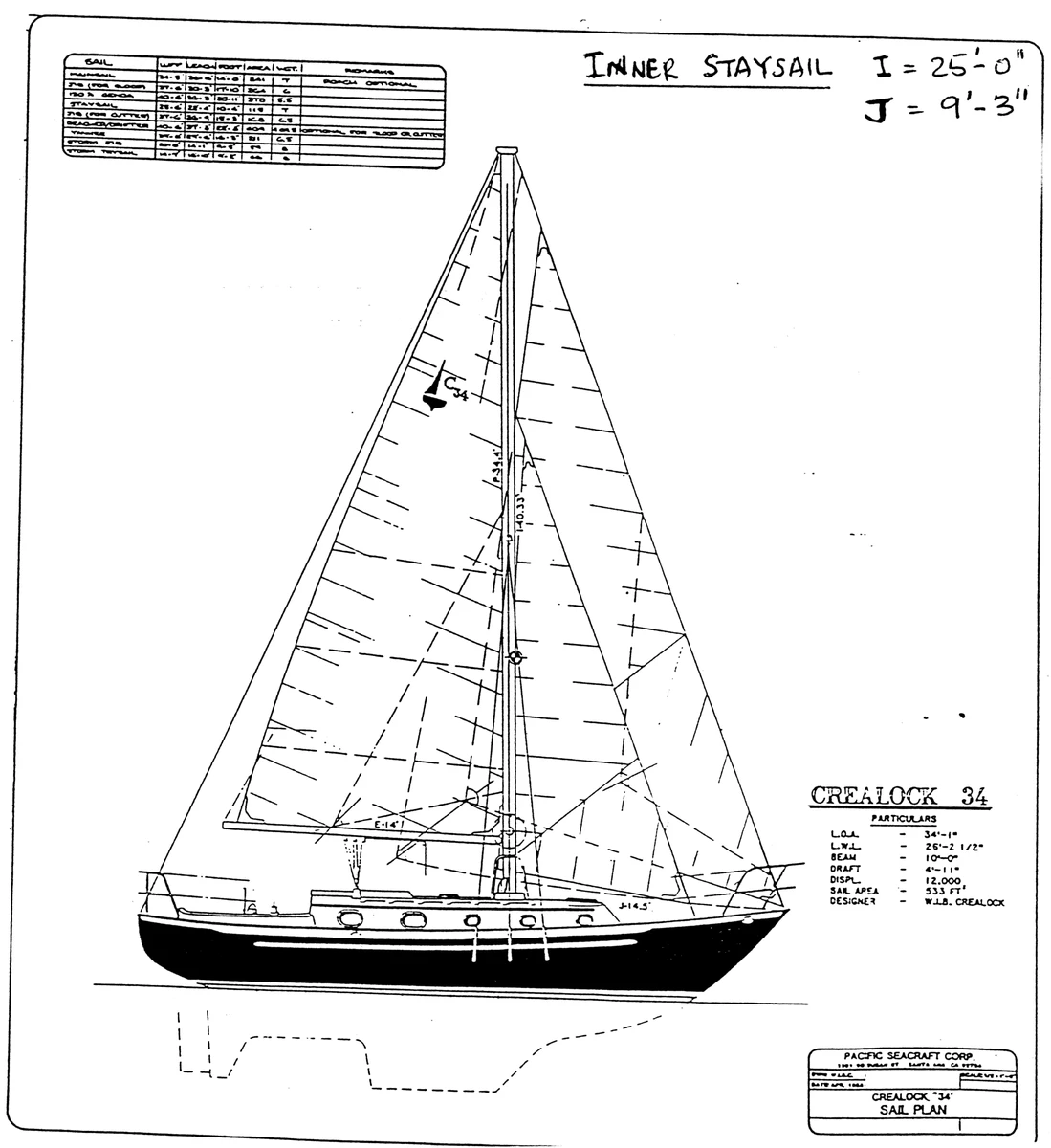
She carries a generous overhanging bow, a handsome sheer, and finishes aft in a traditional canoe stern. Below the waterline sits a long cruising fin keel drawing 4’11” in standard trim, shallow enough to open up anchorages many other boats can’t reach (a shoal-draft option cuts that further to 4’1”), with the rudder hung on a skeg.
She’s rigged as a cutter, with every control line led back to the cockpit. That cockpit runs small by design, a traditional bluewater choice meant to limit the risk of a following sea filling it, and it fills up fast once more than a couple of crew are aboard.
Below, headroom runs 6’4”, the galley is a workable size, and the whole layout suits living aboard. Sleeping capacity tops out around five: a double V-berth forward, two settee berths in the saloon, and a single sea berth aft in the quarter that doubles as nav-station seating underway.
Under Sail
She moves better than her displacement suggests, well balanced with genuinely solid upwind manners. Practical Sailor’s own sea trial recorded 4.5 to 5 knots to weather in 8 knots of wind under yankee, staysail, and full main, picking up to 5.2-5.5 knots surging forward around 70 degrees apparent. Under power she burns roughly six-tenths of a gallon an hour making 6 to 6.5 knots. Like other Pacific Seacrafts, the motion stays seakindly, with some hobby-horsing upwind from those pronounced overhangs.
Construction
The hull is genuinely solid fiberglass, three ounces of chopped strand mat in vinylester resin on the outer layer to guard against blistering, with a bottom thickness reaching 7/8 inch. The deck core is Baltek balsa, and the hull-to-deck joint runs stainless bolts on four-inch centers under a teak caprail. Ballast is lead, bolted on externally, and the interior sits on a full-length molded pan. Practical Sailor summed up the build simply: though pricey, the process behind these boats turns out some of the strongest hulls in the industry.
A few real drawbacks are worth knowing before buying: the molded interior pan can trap condensation and limits how much an owner can customize below, the cockpit seats at most four adults comfortably, the quarter berth measures a tight 34 inches wide by 20 inches high, and there’s no dedicated shower stall. One documented owner, Theodore Rice, sailed his 1985 hull Rhapsody on a singlehanded 100-nautical-mile loop out of Connecticut and back, a real if modest data point on her offshore manners.
Links, References and Further Reading
» Pacific Seacraft Official Site, Pacific Seacraft 34
» Designer Profile, W.I.B. Crealock: Designer And Gentleman