Overview
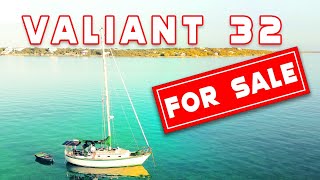
The Valiant 32 is Robert Perry’s compact companion to the Valiant 40. It keeps the canoe stern, moderate displacement, cutter sail plan, fin keel, and skeg-hung rudder in a hull intended for a cruising couple. The standard boat draws 5 feet 2 inches. Valiant also advertised a 4-foot-6-inch shoal option.
The published numbers are consistent across the builder material and later records: 26 feet of waterline, 10 feet 5 inches of beam, 11,800 pounds of displacement, and 4,700 pounds of external lead ballast. A small number of later boats were sloops with the mast stepped farther forward.
Construction and layout
The hull is solid fiberglass. The deck and cabintop are balsa-cored. The keel is a separate external lead fin, and the rudder is carried on a skeg. That arrangement gives less wetted surface than a full keel while retaining more rudder protection than an exposed spade rudder.
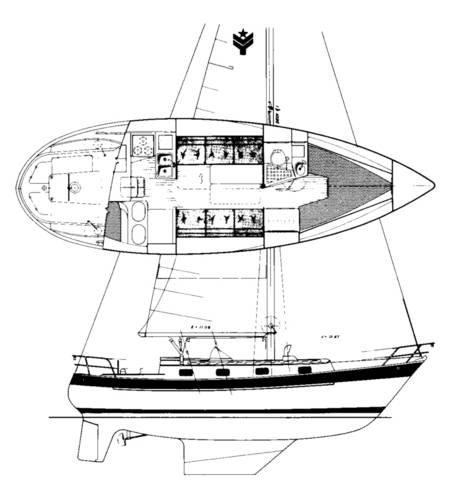
Below, the common arrangement has a U-shaped galley to port, a navigation station to starboard, opposing saloon settees, and a V-berth forward. Some boats have a wet locker in place of the quarter berth. Tankage published in the owner account is 46 to 48 gallons of fuel and 80 gallons of water, which is substantial for a 32-foot boat.
Under sail
Most boats carry a cutter rig. The divided headsail plan keeps individual sails manageable, but the mast position and inner forestay affect balance. The Good Old Boat owner account reports increasing weather helm above about 15 knots and says the first reef in the main settles the boat. A sea trial should test that behavior rather than assuming the helm setup is original after decades of rig and sail changes.
Buyers notes
Start with the deck core, chainplate areas, and the keel and skeg attachments. Confirm which draft and rig version the boat actually is. On a cutter, inspect the inner forestay fittings and their load path. The 25-hp Westerbeke fitted to many boats is now old enough that installation condition and service access matter more than the original specification.
Nestor’s book is useful evidence that the model belongs on an offshore-cruiser shortlist. It is not a substitute for the chapter, a current survey, or a verified passage record for the particular hull under consideration. The design does have real offshore-race evidence at the model level: Shadowfax completed the Pacific Cup (San Francisco to Hawaii) twice, in 1992 and 1994.