offshore

Southern Cross 28

C. E. Ryder · 1978 · Cutter rig

Southern Cross 28 sailboat
LOA30.42'
Beam8.5'
Draft4.67'
Displ.4.3t
Rigcutter
HullFiberglass

Bluewater Evidence · Ocean Proven

88% confidence

John Neal lists the Southern Cross 28 in Boats to Consider for Ocean Cruising (Mahina Offshore Services, April 2026), rating it 2 of 5 for overall value. James Baldwin includes it in his Atom voyages Good Old Boats list. Baldwin's list row notes an Airex-cored hull, a shortened keel, an inboard rudder on a substantial skeg, and owner-completed kit boats of varying quality.

Overview

The Southern Cross 28 is a Thomas Gillmer double-ended cutter related to the larger Southern Cross 31. James Baldwin’s model notes describe an Airex-cored hull and a shortened keel compared with the 31.

History

Archived Sailboatdata identifies C. E. Ryder of Bristol, Rhode Island as the builder and gives 1978 as the first-built year. Good Old Boat reports that production ran mainly through the early 1980s and counts about 66 factory-finished boats plus about 6 kit hulls sold as the Gillmer 28. Those production details come from Good Old Boat alone in the source set read for this review. Baldwin separately confirms that some boats were owner-completed kits. No cited source identifies the final production year.

Construction

Baldwin describes an Airex-cored hull. Good Old Boat reports a foam-cored hull, balsa-cored deck, and encapsulated lead ballast. The more detailed deck and ballast construction remains a single-publisher account. Sailboatdata and Baldwin agree on 3,400 lb of ballast and 8,500 lb displacement, which yields the listed 40 percent ratio. Sailboatdata classifies the hull as a fin with the rudder on a skeg. Baldwin’s phrase, “a shortened keel compared to the Southern Cross 31,” is compatible with that classification but does not independently establish the same taxonomy. Good Old Boat’s Joe Cloidt reports that the chainplates are through-bolted to fiberglass ribs glassed into the hull, accessible from inside the cabin. The mast sits on a stainless steel step bolted to a solid fiberglass section of the cabin top, and there is no compression post: the cabin bulkheads fore and aft of the mast, bonded to the hull, and the reinforced cabin top carry the load. A 15-gallon fiberglass fuel tank is molded into the hull and would be hard to repair or replace, the fiberglass water tank holds 47 gallons, and the boat was built without a holding tank.

Under Sail

Sailboatdata reports 415 sq ft of sail and a 20.17 ft waterline. Good Old Boat describes a masthead cutter with twin forestays and an optional self-tending staysail. It calls the boat “rugged” and “seaworthy” with “modest speed,” and reports at least one circumnavigation. The page does not name the boat or voyage, so the passage claim remains attributed to that source. Cloidt found the boat a bit tender on a test sail, with the rail wanting to go in the water, but quick, responsive and easy to handle once the cutter trim was learned. The headsail and mainsail sheets are all within reach of the helm, which he says suits singlehanders, and he describes the cockpit as snug, with tiller steering. He calls it a good coastal cruiser rather than a fast passagemaker.

Buyers Notes

Baldwin’s recorded warning is specific: “some were owner completed kit boats of varying quality.” Establish whether a boat was factory-finished or completed from a Gillmer 28 kit, then inspect the owner-finished work on that hull.

Passage records

Inspired Insanity· Donna Lange2007

Solo circumnavigation from Bristol, RI (departed 2005, west to east)

Finished solo circumnavigation, returned to Narragansett Bay July 2007

Source: Cruising World: Donna Lange Completes Circumnavigation (Web Exclusive, updated July 17, 2007)

Known Issues

Hull-deck jointmoderateOwner-reported, unverified

The rubber gasket in the bolted hull-to-deck flange joint can harden with age and leak along the joint.

Inspection: Check the full length of the hull-to-deck joint inside the cabin for weeping or staining and look for signs the gasket has hardened.

Source: Good Old Boat: Southern Cross 28 review

What sailing channels say about the Southern Cross 28, quoted from video transcripts with a link to the exact moment. Opinions belong to the speakers; the written review above stays independent of them.

discusses

The owner describes the boat as a double ender with a large fin keel. The owner says the lead ballast is molded into the keel, so there are no keel bolts to worry about.

Refitting Reverie

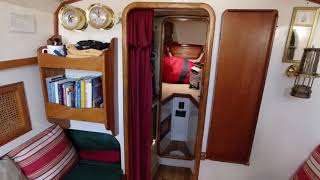
Southern Cross 28 sailboat (Interior/exterior tour)

▶ watch at 1:11
warns⚙ deck⚙ hatches

The owner says the forward hatch is a little bit leaky and needs to be addressed. The owner also points out soft spots on the deck that will need attention at some point.

Refitting Reverie

Southern Cross 28 sailboat (Interior/exterior tour)

▶ watch at 3:04
warns⚙ portlights⚙ interior joinery

The owner says the interior is in fairly rough shape because a lot of water has gotten in through improperly sealed port lights and other routes. Nearly all the interior plywood needs to be ripped out and replaced, though the owner thinks the hardwood can be salvaged.

Refitting Reverie

Southern Cross 28 sailboat (Interior/exterior tour)

▶ watch at 4:47
discusses

The owner says the Southern Cross 28 was formerly made by C.E. Ryder of Bristol, Rhode Island, builders of some very famous bluewater full keel boats. He wanted a full keel boat for his plan to eventually cross the Atlantic, wanted something small and manageable, and found this one on Craigslist after a year and a half of searching. He bought her in the fall of 2014 and says he needs about another 10% of work to finish. An engine issue cut their day on the water short.

Sail Life

Sail Life - Last day in the US and sailing a Southern Cross 28

▶ watch at 3:12
recommends

The owner describes his 1978 Southern Cross 28 built by Clark Ryder in Bristol, Rhode Island as classic old school construction: "this boat treats you very, very well when it gets a little bit bouncy out there, she handles being at sea really well."

discusses

The owners are the third owners. The first owner, a marine carpenter, finished the interior himself, and the owner says many 28s were built as kit boats, so no two are alike inside. The first owner fitted little doors in place of open bookshelves to enclose the interior space. The original head area, which had only a sink, was converted into a rope and hanging locker.

discusses

The owner calls the boat "narrow by today's standards, eight and a half feet", which he says means you don't bounce around much below and can always put a hand out to touch the wall.

  1. [1]EditorialWikipedia: Southern Cross 28- Baseline specs from the article infobox and text: engine, engine_hp, rig_i_ft, rig_j_ft, rig_p_ft, rig_e_ft, phrf. Identity checked against this page's LOA and beam.
  2. [2]Specificationssailboatdata.com - Southern Cross 28- Dimensions, displacement, ballast, hull type (Fin with rudder on skeg), rig (Cutter), designer, builder, 1978 first-built date
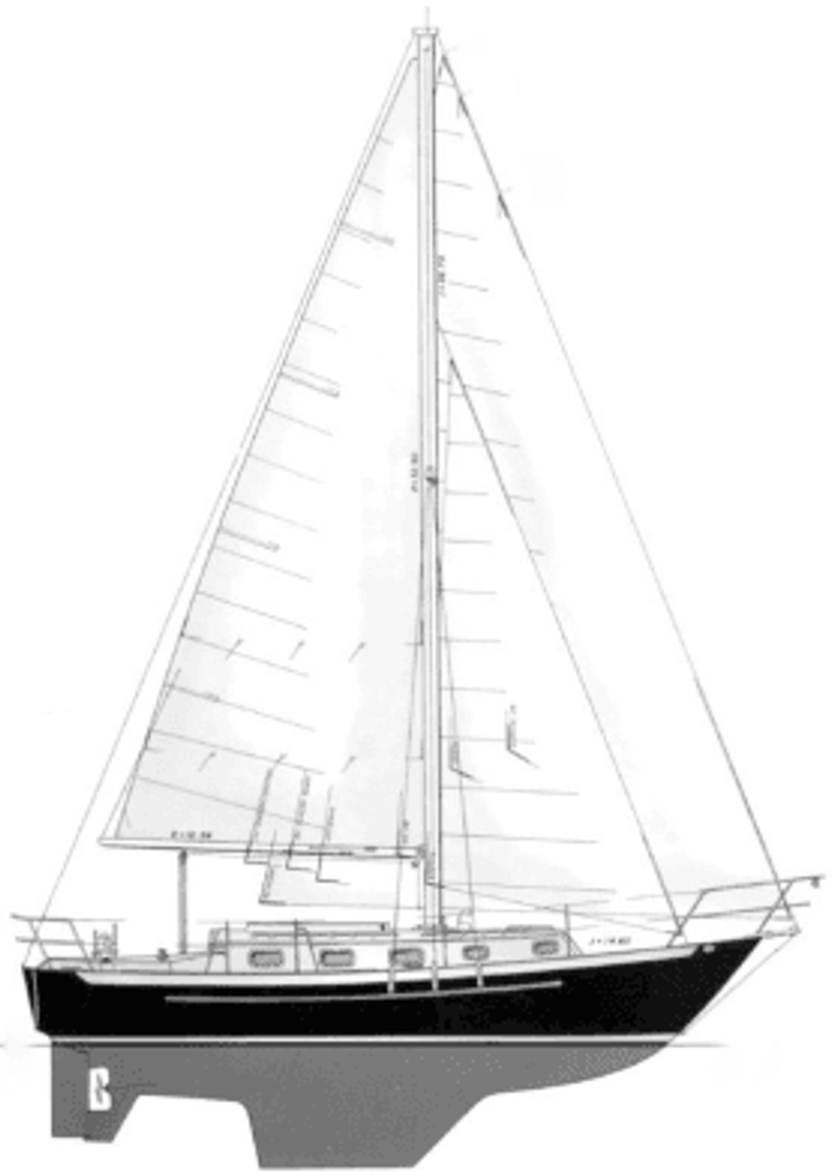
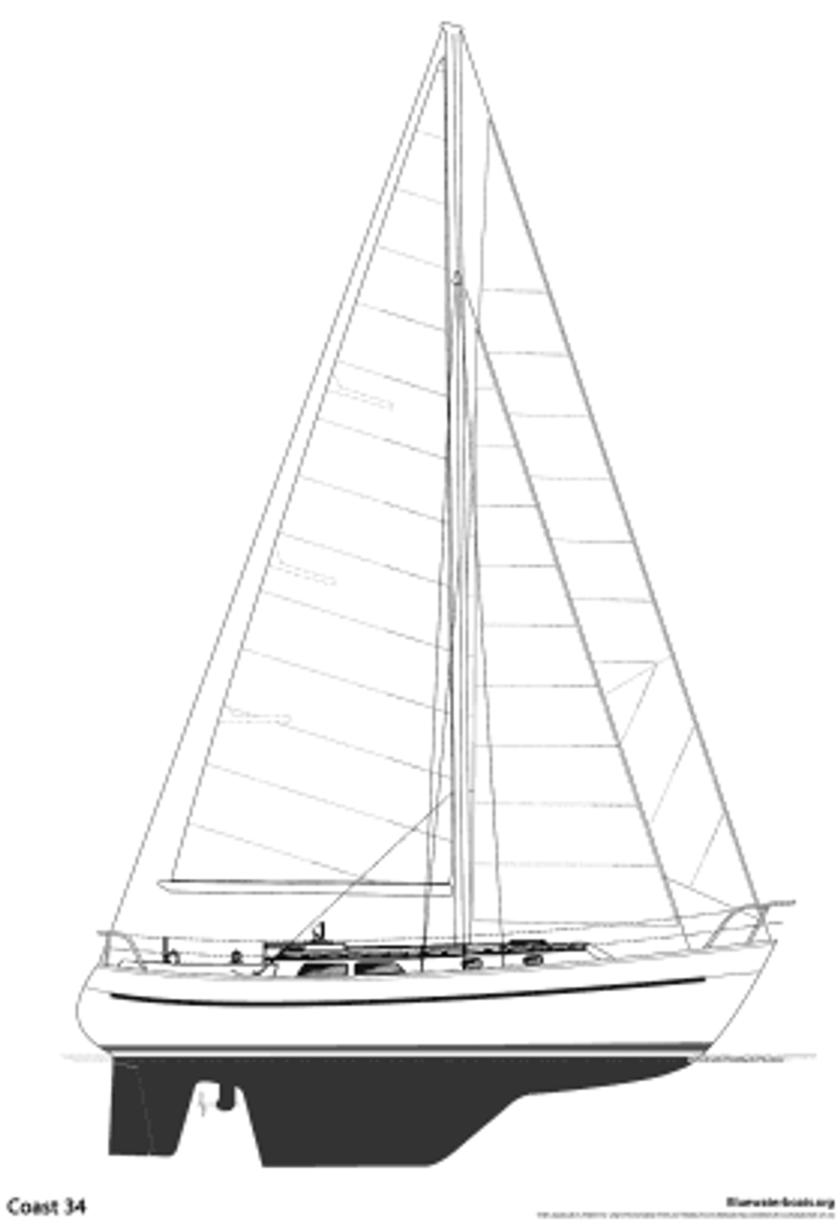
  3. [3]SpecificationsCover image via sailboatdata.com (Wayback, 2019 snapshot)- Lines/sail-plan drawing showing hull profile and keel
  4. [4]SpecificationsGood Old Boat saildata - Southern Cross 28 (Gillmer 28)- Reports builder C. E. Ryder, cutter rig, production mainly into the early 1980s, about 66 factory boats plus about 6 kit boats, detailed construction and rig features, and at least one circumnavigation. The page does not identify its upstream sources, so these remain single-publisher claims.
  5. [5]EditorialAtomVoyages Good Old Boats List (James Baldwin)- Curated list with stated exceptions to its general criteria; the Southern Cross 28 row notes Airex core, a shortened keel, a substantial rudder skeg, and variable owner-completed kits
  6. [6]EditorialMahina Offshore Services - Boats to Consider for Ocean Cruising (John Neal, v4.26)- Rated 2/5 by offshore consultant John Neal, updated April 2026. Calls these moderate quality and old, with limited on-deck storage.
See something wrong? Suggest a correction

Corrections need evidence: a link or citation we can check. Sourced suggestions get reviewed and credited in the entry's change notes if applied.

Owner knowledge counts: name the boat and year so we can attribute it.