Overview
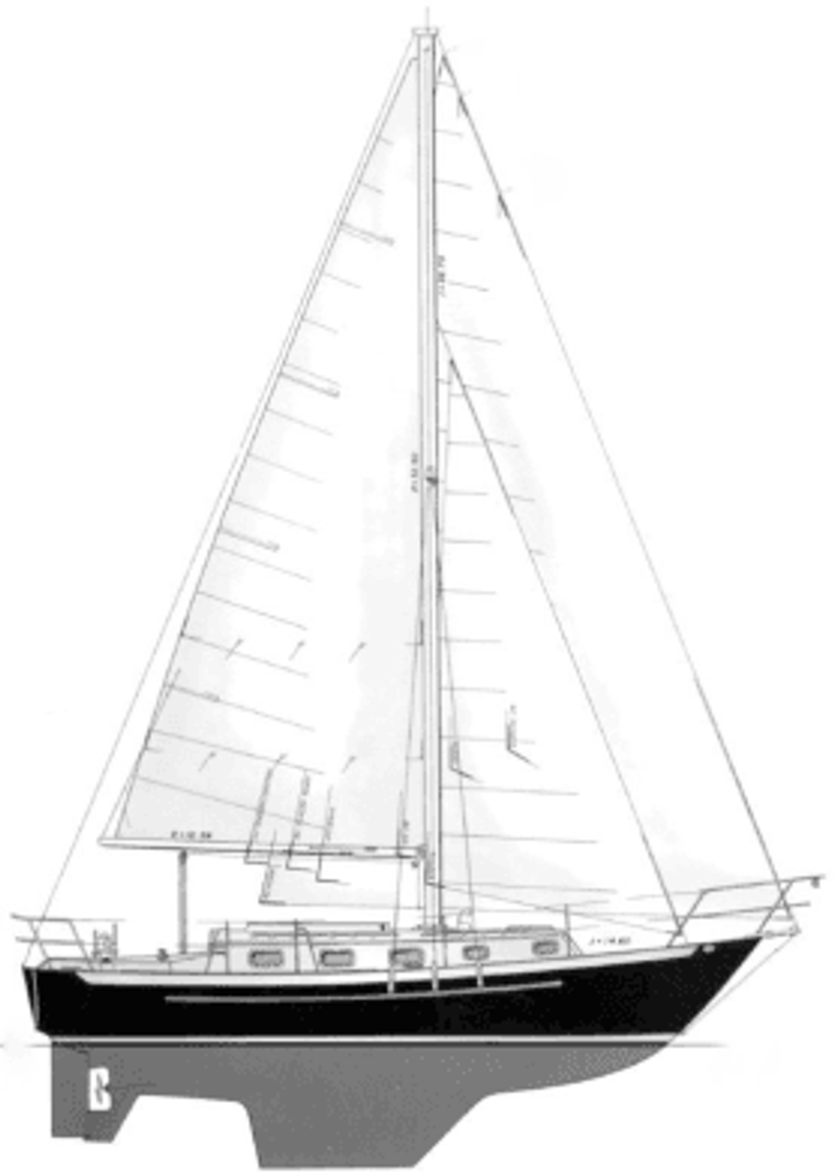
Don’t confuse her with Pacific Seacraft’s earlier, full-keeled 1977 Mariah 31; the Pacific Seacraft 31, introduced a decade later in 1987, is a different boat sharing lineage instead with the celebrated Crealock 37, an American Sailboat Hall of Fame design prized for seaworthiness and build quality. The 31 packs the same comfort-and-safety philosophy into a considerably smaller package. She isn’t cheap for her length, but the price buys Pacific Seacraft’s usual build standard, and owners consistently find her surprisingly roomy, easy to handle, and well suited to a cruising couple.
History
The story starts in 1980, when Pacific Seacraft bought the molds for the Crealock 37 out of the wreckage of Cruising Consultants, a builder that had produced a handful of hulls before going under. Designer Bill Crealock’s 37 went on to earn Sailboat Hall of Fame honors, and by the early 1980s Pacific Seacraft saw demand for a smaller sibling built to the same philosophy. Crealock came back to draw it, and the resulting boat, the Pacific Seacraft 34, hit the water in 1984.
An even smaller 31-foot version followed in 1987, also a Crealock design, rounding out the range. That first production run lasted twelve years, ending in 1999 after 79 hulls. Customer demand for a smaller boat never really went away, and Pacific Seacraft restarted production in 2002; that second run continued until the company’s 2007 bankruptcy, bringing total production to 129 boats.
Construction
Hulls are hand-laid solid fiberglass, with water-resistant vinylester resin in the outer layer and isophthalic polyester underneath, a combination built for real osmosis resistance; some sources describe later hulls using vinylester throughout with Kevlar reinforcement for added toughness, though this isn’t confirmed across the whole production run.
Ballast is lead. The fiberglass rudder carries internal steel-plate reinforcement and hangs off a fiberglass skeg that’s itself steel-reinforced, with a bronze pivot. The deck sandwiches marine plywood between fiberglass skins, molded with a non-skid pattern on top, and the hull-to-deck joint is glued and through-bolted with stainless quarter-inch bolts spaced four inches apart.
The interior sits on a single, full-length molded fiberglass pan bonded to the hull, standard practice on modern production boats: cheaper to build and stiffer overall, with the tradeoff of harder access to some parts of the hull.
Standard draft runs 4’11”, with a shoal-draft option available at 4 feet; this page’s own frontmatter currently records 4.0 ft, worth confirming against a specific hull’s actual keel before assuming it’s the shoal version.
Under Sail
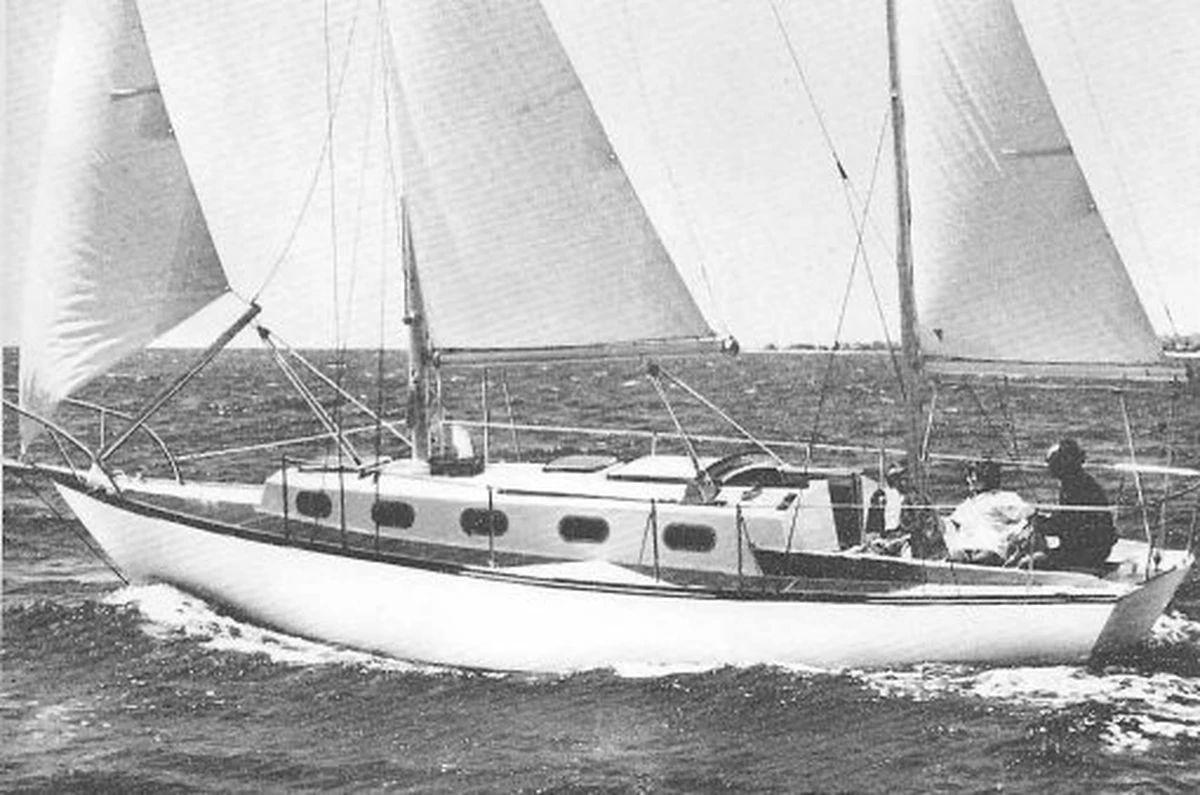
Her long cruising fin and skeg-hung rudder track well, and she’s happiest on a beam or broad reach; she’s not particularly close-winded, losing speed quickly once the apparent wind angle drops under 40 degrees. Practical Sailor’s own sea trial recorded 3.6 knots close-hauled in 10 to 14 knots of wind with a foot of chop, improving to 4.2 knots at 15 knots true, and 6.7 knots broad reaching under a partially reefed main and genoa; tacking cost the boat about 3.8 knots of speed coming out of each turn. Overall she’s well balanced and easy to handle shorthanded.
Buyers Notes
Real weaknesses are hard to find; most reported problems trace back to age or owner neglect rather than the design itself. Practical Sailor’s review did flag a few smaller practical gripes worth knowing about: standing water can collect in the cockpit footwell under full-throttle motoring, the primary winches’ lower lifeline can get in the way of the winch handle’s swing, the transmission dipstick is awkward to reach, and privacy is tight if two couples are aboard overnight. None of these are structural, but they’re worth checking or planning around.
Links, References and Further Reading
» Pacific Seacraft 31 info at the official Pacific Seacraft website.» Twenty Affordable Sailboats to Take You Anywhere by Gregg Nestor (Ch 16. p145-p152) ISBN:978-0939837724» Blue Water Sailing Magazine, Jan 2005, review of the Pacific Seacraft 31 by Greg Jones.» Latitudes and Attitudes Seafaring Magazine, Feb 2009.