Overview
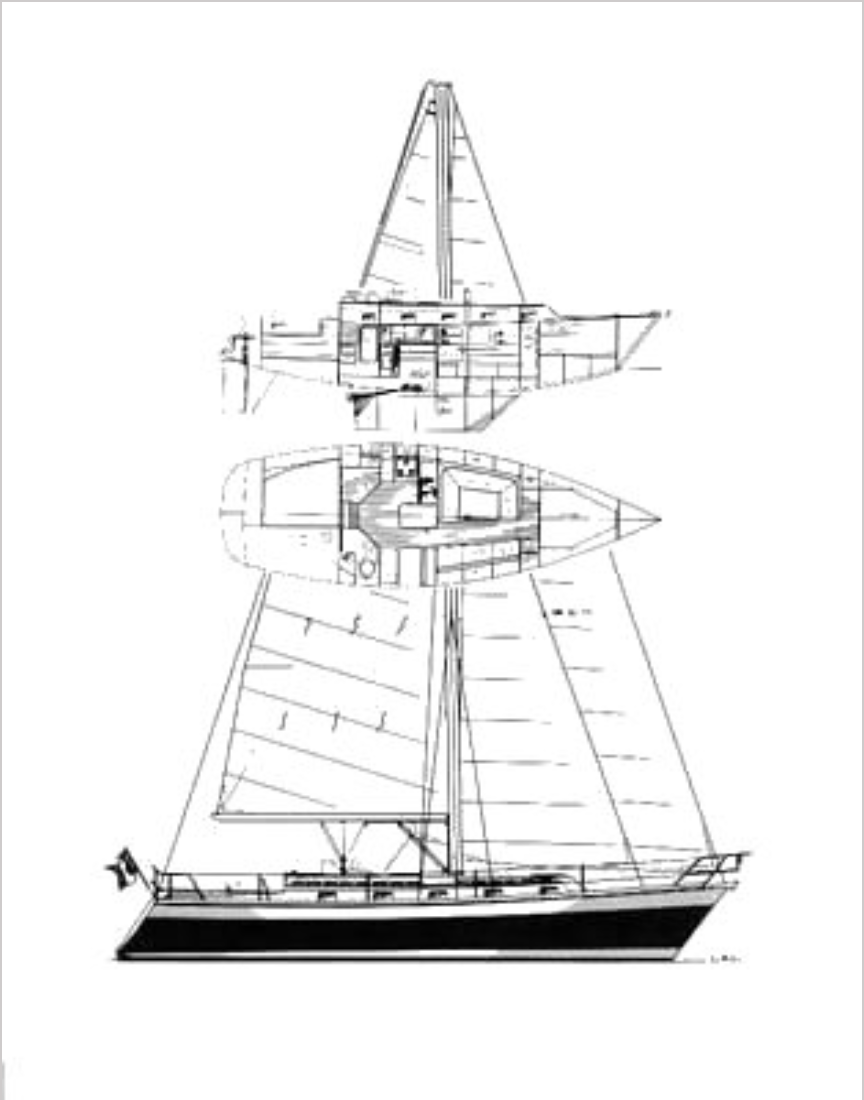
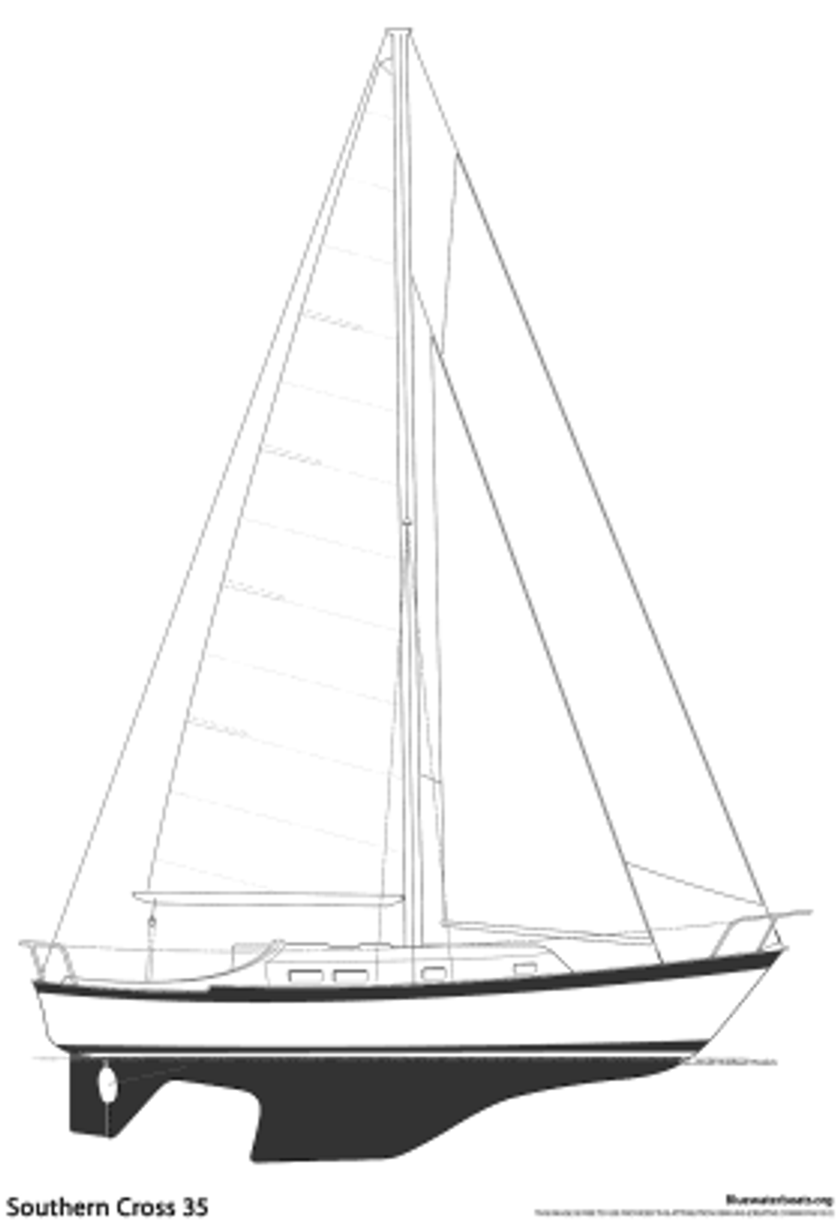
Thomas Gillmer gave the Southern Cross 35 a traditional canoe stern and sheer above a comparatively modern underwater shape. It has a shallow fin keel, skeg-mounted rudder, and cutter rig. C. E. Ryder began the model in 1978 and closed in 1990. SailboatData records 95 boats, while Cruising World says fewer than 100.
The previous record labeled the boat as a ketch even though its sources and sail plan identify a cutter. That has been corrected. The former circumnavigation label also belonged to an unsupported class claim, not a named Southern Cross 35 voyage, and has been removed.
Dimensions and Construction
Cruising World’s figures are 35 feet 3 inches overall, 28 feet on the waterline, 11 feet 5 inches of beam, and 4 feet 11 inches of draft. Displacement is 17,710 pounds with 5,750 pounds of ballast and 632 square feet of sail. SailboatData reports 17,700 pounds and 627 square feet, a small difference caused by rounding and sail-area convention.
The hull uses Airex foam between heavy fiberglass skins. Cruising World reports that the completed boats came out more than 2,000 pounds above designed displacement because of the layup. The deck is cored, the lead ballast is encapsulated, and the rudder hangs on a separate skeg. Navtec rod rigging was tied into glassed-in structure on factory-finished boats.
Some Gillmer 35 hulls were sold for owner completion. Cruising World says these did not necessarily receive the factory rigging system or all standard features. Builder identity and finish history therefore matter as much as the model name.
Under Sail
The long static waterline, moderate beam, cutter sail plan, and separated fin and skeg distinguish the 35 from Gillmer’s smaller full-keel Southern Cross 31. Cruising World describes the 35 as easy to control in strong winds and large seas, dry despite its freeboard, and able to keep pace with many boats of similar length.
Propeller arrangements changed during production. Early feathering two-blade installations caused vibration. Ryder changed to a fixed three-blade propeller, then thinned the skeg on later hulls and returned to two blades. A survey should identify which arrangement remains and check the skeg, shaft, aperture, and engine alignment together.
Interior and Cruising Use
The standard arrangement has a U-shaped galley aft to starboard, chart table and wet locker to port, opposing saloon settees, a forward head, and a V-berth. Cruising World found the boat comfortable for two and adequate for four. The cockpit is small but protected, with wide side decks and inboard shrouds easing movement forward.
Mahina gives the Southern Cross series 2/5, calling the boats old and of moderate quality with limited on-deck storage. That is a useful counterweight to the favorable period review. Design suitability and the present condition of a 35-year-old cored boat are separate judgments.
Evidence Limits and Inspection
The model review supplies credible offshore handling observations but no named crossing. Gillmer’s earlier Allied Seawind circumnavigation does not transfer to this design. The capable rating is therefore based on design, construction, and model testing with moderate confidence.
Inspect the plywood dorade boxes, mast base and stainless step for corrosion, deck core, hull core around penetrations, rod rigging and its internal attachments, chainplates, encapsulated ballast, skeg, rudder bearings, tanks, and cockpit drains. Confirm whether the boat was factory finished. On any owner-completed Gillmer 35, document bulkhead bonds, rig load paths, wiring, plumbing, and tank installation before relying on the production specification.