Overview
Pearson sold the 36 Cutter as the 367 during a short 1981–1982 production run. William Shaw started with the broad hull used for the Pearson 365, then gave this version a deeper keel, a taller mast, and a cutter sail plan. The Pearson owners’ archive records 49 boats. That small fleet is why searches also turn up the model under several names, including Pearson 36C, 36 Cutter, and 367.
The boat is 36 feet 5 inches on deck with a 30-foot waterline, 11-foot 6-inch beam, and 5-foot 6-inch draft. SailboatData lists 17,700 pounds of displacement and 7,300 pounds of ballast. Pearson’s surviving factory diagram instead prints 17,000 pounds. This page uses the value repeated by the owners’ model table and SailboatData, while preserving the factory discrepancy here.
Design and Rig
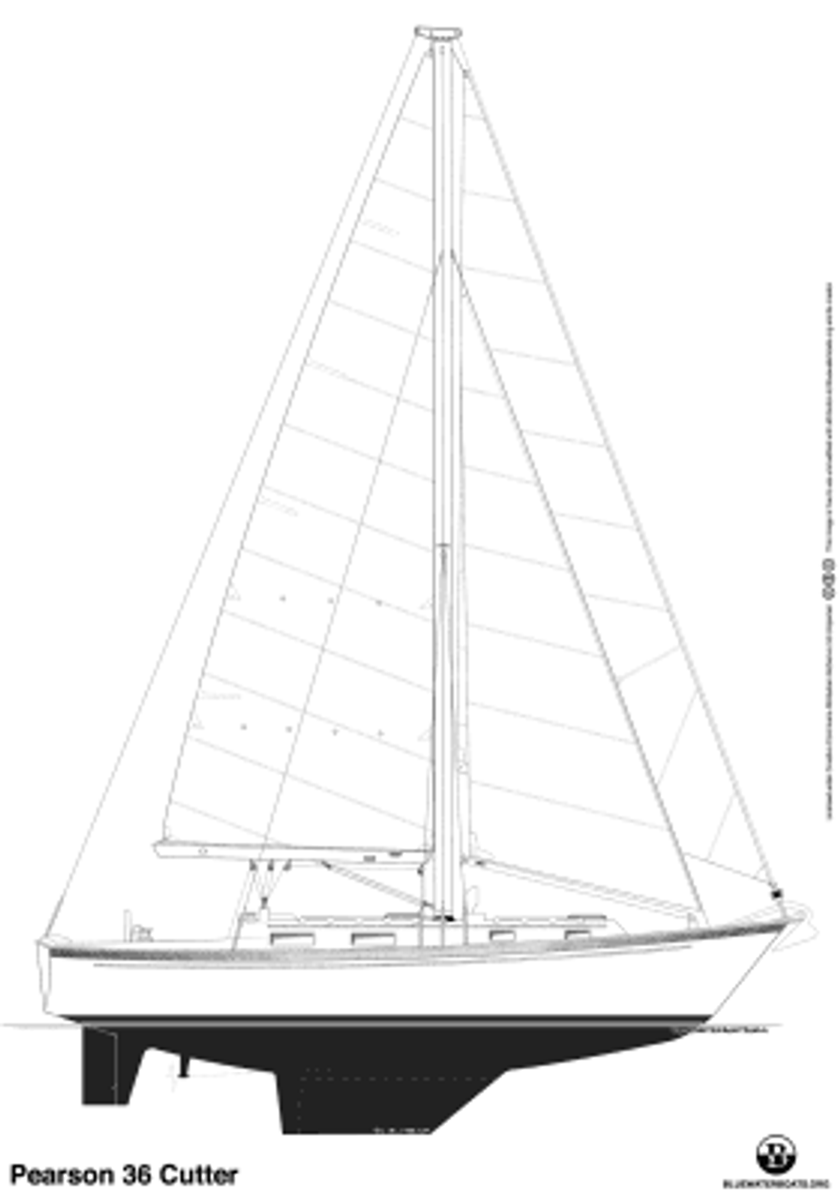
This is not the shoal-draft Pearson 365 with a different mast. The 36 Cutter has a fin keel, a rudder carried on a separate skeg, and a cutter rig with the mast stepped farther aft than on the 365. Pearson’s published sail plan gives 599 square feet from the main and foretriangle. The club-footed staysail can tend itself, which was central to Pearson’s pitch to short-handed crews.
The numbers describe a heavy cruising boat with modest sail power. That usually means a deliberate start in light air and useful momentum once the breeze fills in. The long skeg and deep fin should give steadier tracking than an exposed spade rudder, though they also add wetted surface and do not make the boat especially quick through a tack. Reports of 120-mile passage days survive in the archived review, but a named log or contemporary test has not yet been found to verify them.
Deck and Interior
Pearson drew a large cockpit with a bridge deck and narrow footwell. The side decks have molded bulwarks, and the anchor roller projects from the bow. Those are practical details for moving aboard and keeping cockpit water out of the cabin, but any 40-year-old deck still needs a moisture survey around fittings and high-load hardware.
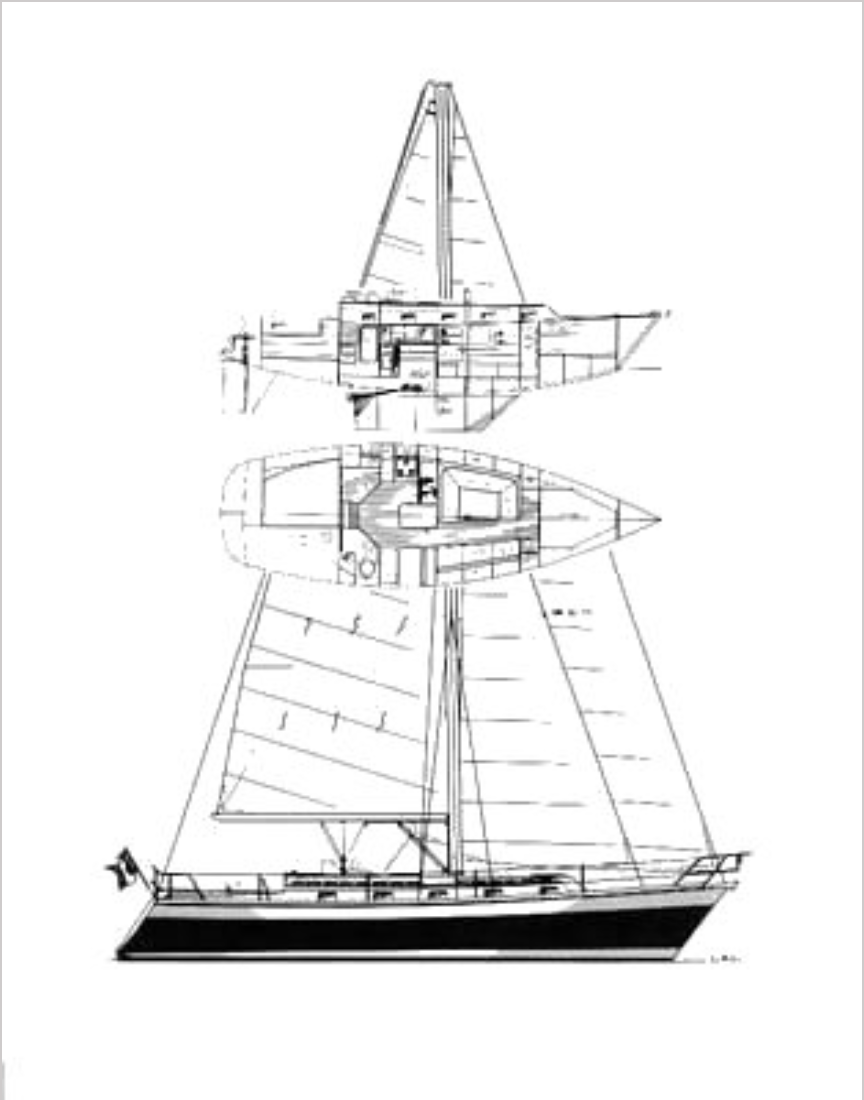
Below, the arrangement is conventional and workable at sea. The galley is to port, the navigation station and wet locker are to starboard, and opposing saloon settees can serve as sea berths. A head with a separate shower sits forward of the saloon, followed by the V-berth. The factory diagram shows 150 gallons of fresh water, 50 gallons of fuel, and a 20-gallon holding tank. Tank replacements and owner alterations can change all three figures.
What to Inspect
The archived BluewaterBoats review identifies corrosion at the steel mast-step plate, aging aluminum fuel tanks, fixed-port leaks, and damage around the deep aft keel sump as recurring concerns. These are useful survey prompts, not a verified defect rate. Check the mast base with the sole opened, inspect the tank and its surrounding structure, and trace any staining below ports before purchase.
Also inspect the balsa-cored deck around chainplates, stanchions, hatches, and deck hardware. Confirm the skeg and keel laminate after any known grounding. A boat from this small run may have decades of owner work, so the quality of repairs and system access matters more than the original brochure finish.
Evidence Limits
The factory material supports the dimensions, layout, production dates, and short-handed design intent. The archived review supplies most of the sailing impressions and maintenance history. No independently documented ocean crossing for a Pearson 367 is attached to this record yet. The current rating should therefore be read as a design assessment with moderate confidence, not proof from a named passage.