Overview
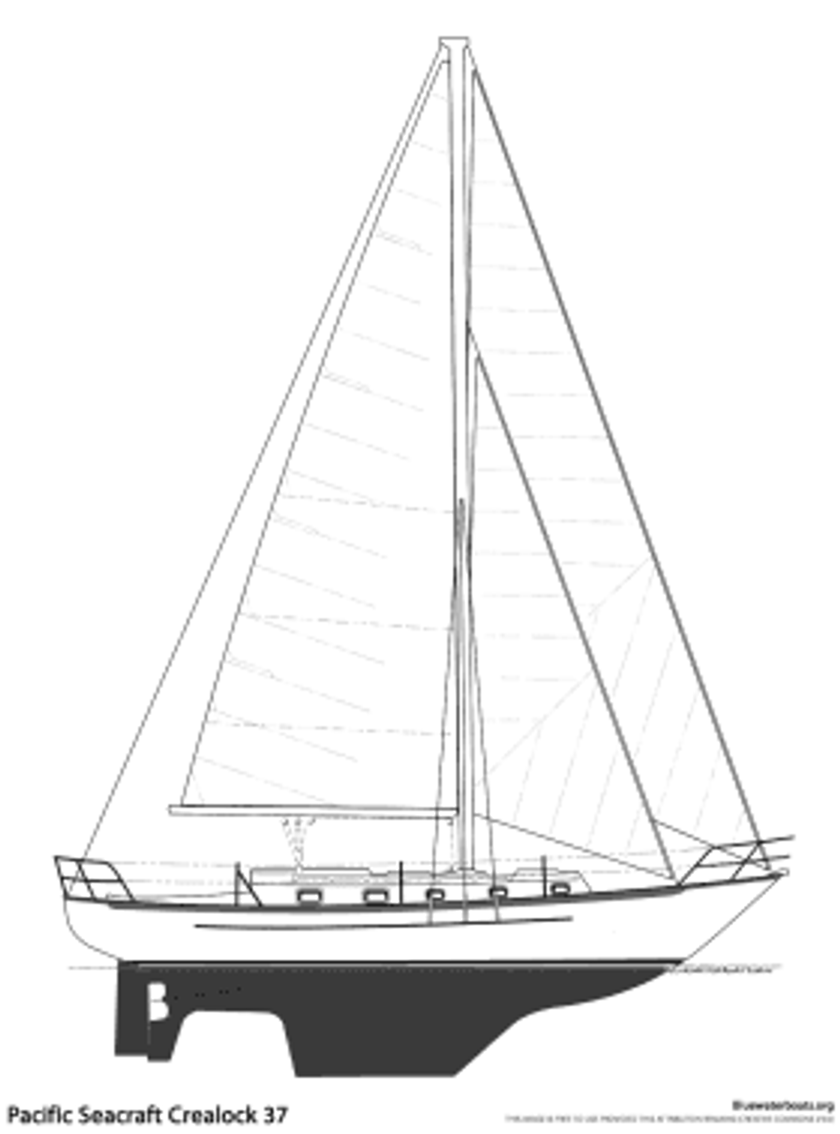
William “Bill” Crealock designed this 37-footer in the mid-1970s, leaning on his own bluewater experience from cruising the Atlantic in a 40-foot gaff cutter as a young man. The result is a moderate-displacement, canoe-sterned cruiser with a low-freeboard, traditional-looking hull that was built, in one form or another, for over four decades. It was inducted into the American Sailboat Hall of Fame in 2002.
History
The design started life as the Clipper Marine 37, commissioned by a company already building a line of Crealock-designed trailer-sailers, but Clipper Marine folded before a single hull was built. Cruising Consultants of Newport Beach, California, bought the molds and built sixteen boats under the Crealock 37 name between 1978 and 1979 (hull numbers starting at #101). Pacific Seacraft bought the tooling in 1980, continued production as the Pacific Seacraft 37 with hull numbers from #117, and kept building it in Fullerton, California for 27 years, into the 2000s. Pacific Seacraft’s own later ownership changes eventually saw the company name and molds acquired by Stephen Brodie, who relocated production to North Carolina, where the design has remained available in some form.
Design and Construction
Pacific Seacraft’s build quality on this hull is well regarded by independent reviewers, not just its own marketing: Practical Sailor singles out the fiberglass work as excellent even on dark hulls, and calls the hull-to-deck joint and hardware installation first-rate. The hull is solid fiberglass laminate, with balsa or foam coring offered only as an insulation option, not structurally. Like many boats of its era, early-to-mid-1980s hulls saw some osmotic blistering; Pacific Seacraft moved to vinylester resin on the outer laminate layer in 1988 to address it, and to biaxial roving in 1993 to meet a change in ABS standards. A full-length molded liner is glassed to the hull at numerous points for stiffness. The keel is a bolted external lead casting on a fin keel with a skeg-hung rudder, and a Scheel shoal-draft option (around 4.92 ft) was available alongside the standard draft.
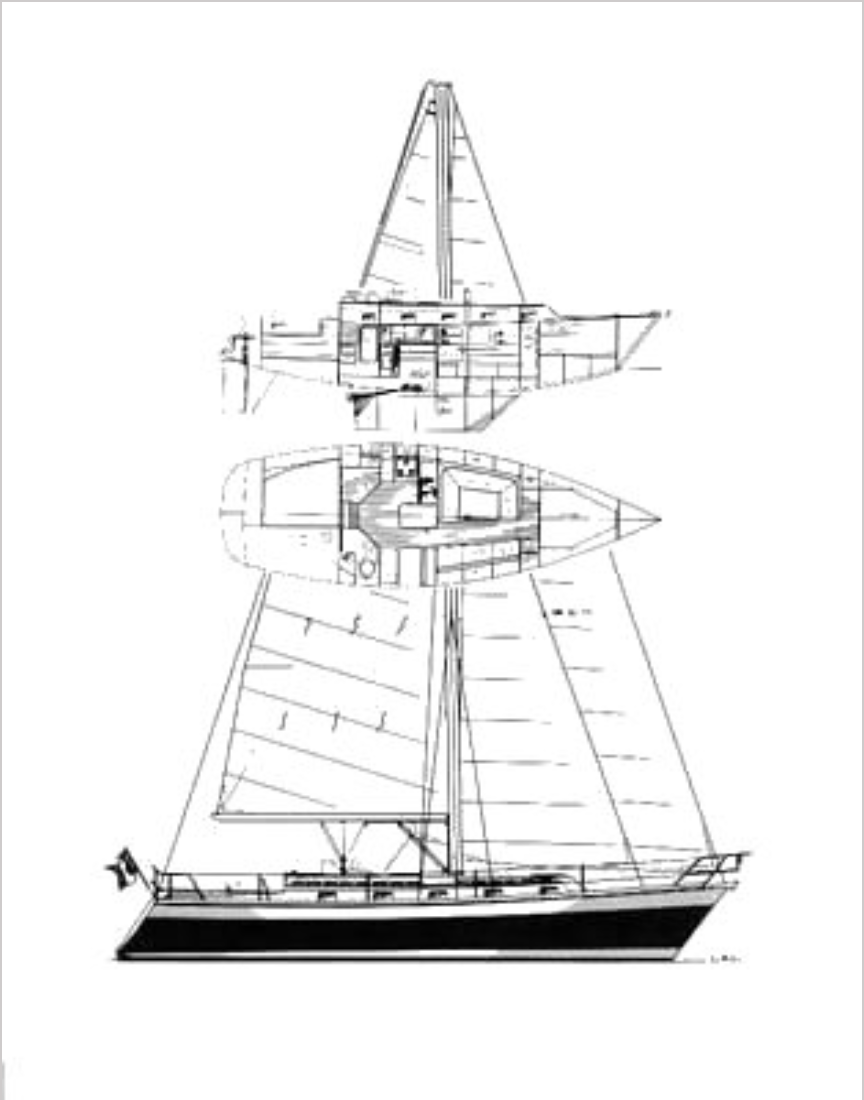
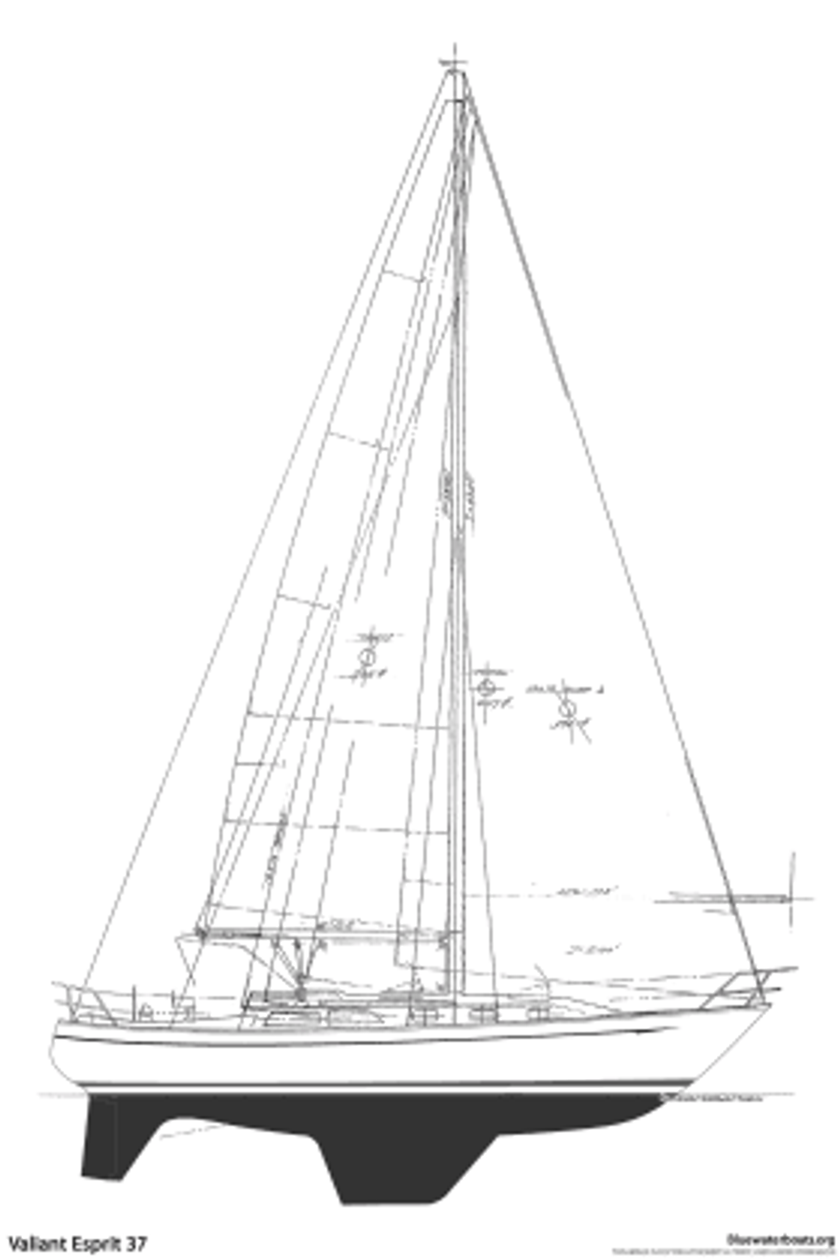
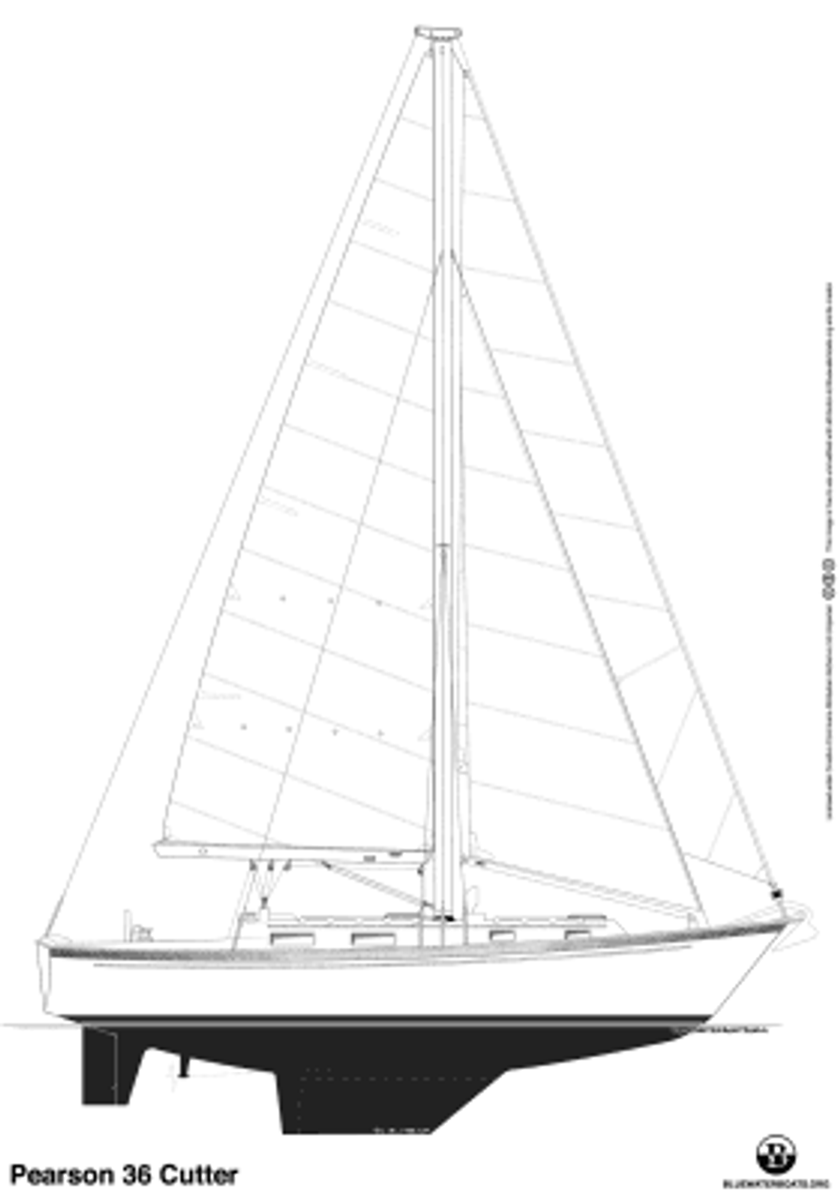
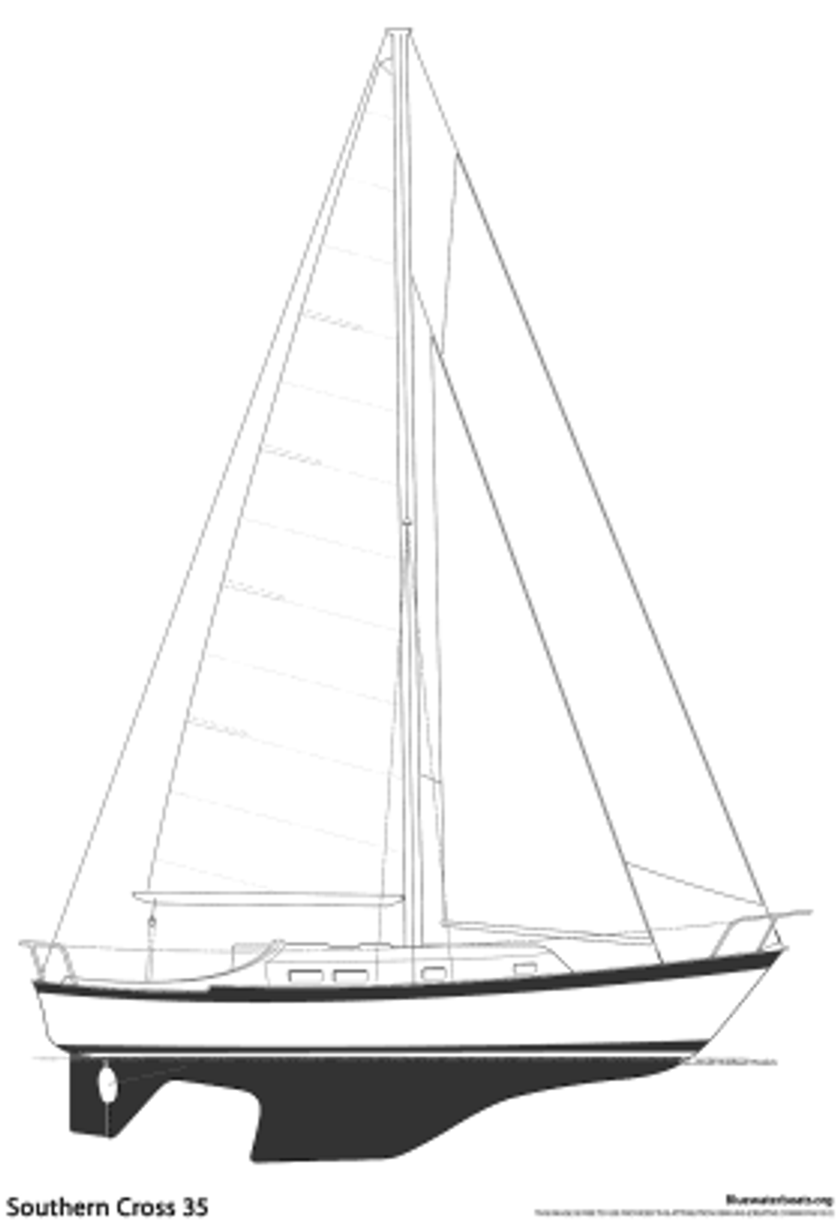
The boat was built to take three different rig configurations: a cutter, a masthead sloop, and a yawl, each with its own reported sail area. The cutter has always been the rig of choice for most buyers, with the yawl rarely ordered; a deck-stepped mast carried on a glassed and bolted compression post is part of why the same hull shows up under different rig silhouettes in used listings.
Under Sail
Practical Sailor and SpinSheet both describe respectable performance for a boat on the heavy end of the displacement spectrum: SpinSheet’s reviewer found it tacked through about 85 degrees and tracked well in moderate-to-strong conditions, while Practical Sailor called it satisfying on long passages in anything but drifting air. Pacific Seacraft’s own marketing has promoted the boat as ready for offshore work, including a “Circumnavigator package,” but no independently documented named voyage was found to confirm a specific boat or skipper completing one, so that claim is not used as evidence here.
Buyers Notes
Practical Sailor’s survey of used examples flags several recurring items worth checking: minor gelcoat cracking around the mainsheet traveler supports (more likely a mold-release artifact than a structural issue), chainplate oxidation streaking the topsides after ocean passages, tight anchor-roller clearance for larger anchors, and a galley sink that can siphon seawater back through the drain on port tack if not fitted with a proper seacock routine. SpinSheet and this file’s own prior sourcing both note that the bilge-mounted aluminum fuel tank is prone to corrosion from standing bilge water and is worth inspecting closely, along with the hull-liner-integrated water tanks. Several systems that read as standard on paper, like bilge pumps, pressure water, and lightning grounding, were factory options rather than defaults, so it is worth confirming exactly what a given hull actually has.