Overview
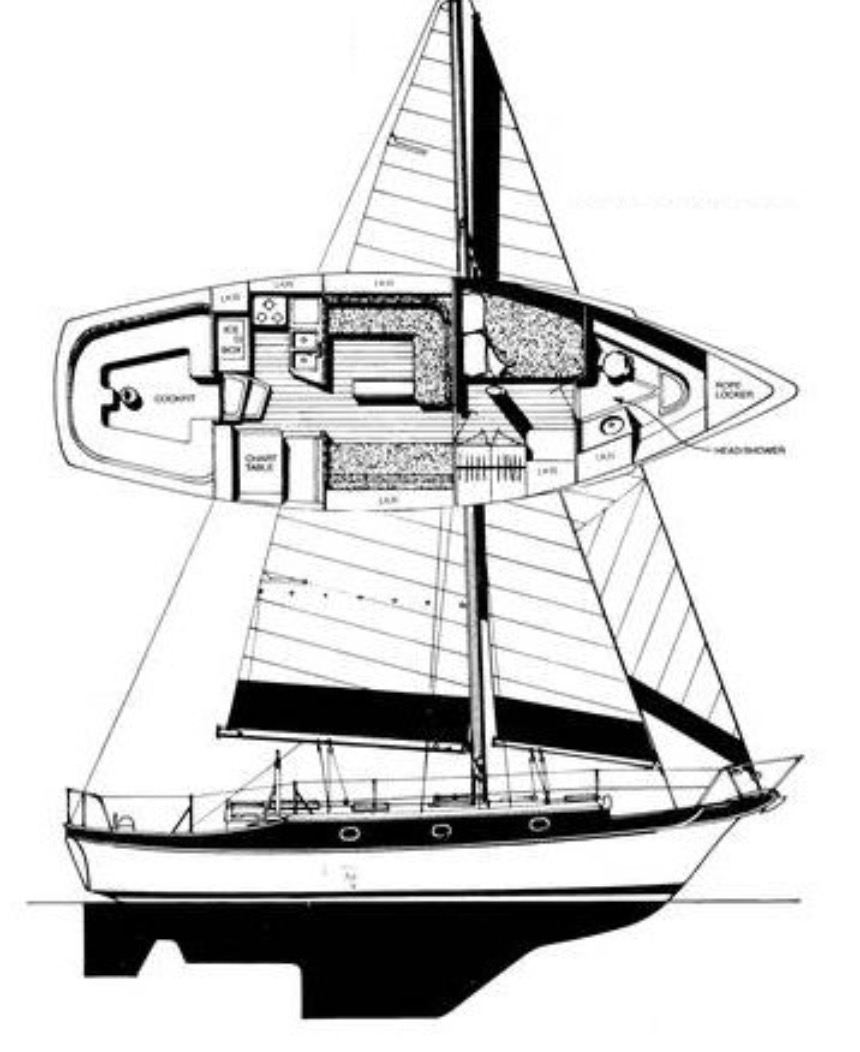
Caribbean Sailing Yachts began as a bareboat charter operation founded by New Jersey dentist Dr. John Van Ost before building its own fleet, and the CSY 37 is the mid-sized boat in that line, designed by Peter Schmitt as a raised-deck cutter built primarily for Caribbean charter service. Eighty-seven were built between 1978 and 1981, before the company closed during a difficult period for boatbuilders generally.
Design and Construction
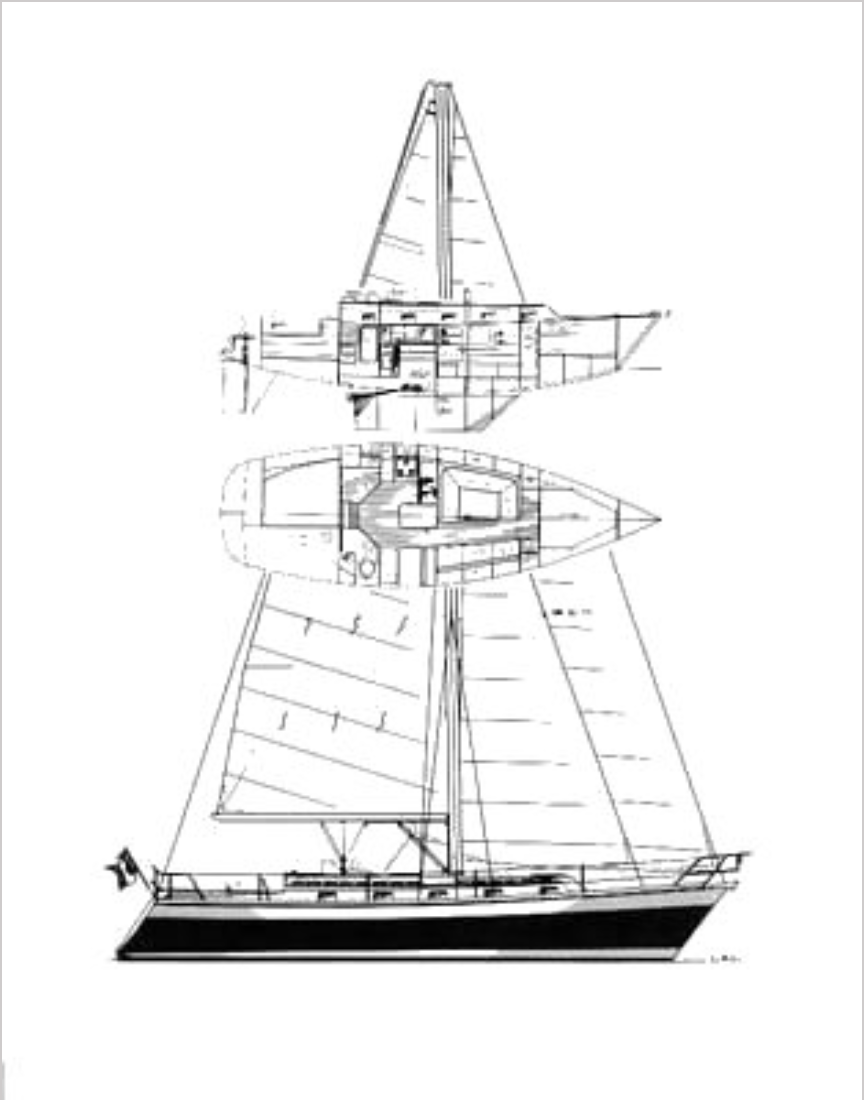
Schmitt blended traditional styling, an oval stem, raised deck, and semi-clipper bow, with a comparatively modern underbody: a fairly long fin keel and a skeg-mounted rudder. Construction is genuinely heavy-duty: Practical Sailor describes the solid-glass layup, with no coring anywhere in the hull, as “massive overkill,” and the hull-to-deck joint uses 3M 5200 sealant with stainless through-bolts on 4-inch centers for a reliable, watertight seal. The boat’s extra buoyancy from its tubby hull form is a genuine asset in heavy weather, and hardware installation, including bronze seacocks, is rated highly. Practical Sailor says the cast lead ballast is glassed into a hollow keel molding and glassed over to form a double bottom, the same in both draft versions. The deep-draft boat adds a 16-inch keel extension filled with about 600 lb of cast concrete, which can be cut off to make a shoal-draft boat that will make more leeway. The rudder stock is a solid 2-inch bronze bar, and the chainplates are heavy stainless flat bars through-bolted to a hull that is reinforced in their way.
Under Sail
The standard short rig only really comes alive in heavy air; an optional taller rig with dual spreaders (about 8 ft taller) improves performance meaningfully but makes the boat more tender. Practical Sailor is direct that this “is no performance cruiser” and that windward ability suffers from a wide sheeting base and aft-leading shrouds that also get in the way of broad reaching. Off the wind is where the design earns its keep: stable and genuinely capable on a tradewind passage. In Practical Sailor’s owner surveys the owners most satisfied with performance had tall rigs, though even they agreed it was an all-out cruising boat. With the short rig in light air the same magazine called the boat a slug.
Buyers Notes
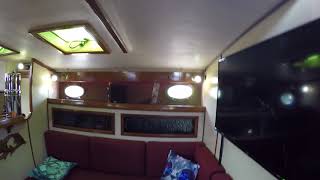
Practical Sailor’s survey flags a short list of real, specific issues: a single bow cleat that complicates running a second anchor, awkward helm handling under power in crosswinds from the boat’s high topsides, and limited cabin sole access that restricts bilge inspection. Both one- and two-stateroom interior layouts exist and both have real layout compromises worth experiencing in person. The huge cockpit that makes the boat comfortable at anchor in the charter trade is a genuine tradeoff against serious offshore use, worth weighing directly against intended use before buying. Practical Sailor adds that the companionway sill should be higher for offshore use, and that the four large cockpit scuppers are imperative with so big a cockpit, though some owners report water backing up through them, which swapping the hoses so port scuppers drain to starboard cures. The two-stateroom, two-head plan is used mainly in charter and the reviewer says it is too much interior for a 29-foot waterline. The single-stateroom plan gives the forward 40 percent of the interior to a large cabin and a huge head, so guests must troop through the owners cabin to reach the head.