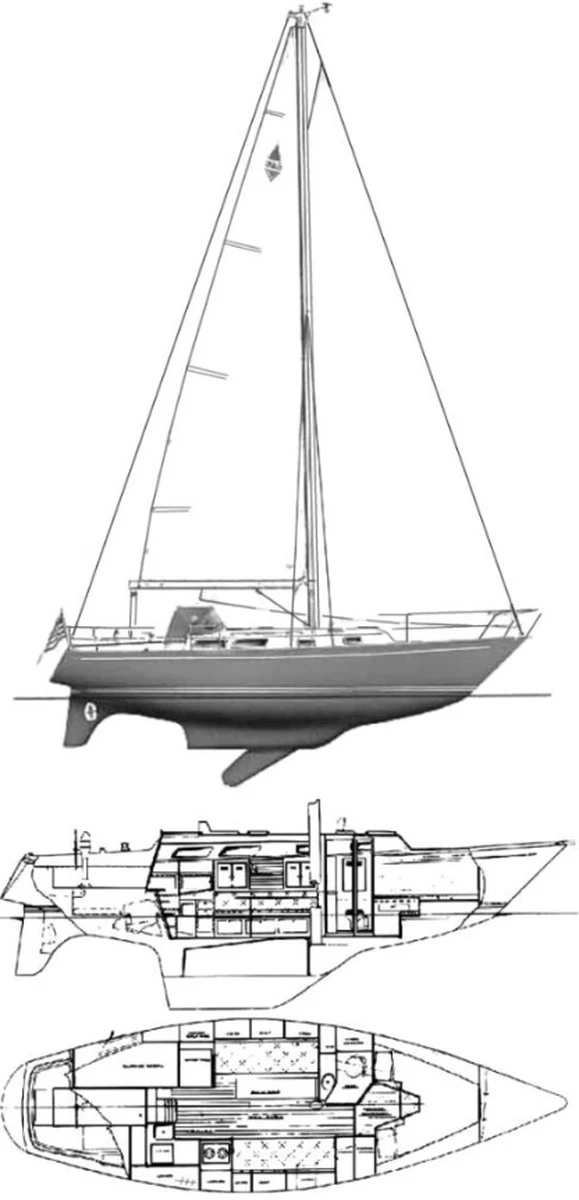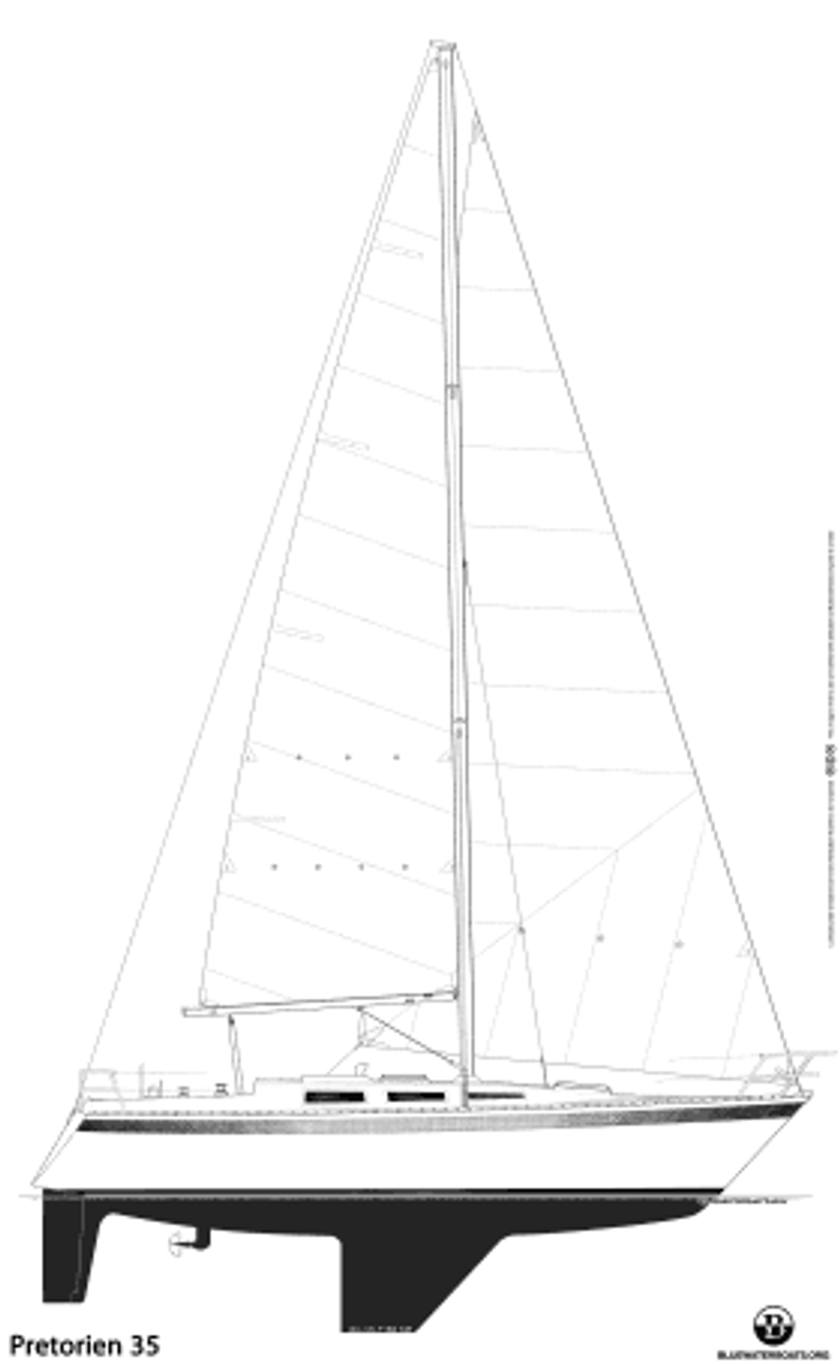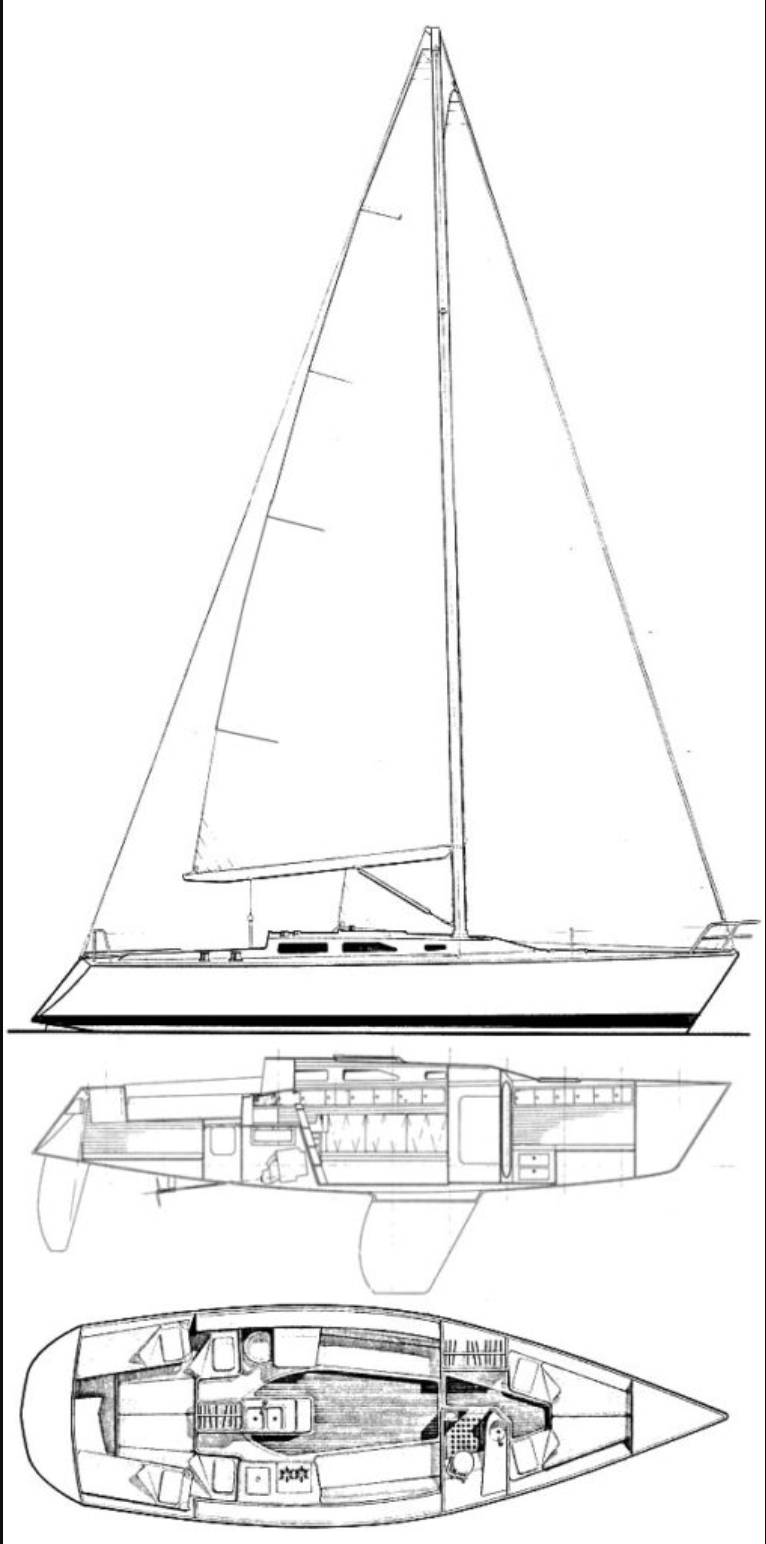
Overview
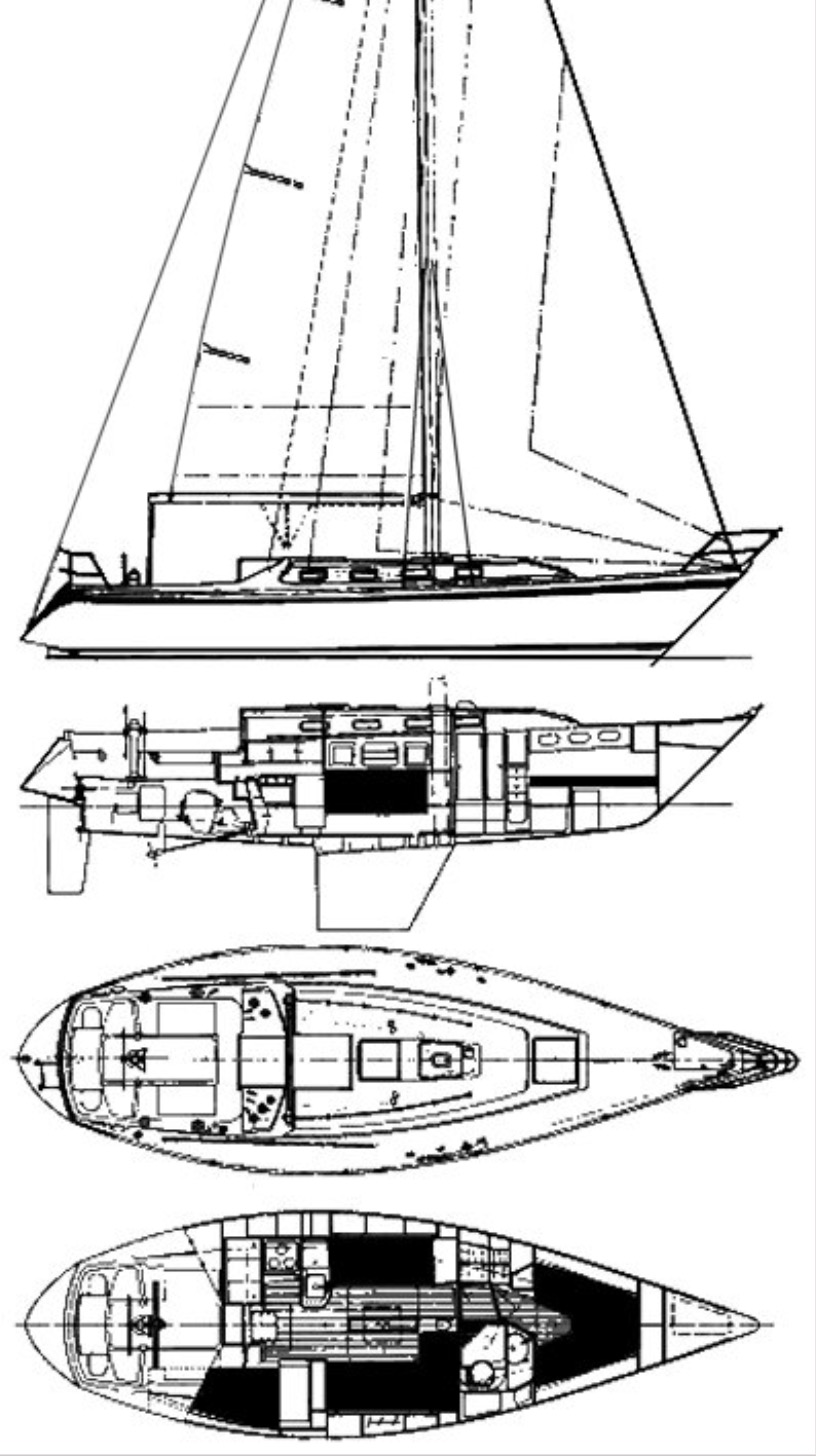
Carl Schumacher designed the Express 37 in 1984 for Terry Alsberg’s Alsberg Brothers Boatworks in Santa Cruz, following the success of the smaller, similarly race-bred Express 27. The goal was explicit: a boat that excelled on the reaching and running legs of long ocean races, not a general-purpose cruiser. It delivered immediately, with the first three hulls sweeping the top three class positions in the 1985 TransPac Race.
Design and Construction
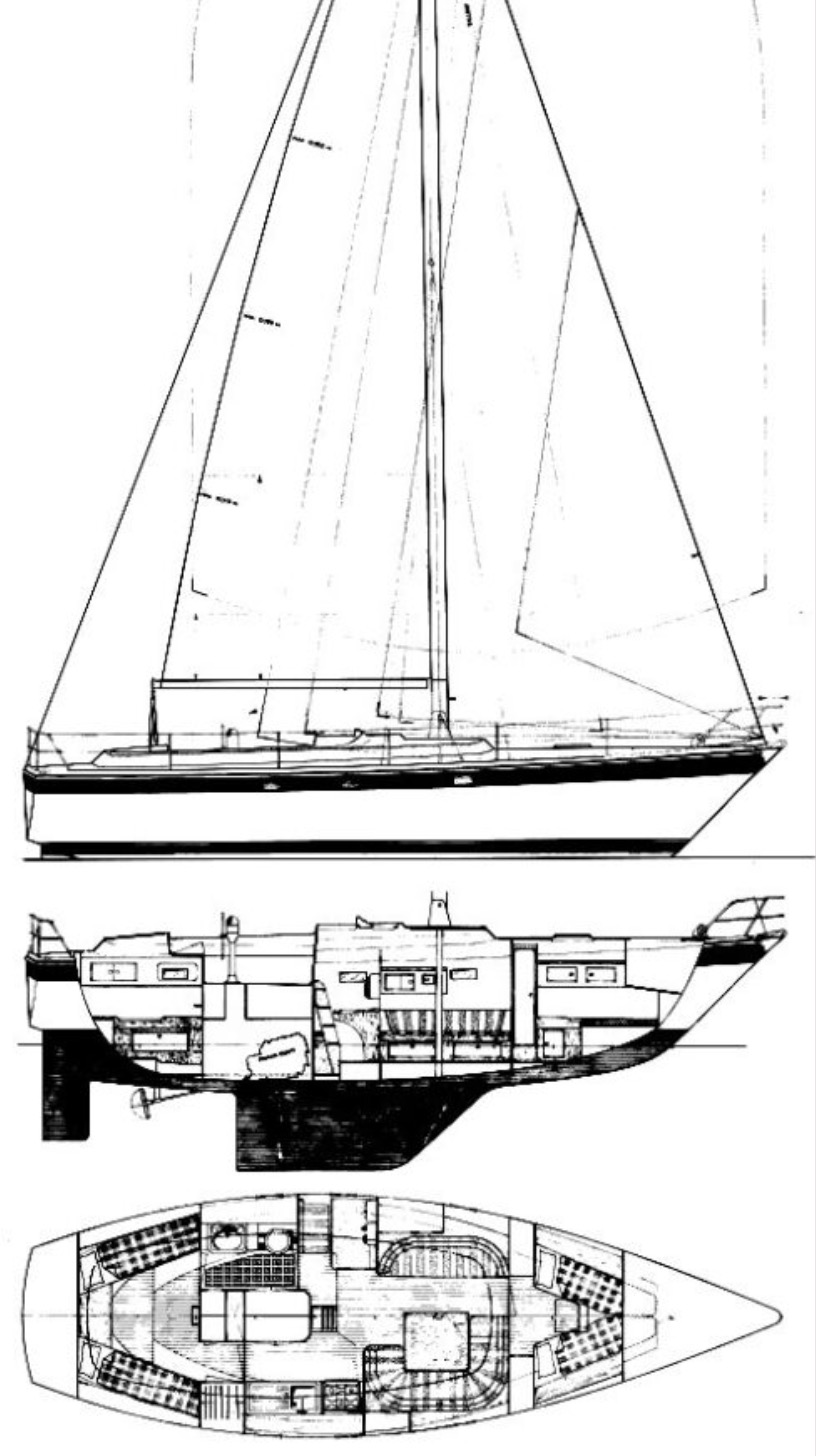
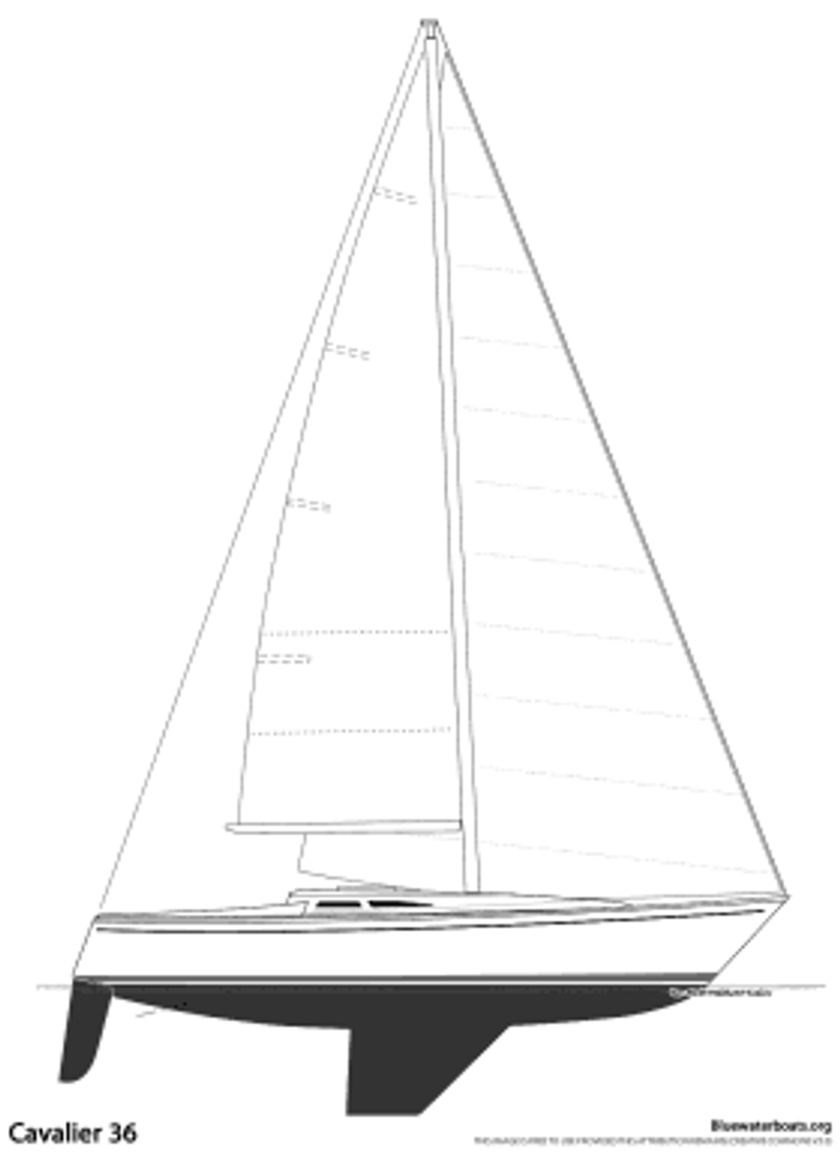
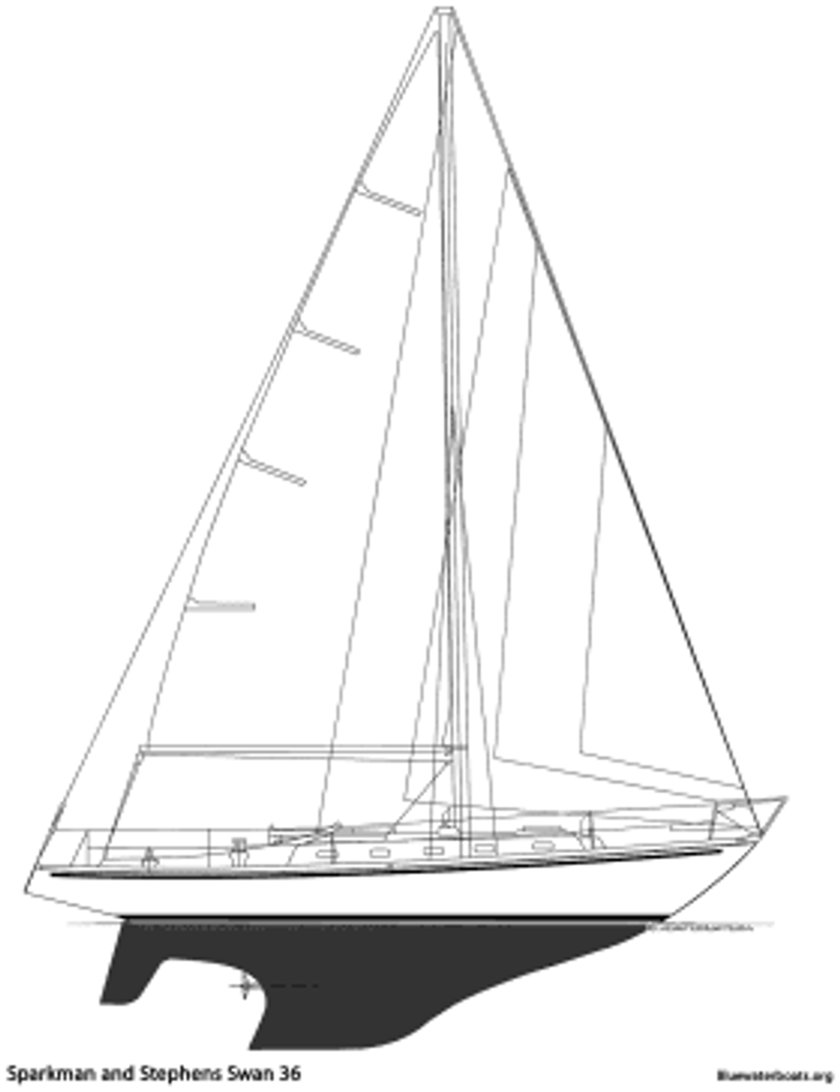
At just 9,800 lb displacement with a deep 7.25 ft fin keel and nearly 47 percent ballast ratio, this is a genuinely light, race-oriented hull, reflected in a high sail-area-to-displacement ratio and correspondingly low comfort ratio compared to the cruising designs that make up most of this catalog. Construction quality is well regarded independently, not just by the builder: Alsberg combined hand-layup with vacuum-bagging, balsa coring, and vinylester resin to resist blistering, built to ABS and Lloyd’s standards, and inspected examples show no structural failures with gelcoat and nonskid holding up well over time. Sixty-five were built between 1984 and 1988; a later Mk II variant (about 10 boats, after hull #58) softened the interior toward cruising use.
Under Sail
This is a genuinely fast boat: testing found it carrying a 140 percent genoa through 2-to-3-foot swells in 12-17 knot winds without excessive heel, and holding 9-10 knots downwind, sailing to its PHRF rating in most conditions. The design’s real offshore credentials come from racing, not cruising: the 1985 TransPac sweep is the headline result, and the boats have proven genuinely tough in practice, with one surviving a whale strike with only a bent keel and another an Alcatraz grounding with minimal damage beyond the keel.
Buyers Notes
On hulls numbered before 20, confirm whether the mast-step bulkhead has been retrofitted with fiberglass tabbing; the original 5200-only bond is known to flex over time. Check the mast at deck level for cracking around any hydraulic hose penetration, a known issue on boats fitted with hydraulic backstay or vang systems. Confirm which keel a specific hull has, since a shallower option exists alongside the standard 7.25 ft fin, and whether it’s an earlier racing-focused interior or the later Mk II’s more cruising-oriented layout.