Overview
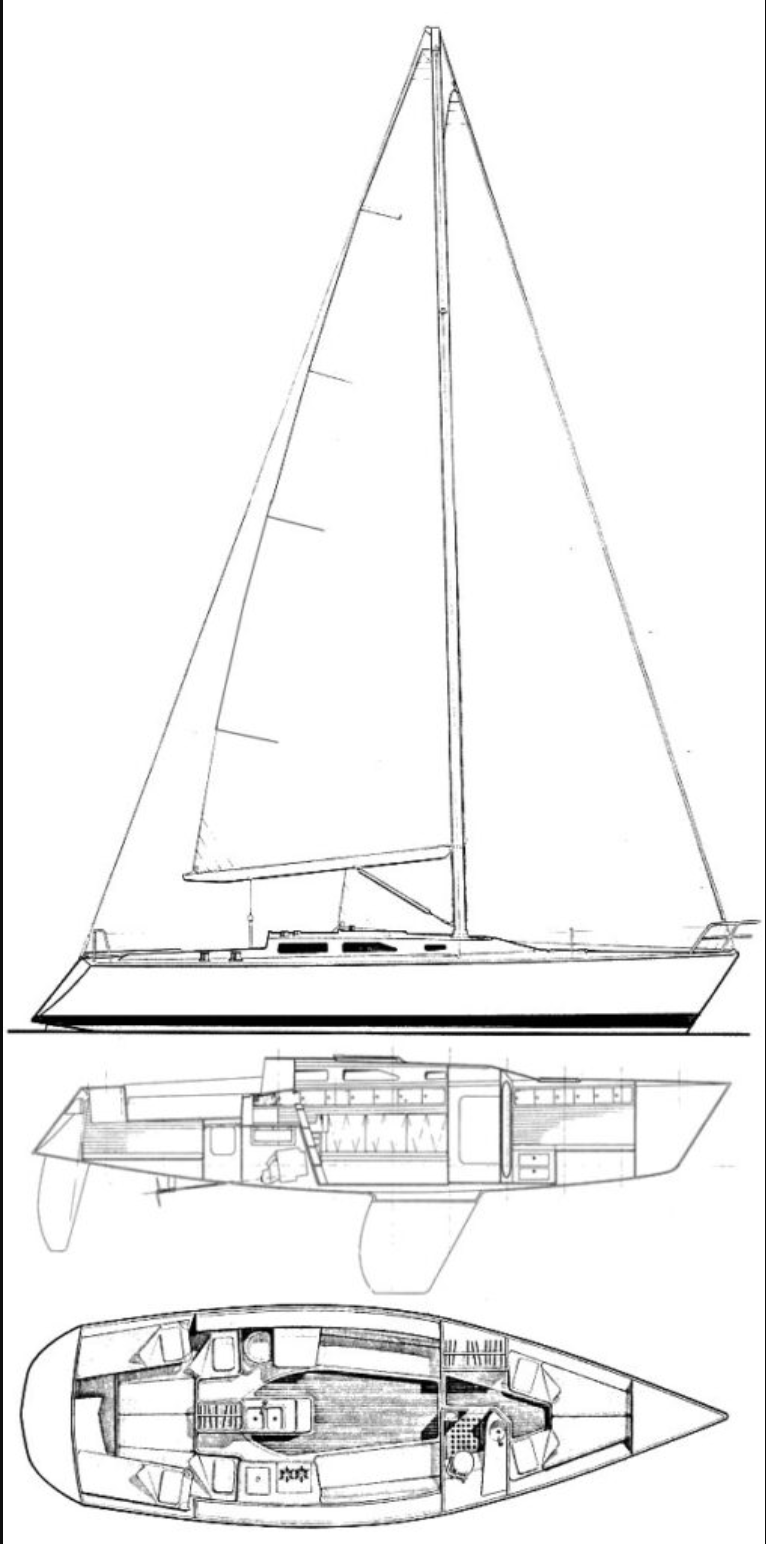
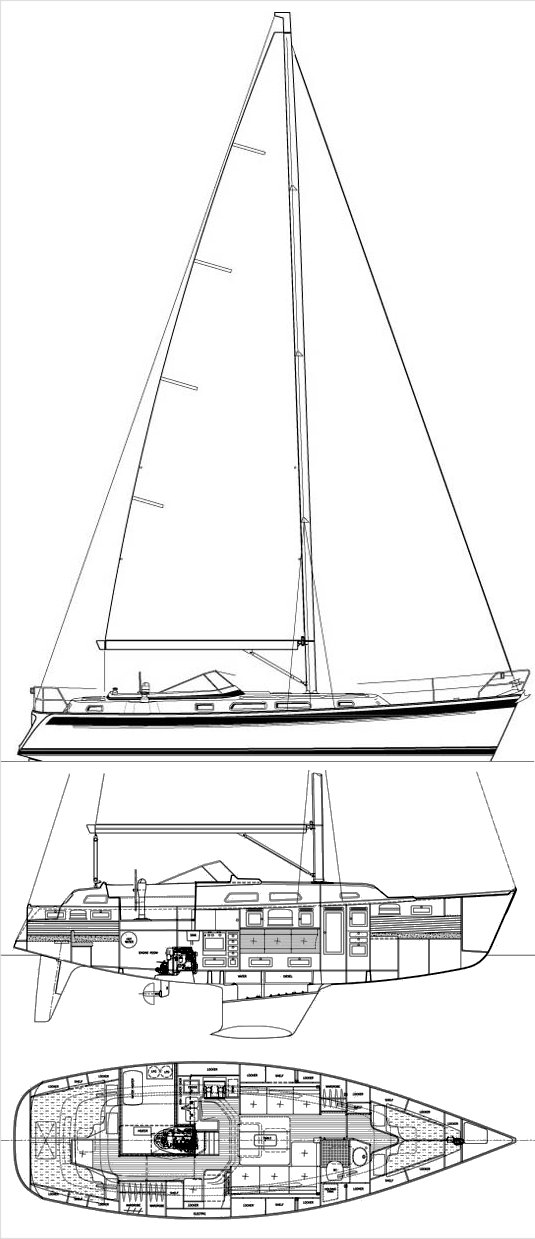
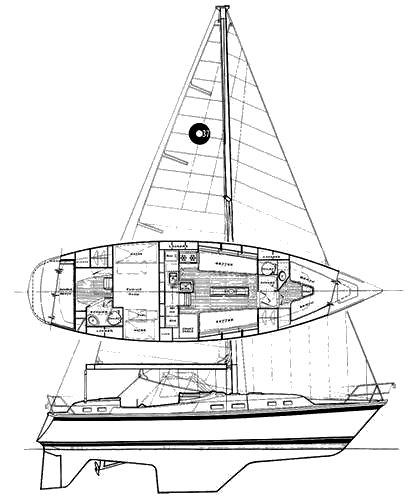
The O’Day 37, introduced in 1977, was designed by C. Raymond Hunt Associates (John Deknatel leading the project) for O’Day Corporation, one of the larger American production builders of its era. A subtle sheer from raked stem to reverse transom, highlighted by a wide cove stripe, gives the boat a distinctive profile.
Design and Construction
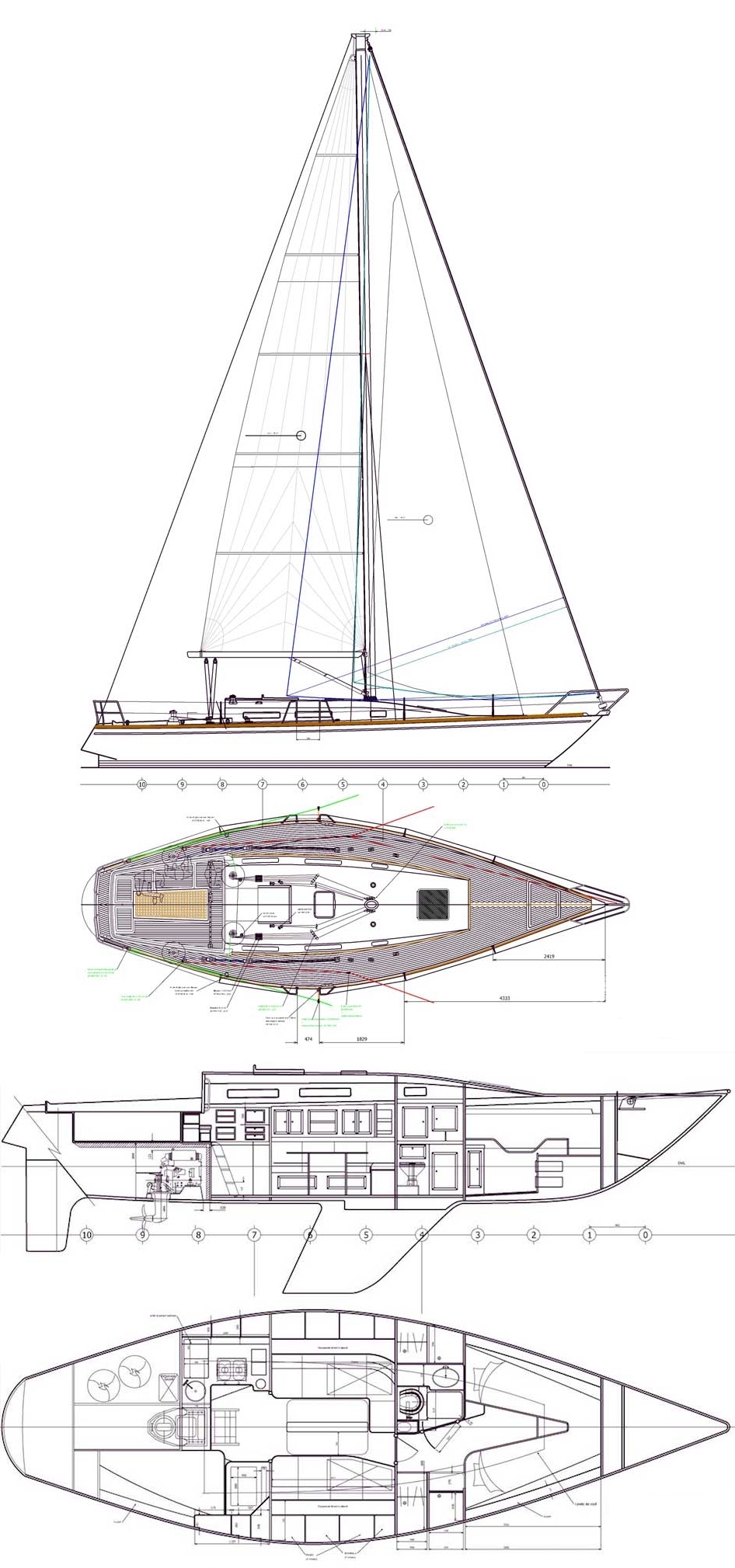
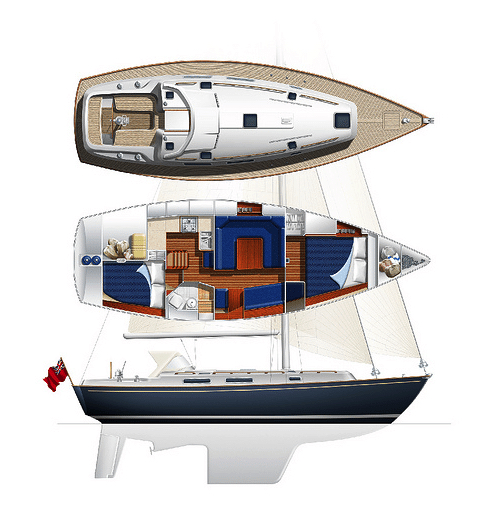
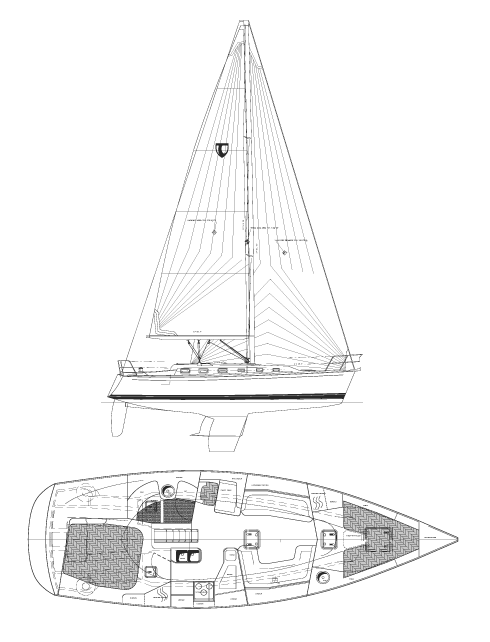
At 14,000 lb displacement with a 43 percent ballast ratio, the boat carries a swept-back fin keel with the rudder mounted on a full-length skeg for protection, a masthead sloop rig, and a solid hand-laminated fiberglass hull with a balsa-cored deck. Sailboatdata.com notes some hulls were built with iron rather than lead ballast, and that many boats were originally sold into charter fleets and sailing schools rather than to private owners, worth factoring into an assessment of any specific used hull’s condition and history. The design was also built and sold in Brazil under the name Trinidad 37. The skeg-hung rudder is a sandwich of high-density foam within a fiberglass shell. The keel-stepped mast is held by three sets of shrouds (uppers and double lowers) and a single backstay.
Under Sail
The owner whose boat Good Old Boat sailed finds her best on a beam reach, says she starts to show her stuff at about 10 knots, and begins reefing as the wind nears 20 knots. The review puts her sail area/displacement ratio at 16.4 and her displacement/length ratio at 224, a coastal cruiser by design that has nevertheless made offshore passages.
Buyers Notes
Given the design’s history in charter and sailing-school fleets, confirming a specific hull’s use history and maintenance record matters more than usual. Buyers should also ask directly whether a given hull has lead or iron ballast, since sailboatdata.com documents both as having been used across the production run. The fiberglass water tanks sit under the cockpit seat lockers, with the aluminum fuel tank inboard of the starboard water tank. There is no bridge deck aft, so the helmsman has no dedicated seat behind the wheel and the aft companionway is unprotected, though visibility from the helm is excellent.