Overview
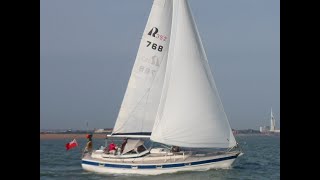
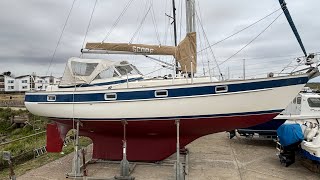
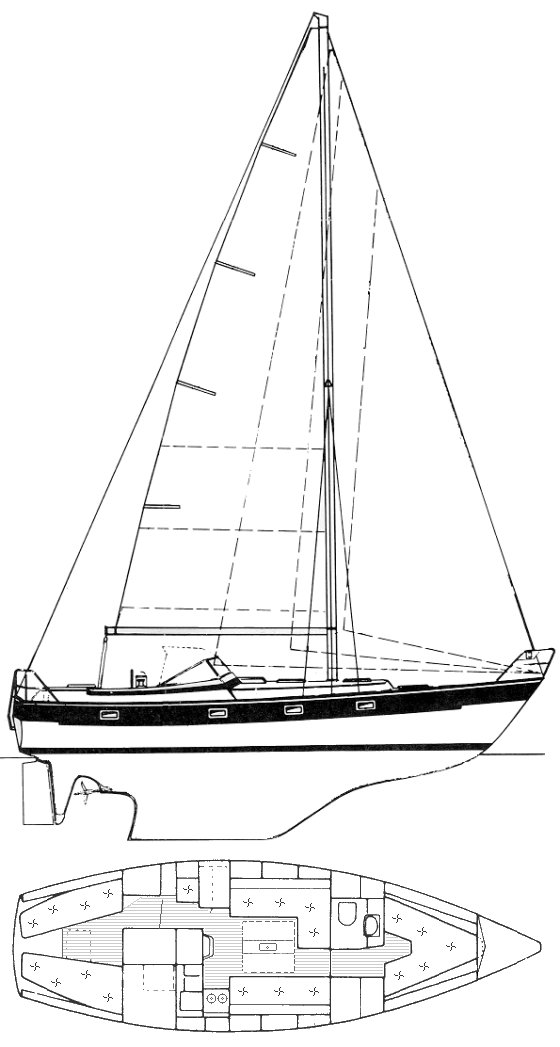
The Hallberg-Rassy 352 is a center-cockpit sloop built in Sweden from 1978 to 1991, designed by Olle Enderlein with Christoph Rassy. With 802 built it is one of the most numerous Hallberg-Rassys, and Yachting Monthly calls it a dogged mile-muncher rather than a racer.
Design and Construction
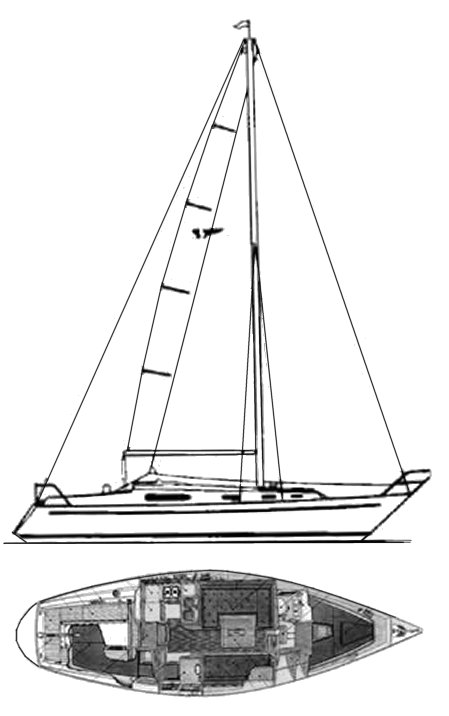
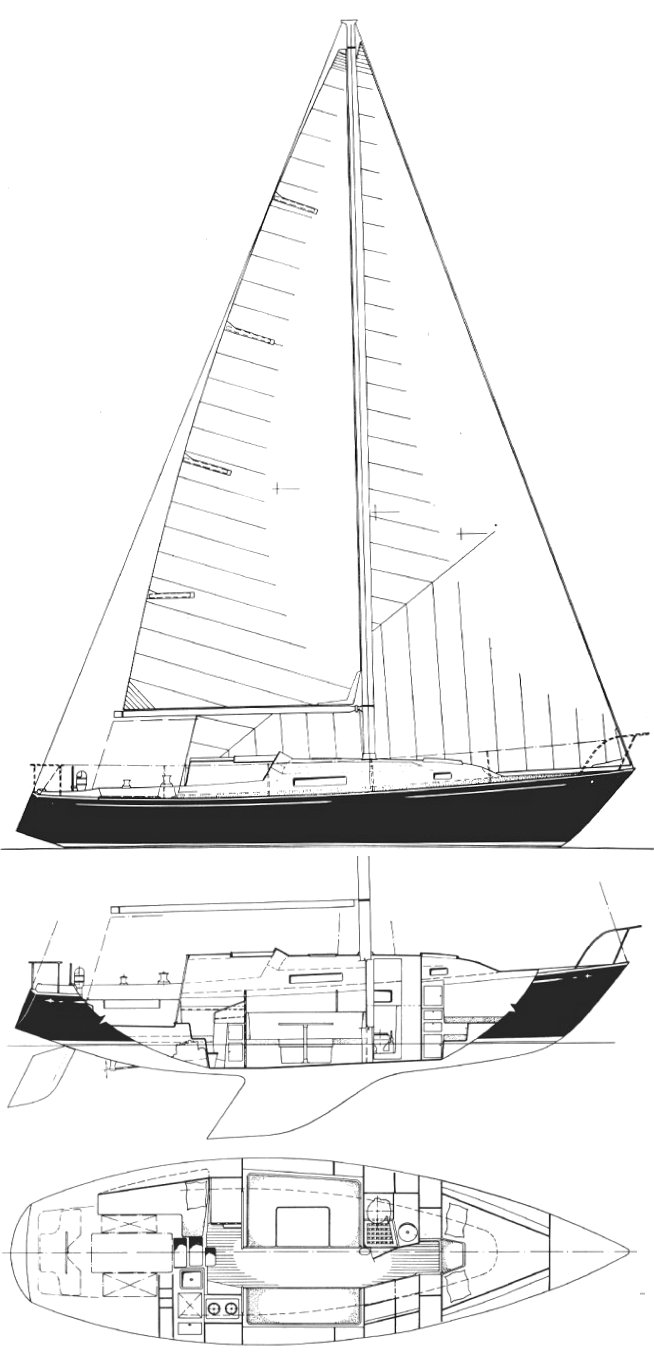
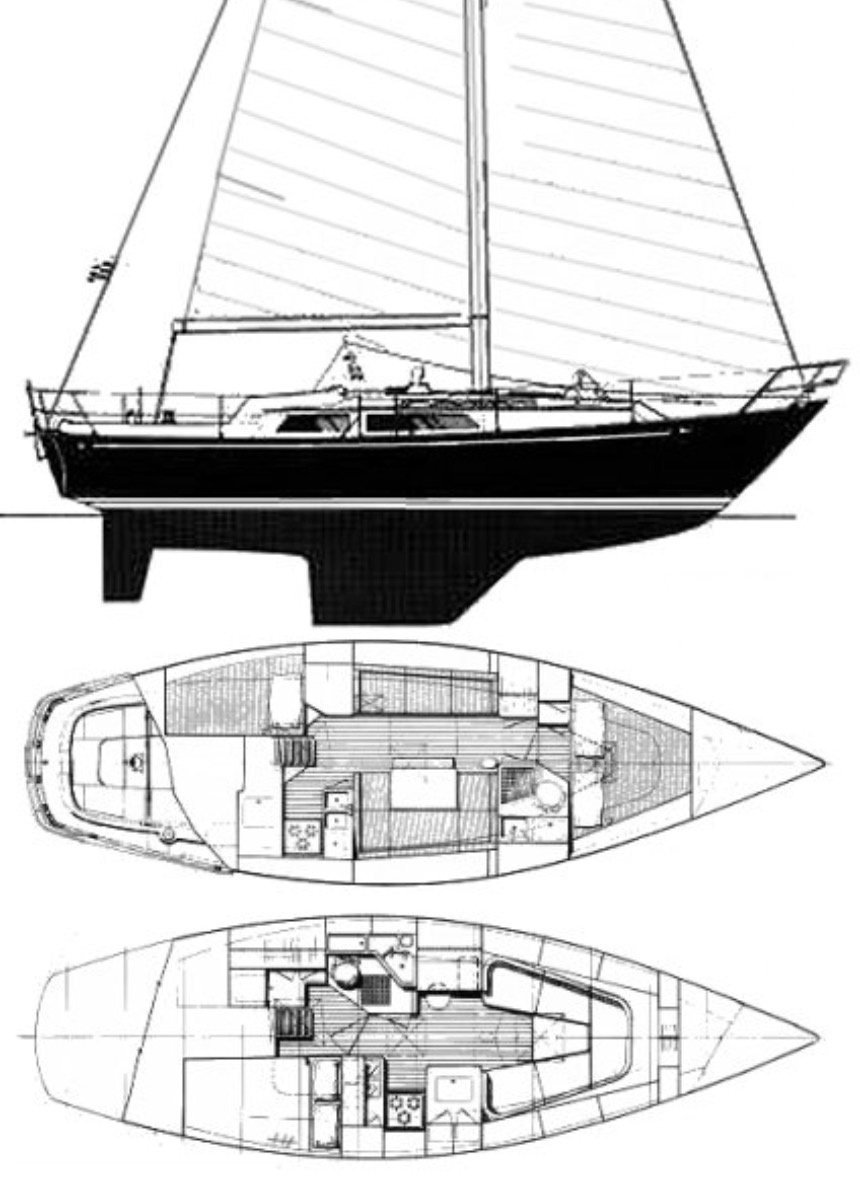
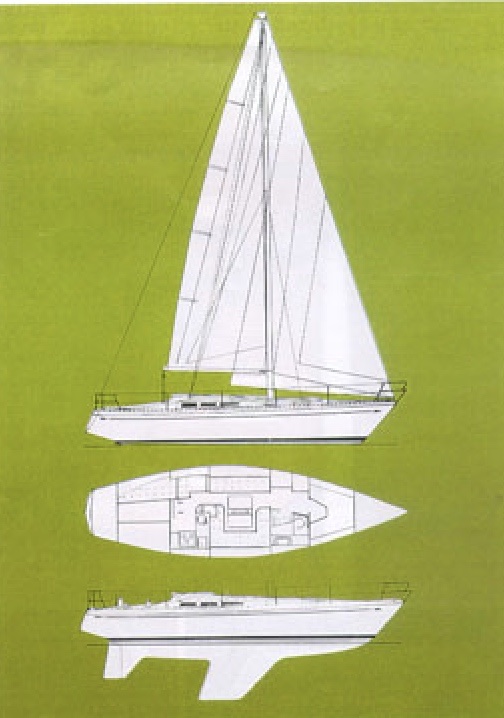
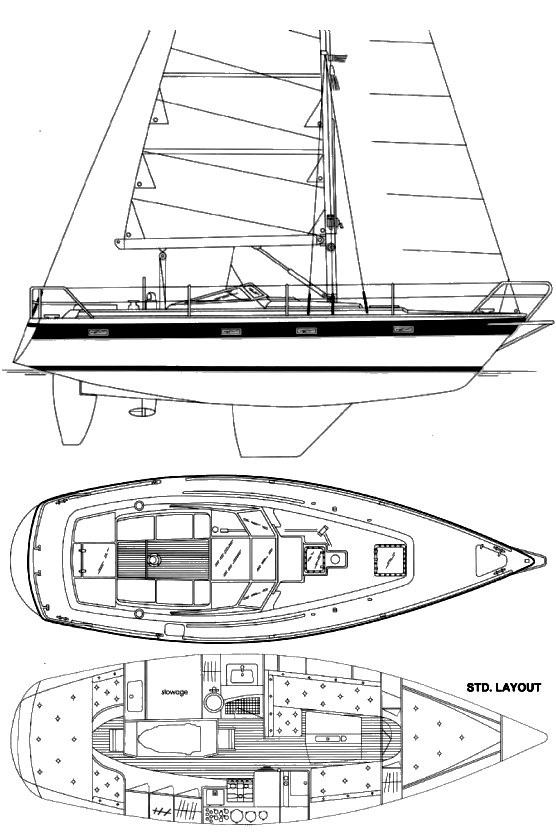
The keel is a long, encapsulated fin holding three tons of cast iron, with a forward cutaway to help it tack, and a full-depth skeg supports a large rudder. The hull was hand laid with generous fiber and resin and stiffened with glassed-in longitudinal stringers. The 352 was one of the first boats of its size with a corridor to a large aft cabin, so the aft cabin is reached without going through the cockpit. Yachting Monthly’s Duncan Kent says the bulkheads and much of the furniture are bonded to the hull and deckhead to stiffen the structure. Power was a 30 hp freshwater-cooled three-cylinder Volvo diesel, the MD21B or, after 1985, the 2003T. Later boats had better galleys, more headroom, louvred locker doors and bigger hatches and skylights, and also offered in-mast reefing and cutter rig options. A few were built with a hardtop and a deeper cockpit, which gave up the corridor so the aft cabin is reached from the cockpit only.
Under Sail
Yachting Monthly describes the performance as steady, undramatic and thoroughly sea-kindly. Early boats with the shorter mast are slower. The big rudder makes close-quarters maneuvering awkward. Kent says the full but not long keel gives little leeway and superb directional stability, and that the deeply vee’d forefoot prevents slamming and gives a gentle rocking motion when beating. He found visibility under the large genoa nil from the center cockpit, so many owners carry a high-cut Solent jib for busy waters. A taller mast with twin spreaders was optional for more sail power, at the cost of reefing earlier. She is easy to single-hand, with the primary sail controls within reach of the wheel and reefing done at the mast.
Buyers Notes
Early boats have poor headroom, especially in the aft corridor; the deck was raised twice during production, so later boats are better. Check the teak decks (see Known Issues).
Kent describes a U-shaped galley to starboard that lets the watch brew up without disturbing those sleeping, a proper nav station with an Admiralty-sized chart table, and long straight settees that make good sea berths. On deck the sidedecks are wide and run right around the boat, the cockpit is snug thanks to a fixed windscreen and high coamings, and the anchor chain feeds into a deep chain locker. The low coachroof makes stepping to the mast safe, but puts the handrails below knee level.