circumnavigation-provenfull-keelcutter-rig

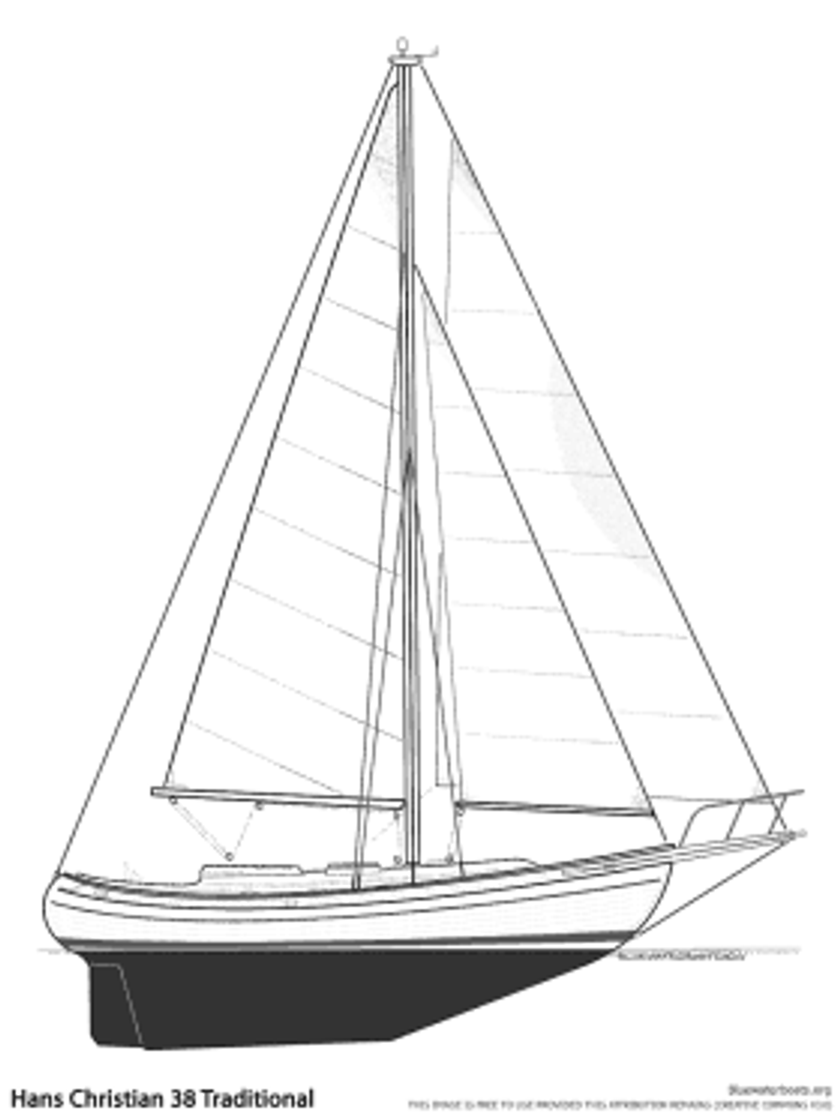
Hans Christian 38 Traditional

Shin Fa Industries, Taiwan · 1976–1989 · Ketch rig

Hans Christian 38 Traditional
LOA37.92'
Beam12.33'
Draft6'
Displ.13.3t
Rigketch
Hullfiberglass

Bluewater Evidence · Bluewater Capable

55% confidence

Practical Sailor's 1999 review recounts a US Coast Guard owner making a mid-winter passage from an ice-bound Annapolis. The claim of many circumnavigations under her belt is not backed by a named skipper or boat in current sources, so this stops short of the proven tier despite the existing tag.

Overview

Built like a tank and laden with teak, the Hans Christian 38 Traditional (sometimes known as the 38T) is a heavy displacement double-ender that oozes the classic feel of a bygone age. Like many American cruisers from 1970/80s it traces its origins back to the work of Colin Archer, who in turn inspired William Aitkin with Thistle and Eric from which rose Crealock’s famous Westsail 32, the boat that not only “launched a thousand dreams” but a boatbuilding boom eager to quench the demand for the salty Scandinavian double-ended styling.

The timing was perfect for Hans Christian Yachts which was founded in Long Beach, California by John Edwards, a school teacher described as a dreamer and an eccentric. He was one of the very first of a wave of American entrepreneurs to utilize the cheap yet skillful boatbuilding industry in Taiwan. Interestingly he was the first to approach the now famous Bob Perry to design a production yacht, the CT54. It led onto the Hans Christian 34 Traditional which set the design direction for the Hans Christian line for over two decades. However the company’s ties to Perry did not last and by 1974 Hans Christian Yachts was using Harwood Ives. The 38T introduced in 1976, became the third Hans Christian boat from Ives.

Like other siblings of that era (the 43, 36 and 33) the 38T is beautiful visually and incredibly seaworthy with many circumnavigations under her belt. They have many fans, owners love their liveaboard comfort and “cadillac ride”, yet pundits will be quick to point out their mediocre “heavy displacement” boat speed.

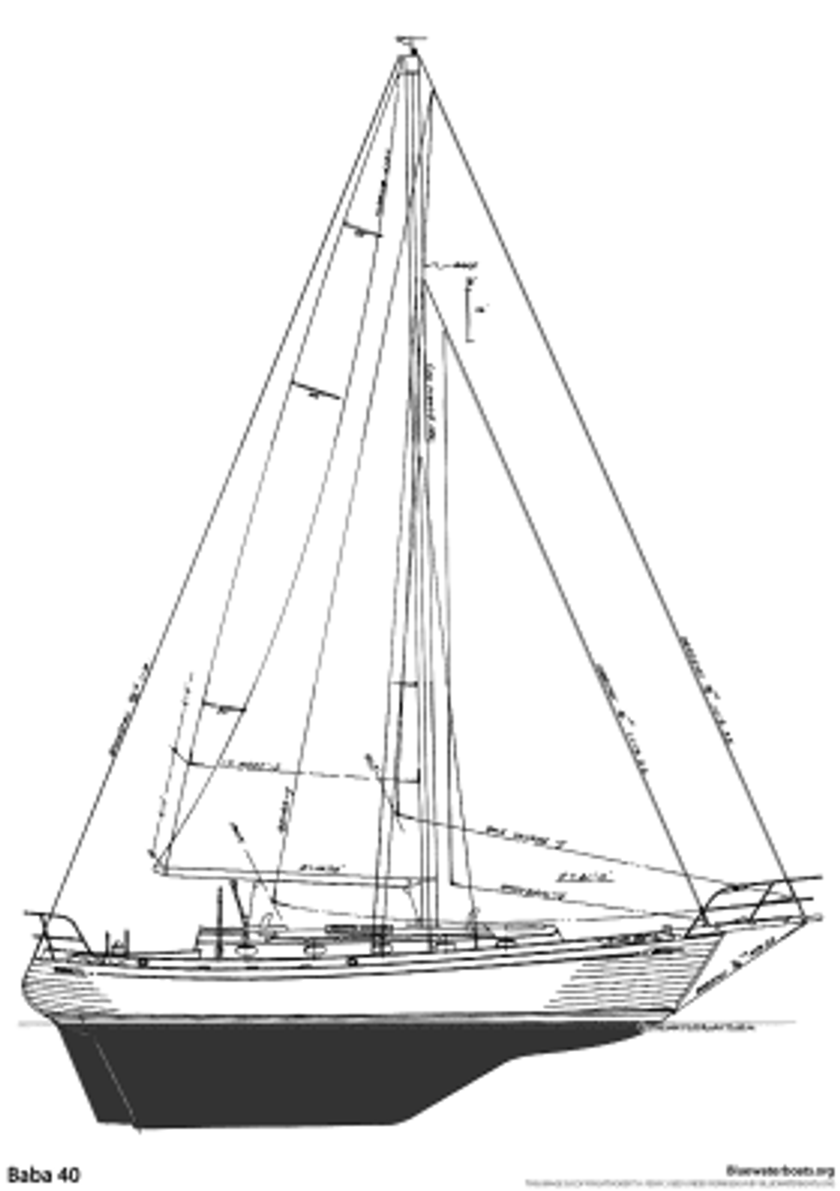
Above the waterline, the styling is classic Hans Christian; a long bowsprit, a springy sheerline, and rounded canoe stern with large dollops of teak all over. Below the waterline you’ll find a hull with very rounded sections, a full keel with a forefoot cutaway and a big “barn door” rudder.

As you can imagine, they are solid boats overbuilt to cruise in safety and comfort. Practical Sailor Magazine in their 1999 review recalled one US Coastguard who made a mid-winter passage from Annapolis while the boat was ice-bound.

Underway at over 30,000 lbs in typical cruising trim, she’s definitely no lightweight, and light air performance suffers despite carrying a generous amount of sail area. Ignoring the later variations on the boat, the standard 38T doesn’t point very high, owners comment around 40 degrees of apparent wind is about the best. With 10-15 knots she can make around 6 knots to weather and about 7 knots off the wind. The first reef is usually taken in in around 15-18 knots and as the winds pick up there is a tendency for weather helm. Of course in heavy airs and seas, the Hans Christian 38T comes into her own, she’s both seakindly and dry with no bobbing or banging around in the rough stuff.

Buyers Notes

As with most older boats some standard things to check are:

Chainplates for signs of leaks

Inspect hoses for deterioration and clamps for rust and corrosion, the original boats did not necessarily use the best grade metals

Through-hulls and seacocks should be inspected closely as some loosen with age

And of course the teak decks should be inspected if they have not already been replaced

Electrical problems are probably the weakest link in most Taiwanese built boats of the 1970-80s era. Some earlier boats used automotive grade wiring more suspectible to corrosion and wiring looms were often hard to access buried under teak battens and ceiling liners making repairs expensive.

Prospective buyers should seek model-specific advice from the Hans Christian Owners Association and compare age, condition, and refit history.

» Practical Sailor Magazine, Feb 1999, A look at the Hans Christian 38 and its history.» Hans Christian Owners Association, Images, Information and discussions.

Variations

The variations on the 38T are as mysterious as the sea itself. We shall venture into these realms with the help of Craig Beckwith, once VP of Sales for Hans Christian, he oversaw production in Taiwan. Still devoted to these boats to this present day he holds the entire encyclopedia of Hans Christian in his head.

The original 38T was optioned as a cutter or ketch, the cutter proved by far the most popular. Interior layouts came in two flavors, a pullman berth or a v-berth in the forepeak. Not long after the boat’s introduction a “MkII Interior” was offered, where the pullman berth moved further aft and the head relocated to the forepeak. On these boats the main bulkhead was moved aft to make more room for the pullman berth.

Around 1977, the 38T inspired an all new boat, somewhat confusingly named the Hans Christian 38 MkII. This sibling, also designed by Ives, had flatter bottom sections with beam carried further forward and aft, a taller rig with more sail and an interior layout similar to the 38T “MkII Interior”, except the galley sink was placed on an island bench. You can quickly identify these by looking for a truncated teak coaming at the very stern of the boat (unique to only the MkII and the Hans Christian 33 Traditional). Hauling out, you’ll also see the placement of the rudder is further aft. The taller “MkII rig” from this boat was offered as an option on the 38T, but really the rig was overpowered for the 38T, that is until the next chapter, when the Telstar Keel was introduced.

In 1984 one of the two 38T production molds went in for surgery in search for better performance. The keel’s leading edge was moved aft, a large bite was taken from the trailing edge, and was complemented with a redesigned skeg-mounted rudder. The revised boat was dubbed the “Telstar” Hans Christian 38 Traditional. Beckwith tells us, the Telstar Keel was a considerable improvement, it pointed higher and particularly improved light wind performance.

The Telstar 38T came with the taller “MkII rig” as standard equipment. However the “MkII interior” was no longer an option for the Telstar 38T as the new position of the compression post (12 inches further forward) obstructed the would-be berth entrance. This was also true of the handful of 38T boats optioned with this “MkII rig”.

In all Beckwith estimates 167 Hans Christian 38 Traditionals were built, this includes 30 Telstars, in a production run that outnumbered Hans Christian 38 MkII (87 built). Both boats ceased production at the same time around 1989 when a recession and a luxury tax hit the boat industry with both barrels. By then the builder, Shin Fa Industries, was on the way out of business and Hans Christian Yachts was in the process of migrating their operations to Thailand. The last boat built was a Telstar 38T sold by Beckwith in the San Diego boat show in 1989 and the molds were destroyed shortly thereafter.

Credits

For assistance in the research of this article, thanks goes to Craig Beckwith who joined Hans Christian Yachts in 1979, was involved with overseeing construction in Taiwan, and served as VP of Sales. Permission to publish Hans Christian line drawings and images kindly granted by Francis Mertens.

What sailing channels say about the Hans Christian 38 Traditional, quoted from video transcripts with a link to the exact moment. Opinions belong to the speakers; the written review above stays independent of them.

warns⚙ standing rigging⚙ plumbing⚙ steering

On surveying a Hans Christian 38T: "They usually have two lowers where most boats just have one, two mids where most boats just have one - you need to check to make sure all of that is good. Where the worm gear steering attaches to the quadrant, you should look at that, get your head inside that steering gear. A lot of those boats are going to be older, so make sure the fridge has been replaced, make sure the plumbing has been replaced. The plumbing they used to use in those boats was crap - reinforced nylon hose and hose clamps that invariably get rusty and break off."

See something wrong? Suggest a correction

Corrections need evidence: a link or citation we can check. Sourced suggestions get reviewed and credited in the entry's change notes if applied.

Owner knowledge counts: name the boat and year so we can attribute it.