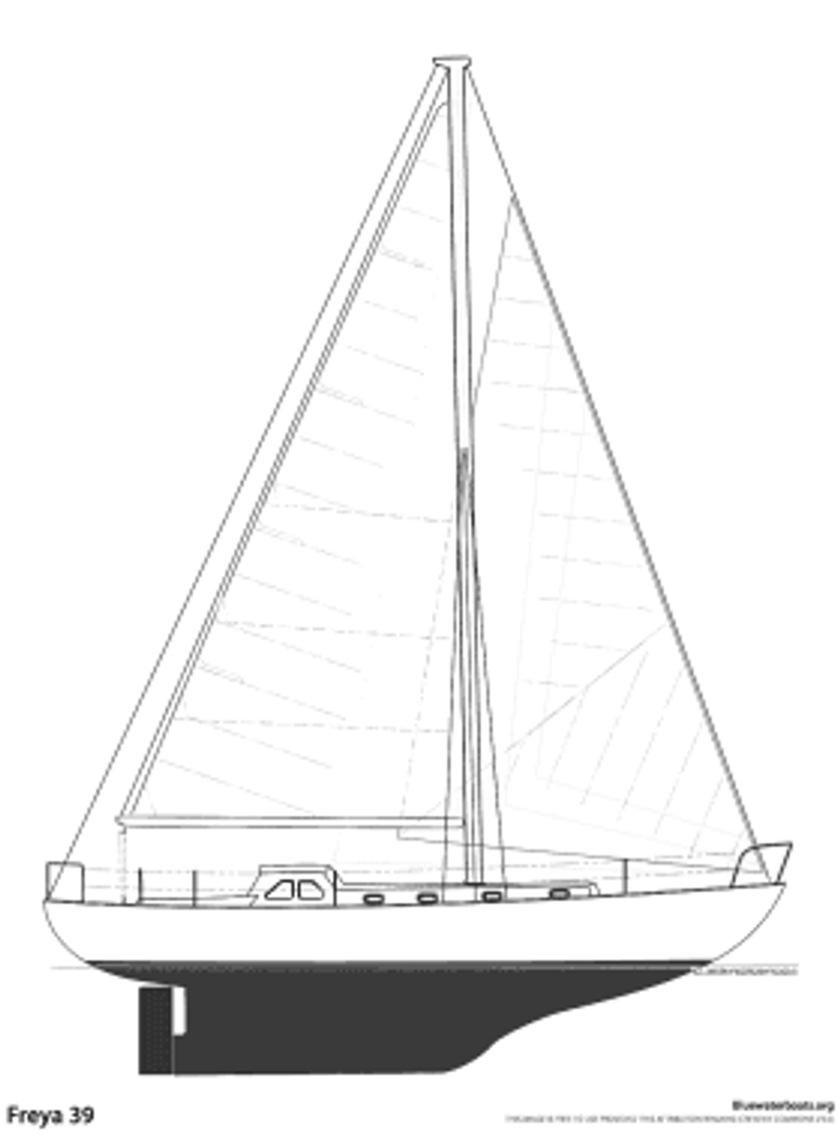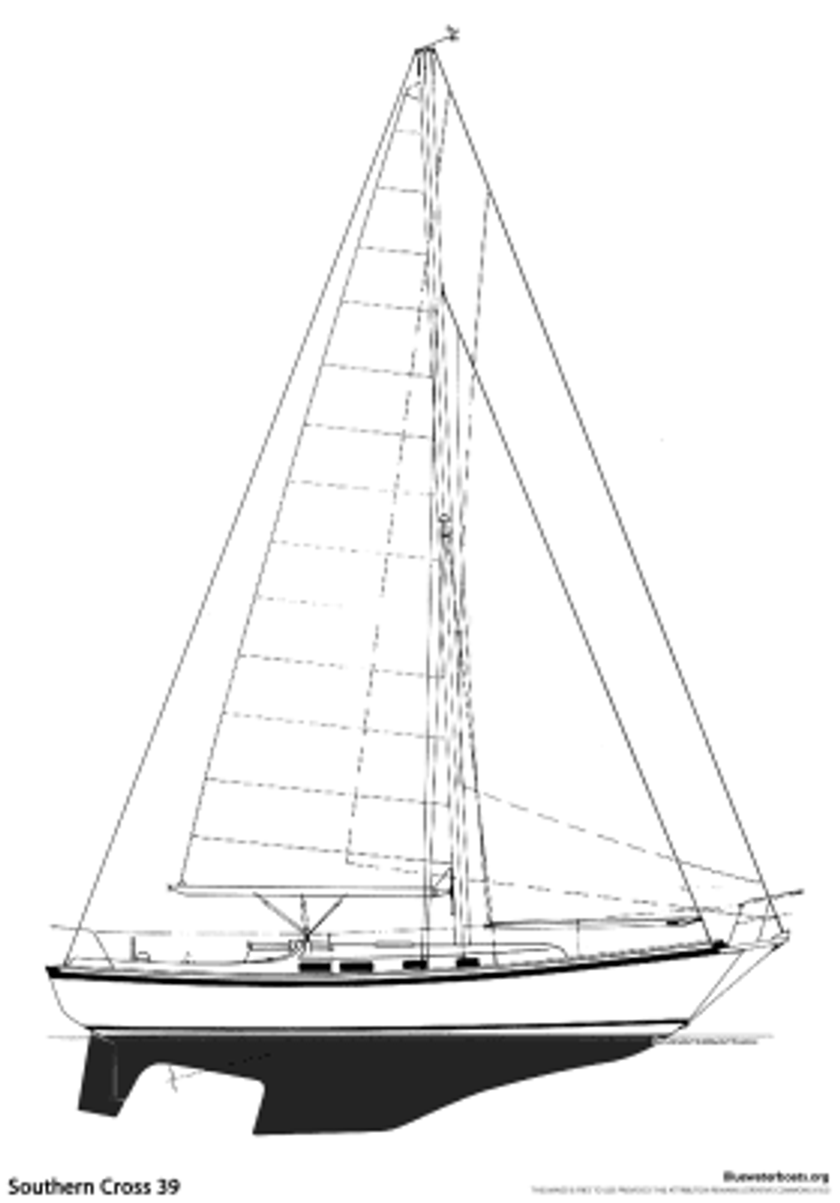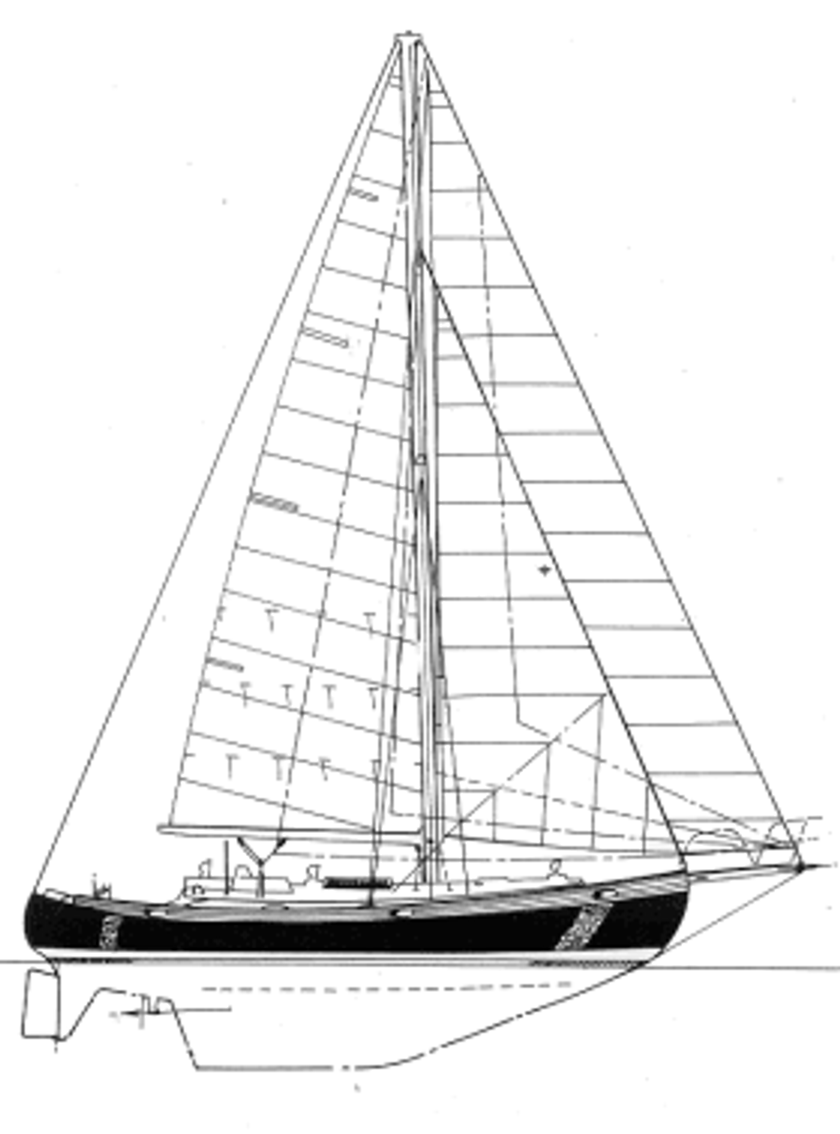
Overview
Scott Sprague designed the Hans Christian 41 in the mid-1980s with input from company founder John Edwards. The boat retained the marque’s canoe stern, bowsprit, high bulwarks, and extensive joinery while using a separated fin and skeg underbody. SailboatData records 55 boats beginning in 1985.
The former catalog record used 51 feet as hull length and called the boat a sloop. The 51-foot figure includes the long bowsprit and other projections. The published hull length is about 40.8 feet, and the standard rig is a cutter. Both corrections materially improve comparisons with other boats.
Dimensions and Underbody
SailboatData lists a 40.81-foot hull, 36.84-foot waterline, 13.25-foot beam, and 6.17-foot draft. Displacement is 35,501 pounds with 12,000 pounds of ballast and about 1,150 square feet of reported sail area. The long waterline carries more of the nominal length into the water than earlier double-ended cruisers.
The underbody is cataloged as a fin keel with a rudder on a separate skeg. Period accounts call it a split-keel arrangement and compare it with Hans Christian’s Telstar development. Those labels can obscure the practical survey questions. Inspect the keel and ballast installation, skeg structure, rudder bearings, shaft, and steering as distinct load-bearing systems.
Production and Variations
The build history moved among yards and countries. SailboatData names Anderson Yachts in Taiwan and notes later Traditional 41 production by Pantawee Marine in Thailand. The archived account also names South Coast Ship Building for early boats and describes further yard changes after the company relocated. The builder line includes the principal reported yards instead of presenting one as universal.
The 2017 endpoint in the old record was the date Pantawee discontinued the broader Traditional range, not a documented last hull for this model. It has been removed from the class dates. Production year, yard, layout, and construction details should be established from the individual hull number.
Interior and Cruising Use
The 41 was semi-custom. Period material names Molokai, Harmony, Atlantic, and Pacific layouts, plus a workshop variation. The Molokai arrangement generally used two heads and double berths forward and aft. Other boats exchanged berths, work areas, lockers, and navigation space.
Heavy joinery, large tanks, ground tackle, batteries, and cruising stores can push actual displacement well above the published figure. The long waterline helps carry the load, but weight distribution still affects helm, pitching, and light-air performance. A boat advertised at 40,000 pounds in cruising trim is not necessarily inconsistent with the lighter class figure.
Under Sail and Evidence Limits
The cutter divides the foretriangle into manageable sails and gives several heavy-weather combinations. The moderate fin and skeg should offer better turning and windward work than a continuous full keel, while retaining protection for the rudder. Heavy displacement and windage will still make light-air sailing and close-quarters handling deliberate.
No named ocean crossing or circumnavigation is attached to this model in the current record. Reputation from other Hans Christian designs does not document a 41 voyage. The capable rating reflects the design and cruising arrangement with limited evidence confidence.
What to Inspect
Confirm the actual yard, year, rig, layout, and hull length before applying class assumptions. Inspect deck core around teak fasteners and fittings, chainplates, mast support, bowsprit and bobstay attachments, tanks, bulkhead bonds, keel and skeg structure, rudder bearings, steering, and every inaccessible section of wiring and plumbing. Interior finish can make neglected structural access easy to overlook. Survey the load paths first and cabinetry second.