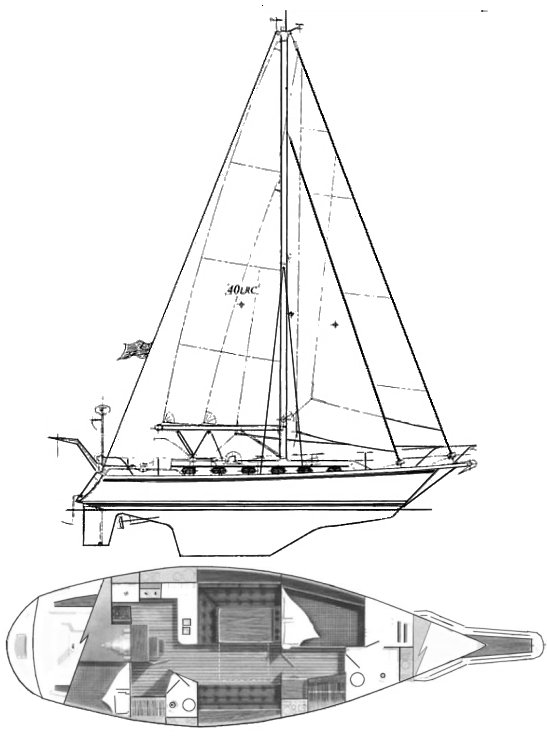
Overview
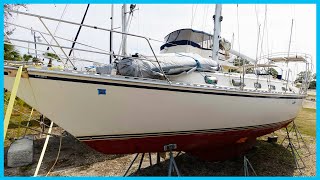
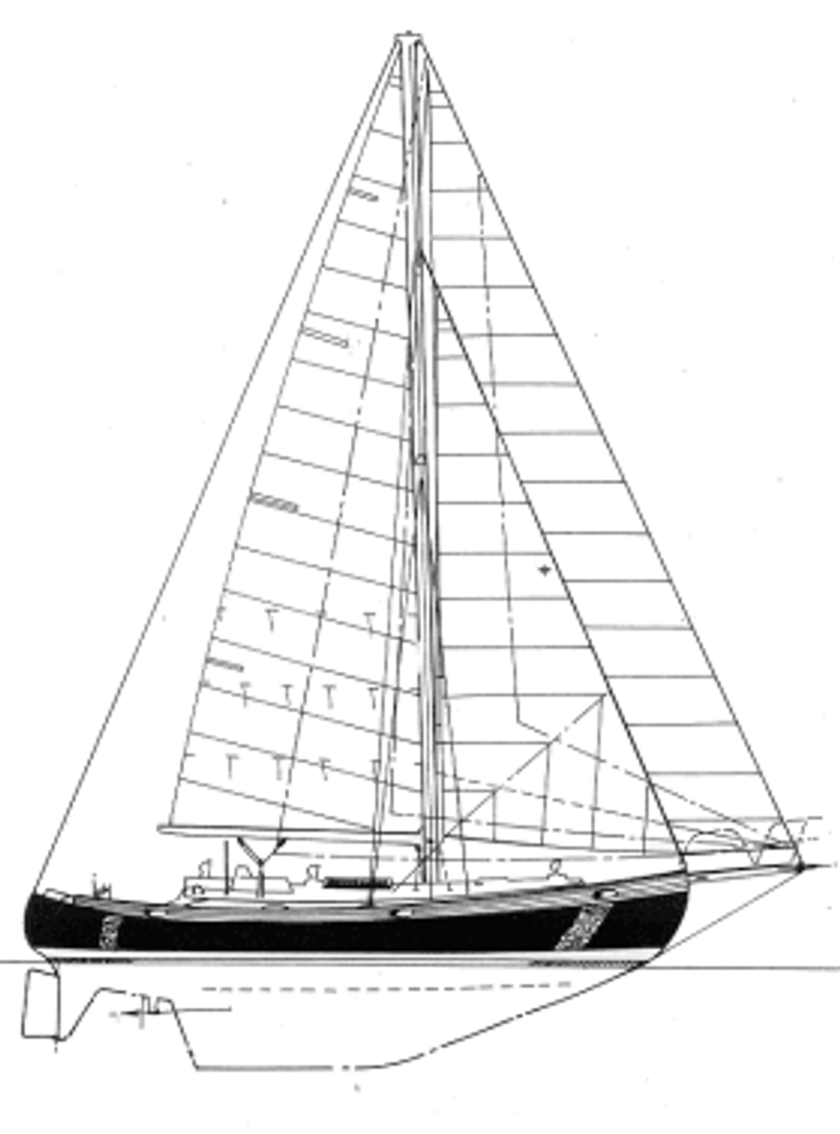
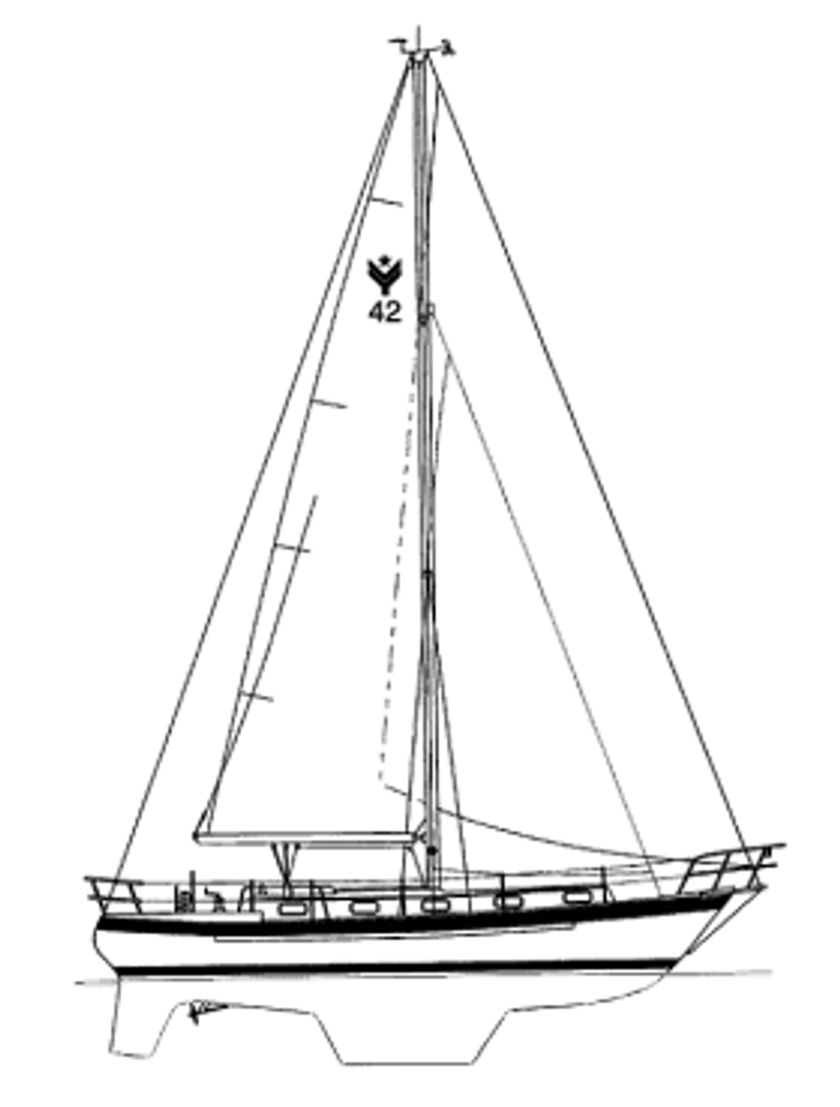
The Caliber 40 LRC is a Michael McCreary cutter built by Caliber Yachts in Florida from the mid-1990s. LRC stands for long-range cruiser: the main change from the earlier Caliber 40 is much larger fuel and water tankage. Practical Sailor notes it is most often compared to an Island Packet. Caliber’s Long Range Cruising line began in 1994, and the company stopped building boats in 2010.
Design and Construction
The underbody is a long cruising fin, close to a full keel with a cutaway forefoot, with a skeg-mounted rudder for protection and tracking. The hull is solid glass with a molded grid that incorporates the fuel and water tanks, and the deck is cored with plywood, which McCreary preferred for mounting hardware. Ballast is 9,500 lb on a 21,600 lb displacement. Practical Sailor gives the displacement/length ratio as 281, against 256 for a Valiant 40, and reports the designer’s figure for the limit of positive stability as 138 degrees. The deck and hull flanges are bonded with 3M 5200 and the inside seam with copolymer tape, with an aluminum toerail over the exterior seam fastened on 6 inch centers. The rudder is a stainless steel plate welded to a 2 inch stainless stock and encapsulated in fiberglass, carried by a shoe on the skeg, a bronze stuffing box at the waterline and an upper bearing.
Under Sail
Practical Sailor’s testers could not approach the tacking angles the designer claimed; one owner measured 112 degrees. In 9 to 12 knots they made 5 to 5.5 knots, and in light air under 6 knots the boat needed its engine. One owner reports it rounds up in about 25 knots if over-canvassed, so reef early. The reviewers expect it to log fewer miles than lighter boats but to ride more comfortably in heavy seas. The test boat had the optional inner forestay for a self-tacking staysail, which Practical Sailor says lets her heave-to easily in case of a brush with weather. The mainsheet traveler is mounted on the coachroof, so a shorthanded sailor has to leave the helm to trim the main.
Buyers Notes
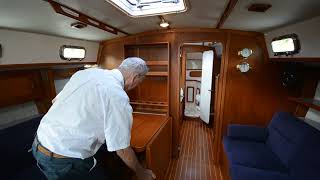
Check the holding tank and tank vents (see Known Issues). The fuel and water fills are unmarked and close together, so a fuel spill can reach the water fill. One owner found engine noise intrusive in the saloon.