Overview
The Valiant 42 carries forward Robert Perry’s Valiant 40 hull concept with a new deck, revised rig, and updated keel. SailboatData lists the first build in 1992, while Practical Sailor describes the model as introduced in 1993. That one-year difference probably reflects the distinction between the first hull and market introduction. The catalog retains 1992 as the first-build date and uses SailboatData’s 2010 final year.
Valiant built the 42 as a semi-custom cruiser. Practical Sailor found five basic accommodation plans, with owners able to alter details. That flexibility is valuable, but it also means two boats of the same year may differ in companionway position, berths, ventilation, tank access, and deck hardware.
Design and Construction
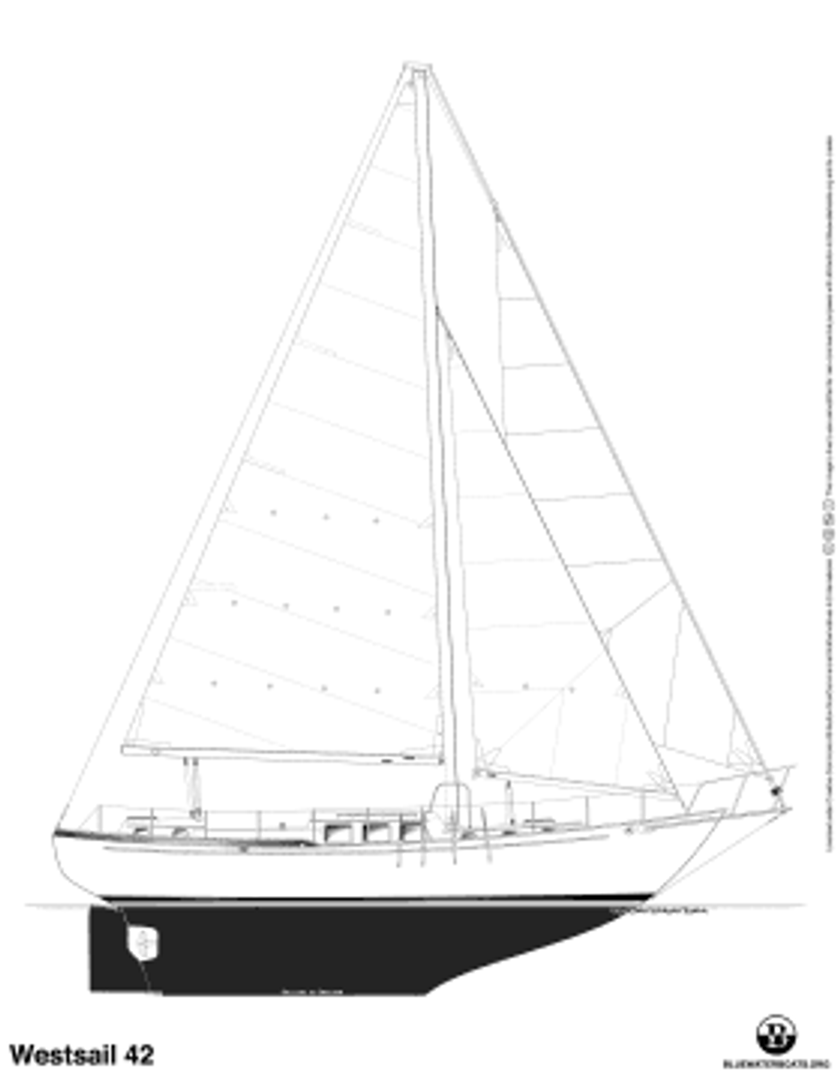
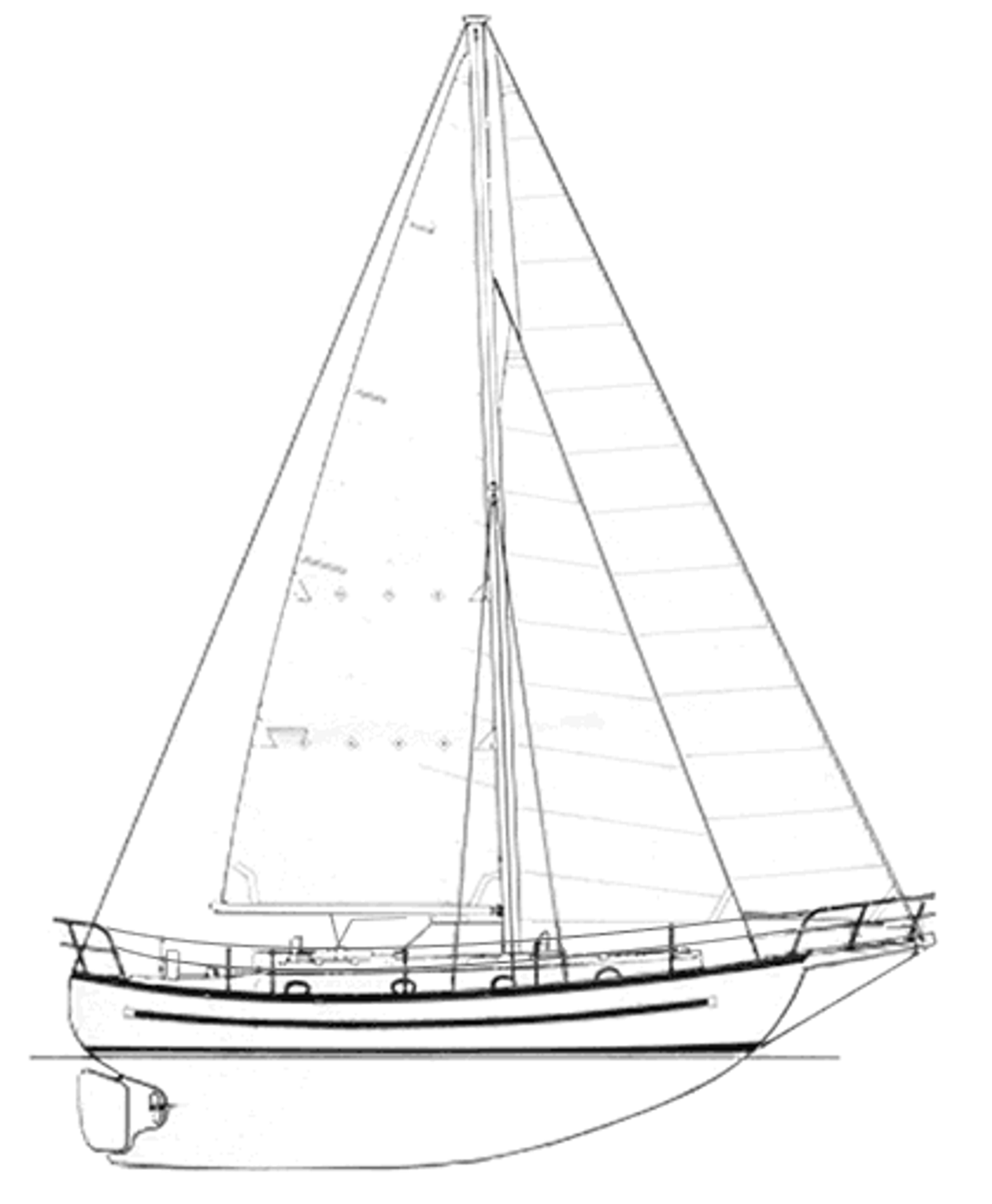
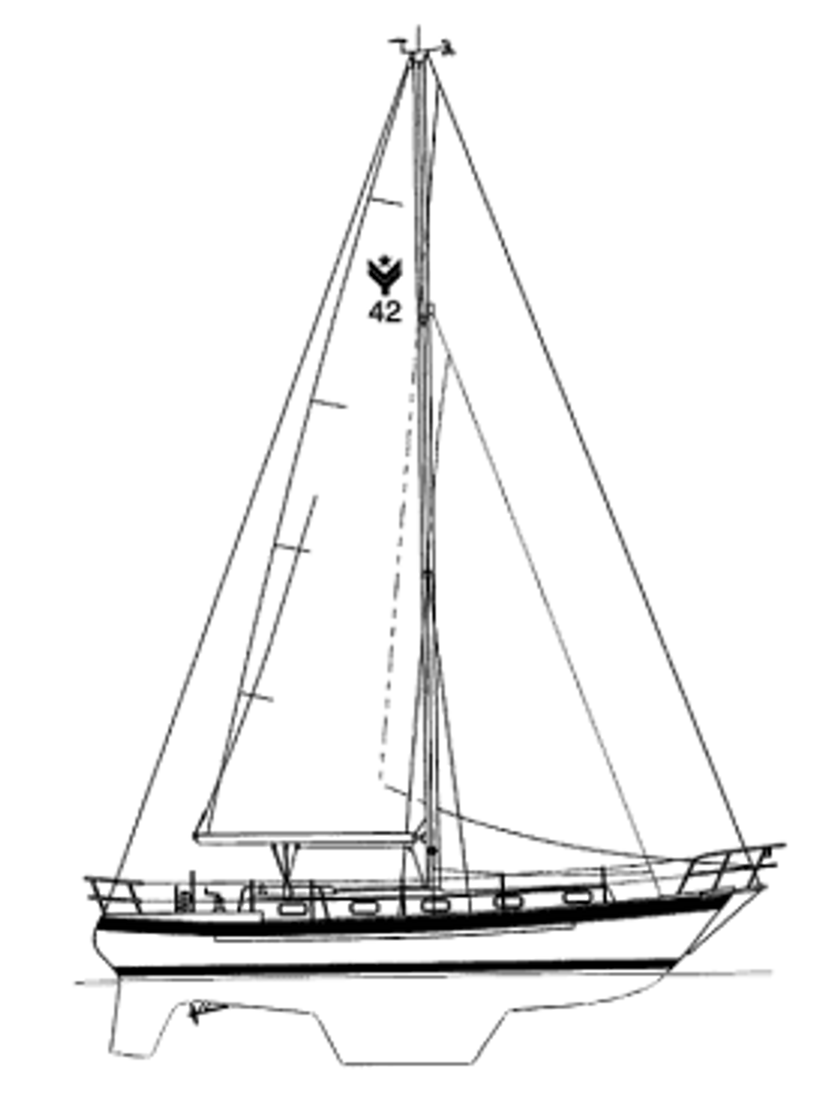
The 42 has a fine entry, a long waterline for its overall length, a fin keel, and a rudder protected by a skeg. Practical Sailor reports that the later keel section used a fuller leading edge and narrower trailing edge, with 1,800 pounds more ballast than the earlier configuration. A stainless bowsprit moved the sail plan forward, while a taller double-spreader mast added sail area.
The deck was molded without fixed hatch bosses so openings could suit the selected interior. Higher cockpit coamings surround more of the cockpit than on the Valiant 40. Practical Sailor’s test boat had tinned copper wiring, labeled electrical circuits, and a labeled plumbing manifold. Those observations apply to the inspected hull and should be checked rather than assumed on every semi-custom example.
Under Sail
At 24,600 pounds, the 42 needs time to regain speed after a tack. Practical Sailor’s trial recorded 3.9 to 4.2 knots in 7 to 8 knots of true wind. In 12 knots the boat made 5.2 knots close-hauled, and in 14 knots it reached 6 knots upwind. The helm was reported as light once the boat was moving. Under power, the test boat made 6.6 knots at 2,500 rpm and turned within about one boat length.
The published rig is a cutter, not the sloop previously recorded in this catalog. SailboatData also lists a 5-foot 6-inch shoal-draft option alongside the standard 6-foot keel. Buyers should identify the keel and rig actually fitted before comparing performance or clearance.
Passage Record
The Pacific Cup Yacht Club’s aggregate census records two Valiant 42 finishes from San Francisco to Kaneohe, one in 2004 and another in 2008; the race’s own official results archive names both as the same hull, Acacia, sailed by Robert Hinden.
The well-known blister failures associated with some 1977–1981 Valiant 40 hulls should not be transferred automatically to the later Texas-built 42. Practical Sailor says the resin problem was addressed after production moved to Texas in the 1980s. A survey still needs to inspect the actual laminate and repair history.
Accommodation
Practical Sailor’s center-entry test boat had 6 feet 5 inches of headroom, a forward queen berth, opposing saloon settees, and a U-shaped galley to port. A forward-facing navigation station and a wet locker sat near the companionway. The aft berth was close to the cockpit and suitable for an off-watch crewmember.
Published tankage is 100 gallons of fuel and 120 gallons of water. Long-range capacity is helpful only when tanks, fills, vents, manifolds, and inspection ports remain serviceable. Layout changes can alter access, so the generic plan is not enough for a purchase decision.
Buyers Notes
Confirm the production year, keel option, deck layout, and interior plan first. Then inspect the external keel joint and fasteners, skeg and rudder bearings, chainplates, mast support, bowsprit attachments, deck core, and hull-to-deck joint. Test every labeled circuit and valve rather than treating neat installation as proof of current condition.
The Valiant 42 has a documented, named two-time Pacific Cup finisher (Acacia) and a favorable independent sea trial. Its age, semi-custom construction, and substantial systems load make records and survey access central to choosing a particular hull.