What sailing channels say about the Pearson 424, quoted from video transcripts with a link to the exact moment. Opinions belong to the speakers; the written review above stays independent of them.
discusses
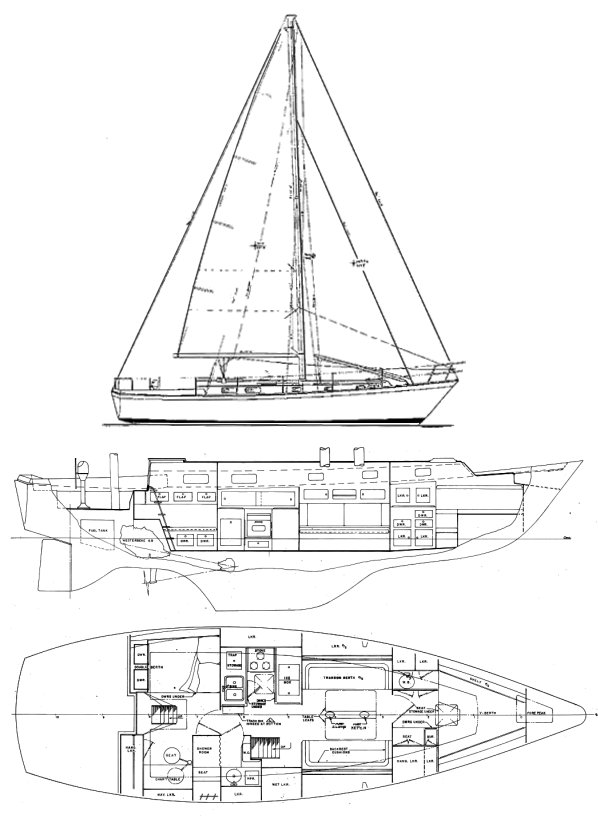
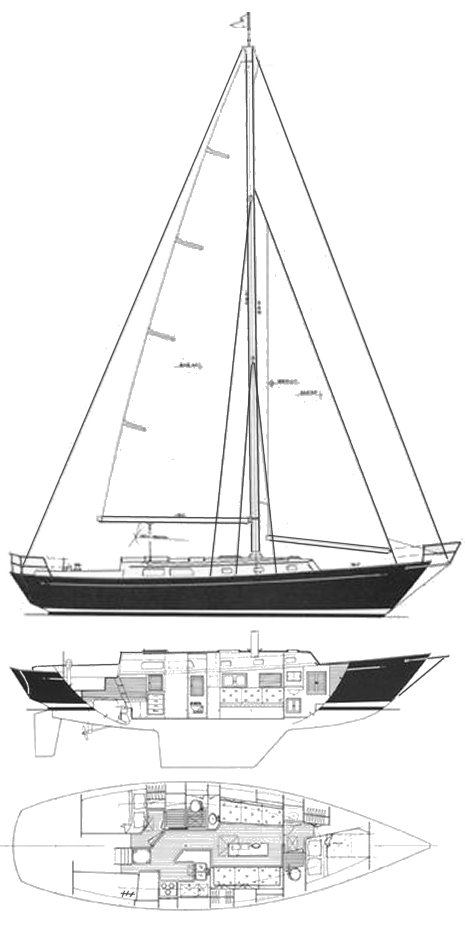
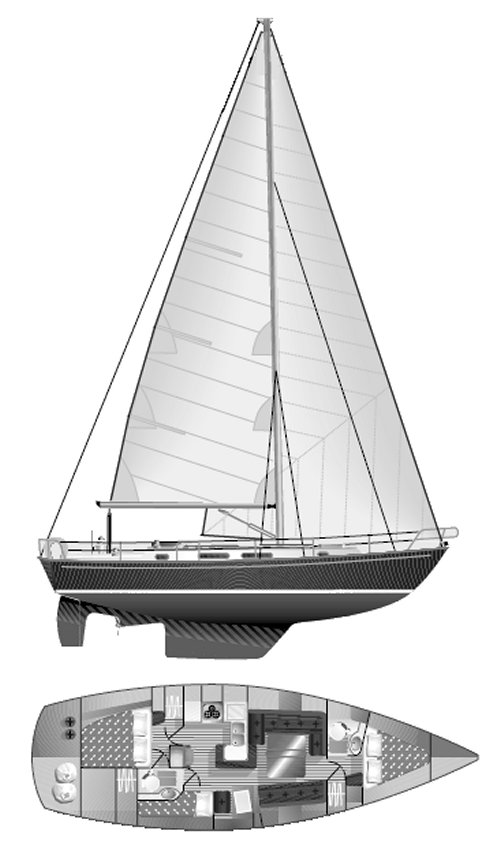
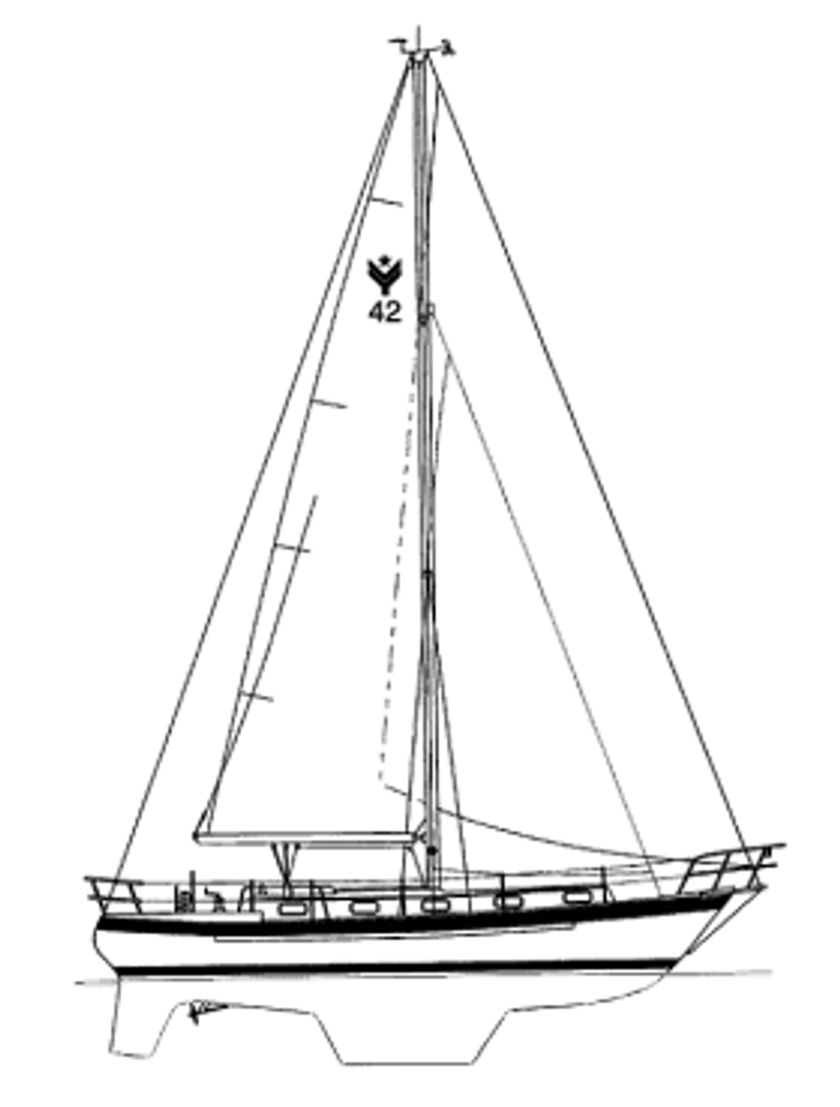
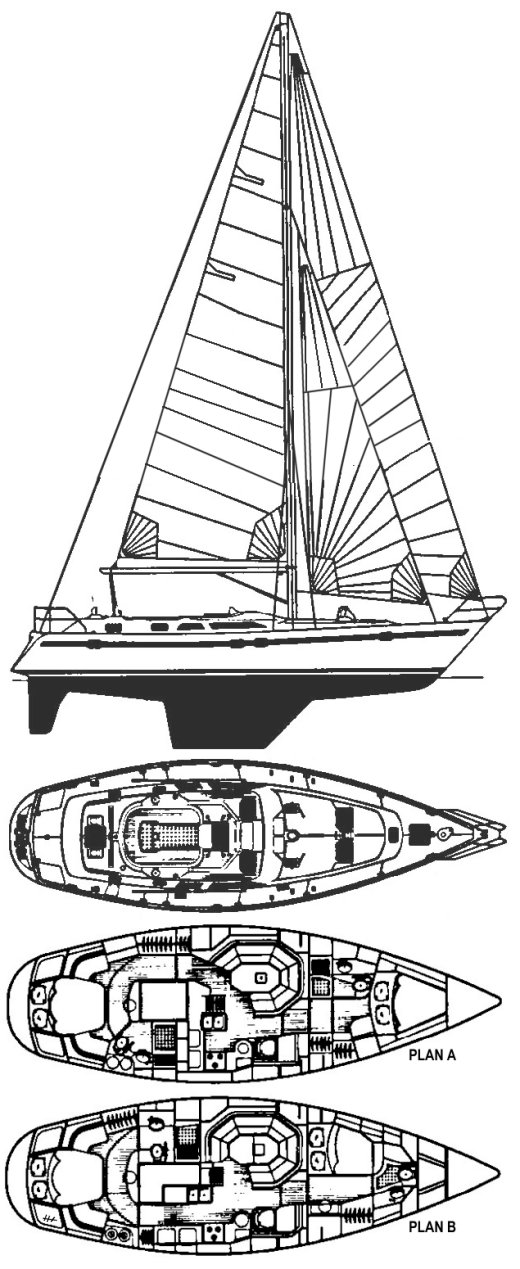
The presenter describes the Pearson 424 as designed by William Shaw and built from 1978 to 1984, about 225 built, mostly cutters with some ketches and a couple of sloops.
discusses
The presenter gives the cutter at 22,000 lb with 7,600 lb of ballast (about 34 percent), a sail area to displacement ratio of 14.89 (15.26 for the ketch) and a capsize screening formula of 1.89. The hull is solid fiberglass with a full-bodied fin keel with internal lead ballast and a skeg-hung rudder.
warns⚙ teak decks⚙ deck core
The presenter says the 424 is not perfect: some boats came with teak decks that can become a leaky nightmare if aged or poorly maintained, so he advises checking for core rot and past repairs, and notes that wiring, plumbing and rigging will need updating on these older boats.
discusses
Quoting an owner who cruised the Caribbean: the ketch rig made a two-person Atlantic crossing feel comfortable, the layout is the best feature, and the least satisfying attributes are the wide sheeting angle, relatively shallow keel and ketch rig, which make it hard to sail to weather efficiently.
discusses
The presenter says solid 424s sell from about 40 grand up to about 80, depending on condition and upgrades. Most came with a Westerbeke diesel that he says is not the one you want, and many owners have repowered with Yanmars or Beta Marine engines.
recommends
The owner, selling after more than seven years, calls the boat "a very capable blue water cruiser" that handles waves and weather well and "actually likes 15 knots or more of wind." The boat is kept on Lake Michigan.
discusses⚙ engine
In the engine compartment the owner notes that the engine is installed reversed compared with most: the shaft goes forward to a V-drive and is then routed back to the propeller. He shows redundant fuel filters and an easy-to-reach dipstick.
discusses
The owner says the two water tanks under the settees are 55 gallons each, and shows the holding tank and a very deep bilge below. He also points out a second companionway direct to the galley, noting that not many 42-footers have one.
discusses
On deck the owner describes deep, wide cockpit lazarettes that give access to the fuel tank and steering system in the off season, with the after lazarette big enough for a person to climb into for access to the rudder and steering.
recommends
The owner of this 1978 Pearson 424 ketch, which he has sailed for five years, says "I love this boat" and calls her "sturdy and fast". He gives 42.4 feet long and 23,000 lb displacement.
discusses
Out of the water, the owner points to the "long modified thin keel" with a Feathering Max prop, and a skeg that protects the rudder.
warns⚙ engine⚙ heat exchanger
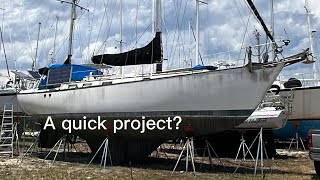
Going through the abandoned boat, the presenter says the engine will need help and that the heat exchanger "looks milky and gnarly in there and all corroded".
discusses⚙ standing rigging⚙ chainplates
Checking the standing rigging, the presenter says the rigging "doesn't look bad at all" to him, and a chainplate is "solid", with the caveat that he does not know what he is looking at.
discusses⚙ hatches⚙ ports
After a Florida rainstorm the presenter reports that "somehow all these hatches and windows" are not leaking; none of them. In the lazarette he says the steering mechanism "looks solid".
recommends
The host says early reviews in the early 1980s, when the boat first came out, were very positive. Underneath he describes a full bottom with a long but truncated keel and no centerboard, with a big skeg to help balance the helm. He says Pearson built a solid boat with no nod to racing rules.
discusses
The hosts say the boat looks a little clunky at first, but carrying the beam aft opens up a much bigger cockpit, which they say is at least eight feet wide and has a bridge deck. They add that with the truncated stern you feel like you are on a 45- or 46-foot boat.
discusses
The hosts say original reviewers in the early 1980s felt the forward V-berth cabin should probably be the owner's cabin. They note a dry hanging locker, drawers, and a symmetrical saloon with a settee on each side, and say this does not feel like a boat that has been around for 40 years.
discusses
In the bilge the host points out an aluminum mast step with a deck tensioner beside it to keep the deck from popping up when the shrouds are tightened, and a deep sump under the shallow-looking floor. He also likes the midship companionway as a second way below.
discusses
The host explains that the engine sits back under the cockpit and drives through a V-drive that changes the direction of the shaft, because turning the engine around would leave too little room for the shaft to exit the hull.