Overview
Robert Harris designed the Vancouver 42 for the Taiwanese yard Ta Yang, which had already built its reputation on Bob Perry’s Tayana 37. Production started in 1979 and ran for roughly 200 hulls, all with a canoe stern and solid teak joinery below. Ta Yang built the Vancouver 42 semi-custom, so no two boats below decks are quite alike, but every one shares the same reputation as a genuine offshore passagemaker rather than a coastal cruiser dressed up for it.
Design and Construction
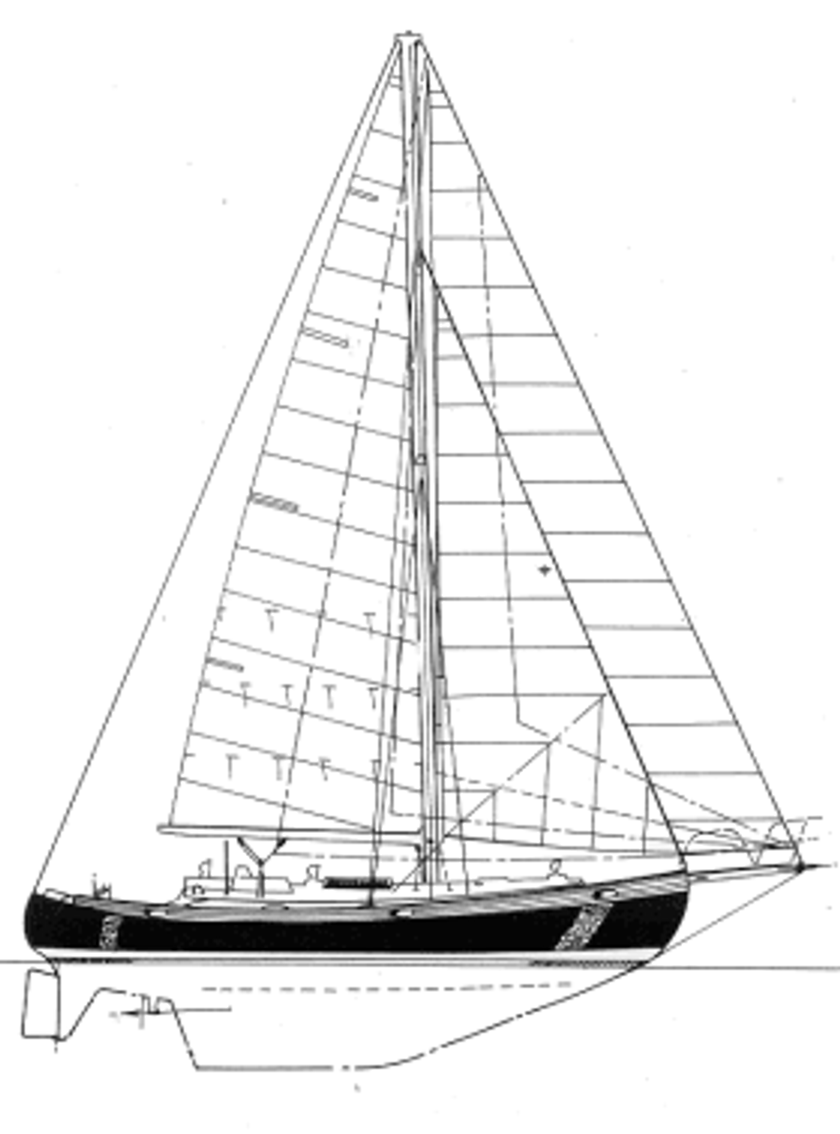
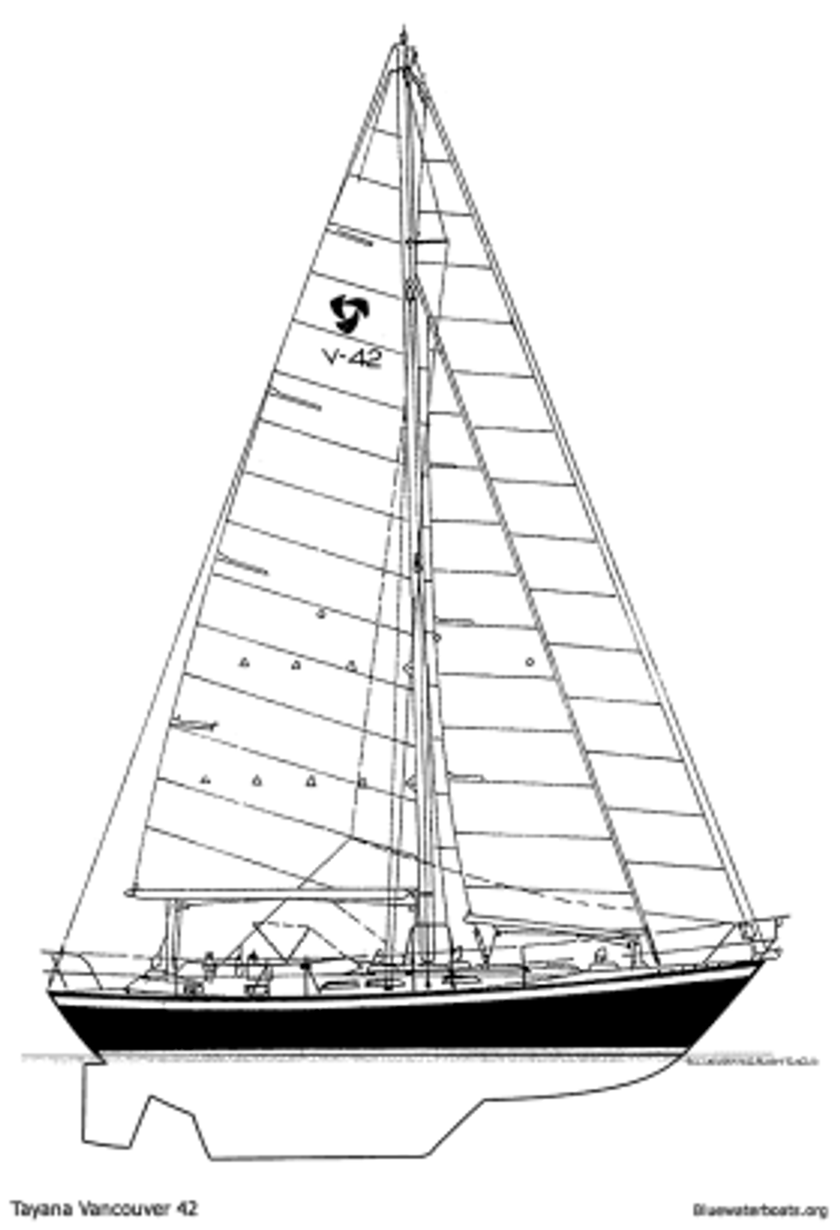
The hull is solid fiberglass, and the deck coring changed partway through production: plywood before 1985, balsa after. Early hulls from 1979 to 1985 have an association with gelcoat blistering, addressed by a switch to isophthalic gelcoat after 1985 and vinylester resin after 1992. The 11,800 lb ballast is a single cast-iron insert, encapsulated in resin inside the fiberglass keel. Harris fitted a deck-stepped rig, unusual for a boat of this vintage and weight class, with a distinctive diamond stay at the upper spreaders supported by an aluminum arc (nicknamed the “cowcatcher” by owners) that eliminates the need for running backstays. Original 33 hp Yanmars were underpowered for a nearly 30,000 lb boat; most have since been repowered with 4-cylinder Yanmars in the 44 to 75 hp range.
Layout and Configuration
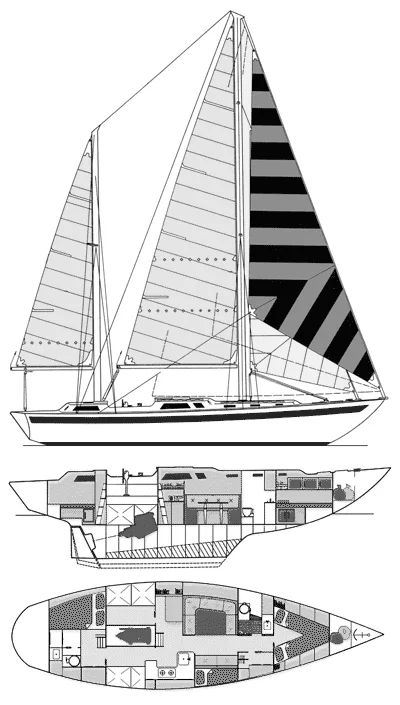
Three deck configurations were built: about 130 aft-cockpit boats, roughly 70 center-cockpit boats (prized by cruisers for the separate aft stateroom), and a handful of pilothouse versions. Because Ta Yang built these semi-custom, accommodation plans vary widely: three-stateroom layouts, one or two heads, a centerline island queen aft, swivel chairs in the saloon, even different bulkhead positions from boat to boat. What’s consistent across every layout is the quality of the joinery, vertical spruce slatting paired with solid teak trim throughout.
Under Sail
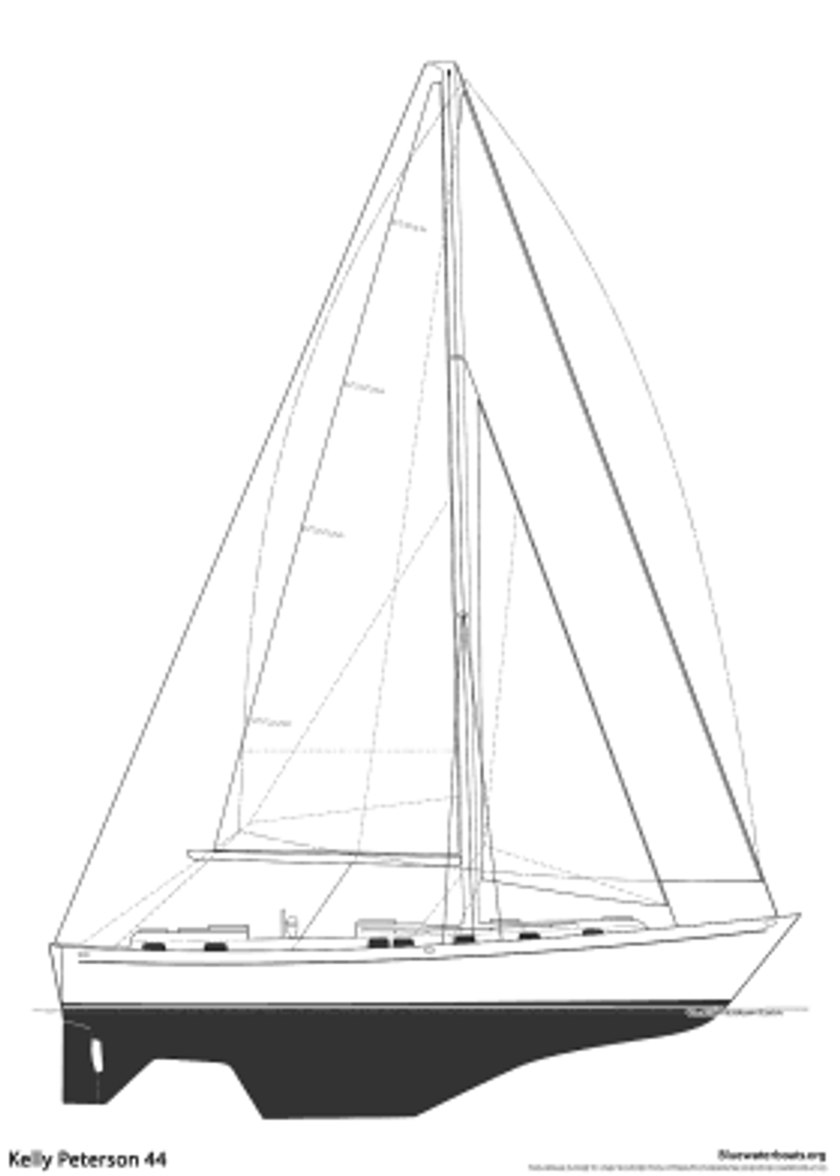
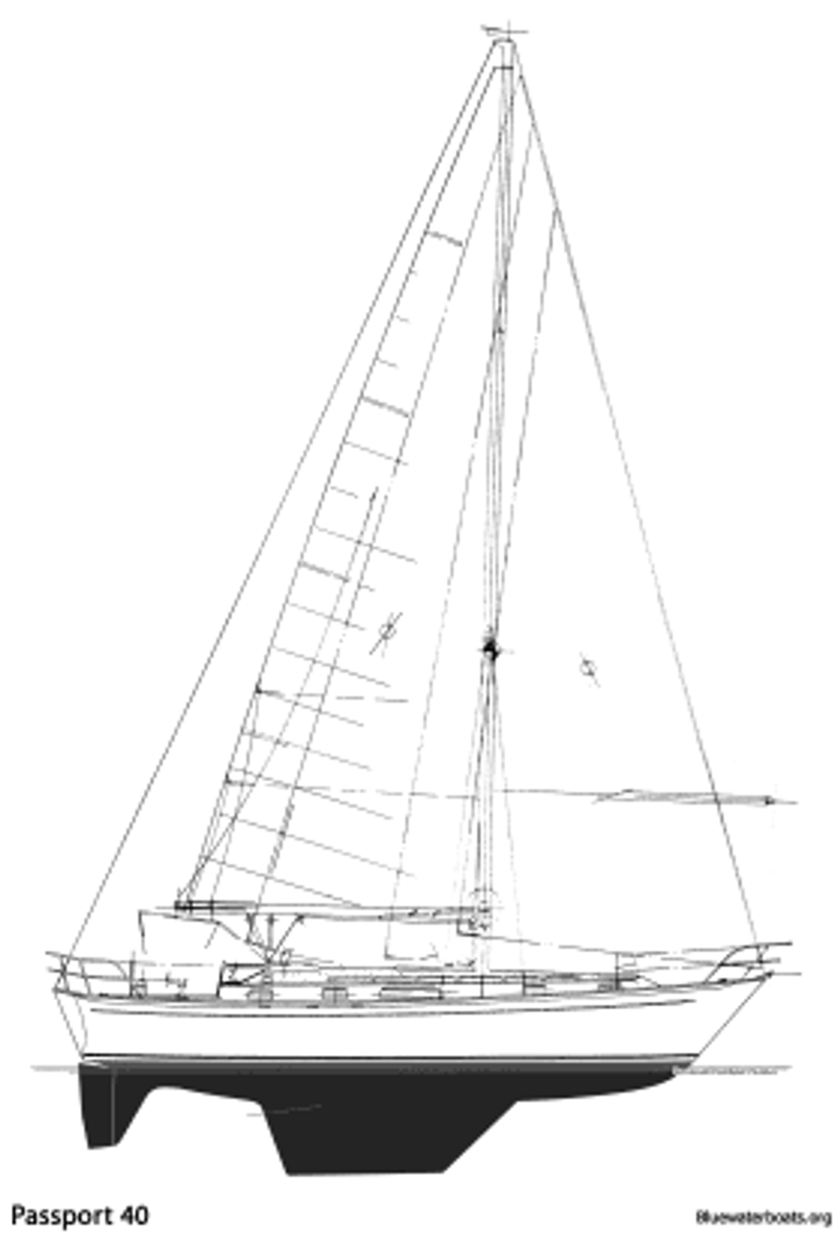
The fin keel gives the Vancouver 42 a more modern underbody than most of her Taiwanese-built contemporaries, and she sails well for her weight. A double-spreader main and cutter rig carry 942 sq ft of working sail, enough to move nearly 30,000 lb of displacement in a real breeze without feeling undercanvassed. Cruising World credits her “tall stick, generous sail plan, and slippery underbody” for respectable speeds given her bulk. A pronounced sheer adds freeboard forward, and the aft-cockpit versions in particular stay notably dry. Cruising World profiles Bill and Judy Rohde’s pilothouse Vancouver 42, Jubilee, cruised from Lake Superior toward the Bahamas; John Kretschmer also included the design in his Used Boat Notebook.
Buyers Notes
Hulls built 1979 to 1985 are more prone to gelcoat blistering; check for evidence of prior barrier coating or blister repair. A plywood-cored deck on an early boat is less tolerant of water intrusion than the balsa coring used later, so sound the deck for soft spots and pay close attention to teak deck fastener seals. Some boats still carry original black-iron fuel tanks, which rust faster than the stainless water tanks Ta Yang typically fitted; confirm tank material and condition on survey.