Overview
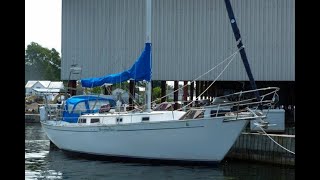
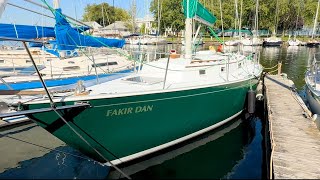
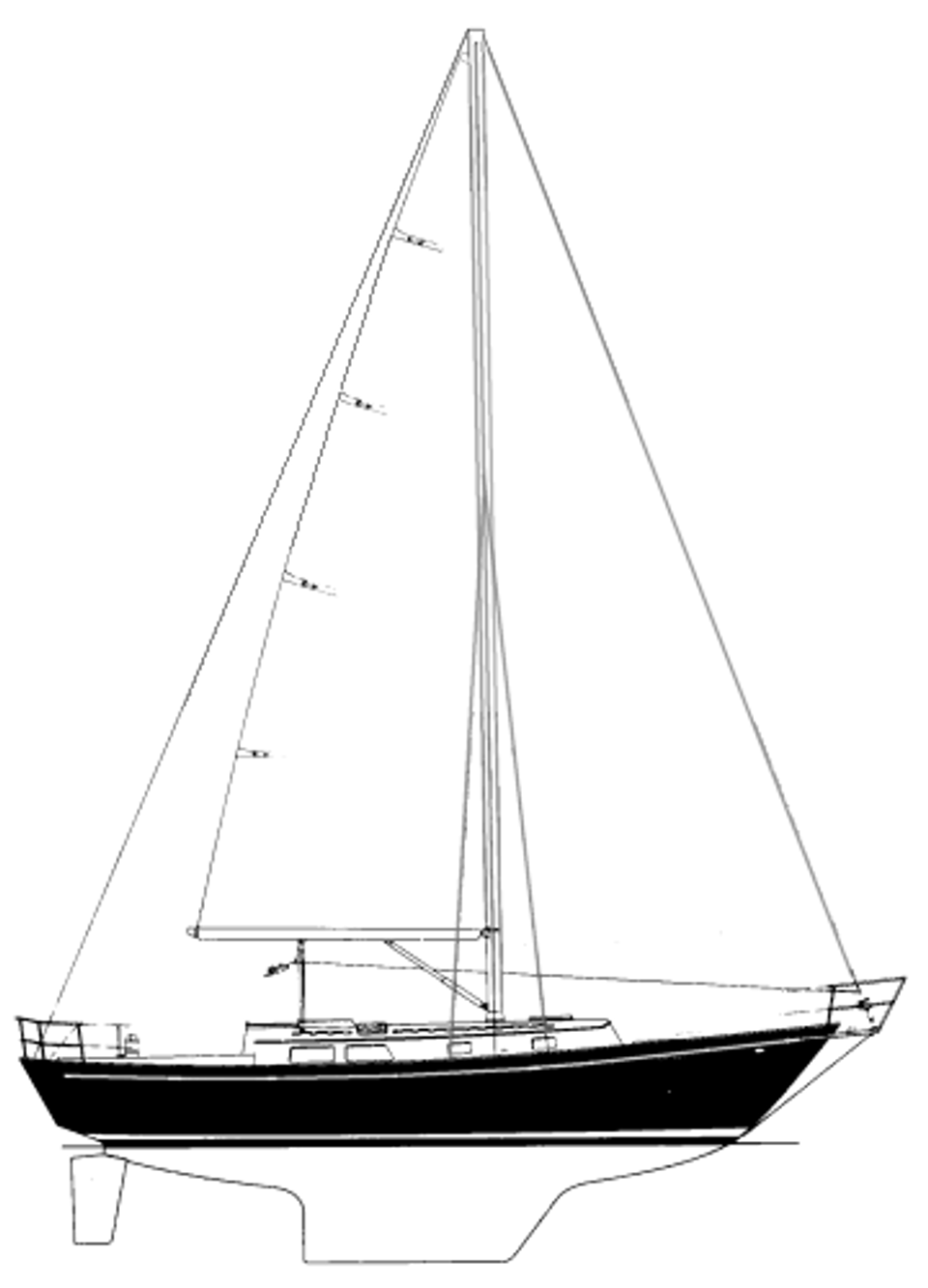
The Niagara 35 is Mark Ellis’ 1978 design for Hinterhoeller Yachts of St. Catharines, Ontario, first shown at the Toronto International Boat Show that year. A fin-keel fiberglass cruiser with an internally mounted spade rudder, it was built for 12 years, 260 hulls, before Hinterhoeller ended production in 1990.
Design and Construction
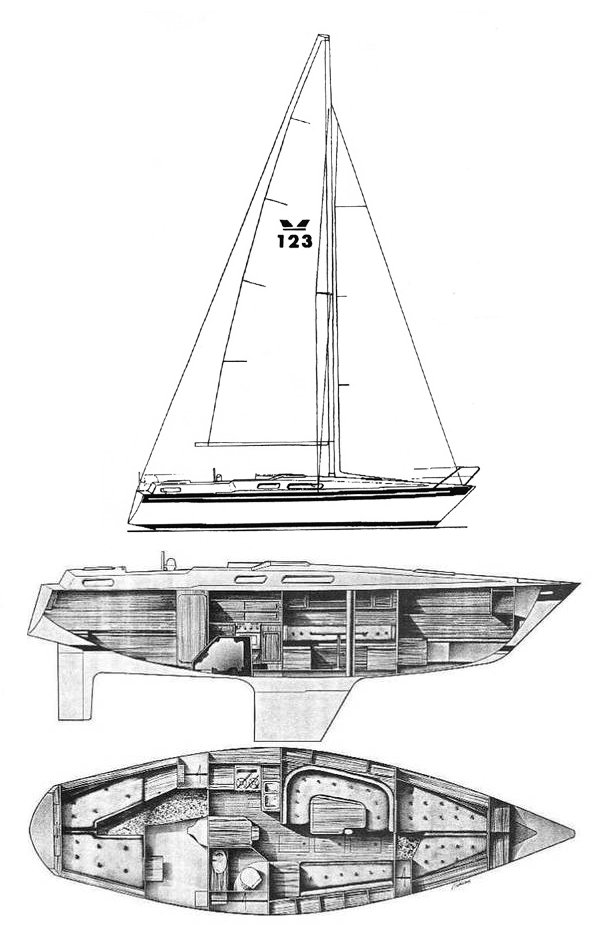
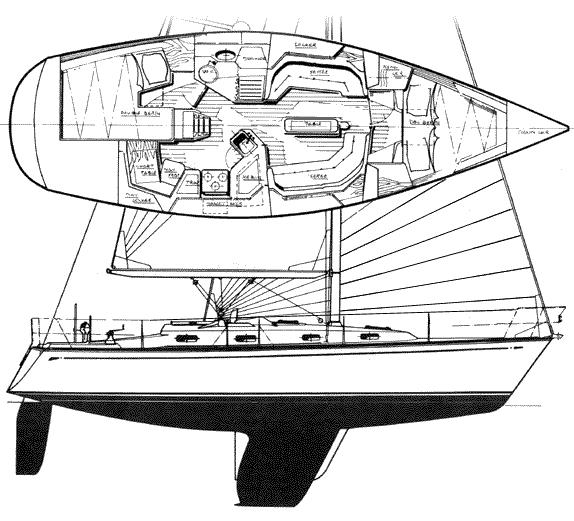
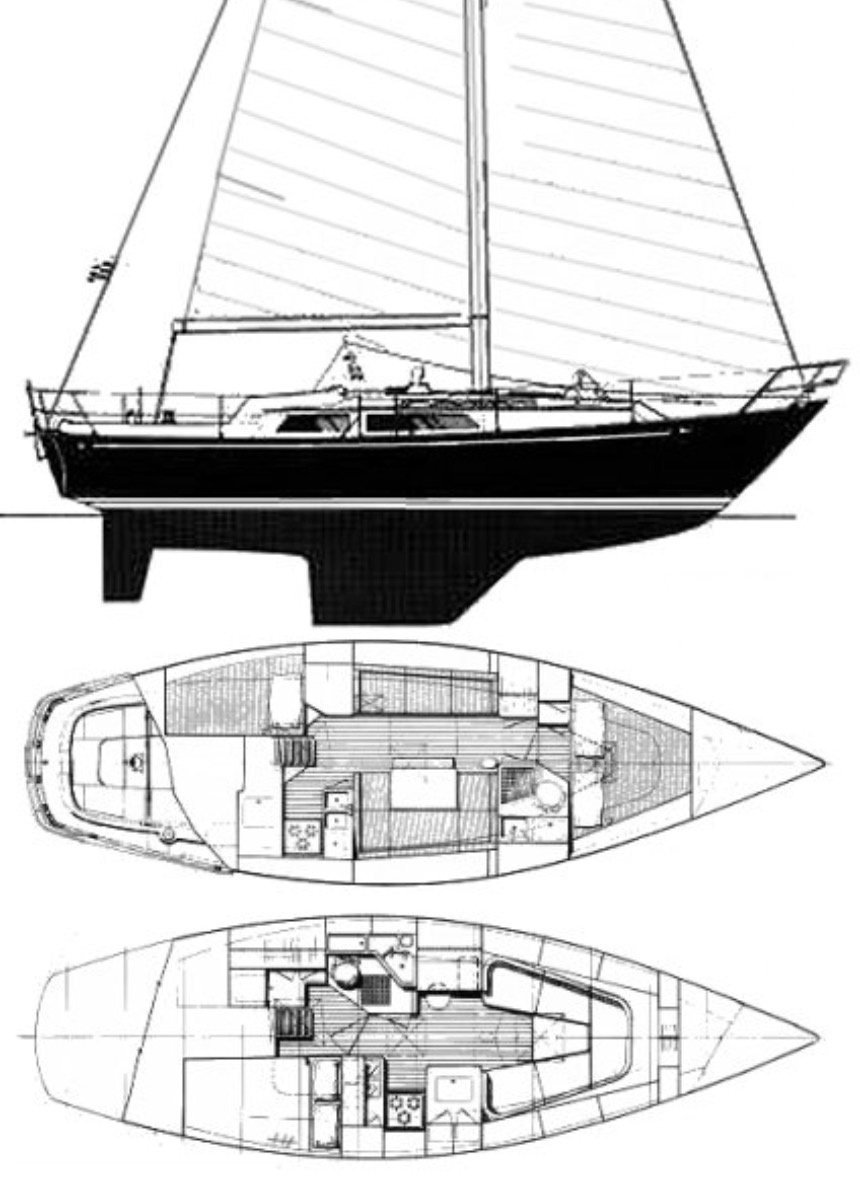
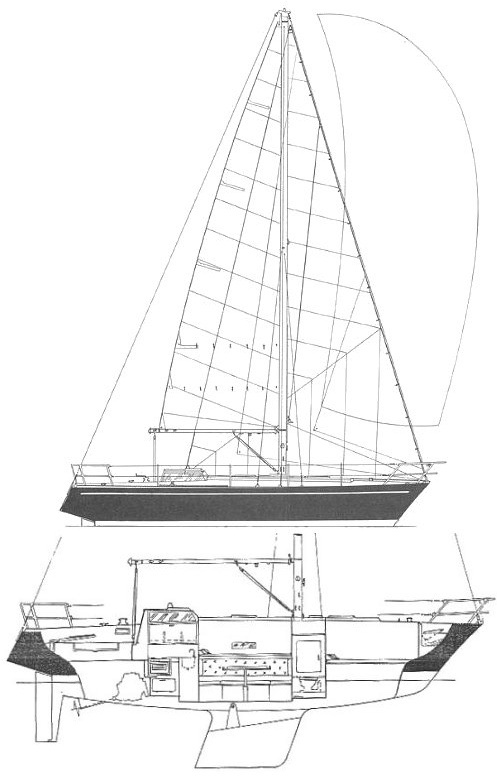
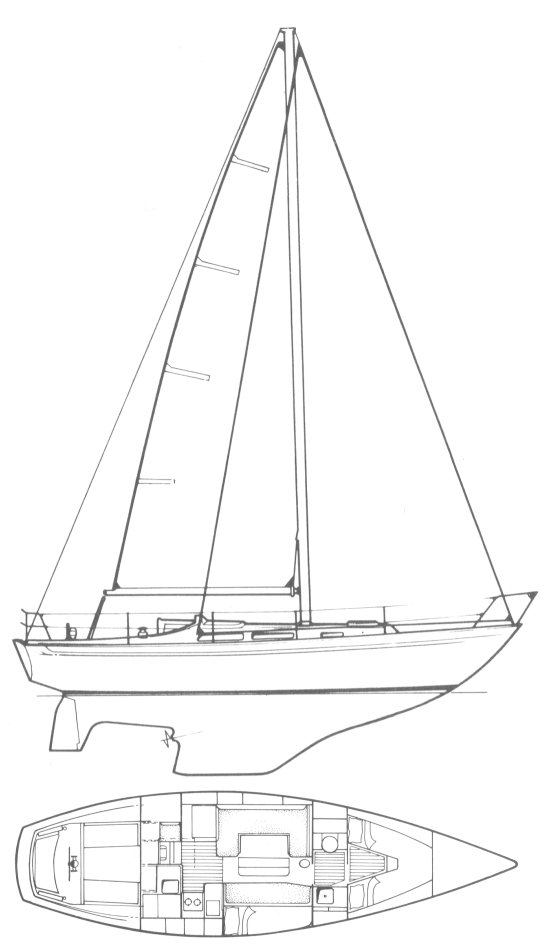
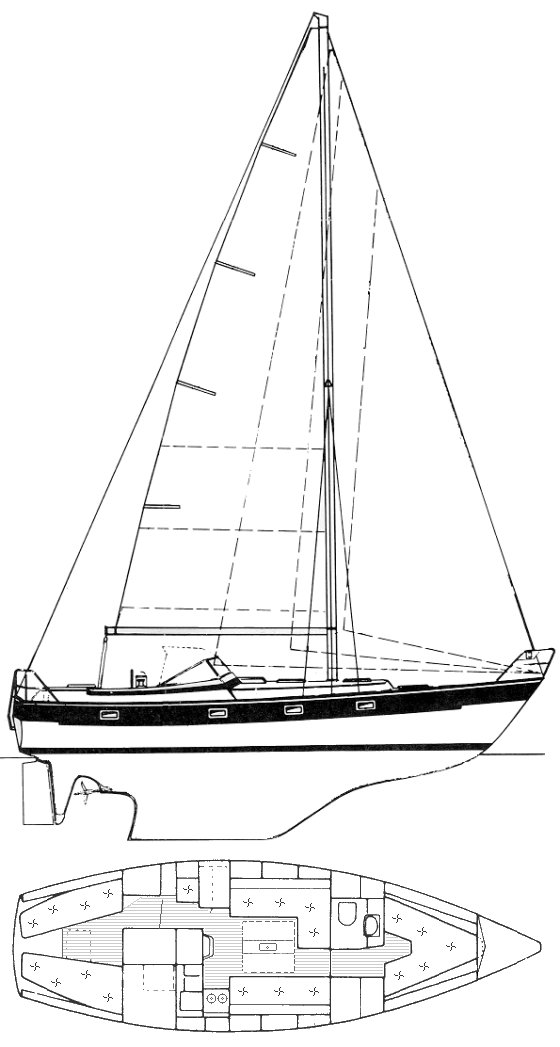
At 14,000 lb displacement with a 39 percent ballast ratio, the boat carries a NACA-foil fin keel drawing 5.17 ft and an internal spade rudder, a fiberglass hull over balsa core with teak trim. The masthead sloop rig carries 597.5 sq ft of working sail. Engine options across the production run included Universal, Volvo, and Westerbeke diesels in the 21-35 hp range. Practical Sailor reports that Hinterhoeller used balsa coring in both hull and deck, with unidirectional rovings and structural bulkheads bonded to the hull, and its reviewers had no complaints about the hull-deck joint. Cruising World describes a longish rather than deep keel, massively faired into the hull with a substantial sump, and chainplates that tie into accessible interior knees heavily bonded to the hull. Owners reported some gelcoat cracking and leaks around portlights and chainplates, with the balsa saturation that follows.
Under Sail
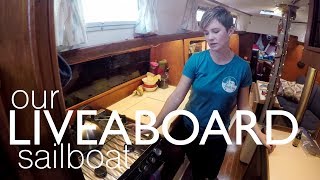
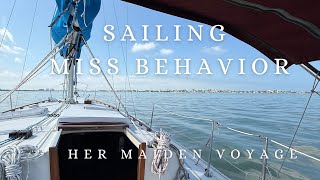
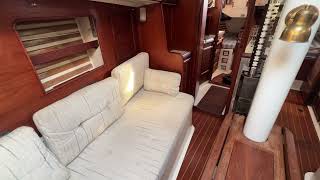
Two named-vessel passages are documented for this model: Gordon McClarity sailed from Vancouver to New Zealand, Australia, and Japan, and Pierre Desjardins sailed from Montreal to the Greek Islands. Cruising World’s reviewer found the boat stable and stiff, with the rail in the water only once, beating down Lake Huron in 20 knots, and noted that sail trim and the right sail combinations make or break progress upwind or in light air. Practical Sailor’s owners said the high bow and 4-inch bulwarks keep the cockpit dry, and that the 35 is not as fast or closewinded as the Niagara 31 but cuts through the seas better. The standard Classic interior puts stowage and a workbench in the forepeak with the head and owners stateroom aft; a more conventional Encore layout followed in 1984.
Buyers Notes
As with most balsa-cored boats of this era, deck and coachroof coring are worth checking closely for water intrusion on survey, particularly around hardware penetrations and stanchion bases.