Tartan 3500

Tartan Marine · 1991–2005 · Sloop rig

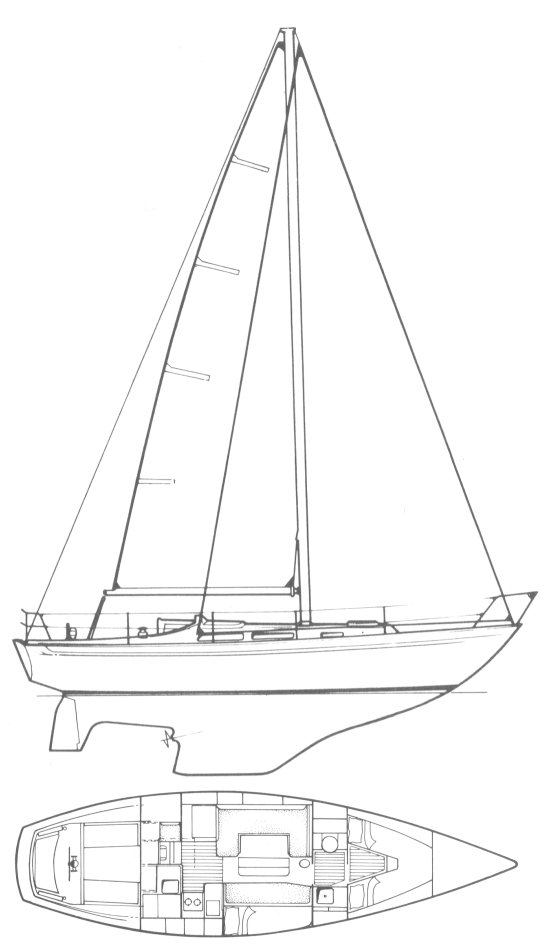
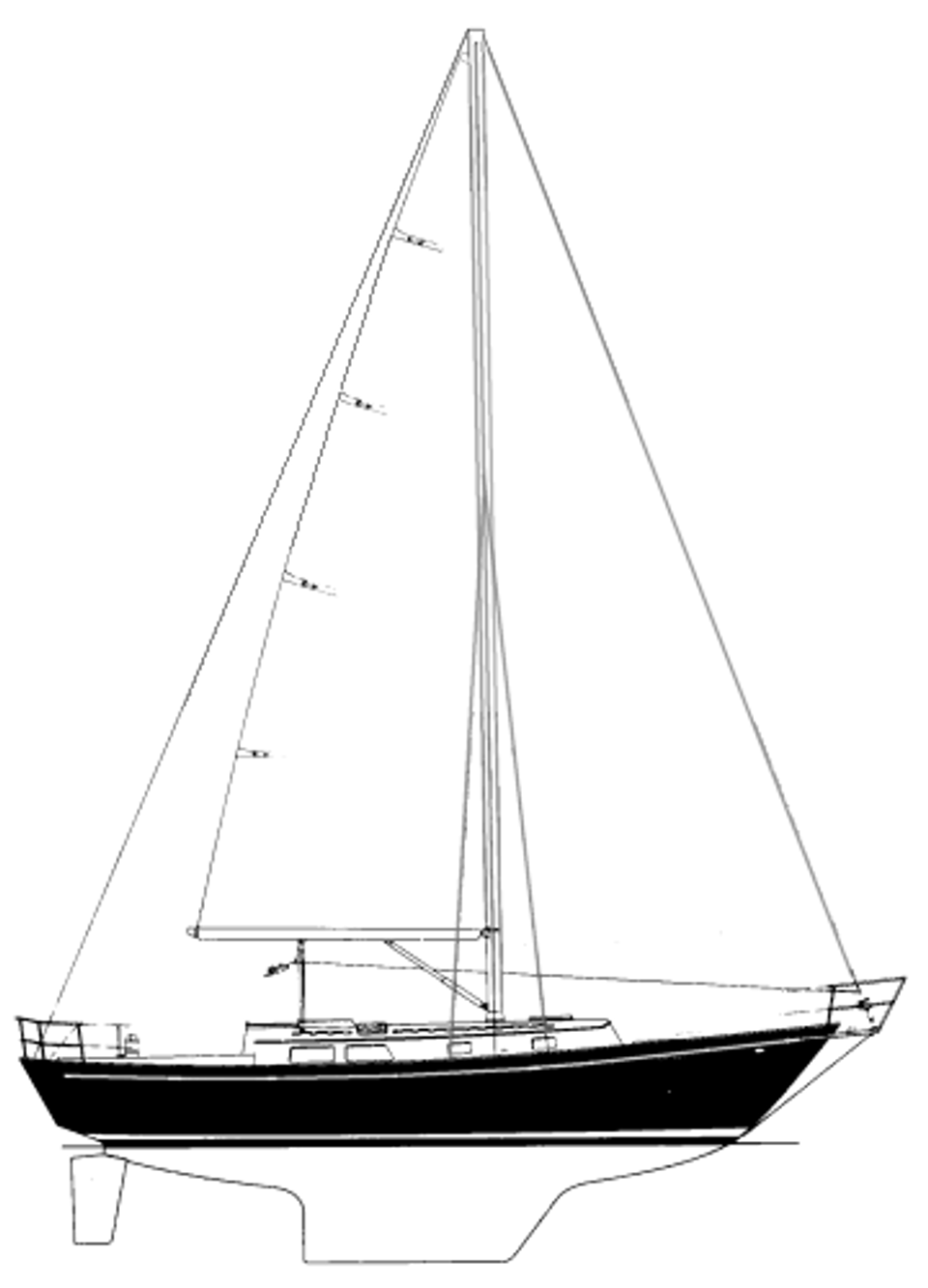
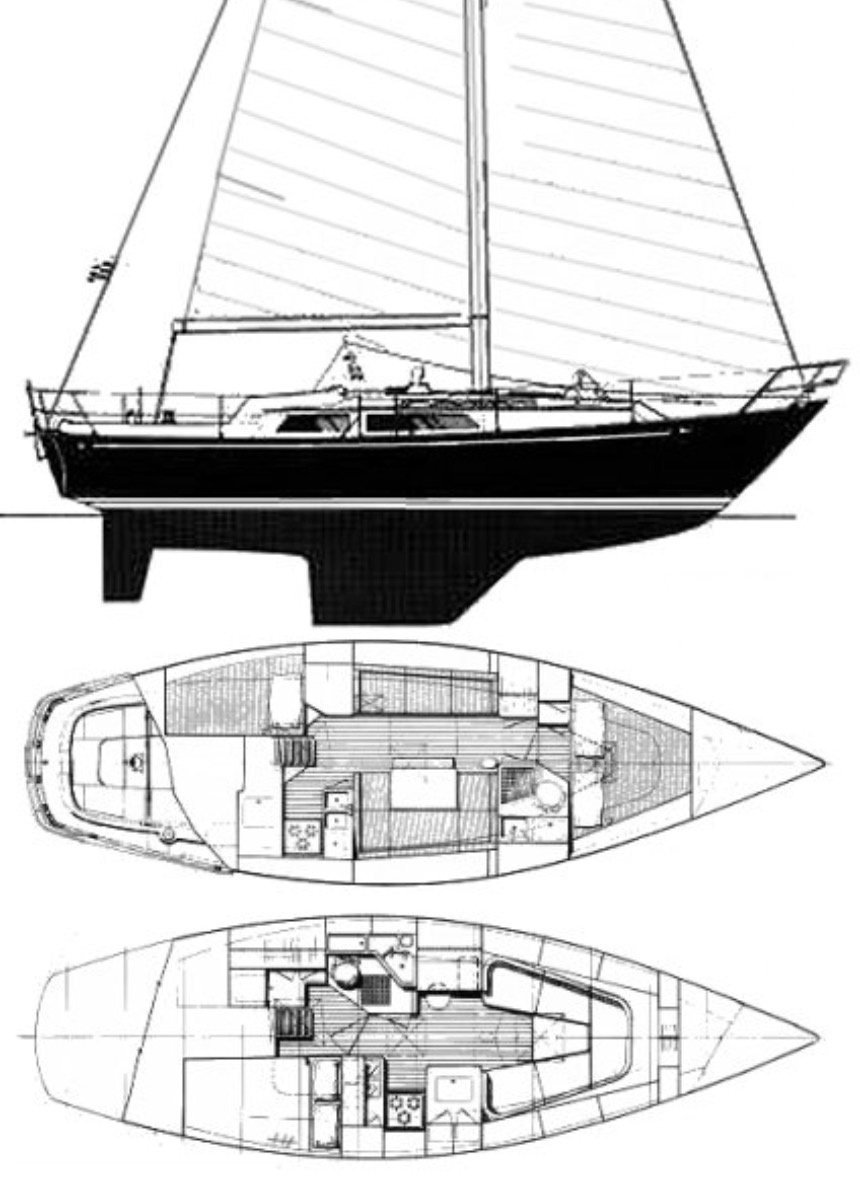
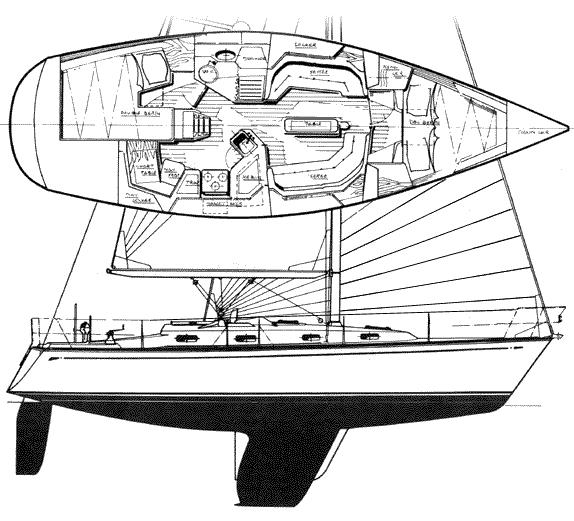
Tartan 3500 profile drawing
LOA35.17'
Beam11.75'
Draft6.5'
Displ.6.3t
Rigsloop
HullFiberglass

Bluewater Evidence · Ocean Proven

76% confidence

John Neal's Boats to Consider for Ocean Cruising lists the Tartan 3500, rated 3 of 5: 'Latest models are impressive, earlier ones have modest quality and tankage.' John Kretschmer's Sailing Magazine review describes a family boat with club-racing performance and a comfortable interior for extended summer cruising. Its capsize screen value is 2.03, just above the usual offshore limit of 2.

Overview

The Tartan 3500 is a Tim Jackett design built from 1991 to 2005, with more than 150 launched. John Kretschmer describes it as a family boat with enough performance for club racing and a comfortable interior for extended summer cruising, and notes that it has held its value better than most 35-footers.

Design and Construction

The hull is hand-laminated with alternating layers of strand mat, unidirectional E-glass reinforcement and partial balsa coring; the deck is balsa-cored with stainless fasteners into aluminum plates. Below the waterline is a high-lift fin keel in deep and shoal versions, externally bolted, and a large elliptical balanced spade rudder on a 3-inch stainless stock. Earlier boats had cable-to-quadrant steering and later ones a Whitlock tie-rod system. Kretschmer notes the hull is solid glass at the deck flange, through-hulls, chainplates and keel installations, and that bulkheads and floors are taped and tabbed directly to the hull skin with little use of molded pans. He also wondered about the long-term effect of joining the stainless fasteners to aluminum receiving plates at the hull-deck joint. The stern evolved from a reverse counter without a swim step, to a swim step, to a flat stern with an opening drop-down step, and a handful of late boats have carbon fiber spars. The SpinSheet surveyor counts 152 boats and says the standard auxiliary was the Yanmar 3GM30F.

Under Sail

With a sail area to displacement ratio of 19.4 and a displacement to length ratio of 188, the boat is quick in light air, and owners report more than 8 knots reaching in a stiff breeze. Kretschmer recommends sailing her flat. Kretschmer calls the flatter forefoot a trade for flat-water speed and forward cabin room at the cost of some tendency to pound upwind, and he likes the masthead rig for its flexibility in light and heavy air. He found the large rudder gives excellent steering. The traveler sits forward of the companionway, all sail controls lead aft, and the T-shaped cockpit is narrow enough to brace in when heeled. Bob Perry called the 3500 the best synthesis of American and European design approaches.

Buyers Notes

The aluminum fuel tank holds only 25 gallons, little for serious cruising. The galley is unusually good for a 35-foot boat. Most boats predate Tartan’s move to epoxy resin in the early 2000s. Kretschmer found few inherent problems: some owners reported leaks around the forward hatch and rudder bearings that swell. Surveyor Tarn Kelsey reports interior joinery that was shifting and working, leaving gaps between sections, water-damaged wood under door thresholds, cabin soles and companionway surfaces, and deck crazing on the few boats built with early epoxy and a problem tie coat.
Passage records

Resolute2018

Annapolis to Bermuda Ocean Race (2018)

Finished.

Source: Annapolis to Bermuda Ocean Race official results (Yachtscoring) 2018 results

Highlander· Jonathan Bixby2021

Bermuda 1-2 Yacht Race (2021)

Finished.

Source: Bermuda 1-2 Yacht Race 2021 results

Wishing Star· Douglas Martin2003

Marion-Bermuda Race (2003)

Finished.

Source: Marion-Bermuda Race 2003 results

Intuition· Donald & Laura McLennan2014

Baja Ha-Ha (2014)

Finished.

Source: Baja Ha-Ha 2014 results

Known Issues

Water-damaged interior woodmoderateSurveyor-documented

A surveyor writing for SpinSheet frequently finds water-damaged wood under door thresholds (especially the head door), in cabin soles and on vertical companionway surfaces.

Inspection: Probe and moisture-meter the wood at door thresholds, the sole and the companionway, and trace any leak source.

Source: SpinSheet: Tartan 3500 Used Sailboat Review (Tarn Kelsey, 2020)

Joinery fitcosmeticSurveyor-documented

The same surveyor reports interior cabinetry that was either not well fitted at the factory or shifted over time, leaving gaps between sections.

Inspection: Check that doors close properly and look for gaps or movement in the joinery.

Source: SpinSheet: Tartan 3500 Used Sailboat Review (Tarn Kelsey, 2020)

Deck crazing on late epoxy-infused boatsmoderateSurveyor-documentedLate production, after the switch to resin infusion

Late in the run Tartan moved from hand layup to resin infusion with epoxy-modified resins, and some of the early epoxy boats, including a few late 3500s, developed premature deck crazing attributed to a tie-coat compatibility problem.

Inspection: Establish the build year and method, and inspect the deck gelcoat for crazing on a late boat.

Source: SpinSheet: Tartan 3500 Used Sailboat Review (Tarn Kelsey, 2020)

  1. [1]SpecificationsTARTAN 3500 - SailboatData.com- Dimensions, displacement, ballast, sail area, keel, rig and designer.
  2. [2]ReviewSailing Magazine - Tartan 3500 (John Kretschmer, 2012)- Independent used-boat review: production, construction, keel and rudder, performance, cruising limits and resale.
  3. [3]EditorialJohn Neal - Boats to Consider for Ocean Cruising (Mahina)- Lists the Tartan 3500, rated 3 of 5.
See something wrong? Suggest a correction

Corrections need evidence: a link or citation we can check. Sourced suggestions get reviewed and credited in the entry's change notes if applied.

Owner knowledge counts: name the boat and year so we can attribute it.