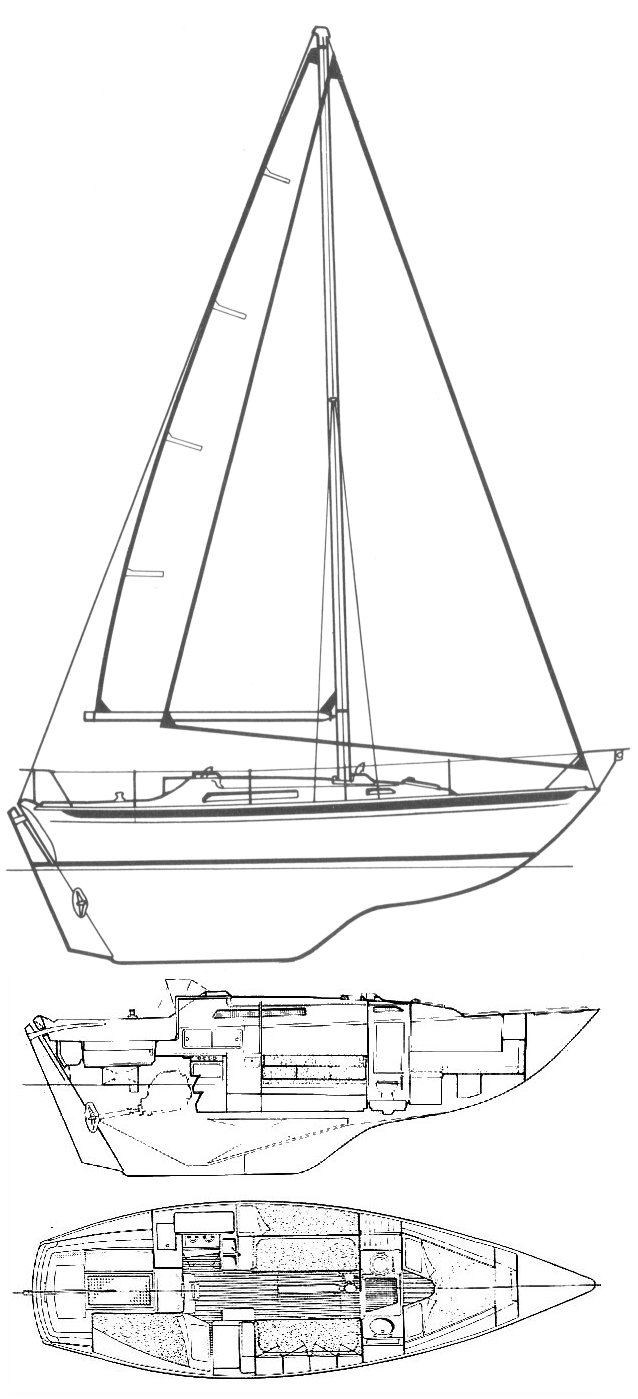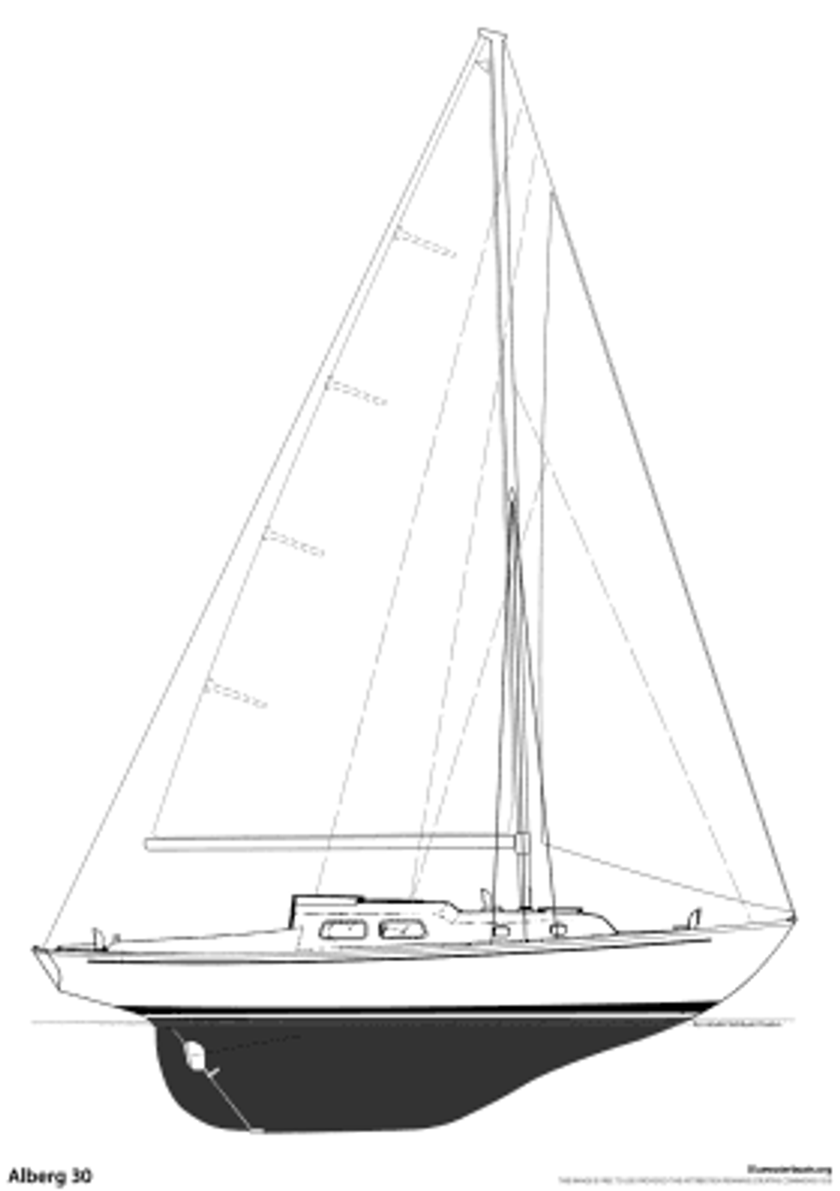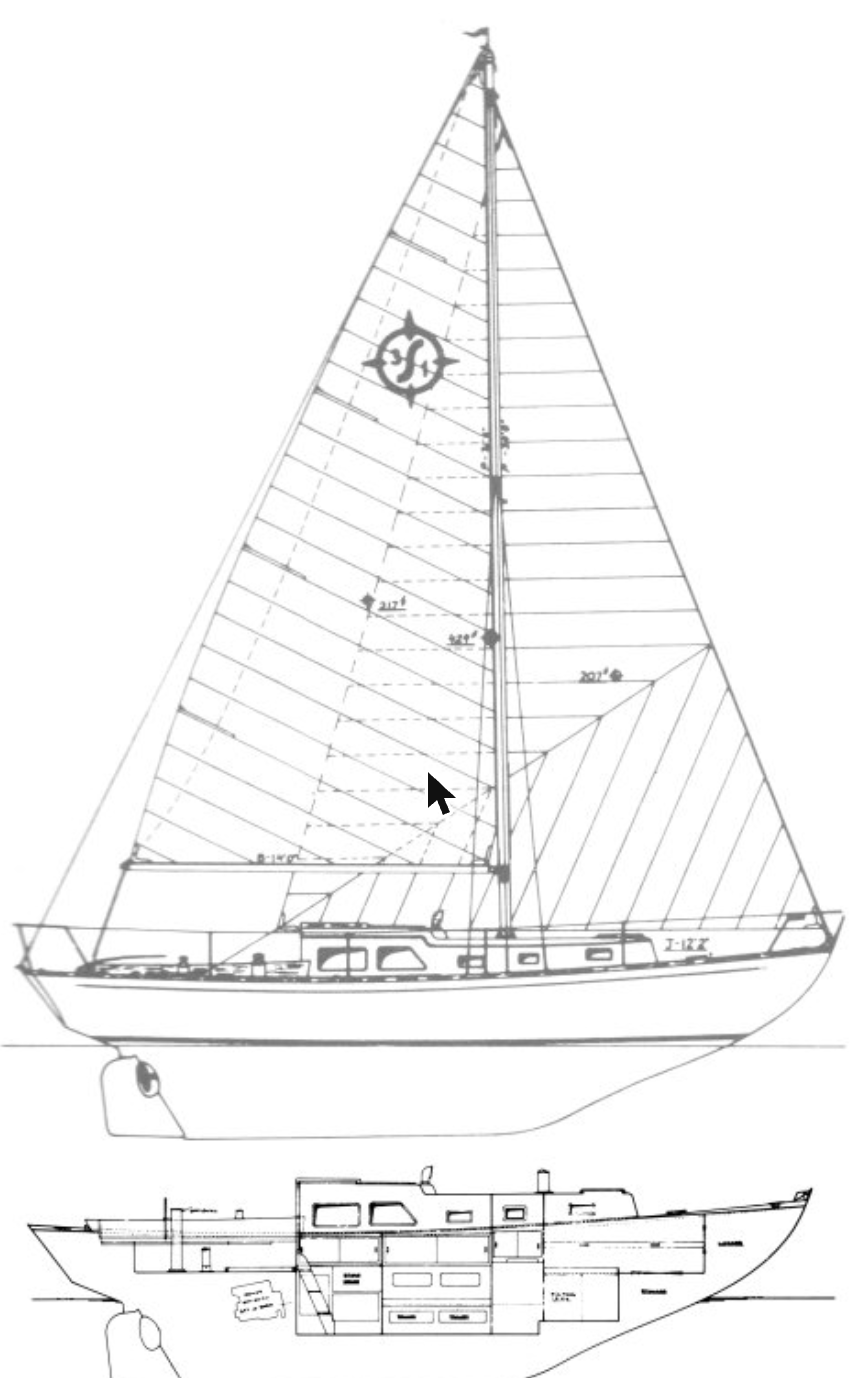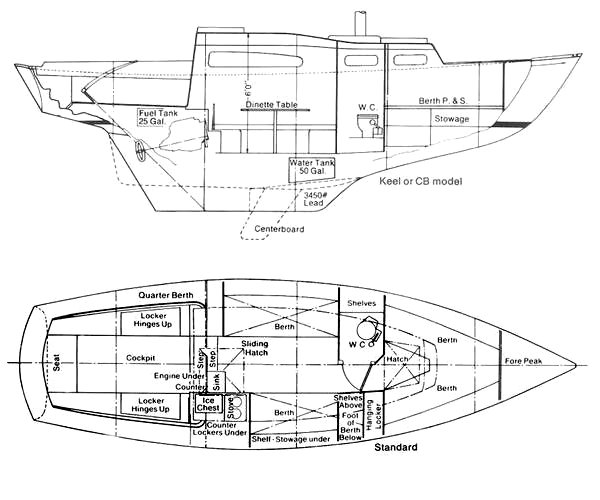
Overview
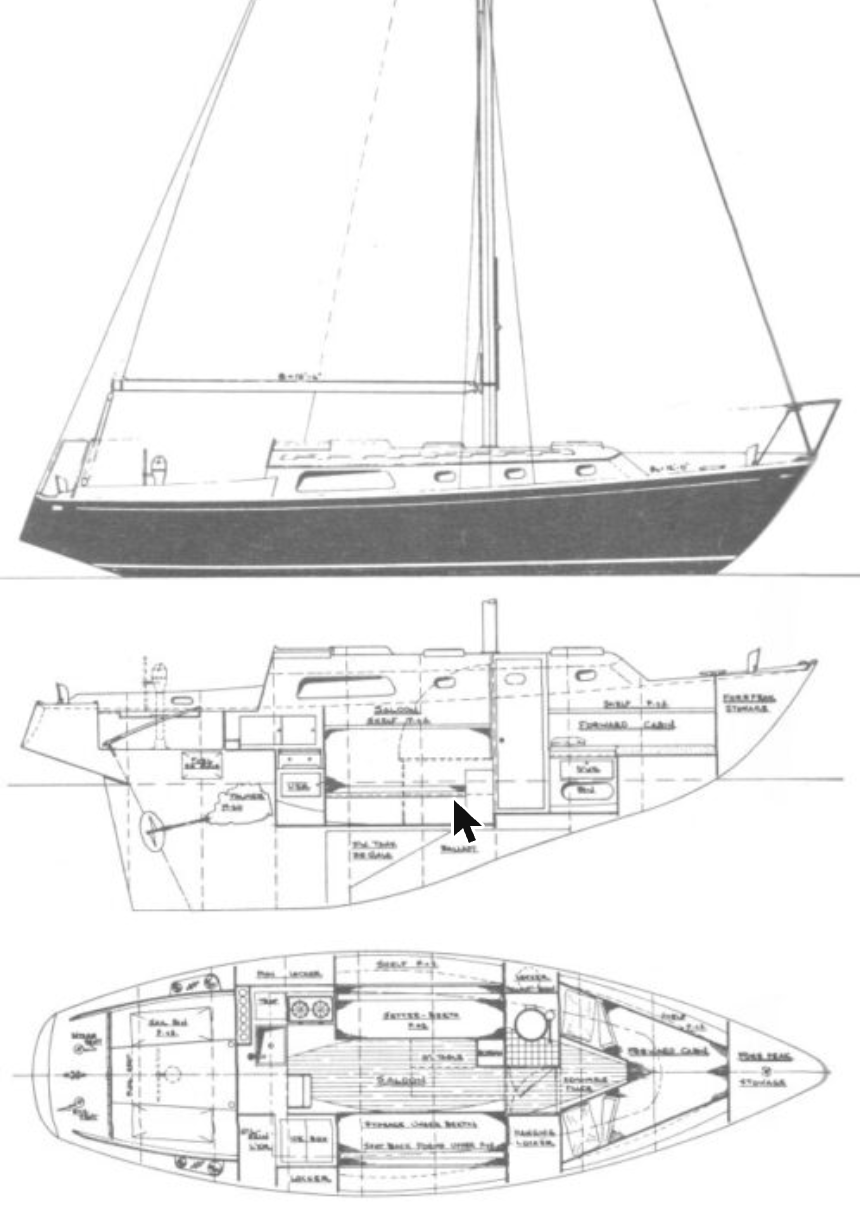
The Rawson 30 is a William Garden design out of the Pacific Northwest, built by a yard better known today for pioneering fiberglass fishing boats than for yachts. It is heavy for its length, full-keeled, and built with a plain, workmanlike solidity that suits the boat’s original coastal-Washington and offshore-cruising intentions more than any racing pretension.
History
Ron Rawson founded his boatbuilding company in Port Angeles, Washington, in the mid-1950s, reportedly the first US builder of fiberglass commercial fishing vessels, and later relocated to Redmond. The Rawson 30 came out of that yard under naval architect William Garden and stayed in production a long time for a boat this size, from the late 1950s into 1984. Sources differ slightly on the exact bracket (sailboatdata.com says 1958 to 1984, a WebSearch summary of other sources says 1959 to 1985, and Baldwin’s own notes say “about 1960-84”), but all three agree closely enough that the run lasted roughly a quarter century. Sailboatdata.com’s record puts the total at 252 hulls, some as standard sloops, some as ketches, and some as pilothouse cruisers, plus, per Baldwin, some sold unfinished as owner-completion kit boats, which explains a good deal of variation between individual boats on the market today.
Construction
The hull is solid fiberglass on a long, full keel, agreed on by both sailboatdata.com and sailboat.guide. Ballast is 5,000 lb of concrete, according to sailboat.guide, an unusual but not unheard-of choice for a boat of this displacement class and era. Displacement itself is where the sources split evenly: sailboatdata.com and sailboat.guide both report 12,000 lb, while Baldwin’s own list and the original stub both give 12,500 lb. That is a genuine disagreement without a clear majority, and this entry uses the lower, database-sourced figure while flagging the difference rather than picking a side with confidence. Either way the ballast ratio lands around 40 to 42 percent, a stiff boat by any measure. Later production added a bowsprit, which per Good Old Boat’s builder notes was meant “to increase sail area and reduce weather helm,” and likely explains why some sources give a longer 32.5 ft LOA against the 30.5 ft hull length reported elsewhere.
Under Sail
Heavy displacement and a full keel add up to a boat that is slow in light air and steady in a blow. Baldwin is direct about this trade-off: “Heavy and therefore somewhat slow in light air, though a bowsprit was added to later models to increase sail area and reduce weather helm.” At 424 sq ft of sail on a 22 ft waterline, the Rawson 30 is not going to win races, but the same weight and keel that slow it down in a drifter make it a forgiving, tiring-free boat to steer on a long passage, the kind that tracks straight and shrugs off a confused sea rather than getting knocked around by it.
Buyers Notes
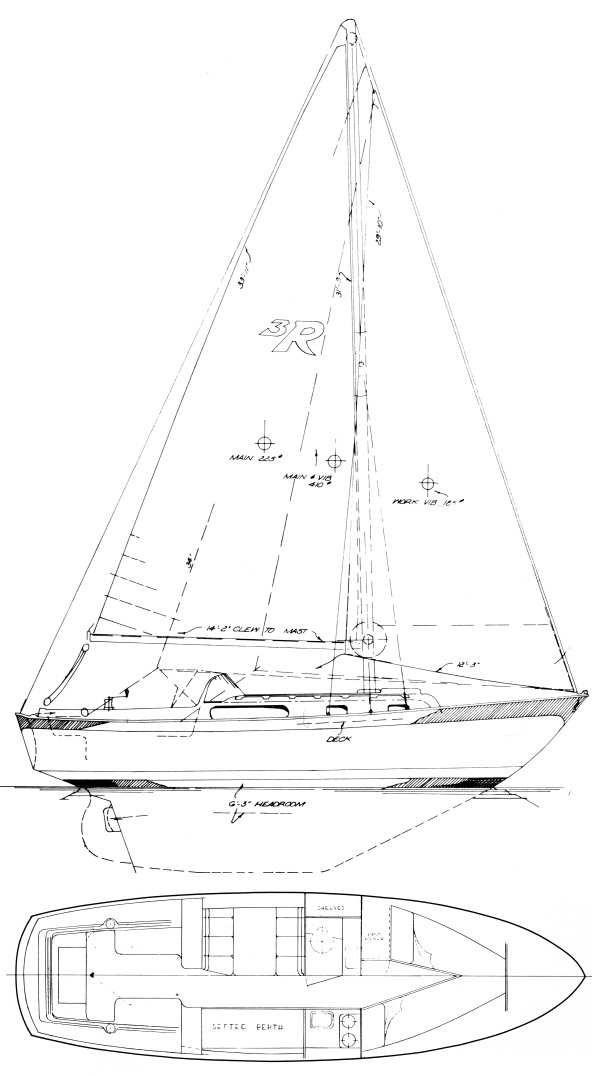
Baldwin’s recorded plus, “6’3" headroom if you happen to need it,” is a real point in the boat’s favor for a 30-footer of this vintage. His minus repeats the light-air trade-off already noted above, and adds a caution specific to this design: “Offered also as owner finished kit boat with resulting variab[ility],” meaning two Rawson 30s can differ substantially below decks depending on who finished the interior and to what standard. A buyer should ask directly whether a given boat was factory-finished or an owner-completed kit hull, since that history affects everything from wiring to tankage to structural details that a surveyor should specifically be asked to check. With production having run so long and so many variants (sloop, ketch, pilothouse, kit), it is worth confirming exactly which configuration is on offer before assuming anything about performance or accommodation from the model name alone.