Overview
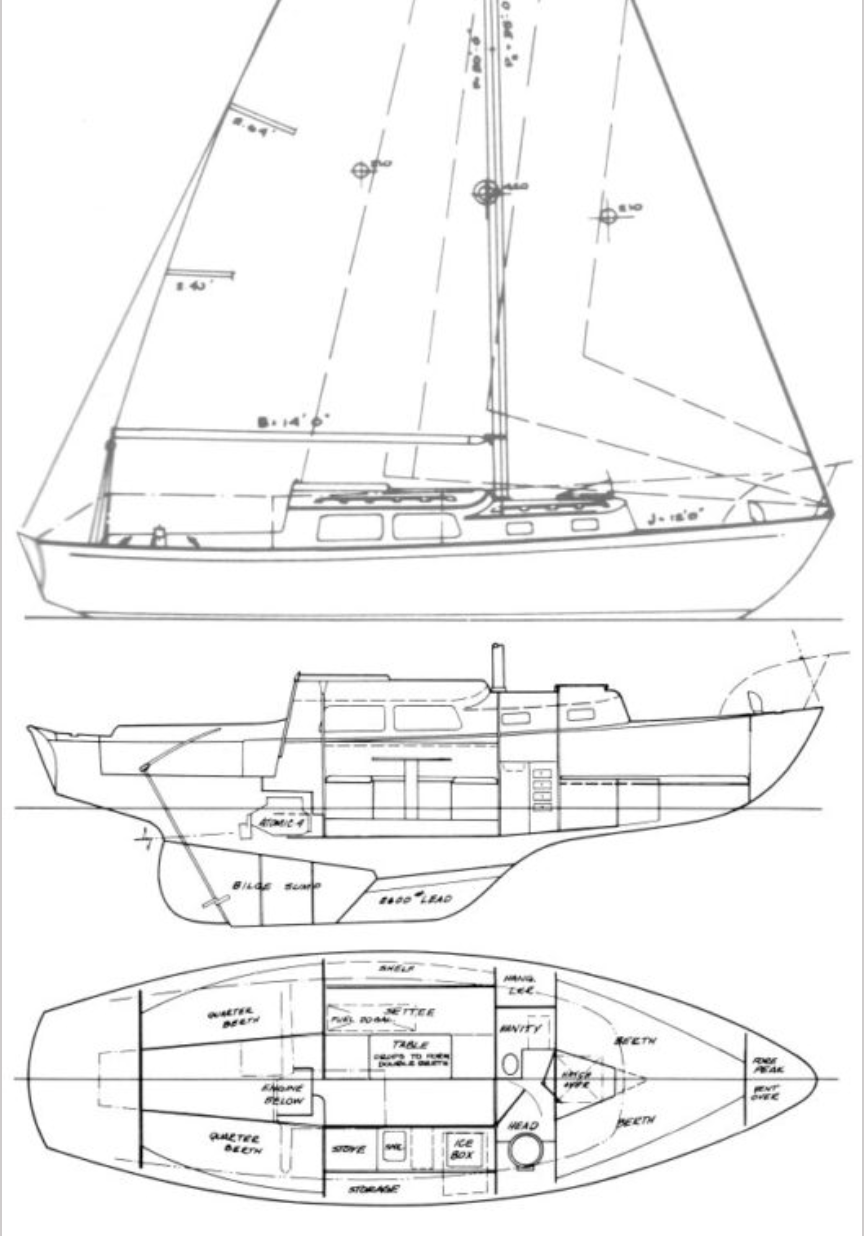
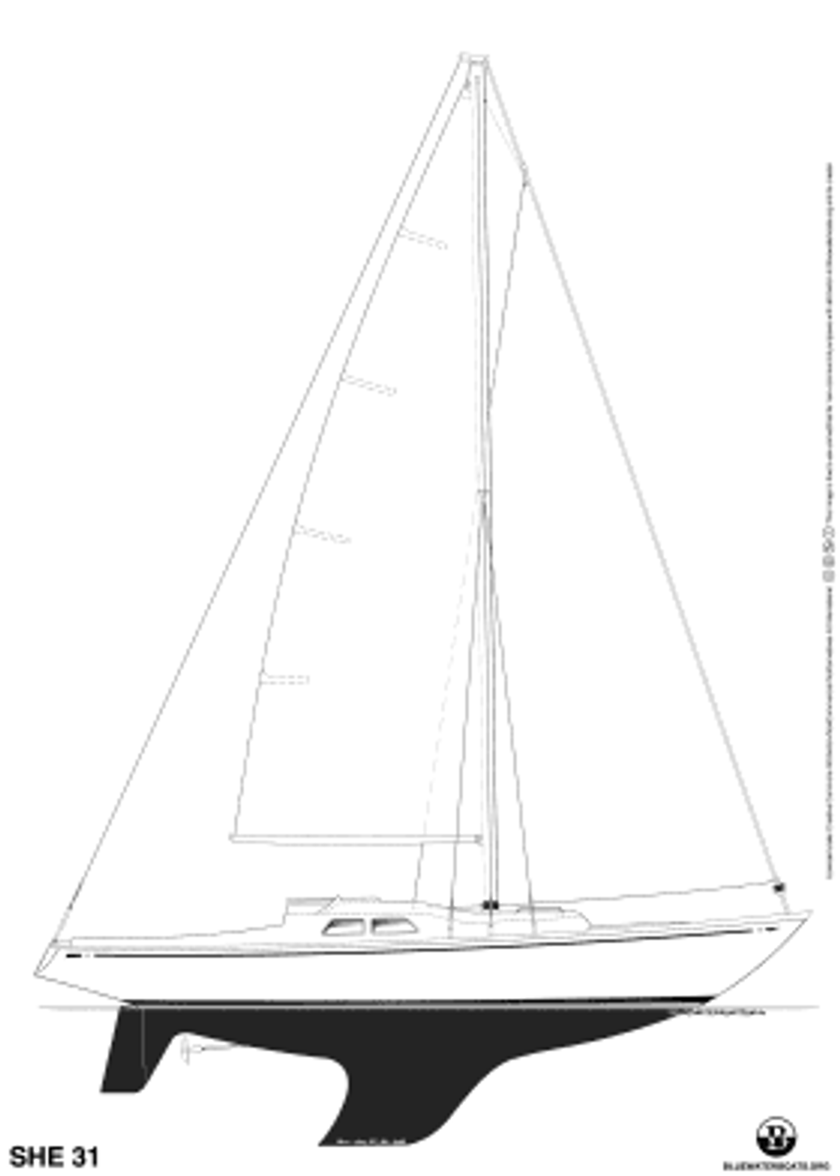
The SHE 31 is Sparkman & Stephens design 1899, built in Britain by South Hants Engineering from 1969. It came from the half-ton racing rule rather than from a cruising brief. Its narrow beam, short waterline, deep fin, and skeg-mounted rudder reflect that origin.
The earlier catalog record mixed several related boats into one production history. It named the Swedish IW yard as builder and carried the IW-31’s 1968–1985 dates. Those figures belong to design 1899C, a related Swedish version, not to the British SHE 31 itself. No reliable final SHE production year has been found, so the record now gives only the documented 1969 start.
Dimensions and Design Family
SailboatData lists the SHE at 30.33 feet overall, 22 feet on the waterline, 8.83 feet of beam, and 5.42 feet of draft. Displacement is 7,800 pounds with 3,400 pounds of iron ballast. Reported sail area is 410 square feet. These figures give the boat substantial ballast and sail for its size, paired with a high displacement-to-length ratio because the rated waterline is short.
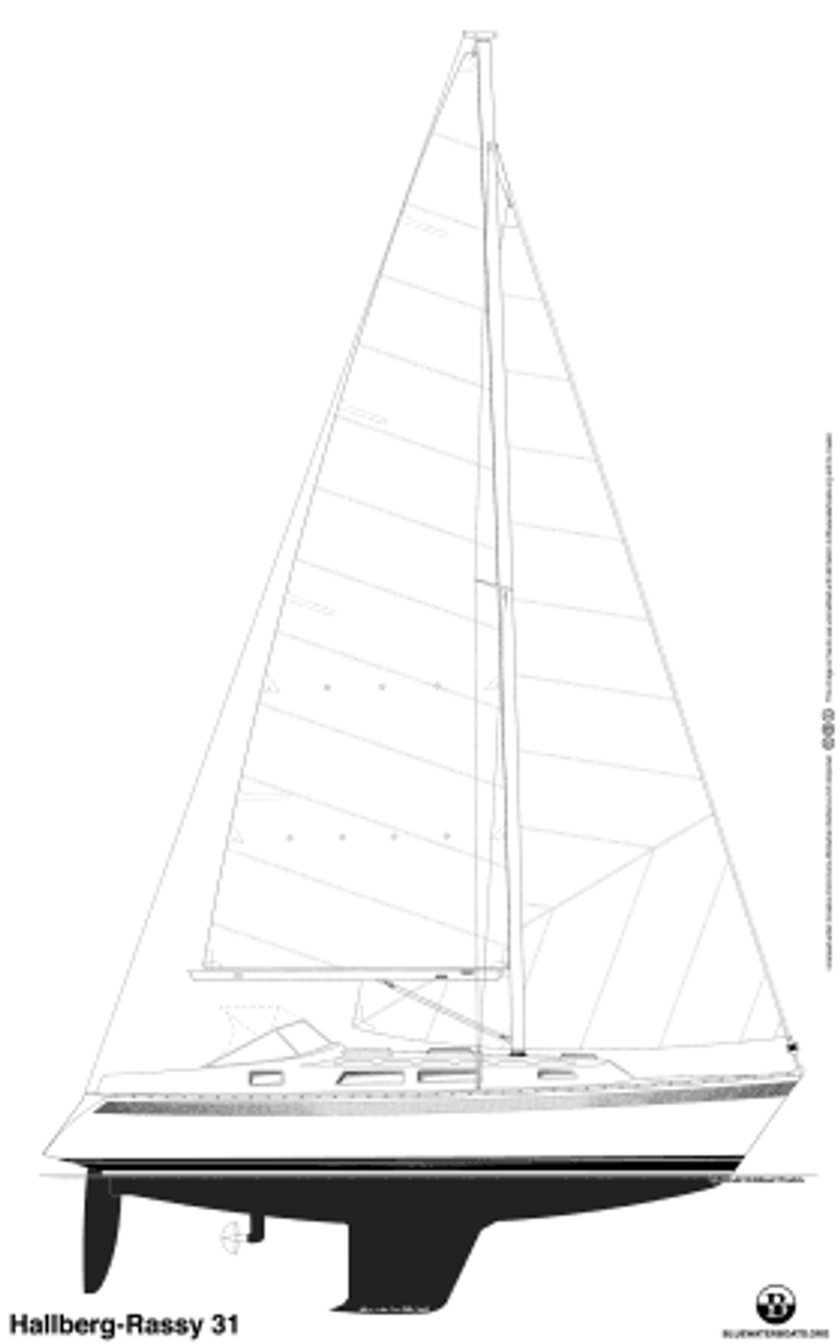
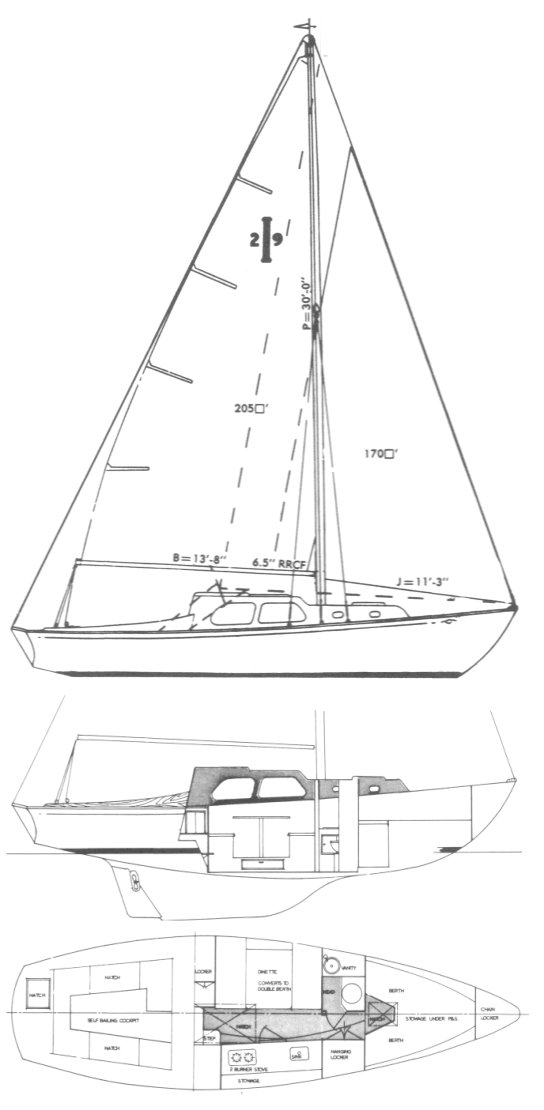
Several names share the basic hull or design lineage. The SHE 9.5 Traveller received more freeboard, a different deck and coachroof, and increased headroom. The Delta 94 or 95 used the same design number and was finished by Laird Adams Engineering. The Swedish IW-31 had its own production history and three revisions. A buyer should not assume an advertisement using one name has the deck, interior, hardware, or dimensions of another.
Hull and Rig
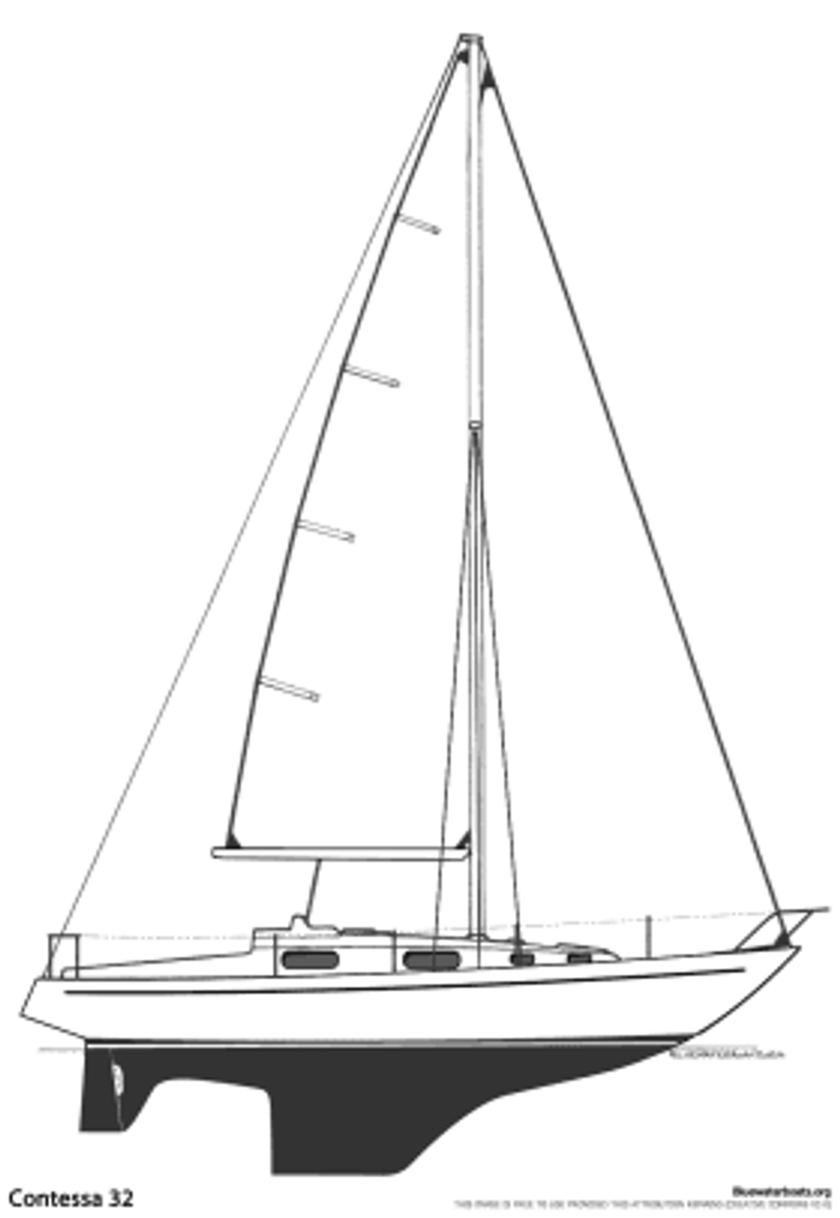
The SHE uses a masthead sloop, swept fin keel, and separate skeg-supported rudder. The propeller is carried on a bracket ahead of the rudder rather than in a keel aperture. This arrangement gives cleaner steering flow than a full-keel cruiser and less protection for the propeller and shaft.
The narrow beam and deep ballast should help the boat stand to its sail, while the pinched ends and short static waterline are products of the rating rule. Actual sailing waterline grows as the boat heels. Loading heavy cruising stores into the ends can change trim and increase pitching, so the original racing proportions deserve a disciplined stowage plan.
Accommodation and Variants
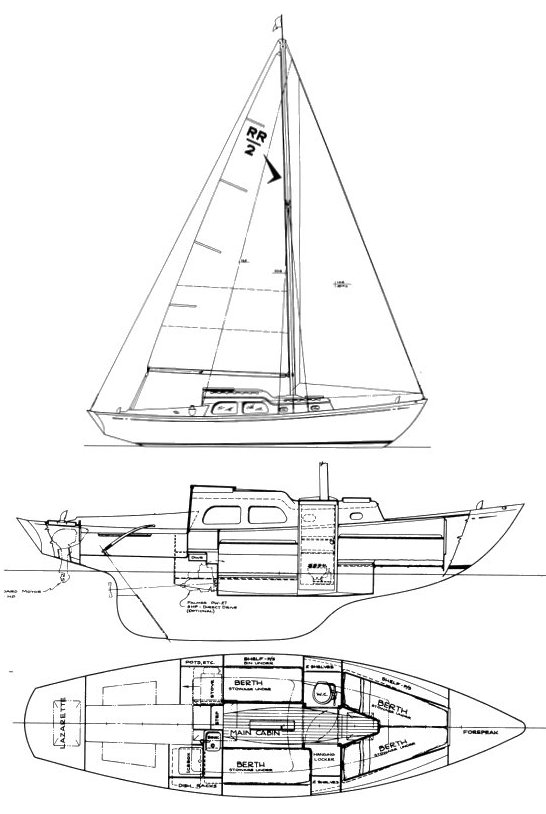
The original SHE interior is compact, especially forward. Five berths may appear on a plan, but berth count does not describe usable sea berths, headroom, ventilation, tankage, or stowage. The Traveller and Delta were attempts to obtain more cruising room without discarding the underlying hull.
The archived review describes good workmanship and durable examples, but it also combines observations from several variants. Confirm the builder’s plate, hull number, deck mold, and interior before applying any general description to a boat for sale.
Offshore Use and Inspection
The design has offshore-racing ancestry, but this record has no named ocean crossing or circumnavigation. A low screening ratio or an ocean-racing family does not document a passage. The rating therefore remains unverified pending boat-specific evidence.
Inspect keel attachment and the hull around the keel root, skeg and rudder bearings, propeller bracket, mast support, chainplates, bulkhead bonds, deck core, and aging through-hulls. Look for hard racing groundings, strained rig attachments, tired steering hardware, and wet laminate around deck fittings. On amateur-finished or later converted boats, trace every structural and systems change. Establishing which design variant is present is the first survey task, not a paperwork detail.