offshoreiron-keel

Dufour Arpege 30

Dufour Yachts · 1966–1976 · Sloop rig

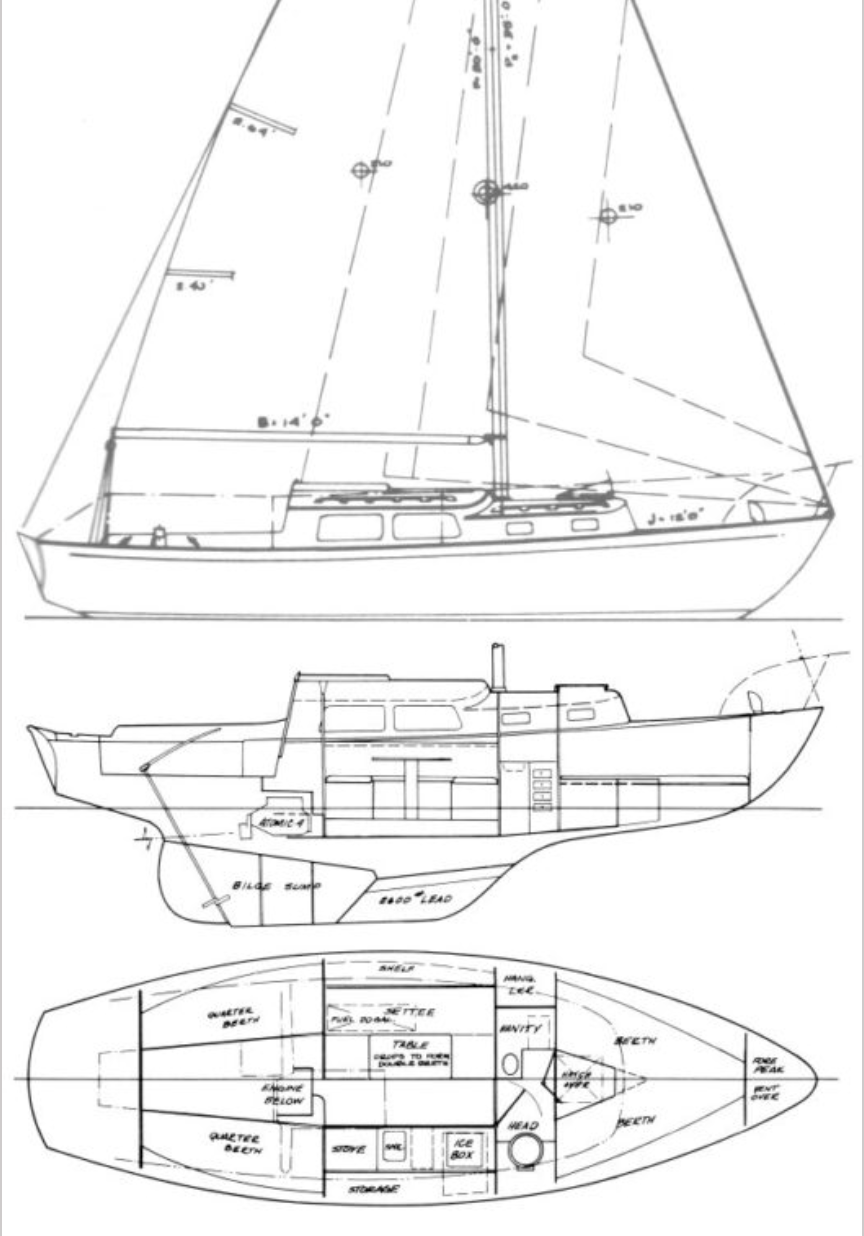
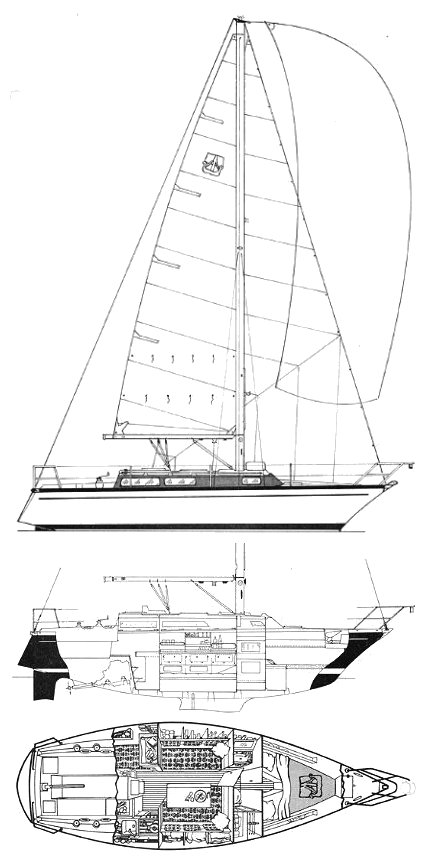
Dufour Arpege 30 profile drawing
LOA30'
Beam9.92'
Draft4.6'
Displ.3.9t
Rigsloop
HullFiberglass

Bluewater Evidence · Bluewater Capable

76% confidence

The Best Used Boat Notebook includes the Arpege 30. Association Éric Tabarly and the contemporary Le Monde archive identify Jean-Yves Terlain's Blue Arpège as second in the 1969 solo San Francisco to Tokyo Transpacifique. Practical Boat Owner also reports that Blue Arpège reached Tokyo ten days after Eric Tabarly. Sailing Magazine reports Atlantic crossings and at least one circumnavigation.

Overview

Michel Dufour introduced the Arpège in 1966. Dufour now describes it as one of the company’s first two boats and reports production above 1,500. The design combines a 22-foot waterline, 9-foot-11-inch beam, 7,700-pound displacement, fin keel, and a rudder carried on a narrow full-length skeg.

Two keel depths were offered. The common standard version draws about 4 feet 5 inches, while the deep keel is about 5 feet 4 inches. Published figures should be matched to the actual boat.

Construction and layout

The hull is solid fiberglass, with a molded interior liner used to support and organize the accommodation. The cast-iron keel is externally fastened. The mast is keel-stepped, and the main bulkheads are tabbed to the hull. Yachting Monthly notes that the interior pioneered internal mouldings with slots to locate the bulkheads, and that the decks are foam sandwich. The magazine warns that older boats can suffer significant deterioration, particularly in the deck coring and around the mast support.

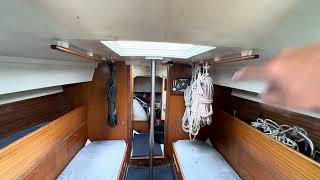
The forepeak is storage rather than a conventional V-berth. The saloon has settees and pilot berths, with quarter berths aft, a galley, and a navigation station. That arrangement favors sea berths and working space over a large forward double. Yachting Monthly describes a pair of quarter berths at the foot of the companionway, an excellent chart table and a rather poor galley that many owners later modified. It says the most significant variants were an extended counter and a deeper fin, both of which it called desirable.

Under sail

The keel and skeg give more lateral area than a modern fin-and-spade design. Owner reports collected by Sailing Magazine describe good tracking and strength in heavier weather, with some weather helm. Sail area varies in published sources and may reflect different calculation methods or keel and rig versions. Yachting Monthly describes the Arpège as beamy and shallow bodied with a high-aspect rig that performed well on the racing circuit, and says those who have sailed her call her perfect for fast offshore cruising. The magazine adds that over 400 a year were built at one time.

Buyers notes

The cast-iron keel and its joint are the first haulout checks. Establish whether the hull has had blister work, inspect the skeg carefully, and assume that standing rigging, wiring, through-hulls, tanks, and engine installations require proof of renewal. Original gate valves are not acceptable substitutes for sound seacocks.

The active French and British owner groups add useful technical depth. Their archives are a better place for model-specific repairs than generic used-boat summaries.

Passage records

Blue Arpège· Jean-Yves Terlain1969

1969 solo Transpacifique, San Francisco to Tokyo

Finished second; contemporary and later accounts report arrival about ten days after Eric Tabarly.

Source: Association Éric Tabarly and Le Monde archive

Edith Kate· Bill Kippen2008

Jester Azores Challenge (2008)

Finished.

Source: Jester Challenge: Azores 2008 page

Calypso· Mike Atkins2024

Jester Azores Challenge (2024)

Finished.

Source: Jester Challenge: Azores 2024 page

Calypso· Michael Atkins2023

Jester Baltimore Challenge (2023)

Finished.

Source: Jester Challenge: Baltimore 2023 page

Lowena Mor· Dominic Power2025

Jester Baltimore Challenge (2025)

Finished.

Source: Jester Challenge: Baltimore 2025 page

Known Issues

Cast-iron keel and fastenersseriousPassageBoats editorial

The external cast-iron keel requires attention to corrosion, fairing, and the keel joint.

Inspection: Inspect keel corrosion, fasteners, joint movement, grounding damage, and the condition beneath fairing.

Source: Sailing Magazine, Dufour Arpege 30

Original through-hulls and aging systemsseriousPassageBoats editorial

The original boats used gate valves, and every original system is now several decades old.

Inspection: Verify proper seacocks and inspect wiring, rigging, tanks, hoses, and any repower installation.

Source: Sailing Magazine, Dufour Arpege 30

Recommended In

As an Amazon Associate, PassageBoats earns from qualifying purchases.

What sailing channels say about the Dufour Arpege 30, quoted from video transcripts with a link to the exact moment. Opinions belong to the speakers; the written review above stays independent of them.

discusses

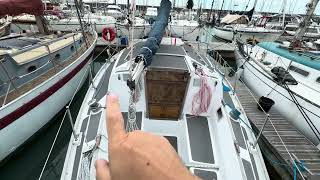
Walkaround of an Arpege 30 the presenter says was built in 1969. He lists a Yanmar diesel with shaft drive and a skeg-hung rudder, and says the present owner has had her about 20 years.

discusses

Below, the presenter finds the interior "really remarkably well maintained", with a large chart table ("the older boats do tend to have much larger chart tables"), quarter berths either side of the galley, a forward heads and six berths in total.

warns⚙ windows⚙ hatches

The presenter points out that the large saloon window and one of the big hatches are delaminating, and says new ones may be wanted. He also notes the bulkhead with an aperture that stiffens the boat athwartships, handrails to brace on while going forward, and a very large nav table.

discusses

The broker notes the winches on the coach roof mean most sail controls can be handled from the cockpit without going forward. He says the side decks are fairly thin because of the very wide, high coach roof, which gives lots of headroom below, and that the Treadmaster deck looks in reasonable shape.

  1. [1]ReviewBateaux.com: Fiche technique Arpege par Dufour Yachts (9.25 m, 1967-1977)- Tankage: "90 l Volume cuve eau douce"
  2. [2]MagazineYachting Monthly: Arpege (used boat review)- Model-specific review used for page detail.
  3. [3]SpecificationsDufour Yachts, company history in current range brochure- Builder source confirming the Arpège as an early Michel Dufour design and production above 1,500 boats.
  4. [4]Owner ReportAssociation des Passionnés d'Arpège- Model association history and racing record.
  5. [5]EditorialAssociation Éric Tabarly, Pen Duick V- Institutional account of the 1969 solo San Francisco to Tokyo Transpacifique. Identifies Terlain as second and records Tabarly's ten-day lead over him aboard an Arpège.
  6. [6]MagazineLe Monde archive, Jean-Yves Terlain deuxième de la course transpacifique- Contemporary report identifying Terlain, Blue Arpège, and second place in the solo Transpacifique.
  7. [7]ReviewPractical Boat Owner, Best 30ft French boats for cruising sailors- Independent sailing publication corroborating that Terlain entered Blue Arpège and reached Tokyo ten days after Tabarly.
  8. [8]ReviewSailing Magazine, Dufour Arpege 30- Construction, keel variants, underbody, offshore history, and buyer inspection points.
  9. [9]SpecificationsSailboatData, Arpege 30- Principal-dimension and rig cross-check.
  10. [10]BookThe Best Used Boat Notebook- Evidence that the model appears in the copyrighted book. Readers need the book for its full review.
See something wrong? Suggest a correction

Corrections need evidence: a link or citation we can check. Sourced suggestions get reviewed and credited in the entry's change notes if applied.

Owner knowledge counts: name the boat and year so we can attribute it.