Overview
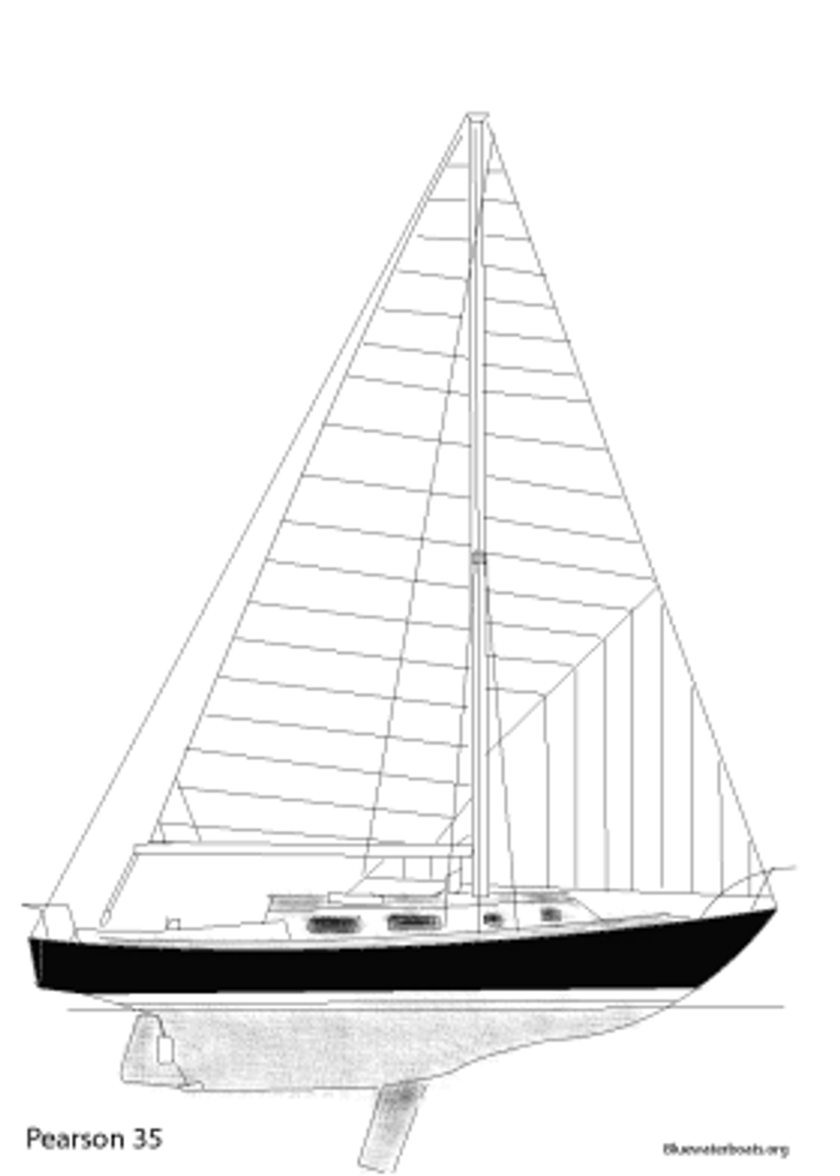
Carl Alberg drew the 35 for Pearson Yachts of Rhode Island, introduced in 1961 as the larger sibling to the Triton and Alberg 30. Pearson built about 280 hulls before ending the run in 1967, a solid production life for a boat of her size and era. Alberg himself considered her a coastal cruiser rather than a dedicated offshore design, but the type’s narrow, deep hull and heavy displacement have carried owners well beyond coastal waters in practice.
Design and Construction
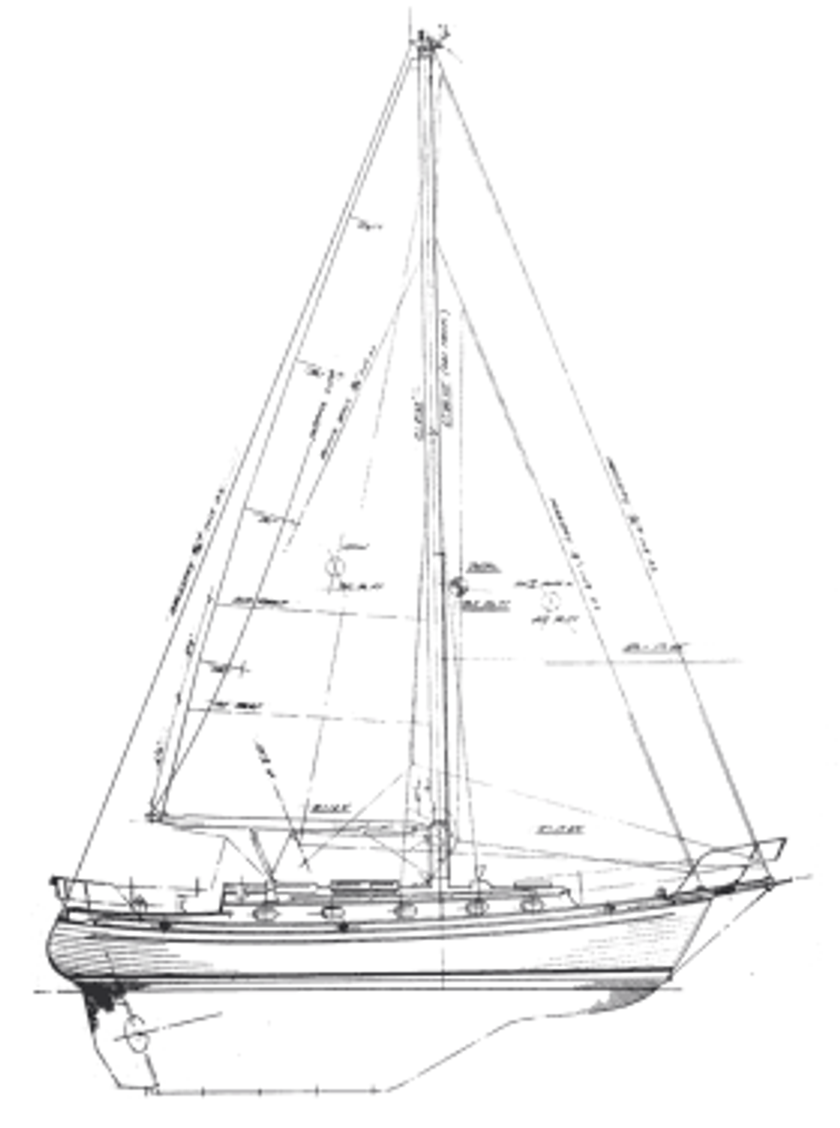
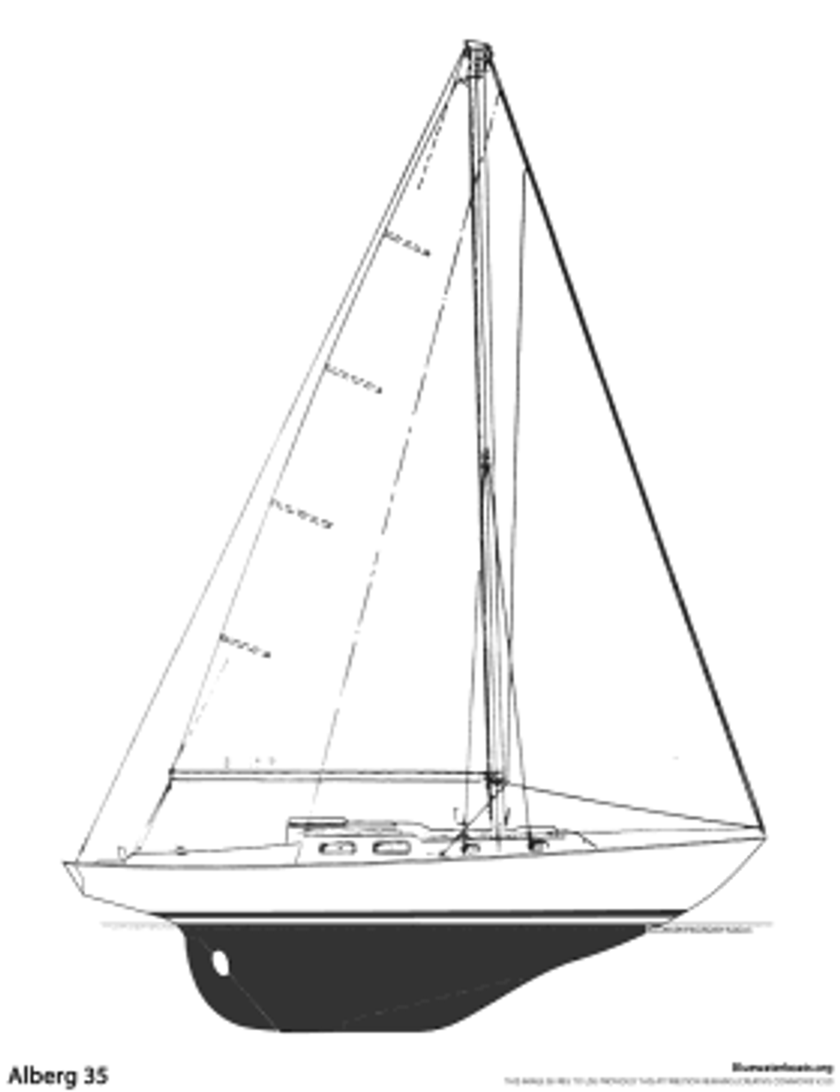
Fiberglass construction was still new when Pearson laid up the first hulls, so they erred conservative and heavy, over an inch thick below the waterline. Practical Sailor calls the layup “easy to repair and relatively foolproof” even if not especially stiff by later standards. The deck is balsa-cored, and early hulls used inferior edge-grain balsa that can delaminate once water gets in. Ballast is 5,300 lb of lead, cast into the keel cavity and encapsulated in fiberglass, which removes keel bolts from the maintenance list but leaves the casting itself prone to voids opening up against the surrounding glass over time. The keel is a cutaway full keel with a forefoot cutaway and a keel-hung rudder, tiller-steered as standard with wheel steering available as an option.
Under Sail
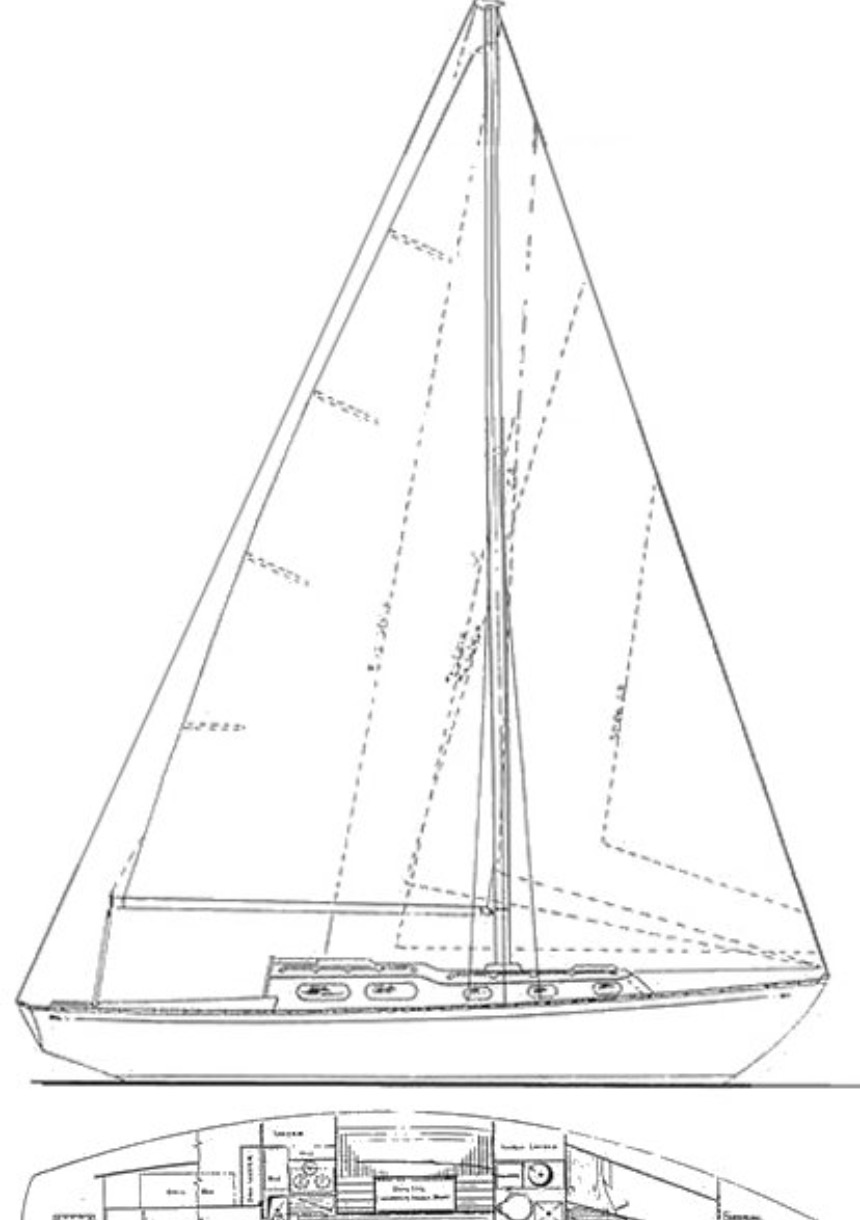
The Alberg 35’s narrow 9’8” beam and slack bilges make her tender initially, heeling to about 25 degrees before her 42% ballast ratio starts to stiffen her up. Her long overhangs lengthen the effective waterline as she heels, so she sails faster than the 24-foot LWL alone would suggest, at the cost of a tendency to hobbyhorse in a chop. Practical Sailor’s review cites an owner who sailed one nonstop from Honolulu to Tahiti in 23 days, and a separate account of an 8,000-mile Pacific cruise aboard the type, real offshore mileage for a boat her designer meant mainly for coastal work. She came in both sloop (545 sq ft) and yawl (583 sq ft) configurations; the mizzen on yawl-rigged boats can double as a riding sail at anchor.
Buyers Notes
Sound the deck for soft spots from balsa-core delamination, particularly around stanchions and hardware, and check for gelcoat crazing that has progressed from cosmetic into the laminate. Sound the keel for hollow spots that would indicate the ballast casting has separated from the surrounding fiberglass. Inspect the mast compression post and supporting bulkhead structure for cracking or movement; some owners reinforce this area for offshore use. Early boats used galvanized fuel and water tanks that eventually corrode through and should be checked or replaced. As with any boat this age, expect the standing rigging, deck hardware, and original engine to need systematic replacement if a previous owner hasn’t already done it.
Layout and Interior
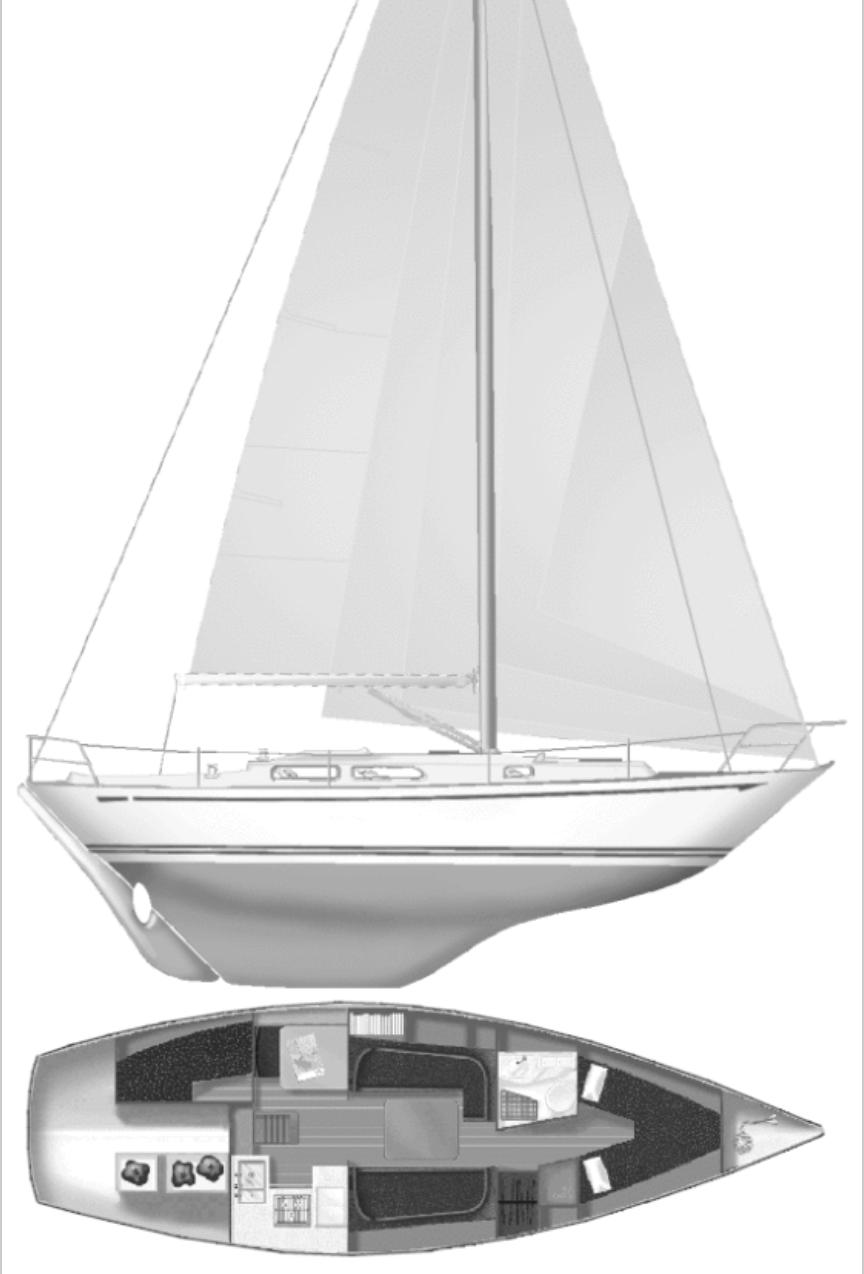
Two interior layouts were offered. A dinette version drops the cabin table to form a wide berth to port, with the galley to starboard alongside a 3-burner stove, icebox, and pantry lockers. The more common layout runs settees along both sides of the cabin, with the galley moved aft into the companionway area. Engine access is good, with several removable panels giving nearly complete access. Water and fuel tankage sit below the cabin sole, and a deep bilge keeps water from sloshing into the lockers in a seaway.