Overview
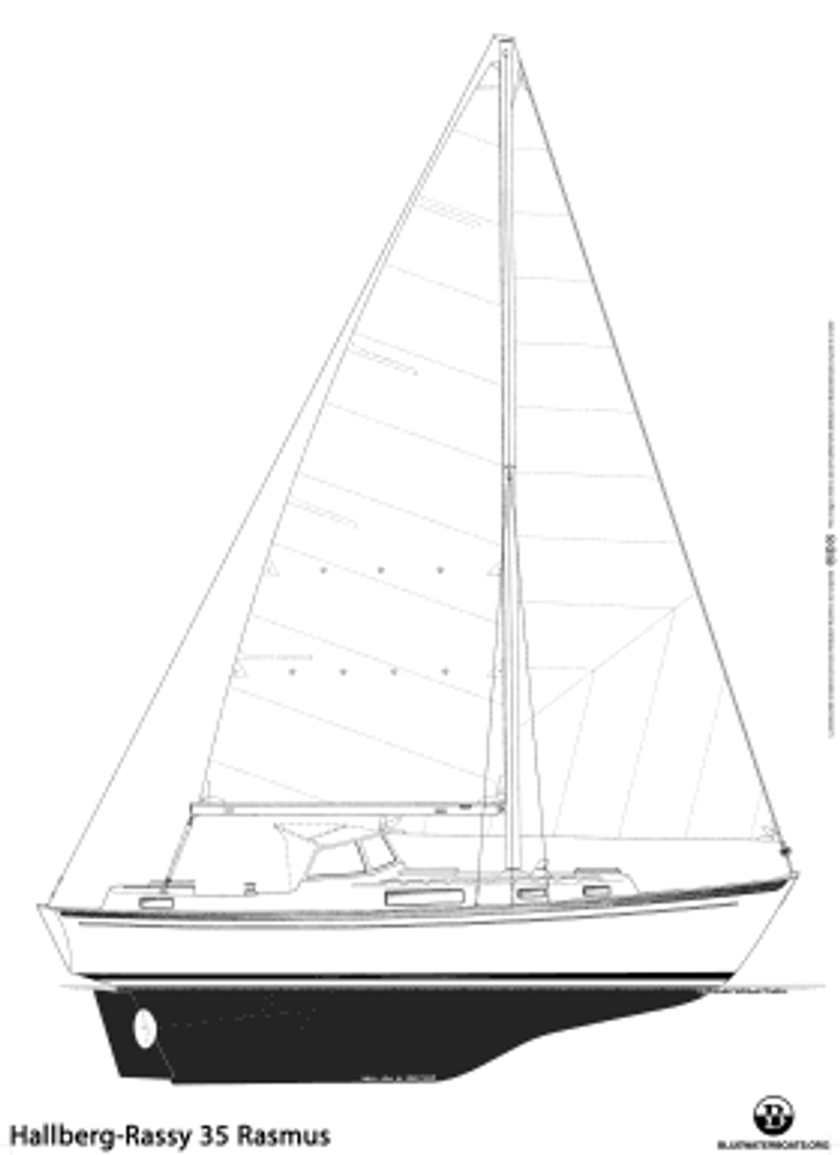
The Rasmus 35 established much of the layout later associated with Hallberg-Rassy. Olle Enderlein drew the boat with a center cockpit, fixed windscreen, long keel, aft cabin, and a relatively large diesel for its era. Hallberg-Rassy says 760 were built from 1967 through 1978, making it one of the yard’s most numerous designs.
The first two boats were mahogany. Hallberg-Rassy changed both hull and superstructure to fiberglass from hull three onward. A buyer therefore needs to establish construction and hull number before treating the fiberglass class specification as universal.
Dimensions, Keel, and Rig
The builder lists a 34-foot 6-inch hull, 27-foot 7-inch waterline, 10-foot beam, and 4-foot 3-inch draft. Empty displacement is 12,125 pounds. The 5,500-pound iron keel is enclosed in the deep fiberglass bilge, giving a ballast ratio near 45 percent.
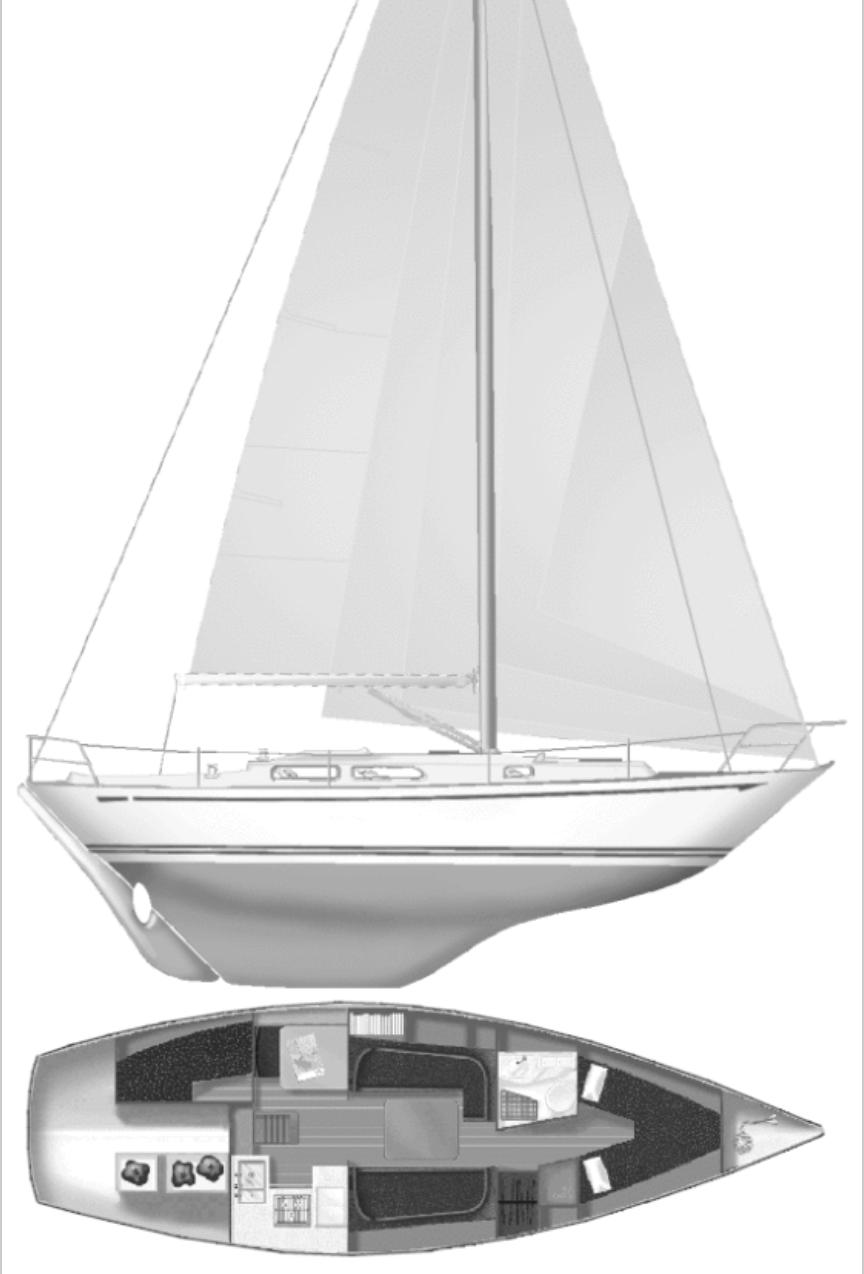
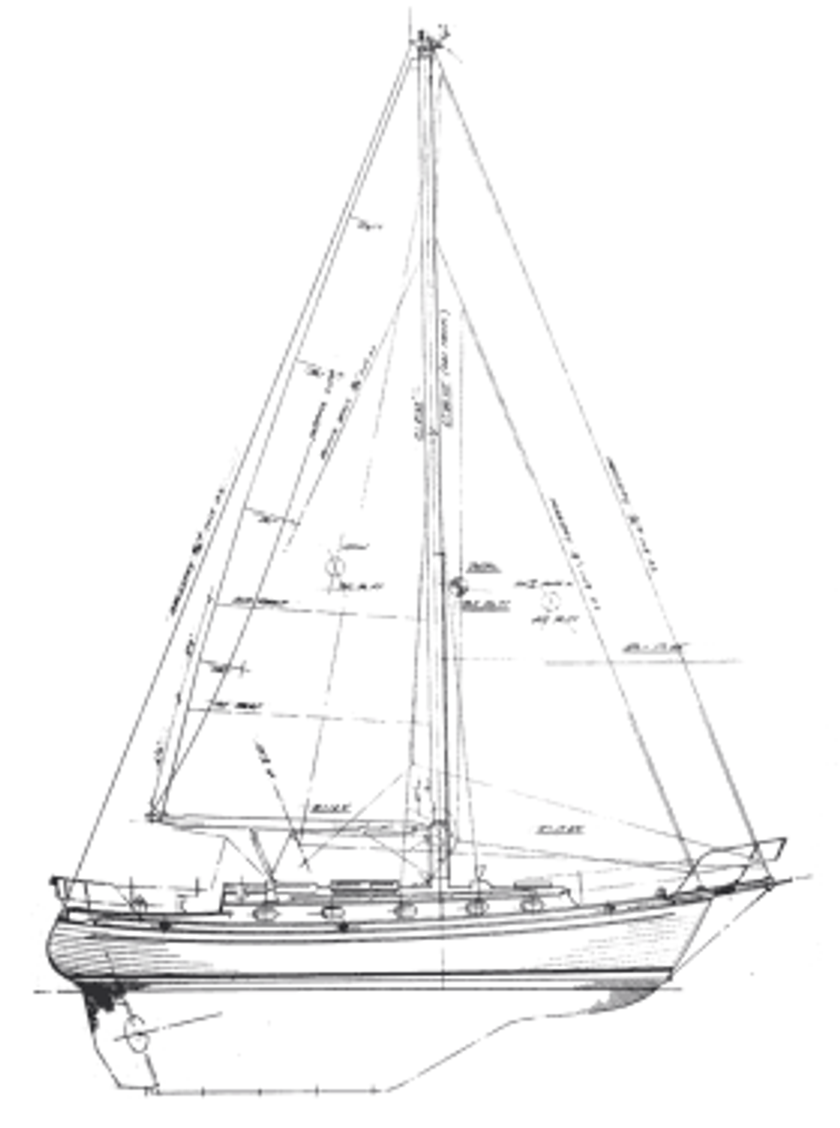
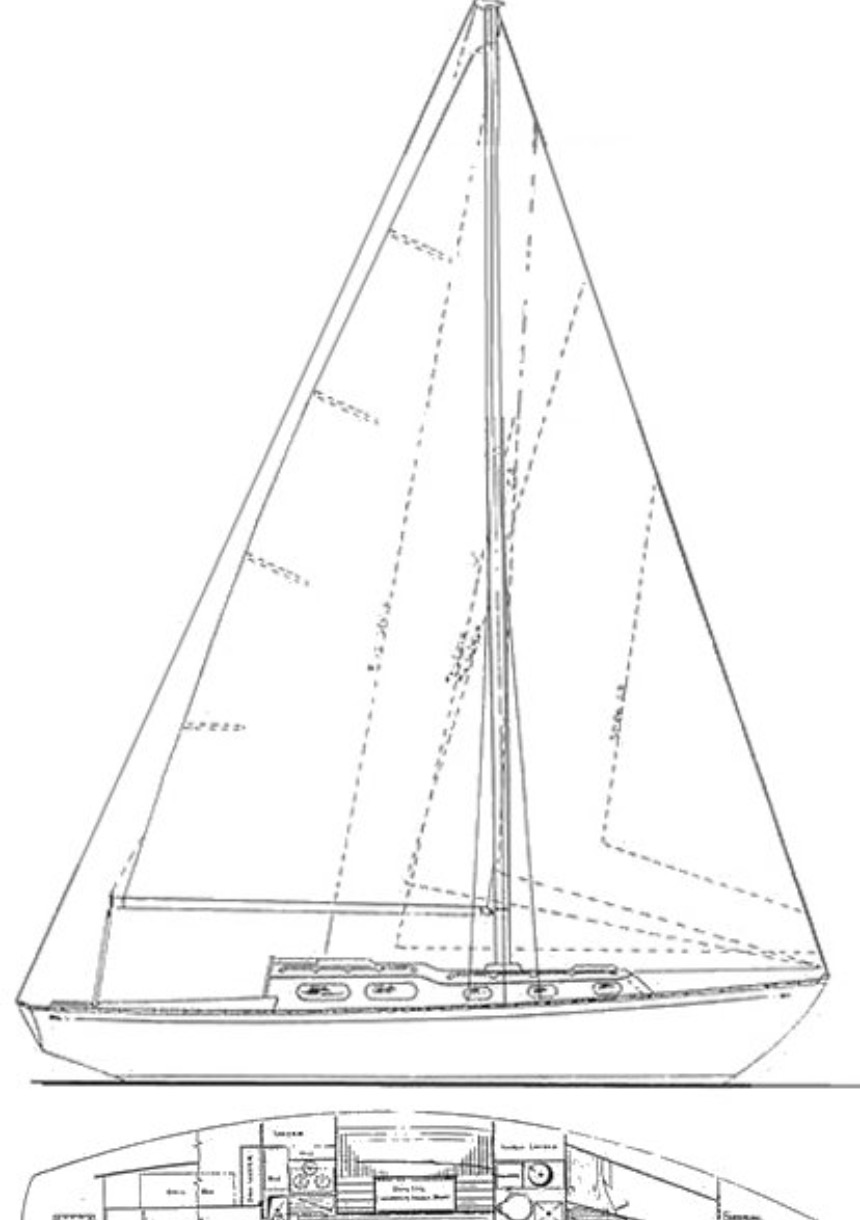
Hallberg-Rassy publishes sail plans for both sloop and ketch versions. The main record now uses the sloop because that is how the class is cataloged by SailboatData, with the ketch retained as a factory variant. The builder gives 485 square feet with jib. Older summaries show nearby totals because sail area changes with the headsail convention.
The original standard specification describes a solid fiberglass hull with molded longitudinal stringers and tanks. The deck and cabin are a one-inch polyvinyl-foam sandwich. Hull and deck are joined with overlapping internal laminate, while their molded edges form a bulwark under the teak cap rail. That is useful construction history, not a substitute for moisture testing and inspection after five decades.
Under Sail and Power
The Rasmus has a short waterline and modest sail area for its displacement. The long keel should track steadily and protect the rudder, but it also asks for room when tacking or maneuvering astern. The ten-foot beam is narrow beside many later 35-foot cruisers, and loading the ends can aggravate pitching.
The protected cockpit and substantial original tankage suit exposed cruising. Hallberg-Rassy also fitted a Volvo Penta MD21, listed by the builder at 45 horsepower. Most surviving engines and systems will have been replaced or substantially altered. Engine access, exhaust routing, cooling, fuel tanks, and added weight matter more than the original badge.
Interior and Cruising Use
The center cockpit divides the accommodation into a forward cabin, saloon, and separate aft cabin. The original aft cabin is reached from the cockpit rather than through an interior passage. This creates privacy in a short hull but makes movement between cabins exposed in poor weather.
The fixed windscreen was unusual in 1967 and remains one of the boat’s practical features. Hallberg-Rassy calls the Rasmus the blueprint for its later concept. That claim fits the layout and production history, though it says nothing about the condition of an individual boat.
Evidence Limits and Inspection
The archived review says numerous Rasmus 35s circumnavigated but names no boat, skipper, route, or result. The former circumnavigation-proven tag has been removed. The capable rating rests on design and construction evidence, not a verified voyage record.
Inspect the deck core around every fitting, the hull-to-deck laminate, rudder stock and bronze fittings, encapsulated iron ballast for internal corrosion or cracking, mast support, chainplates, tanks, and cockpit drainage. Confirm whether the boat is sloop or ketch and whether it is one of the two wooden hulls. Original joinery can be attractive, but structural access and decades of owner changes deserve more weight than finish.