Overview
The Mason 33 is an Al Mason design built by Ta Shing in Taiwan from 1984 to 1989 and imported by Pacific Asian Enterprises. Only 20 were built. It is the smallest of the Mason line, which includes the Mason 43 and 53.
Design and Construction
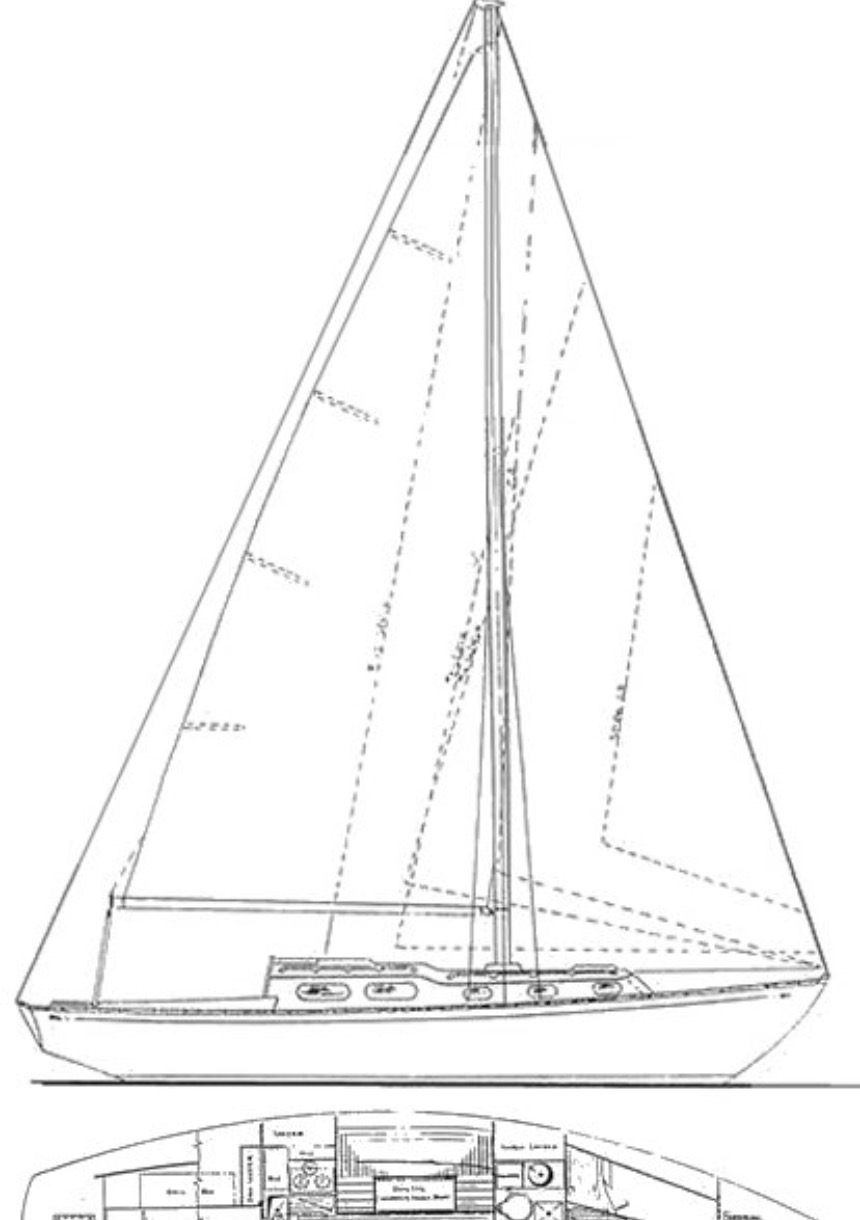
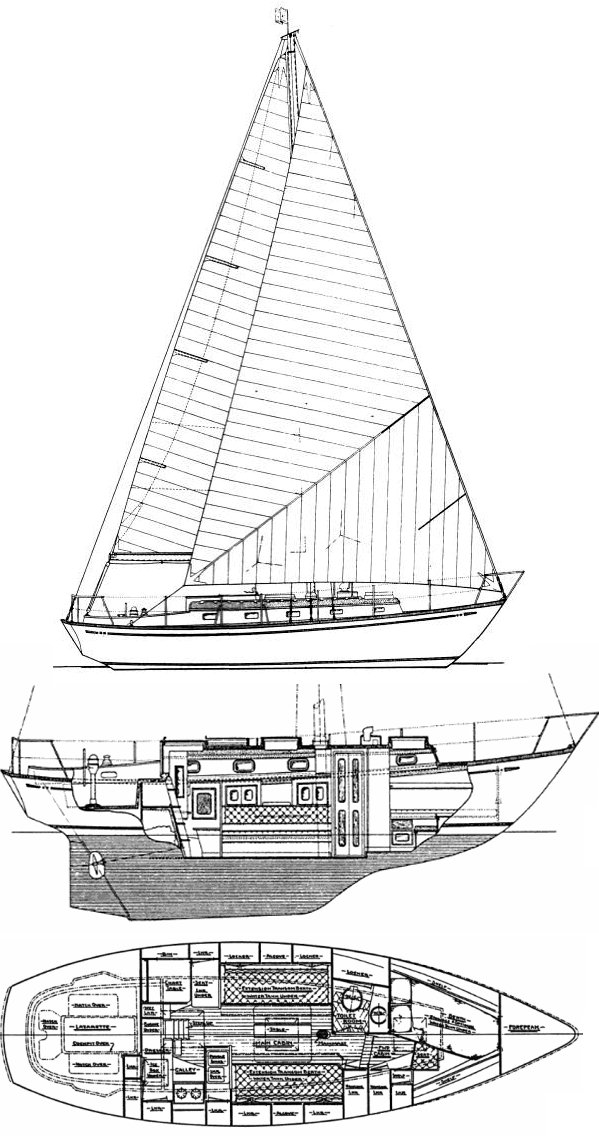
The hull is a moderate, traditional long-keel form with an attached rudder, laid up in solid hand-laid fiberglass heavier than usual and stiffened with four full-length stringers. The ballast is iron, placed inside the hull molding in two pieces. Mason’s brief called for a seakindly hull able to carry ample stores. Practical Sailor notes that the iron ballast is sealed in place to minimize rust or leakage after a hard grounding, and that the hull is reinforced in the way of seacocks, with a nameplate on every through-hull. The deck is a balsa-cored layup with plywood in the cabin trunk and other spots to back the interior joinerwork. The reviewer found no flaws on the topsides and cabin house of the boat examined most carefully.
Under Sail
Practical Sailor found her moving well in 8 to 10 knots and best with the wind slightly forward of the beam, but slow by modern standards, especially in light air and to windward. She rolls a lot dead downwind in heavy air and is reluctant to back up in a straight line; otherwise she tracks and turns well for a long-keel boat. Practical Sailor judged her designed for long passages and the logical choice in her size for a serious bluewater cruiser or liveaboard.
Buyers Notes
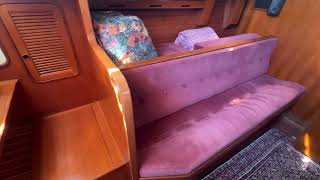
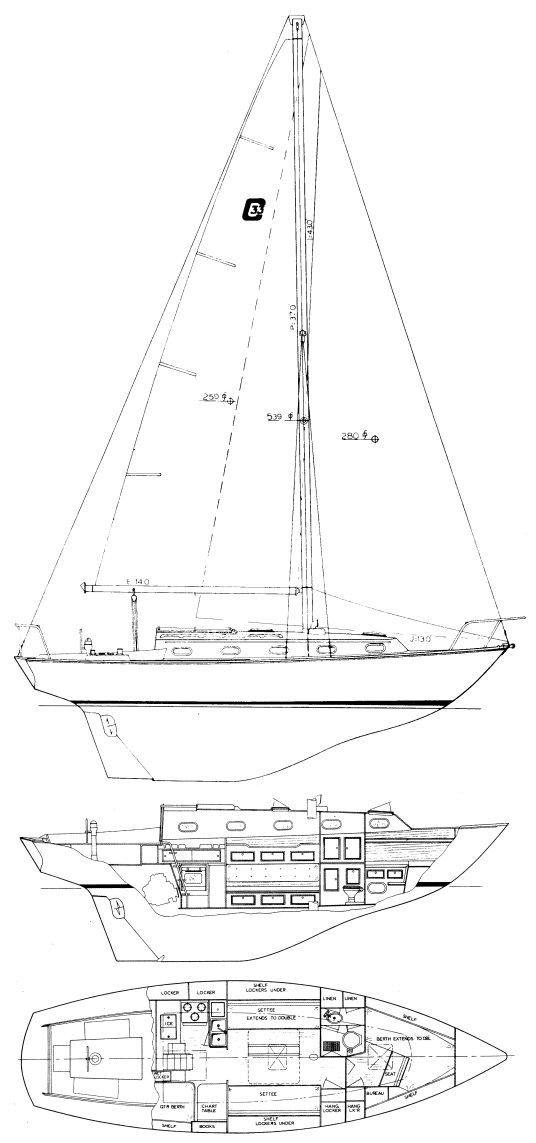
Practical Sailor heard of hull-to-deck joint leaks on older Masons but doubted the 33’s joint could leak. The two-blade propeller hammers under power, and there is no good way to fit a permanent swim ladder. Neal’s verdict is blunt: traditional, short-waterline boats with deck leaks and high maintenance. Early boats had a 21 hp Westerbeke, and later boats a 27 hp Yanmar three-cylinder, with a 35 gallon fuel tank. Full access to the engine means removing the companionway steps and a drawer assembly, which takes some time. Practical Sailor also liked the nav station, the U-shaped galley and the off-center forward berth, which is easier to enter and exit. The boat comes with a mainsail and a 100 percent working jib, so most owners will want to add a genoa.