Overview
Bob Johnson, Island Packet Yachts’ own founder, designed the 31 as the boldest gamble of the company’s early lineup, and it paid off, becoming the most successful Island Packet up to that point. Her styling leans traditional with a real dose of broad-hulled New England catboat in the profile, roughly 262 built between 1983 and 1989. Like those working catboats, she carries a roomy interior and shallow draft in a wide, “codhead”-shaped hull.
She isn’t cheap for a 31-footer, and her cavernous interior and solid build are a big part of why, on top of the reputation Island Packet had already built. Her unconventional shape doesn’t win everyone over, but she’s widely regarded as a comfortable, classic liveaboard, especially in skinny water. Whether she’s a genuine offshore boat is more contested; opinion in the owner community runs both ways.
History
Bob Johnson, a naval architect who’d already designed for Irwin and Endeavour, struck out on his own in Largo, Florida in 1979, building small boats under the name Traditional Watercraft Inc. In 1980 he reworked old molds from the defunct Bombay Yachts into the Island Packet 26, sold through Mark I and Mark II updates and eventually as the Island Packet 27, a solid early success. In 1983, at a moment when plenty of builders were struggling just to survive, Johnson bet the company on an all-new design: the Island Packet 31. The gamble paid off with 14 orders at the Annapolis sailboat show and launched a seven-year production run that only ended in 1989 when the Island Packet 32 took over.
Island Packet built real owner loyalty through its designs and support network, still a good resource for model-specific maintenance and refit questions today.
Layout and Configuration
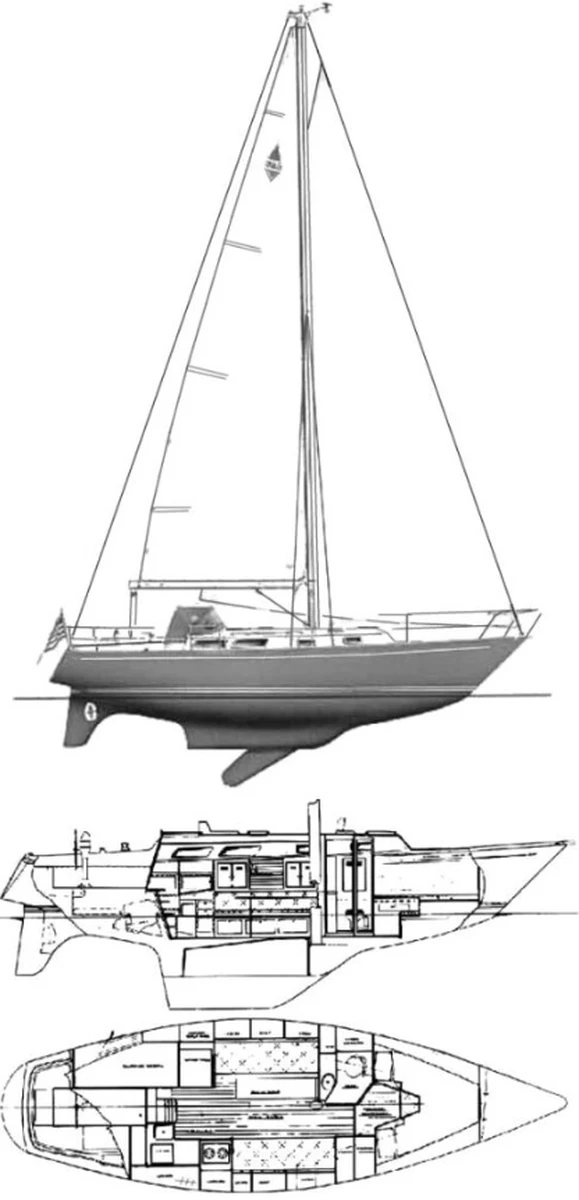
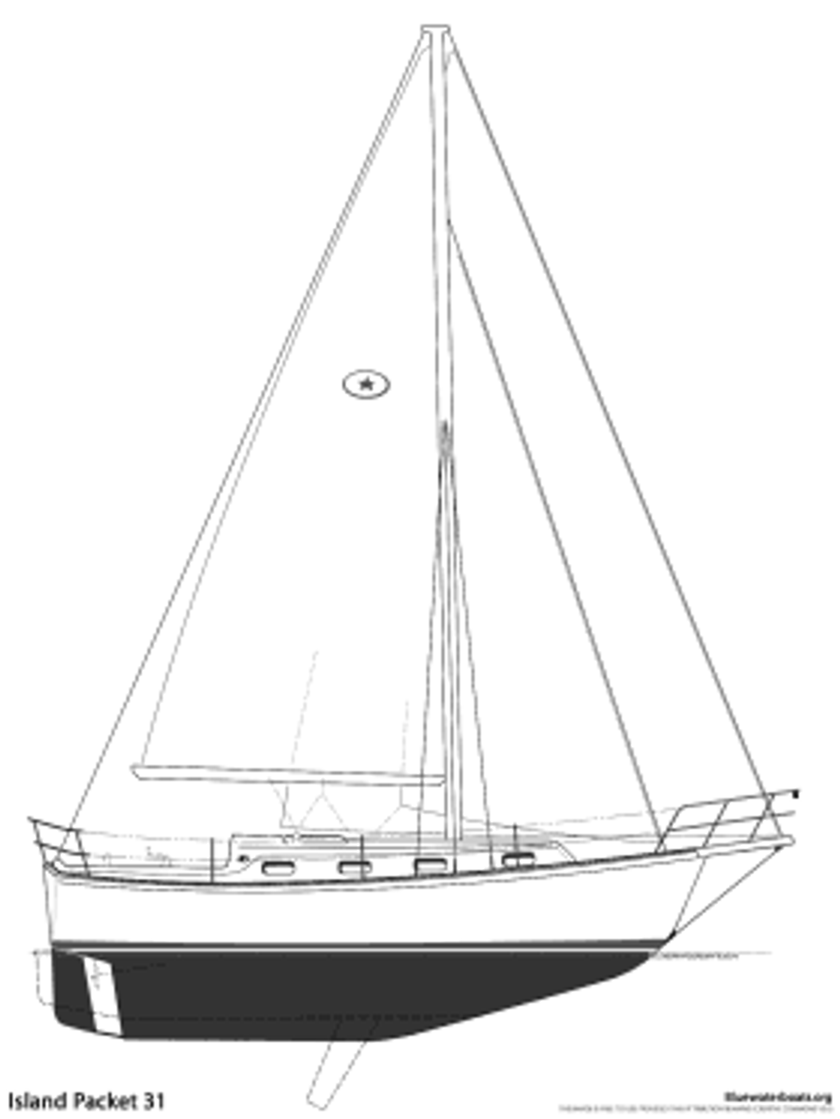
Most 31s left the factory with a double-headed sloop rig, though about 10 percent carry a plain sloop that reportedly works well with a 150 percent genoa. Her distinctive look comes from a nearly plumb stern, short overhangs, a sweeping sheer, and a stubby bowsprit, all sitting on a hull that stays broad nearly her full length, with maximum beam of 11’6” carried forward of amidships. The flat cabin roof, full-length handrails, and wide side decks make moving around on deck easy and safe, and the cockpit, over 7 feet long, is genuinely oversized, arguably too big for serious offshore work.
Inside she feels light, airy, and bigger than her length suggests. A folding door doubles as a fold-down chart table that can close off the aft double quarter berth, a clever bit of space efficiency. Generous headroom, a roomy head, several hanging lockers, and a full wraparound galley round out the accommodation.
Under Sail
Like her catboat inspiration, she’s no windward star, unsurprising given the wide forward sections and large wetted surface. Her short bowsprit lets her carry enough sail to reach at a reported 6 knots on that long waterline, and she tracks well with good directional stability, if not much liveliness at the helm. Owners describe her as easy to singlehand and stiff enough to hold full sail in up to 20 knots, though light-air performance disappoints, and some describe an uncomfortable, sluggish rolling under sail, particularly when the water’s choppy, driven by her large roll angles.
Design and Construction
Island Packet pairs traditional looks with genuinely modern construction, and while the 31 isn’t a heavy boat, she’s proven solidly built over time. The deck core is Island Packet’s own proprietary Polycore rather than balsa or foam, and it’s held up with no reported delamination. Interior liners are used but, by most accounts, installed sensibly enough to leave real access to the bilge and other critical areas. Practical Sailor’s own review flags one genuine weak point worth checking on a survey: early boats had chainplates embedded directly in the laminate, and some corroded; the accepted fix is retrofitting external, through-bolted stainless chainplates. The same review also notes limited backing control from the full-keel, aperture-mounted prop arrangement, and original Par toilets that most owners eventually upgrade.
Below the waterline she carries Johnson’s signature full foil keel, a fin shape stretched fore and aft into something closer to a long keel, a compromise meant to add performance while keeping draft shallow. Standard draft is just 4 feet, and roughly 10 percent of 31s were built with a centerboard option that shoals it further to 3 feet. The keel isn’t bolted on but molded as one piece with the hull, a detail Johnson himself considered central to what makes an Island Packet an Island Packet.
Links, References and Further Reading
Island Packet 31 Review by John Kretschmer, Sailing MagazineIsland Packet 31 Review by Greg Nestor in Twenty Affordable Sailboats to Take You AnywhereIsland Packet 31 on the Island Yachts WebsiteIsland Packets Interview with Bob Johnson on Good Old Boat Magazine, Oct 2004