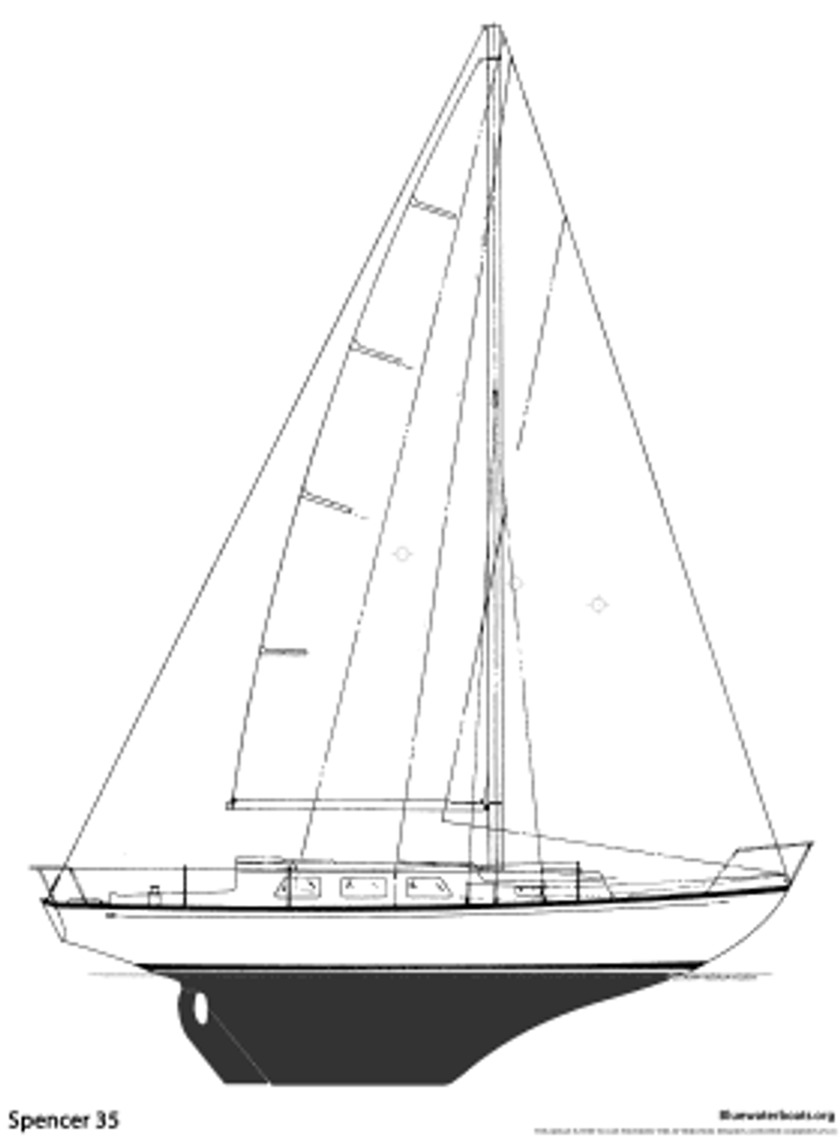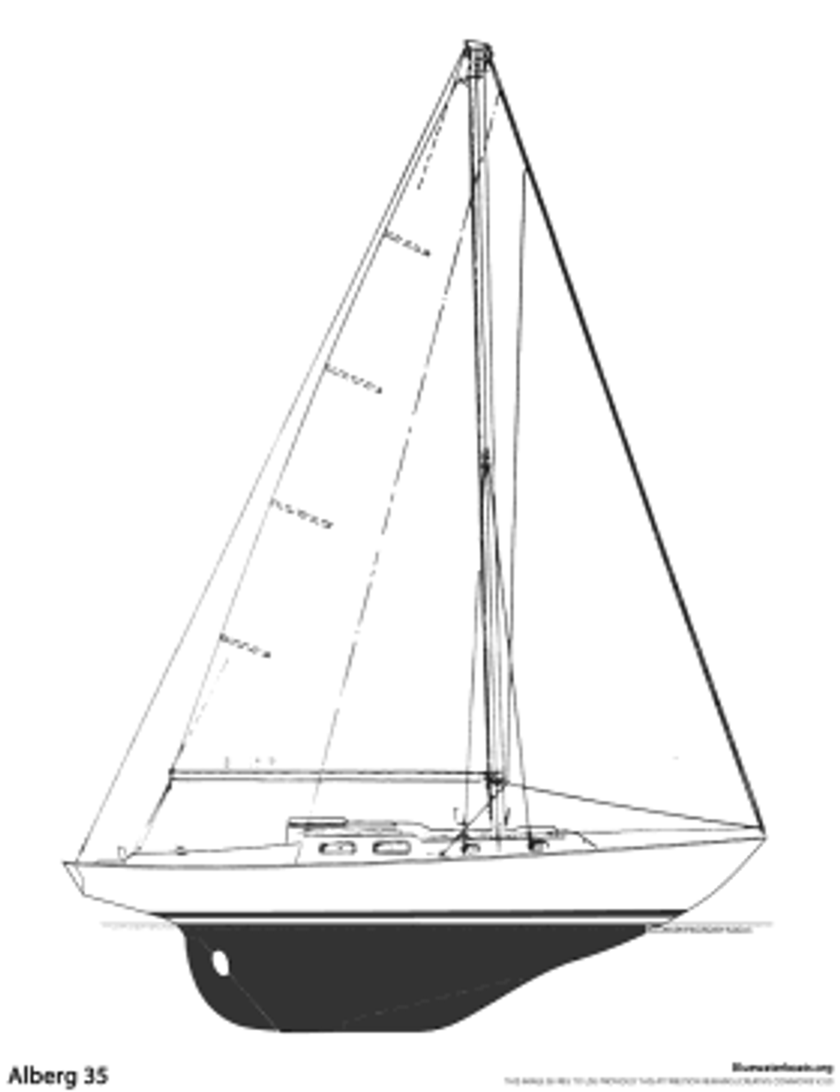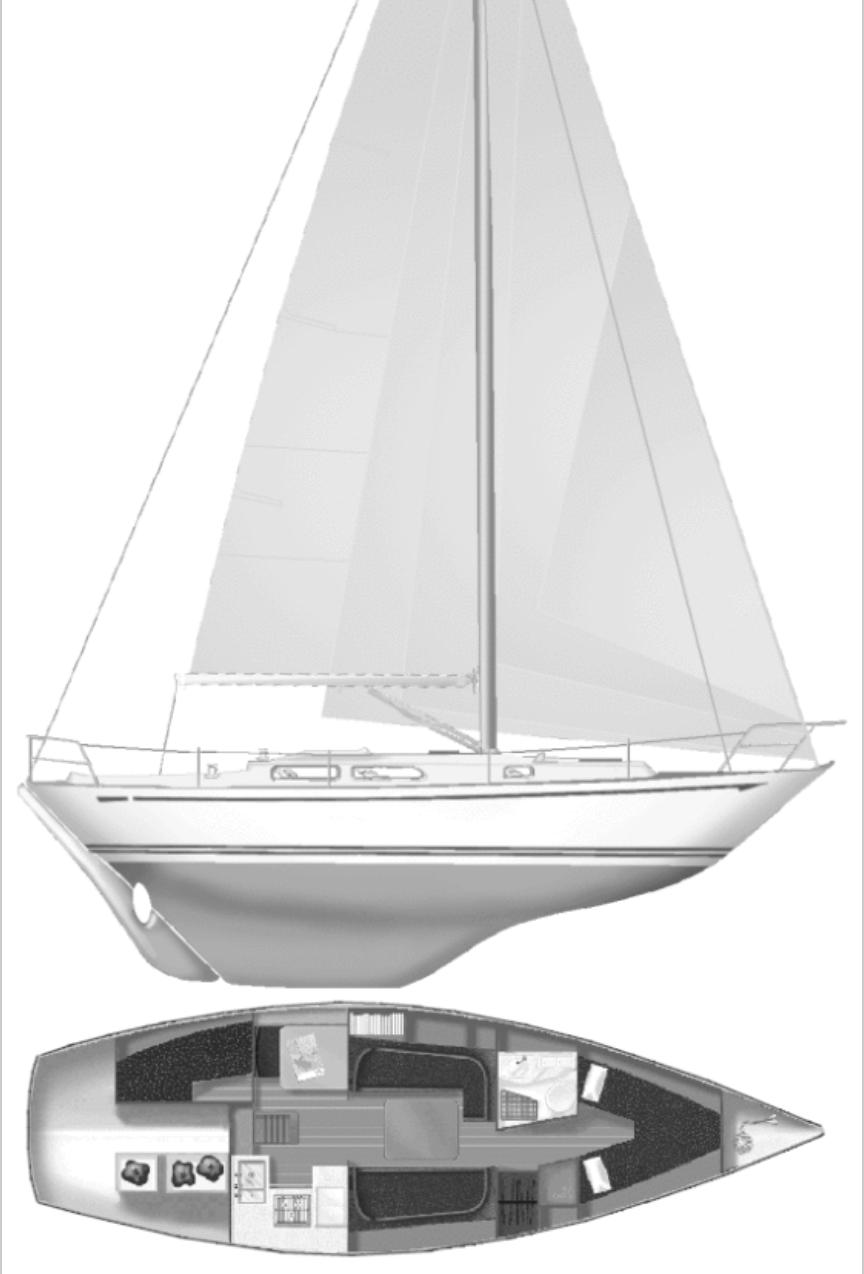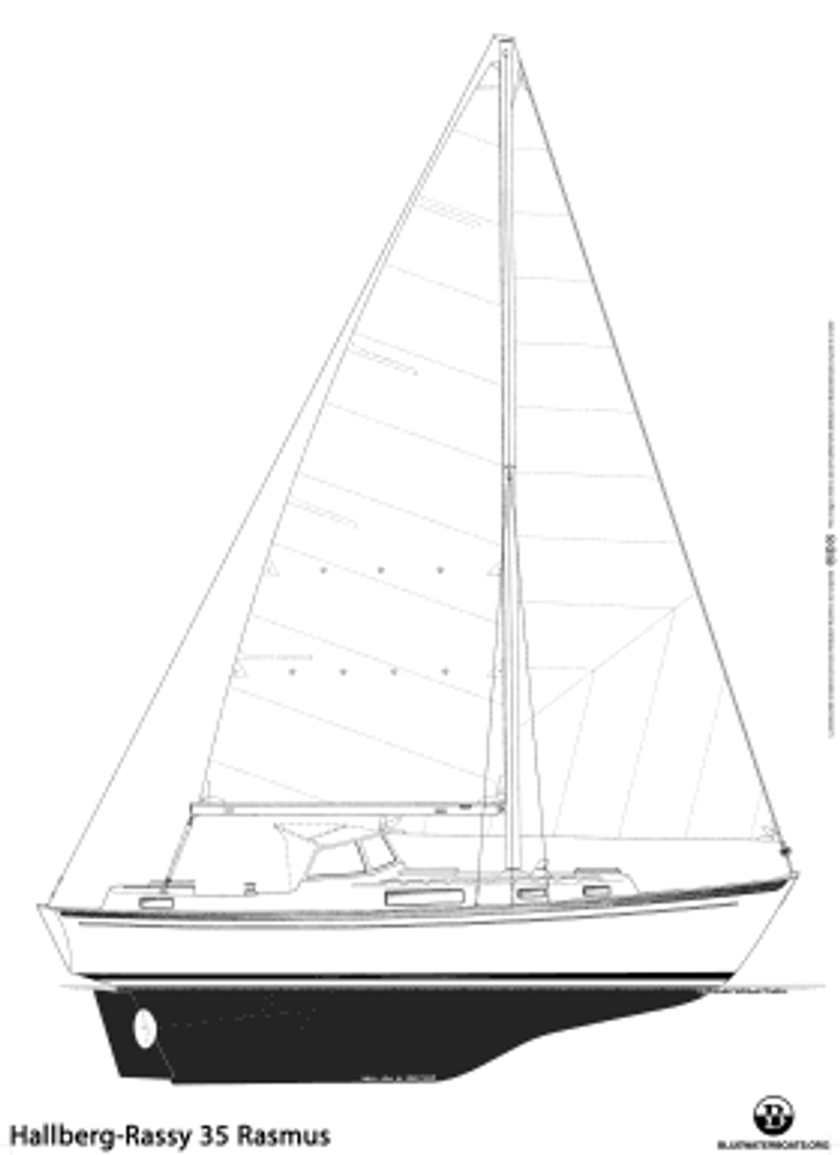
Overview
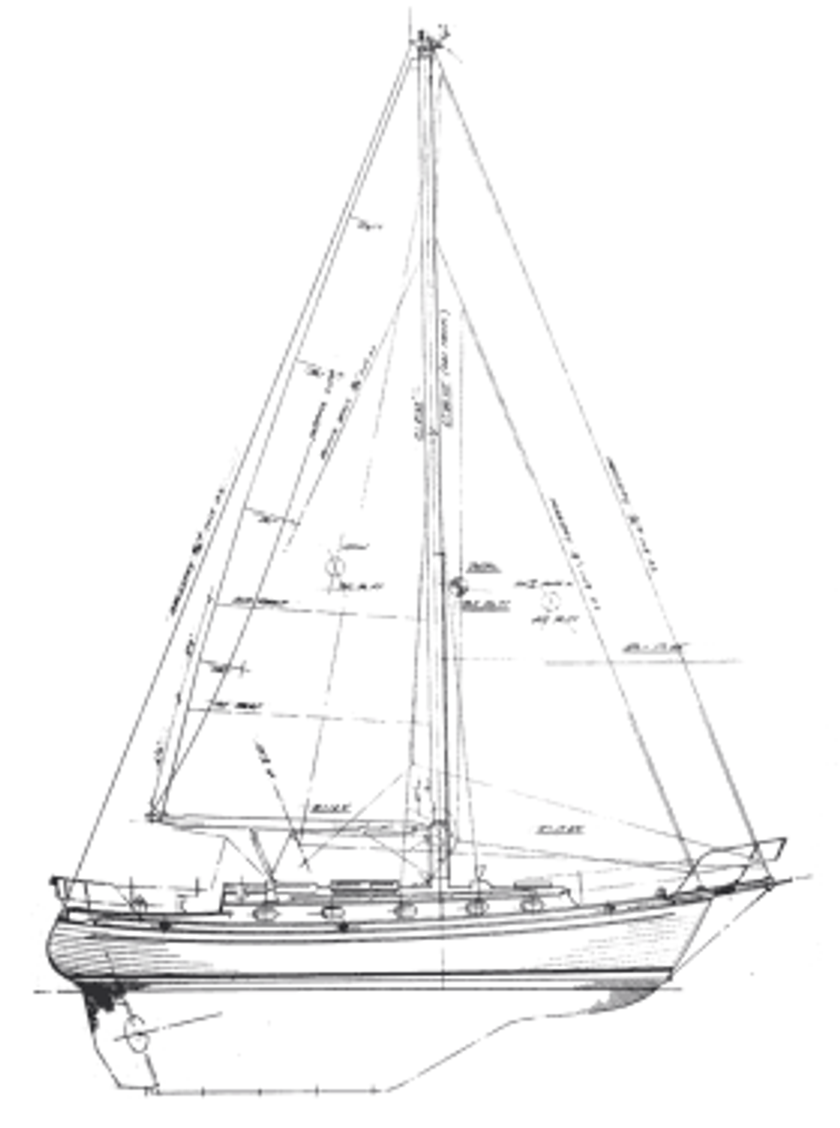
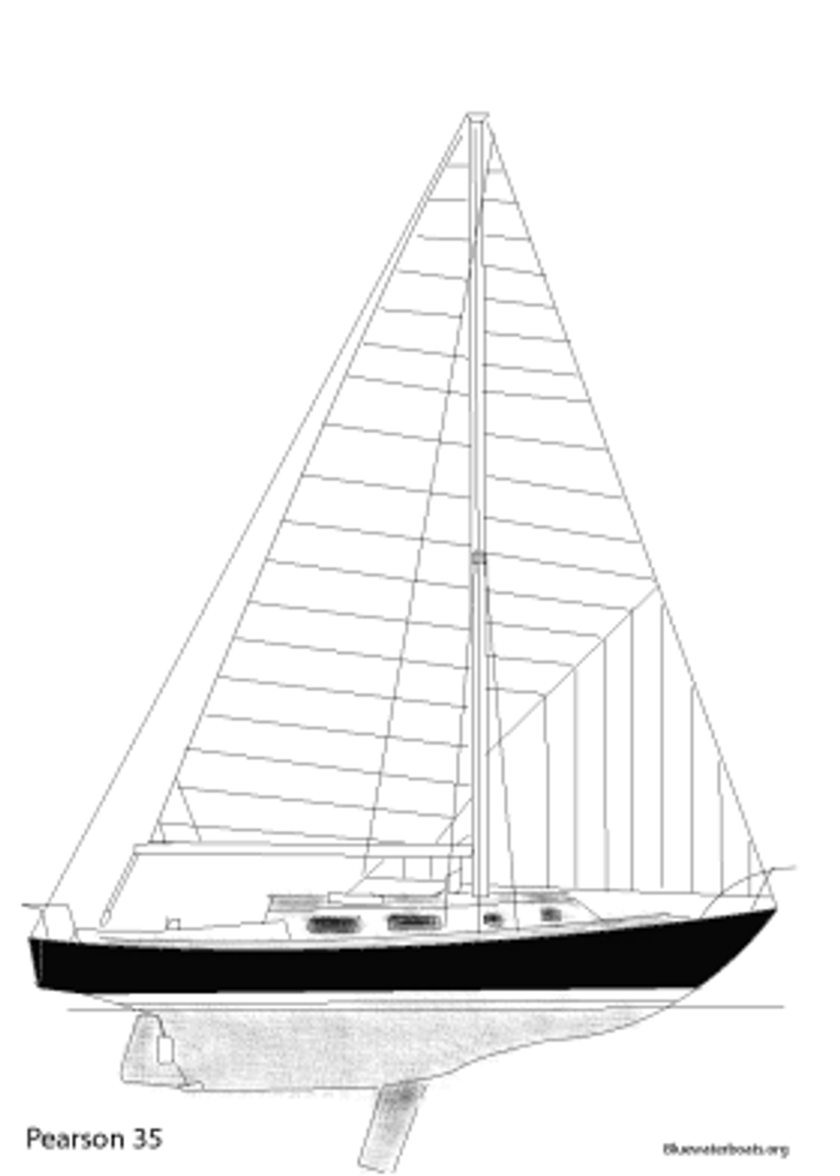
Bill Shaw, who took over Pearson Yachts’ design office, drew the 35 in 1968 as a replacement for the earlier Carl Alberg 35, a different boat despite the shared name and years both were sold. Production ran 14 years with barely a change to the design, 515 hulls built by the time it ended in 1982, a run Practical Sailor calls proof of a genuinely proven design rather than stagnation. She’s best known among shoal-water sailors along the US Atlantic coast for her centerboard: 7’6” down, 3’9” up.
Design and Construction
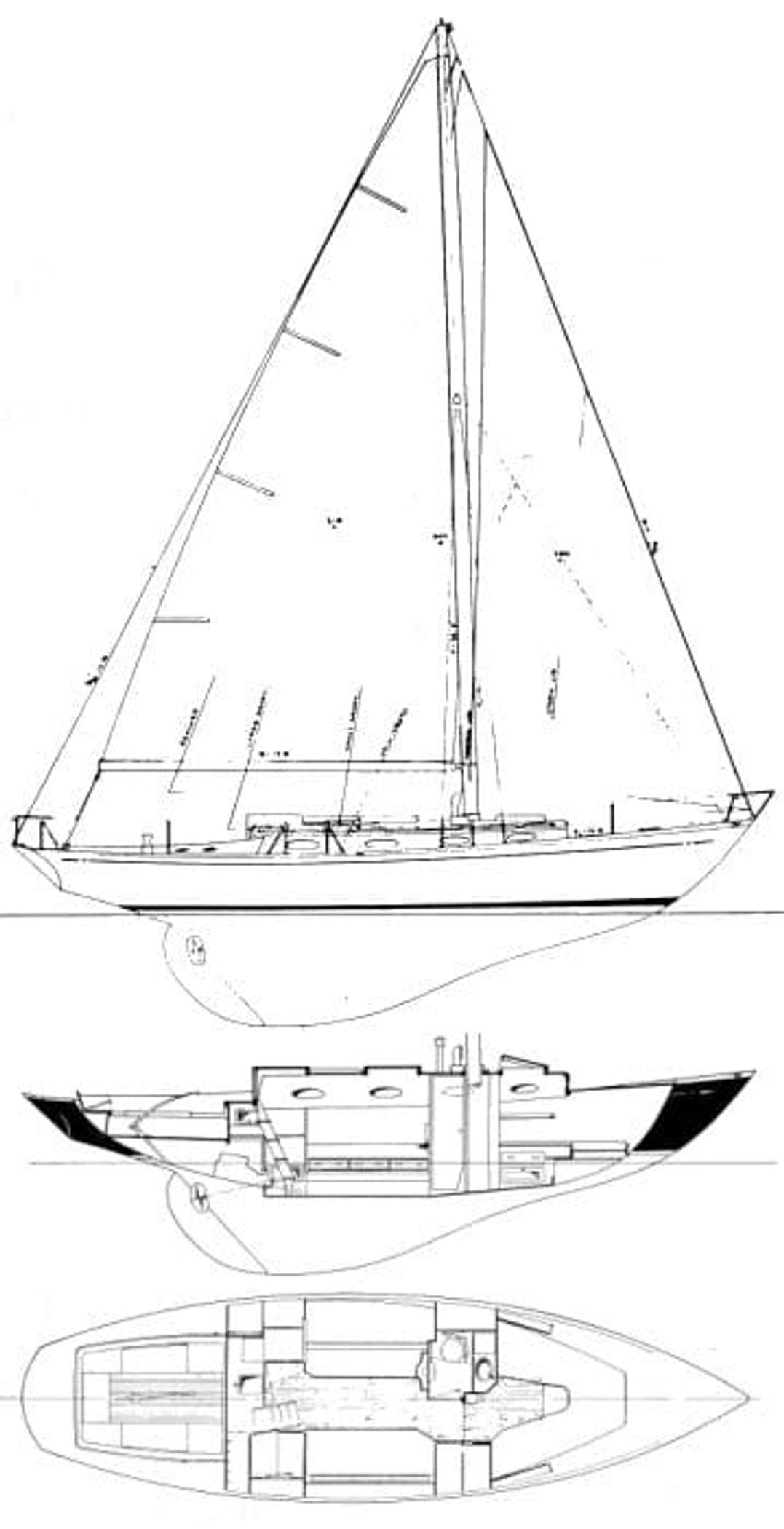
The hull follows CCA-era convention: long overhangs, a graceful sheer, modest freeboard, and a beam narrow by modern standards. She’s heavy for her length but carries a fair sail-area-to-displacement ratio for light air. Construction is solid fiberglass with a balsa-cored deck, an early example of balsa coring from an era, alongside Canada’s C&C, when Pearson’s own glassing technique around deck hardware and the mast step hadn’t fully matured; a wet core near the mast is a genuine concern since it supports a load-bearing bulkhead below. The 5,400 lb lead ballast sits in the full keel cavity, with the centerboard itself built from fiberglass laminate. Standard rig is a masthead sloop, with a yawl offered as an option. Interior structure comes from molded headliners above and pans below; post-1975 boats swapped the earlier dinette/double-berth combination aft to port for a true transom berth.
Under Sail
She’s happiest reaching, and points reasonably well to windward with the main and jib reefed appropriately. The 10-foot beam makes her tender initially, but she locks in around 30 degrees of heel and settles into a soft, CCA-overhang-assisted motion in a seaway; her short waterline does mean some hobbyhorsing in chop. Practical Sailor rates her PHRF around 180, calling her fast, solid, and seaworthy on a close reach in moderate wind, though light air is a weaker point. That same review frames her explicitly as a coastal cruiser and flags her large cockpit as a real liability offshore in heavy seas, worth weighing against reader comments on the same review that dispute the coastal framing by citing (unverified) circumnavigations.
Buyers Notes
Check portlights, hatches, and deck fittings for leaks; age-related but usually just an annoyance rather than structural. Sound the deck around the mast step and hardware for wet or soft balsa coring, and check below the waterline for the gelcoat blistering common on boats this age. Engine access is poor by modern standards, so factor that into any repower or major-service plans.