Overview
Small as she is, the Albin Vega has built a real reputation as an offshore boat. Swedish designer Per Brohall drew her in 1964 for builder Larsson Marine, who wanted a bigger sibling to Brohall’s earlier Viggen 23. The brief was inexpensive, light, spacious, fast, and seaworthy all at once, and the Vega’s lasting popularity suggests he largely delivered. Like most boats of her generation she owes a debt to the Scandinavian Folkboat’s slim lines and long keel; she’s cramped by modern standards, but that narrowness never came at the cost of seaworthiness. Production ran ten years and topped 3,000 hulls before the line ended.
History
Lars Larsson of Larsson Trade AB commissioned Brohall in 1964 to scale up the Viggen 23 to 27 feet, reportedly hoping a bigger boat would drive more sales of Albin engines. Brohall, an early pioneer of Swedish fiberglass construction who’d also published on small wooden boatbuilding, went on to design several more Albins with Larsson (the 25, 21, and 30), but the Vega became by far the best known. The Kristinehamn, Sweden yard built roughly 3,450 Vegas before closing down when production ended in 1979. Most sold in Scandinavia, but plenty shipped further afield, into Europe and as far as the US, Greenland, and Hawaii.
Design and Construction
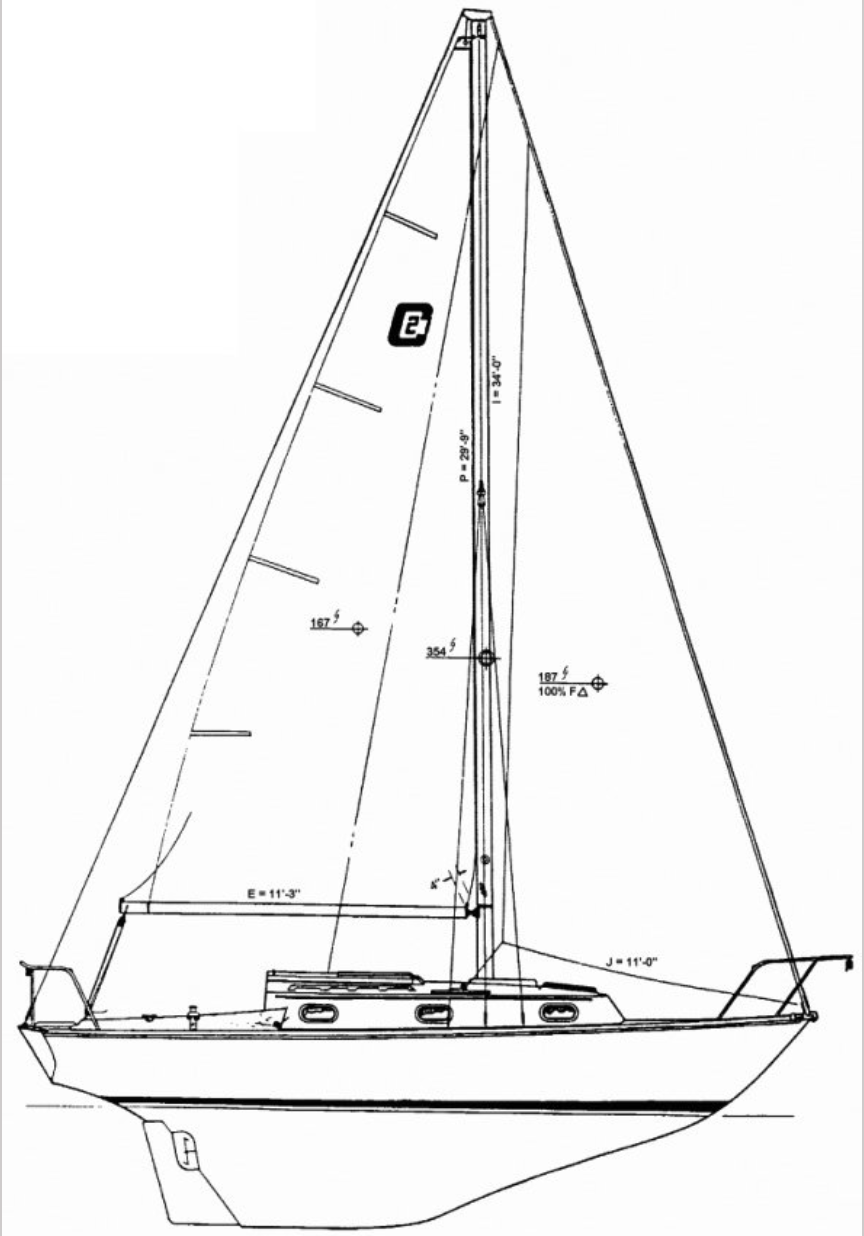
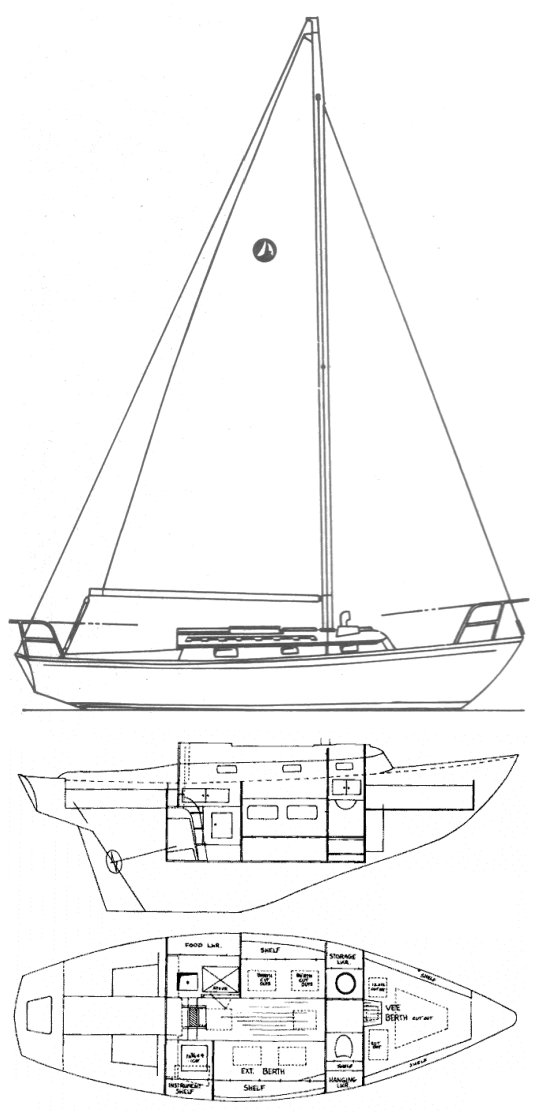
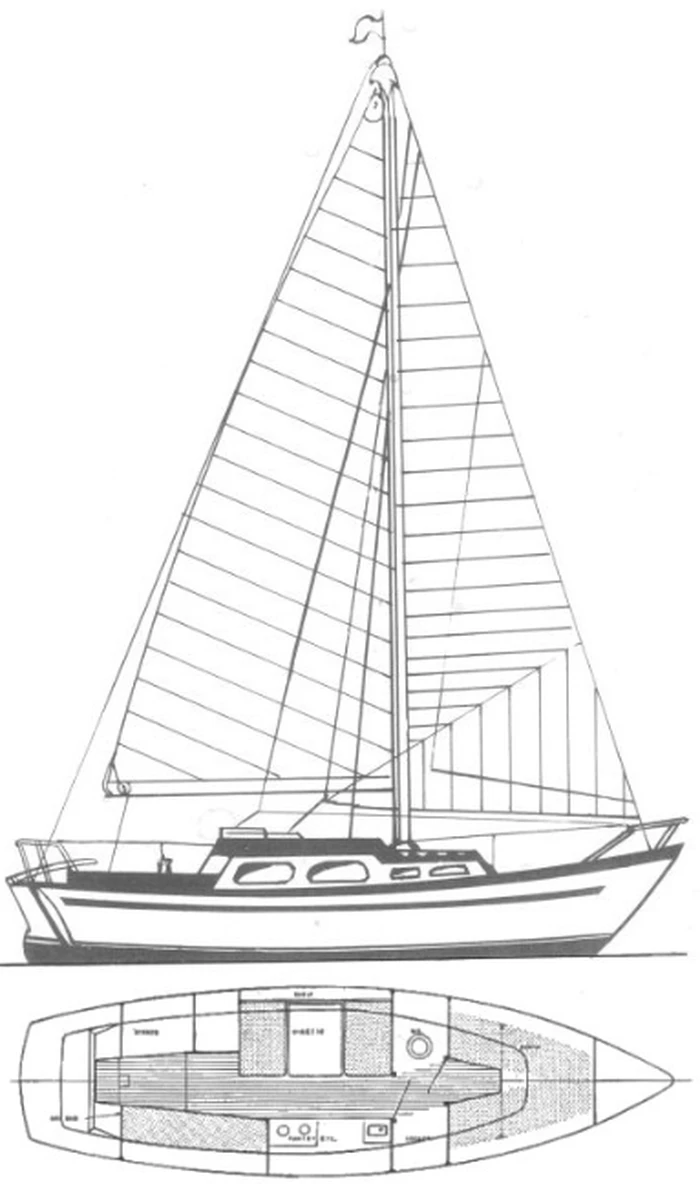
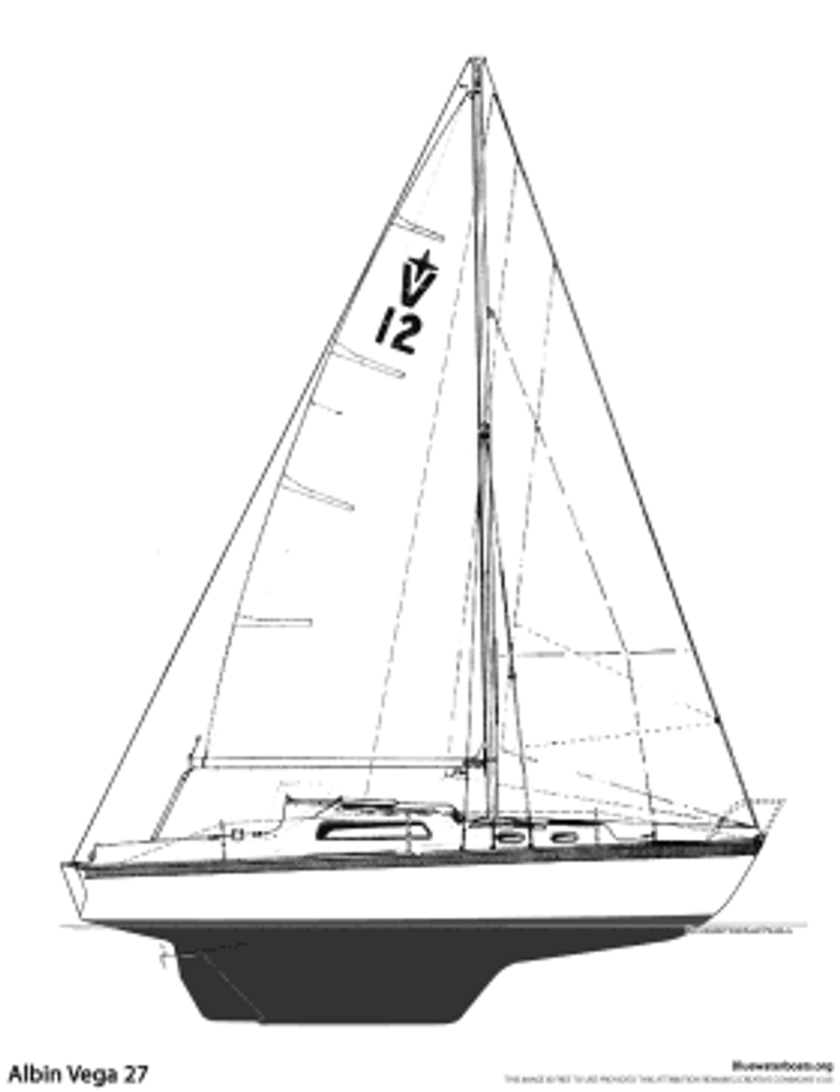
She’s a modest-displacement masthead sloop with a cutaway stern and an inboard, keel-hung rudder, her nearly straight sheerline giving her a slightly hunched profile from some angles rather than classic cruiser curves. The keel is shortened to about half the waterline length rather than running full length, enough to track well while cutting wetted surface for better light-air performance; the propeller unusually exits under the counter stern above the rudder. Swedish boats often need to moor bow-to against rocky coastlines, and the Vega’s bow pulpit is shaped accordingly, to allow stepping off the bow. Hull construction is solid fiberglass up to an inch thick in places; the cabin top and deck are cored and can flex, worth reinforcing for sustained offshore use. Stainless bolts spaced roughly every 5 inches join hull to deck in a strong, watertight joint.
Under Sail
Owners describe her as easy-handling and well balanced with no weather helm. Despite a shallow draft she points well to windward, tender initially through 10 to 15 degrees of heel before stiffening up enough to carry full sail to 20 knots. She’s quick downwind, though offshore sailors do well to carry a large spinnaker or drifter for light air.
Notable Voyages
John Neal’s book Log of Mahina chronicles his Vega’s voyage from Seattle to the South Pacific. Nick and Jenny Coghlan circumnavigated aboard Tarka the Otter from 1985 to 1989, and a young Swedish crew circumnavigated again between 2005 and 2007. Norwegian adventurer Jarle Andhoy and his crew sailed a Vega, Berserk (and later Berserk II), to Antarctica and the Arctic, voyages filmed for Norwegian TV; by their own account, the Arctic voyage set a record for the farthest north any sailing vessel had reached in open water. Most notably, Matt Rutherford completed a solo, nonstop 309-day circumnavigation of the Americas in 2012, via the Northwest Passage and Cape Horn, earning two Guinness World Records and the subject of the documentary Red Dot on the Ocean.
Layout and Interior
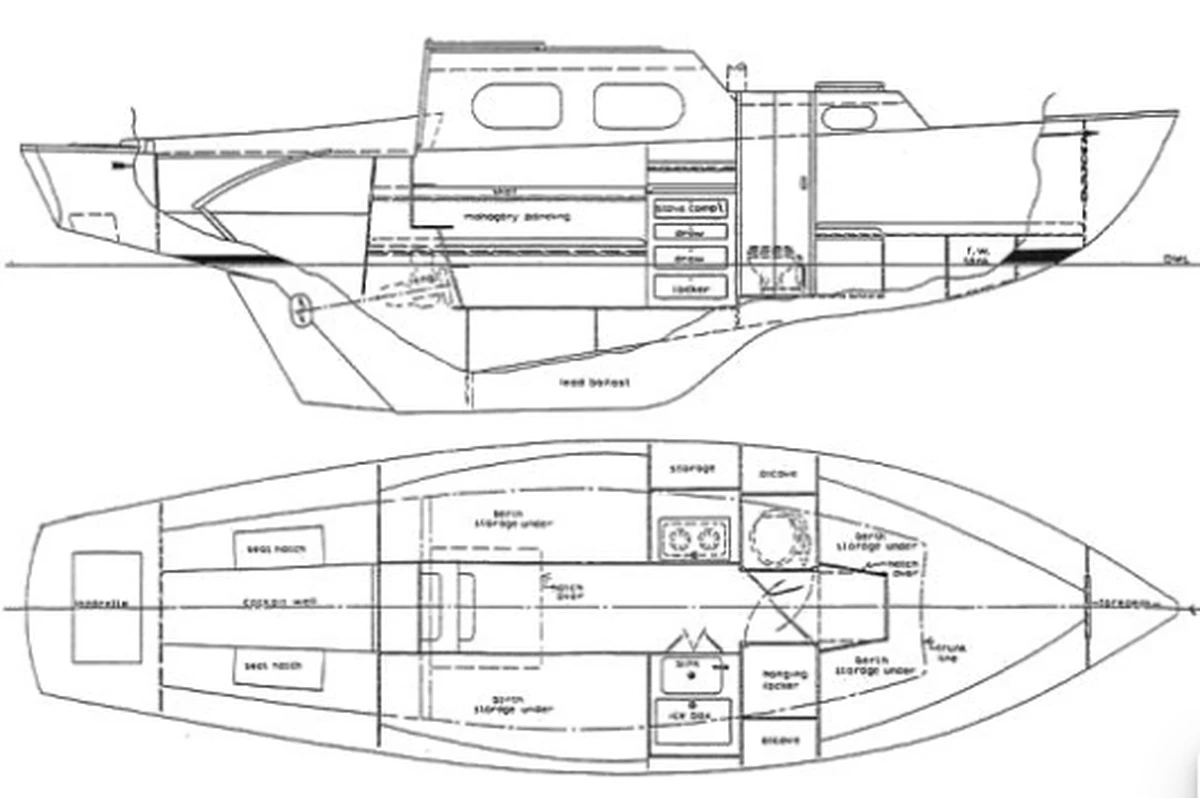
Below decks runs, bow to stern, a chain locker, V-berth, head, single berths on either side of the saloon, and a galley split across both sides of the companionway. The 8-foot beam leaves little room to work with, though she can comfortably carry two adults on long passages, or two adults and a couple of kids on shorter trips. Berths run a reasonable 6’ to 6’6”, and the saloon table unscrews for relocation to the cockpit. There’s no dedicated chart table, so navigation space has to be improvised. Headroom in the main cabin is a modest 5’10”. The cockpit is sized well for offshore work, with good drainage and tall coamings for protection, snug enough that at least one owner has used it as a bathtub with the drains plugged.