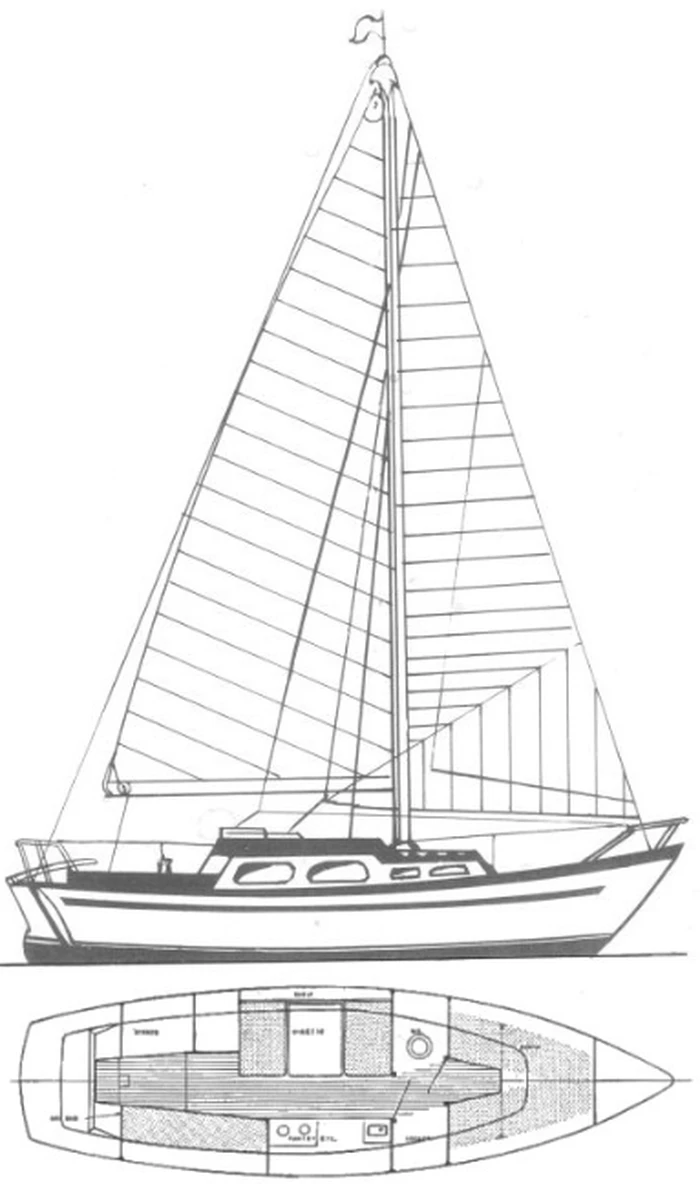
Overview
Carl Alberg drew the Bristol 27 for Bristol Yachts, and production began in 1966. SailboatData records 337 boats built through 1978. Practical Sailor reported that the true number may have been higher, so the production total should be treated as an estimate.
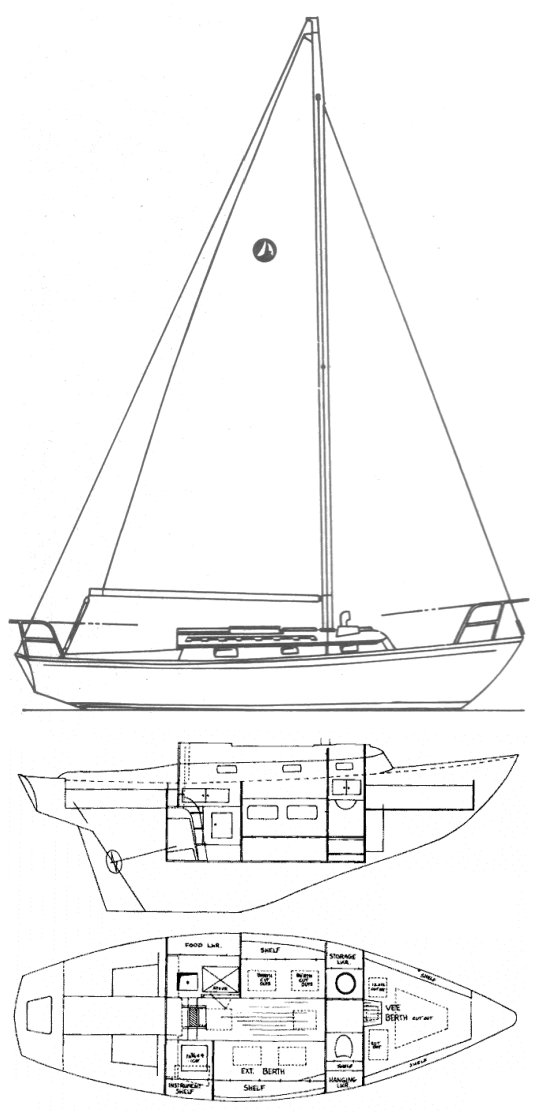
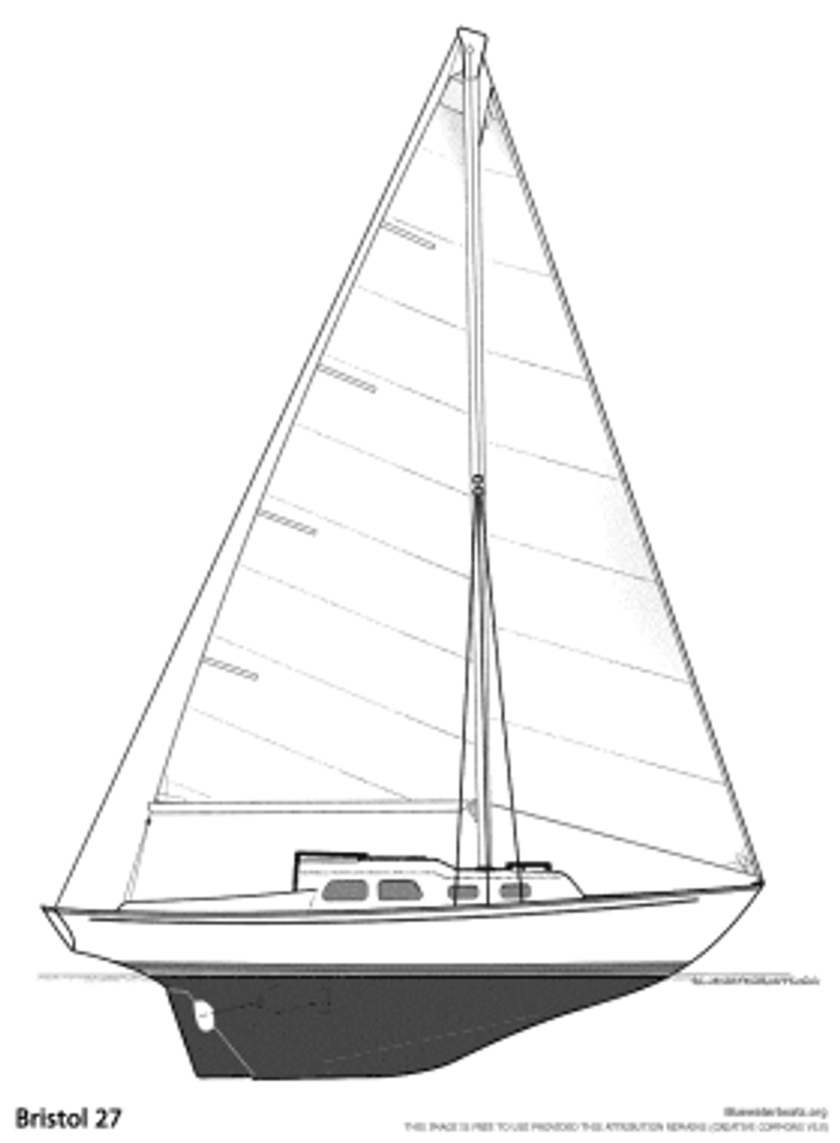
The hull is narrow at 8 feet, with a 19-foot 9-inch waterline, long overhangs, and a cutaway full keel. These proportions give the boat a traditional profile and keep the rudder well protected. They also limit interior volume compared with later 27-foot cruisers.
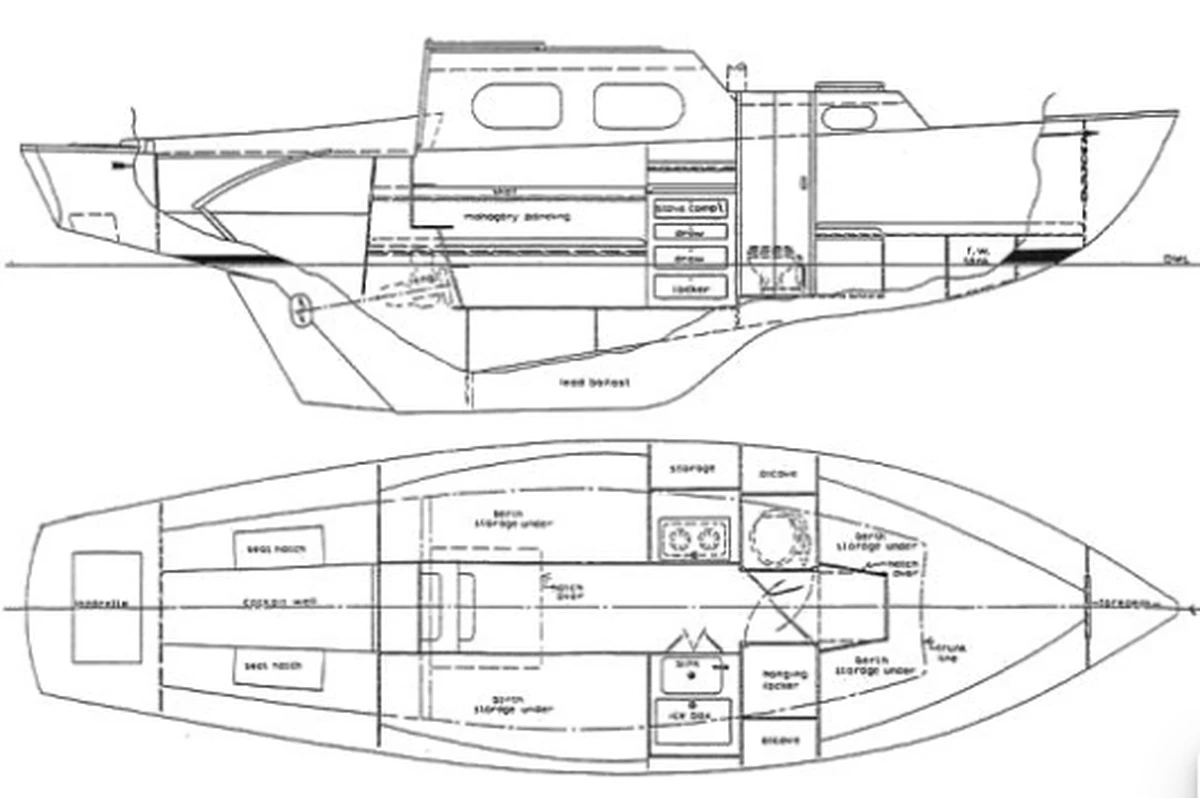
Bristol offered a Weekender with a longer cockpit and less cabin space, plus two cruising layouts. One cruising version used opposing settees, while the other fitted a dinette. Practical Sailor considered the dinette the more popular arrangement. A buyer planning offshore work should look closely at the cockpit configuration because the Weekender gives more hull volume to the cockpit.
Construction
The hull is solid hand-laid fiberglass with internal lead ballast enclosed in the keel. The deck, cabin, and cockpit were molded as one unit. The hull-to-deck joint was through-bolted and sealed. The mast is stepped on deck and loads are carried by a bulkhead below.
This is heavy construction by the standards of a modern 27-footer, but age matters more than original scantlings now. Practical Sailor’s owner survey and the archived BlueWaterBoats review both identify hull-to-deck leakage as a recurring concern. A survey should also check deck moisture, mast support, chainplates, standing rigging, keel damage, and the quality of old fiberglass repairs.
Under Sail
At 6,600 pounds with a short rated waterline, the Bristol 27 favors steady handling over speed. Practical Sailor found noticeable initial heel in a fresh breeze, followed by a firmer feel as the boat settled. Reefing the main can reduce weather helm and keep the boat balanced.
The long keel offers directional stability and protection below the water. Its cutaway forefoot helps the boat turn more readily than a deep full-keel profile. Passage preparation still depends on the individual boat. Rig condition, steering, watertight integrity, cockpit drainage, and the owner’s reefing plan matter more than the model’s reputation.
Machinery and Interior
Early boats were available with an outboard in a well. Inboard installations included the Universal Atomic 4 and later diesel engines. Practical Sailor reported complaints about outboard cavitation and poor progress into chop, making an inboard installation worth seeking for regular offshore or exposed coastal use. Any engine conversion needs inspection for mounts, ventilation, fuel system safety, shaft alignment, and access.
The cruising layouts provide standing headroom beneath the raised cabin section, an enclosed head, compact galley space, and berths for a small crew. The cabin is narrow by current standards. It suits a couple better than a large crew, especially when stores and safety equipment come aboard.
Buyers Notes
Start with the hull-to-deck joint and evidence of persistent leaks. Inspect the deck and cabin molding for moisture, cracks, and poorly bonded repairs. Confirm that the bulkhead beneath the mast remains sound and well attached to the hull.
Compare the actual cockpit and interior arrangement with the intended use. Check whether an outboard well can flood or immerse the propeller poorly in a seaway. On inboard boats, treat the machinery as an individual installation because many engines have been replaced during the boat’s long service life.
The Bristol 27 remains a small passage-cruiser candidate when carefully surveyed and sensibly loaded. Steppin’ Out provides a named owner account of two Atlantic crossings, but it should not substitute for checking the condition and preparation of a specific boat.