Overview
The Nor’Sea 27 packs live-aboard comfort and real offshore capability into a hull small enough to trailer between oceans. Designer Lyle Hess, best known for drawing Lynn and Larry Pardey’s Seraffyn and Taleisin, took on a genuinely difficult brief: a heavy-weather, long-distance cruiser that could still be legally trailered. The result is a tough, traditionally styled double-ender that has gone on to complete four circumnavigations and more than 160 Pacific and Atlantic crossings.
History
The design’s roots trace to Larry Pardey, who in the 1960s bought a set of Lyle Hess plans for the Renegade of Newport and built Seraffyn, the boat that, through the Pardeys’ own writing, introduced much of the cruising world to Hess’s work. That reputation eventually brought Dean Wixom, president of Heritage Marine, to Hess’s door with an unusual request: a cruiser tough enough for the worst offshore weather that could still be trailered without a permit. Hess was the only designer willing to take it on, and the Nor’Sea 27 was the result, introduced in 1976 from a makeshift plant in Southern California. Wixom built his own hull, Chinook (hull #77), three years later and lived aboard her for a decade, logging over 30,000 miles. Heritage Marine was later sold to Bob Eeg and renamed Nor’Sea Yachts, which has continued production since; more than 450 hulls have been built in total.
Design and Construction
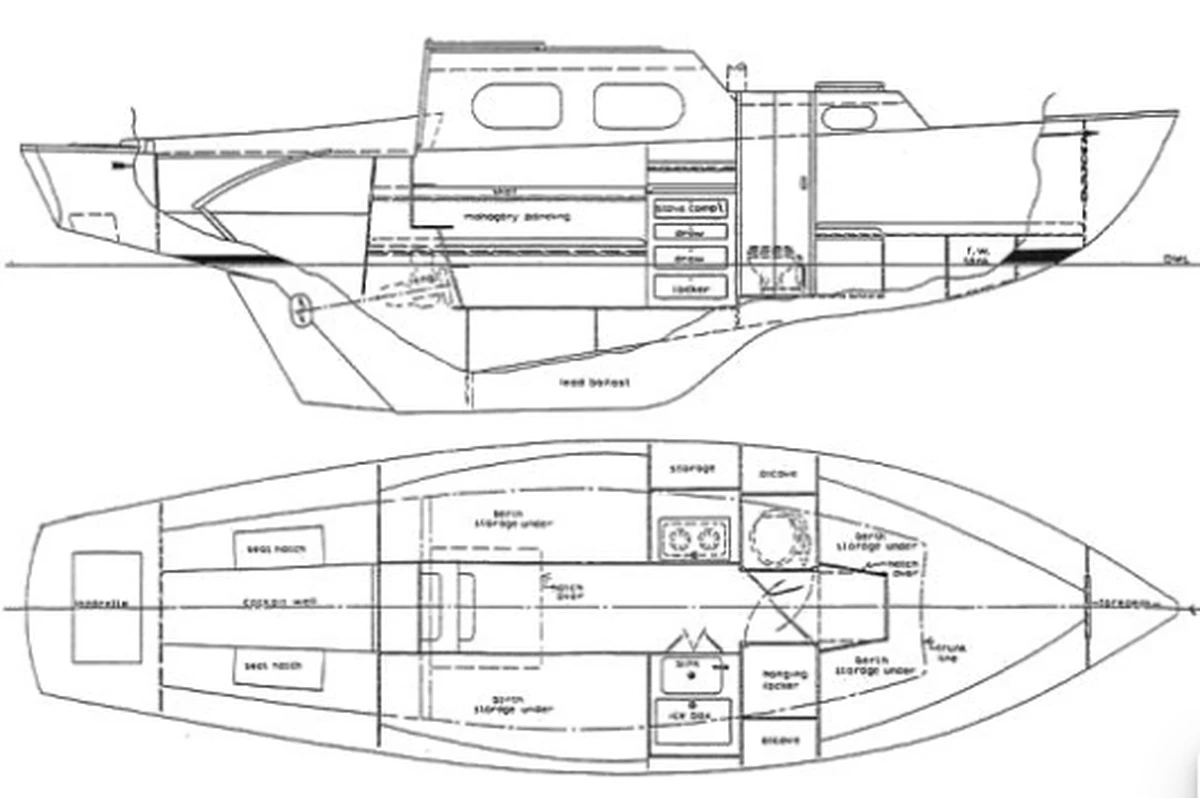
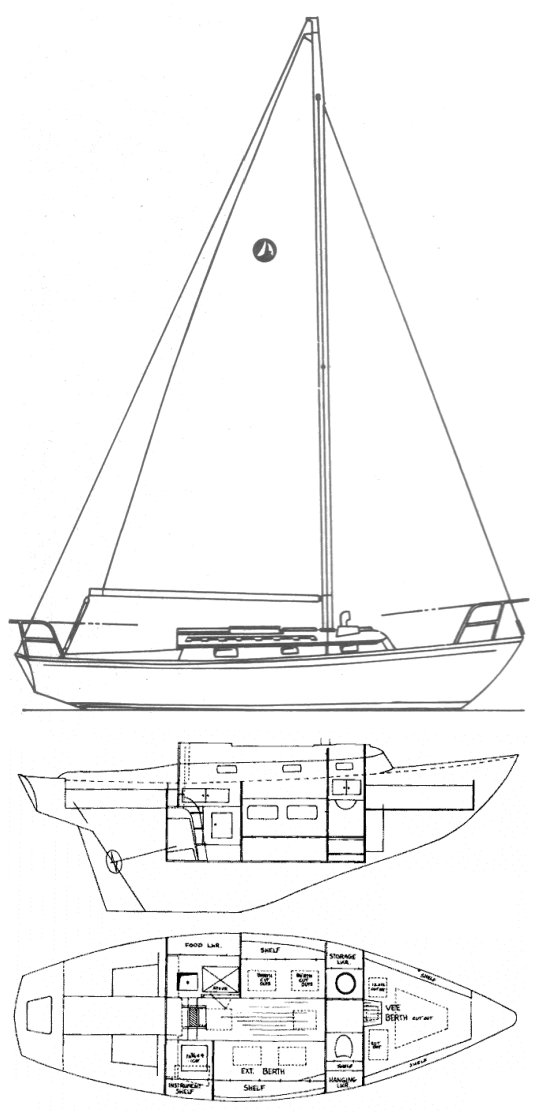
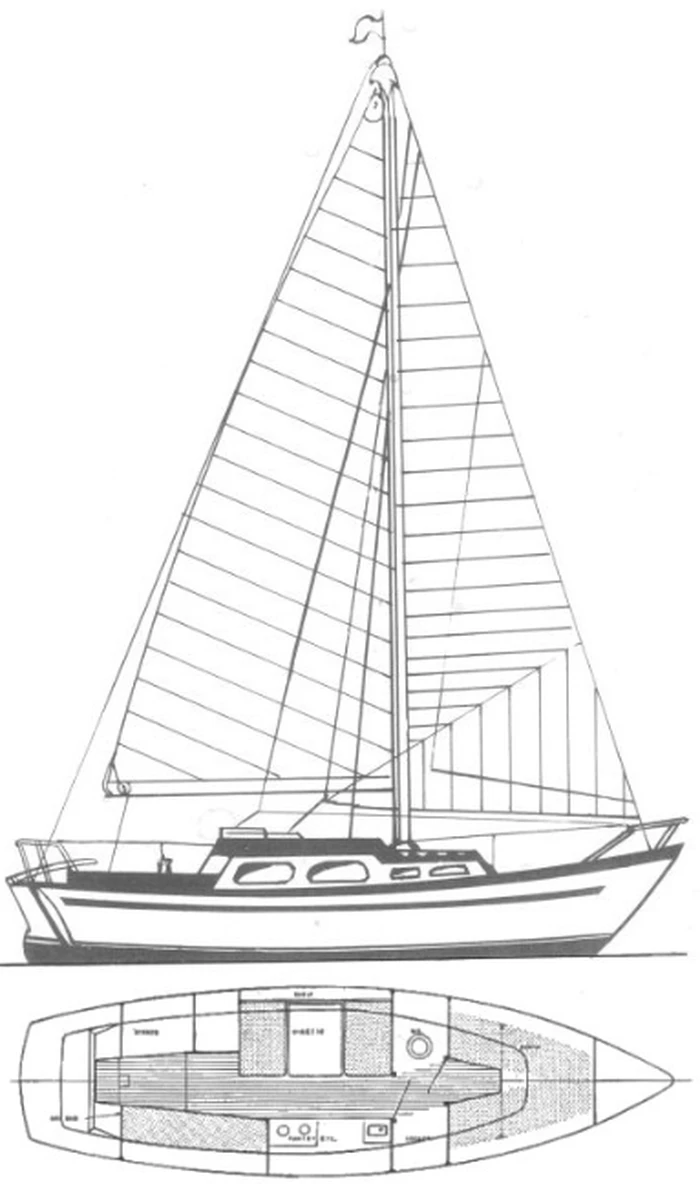
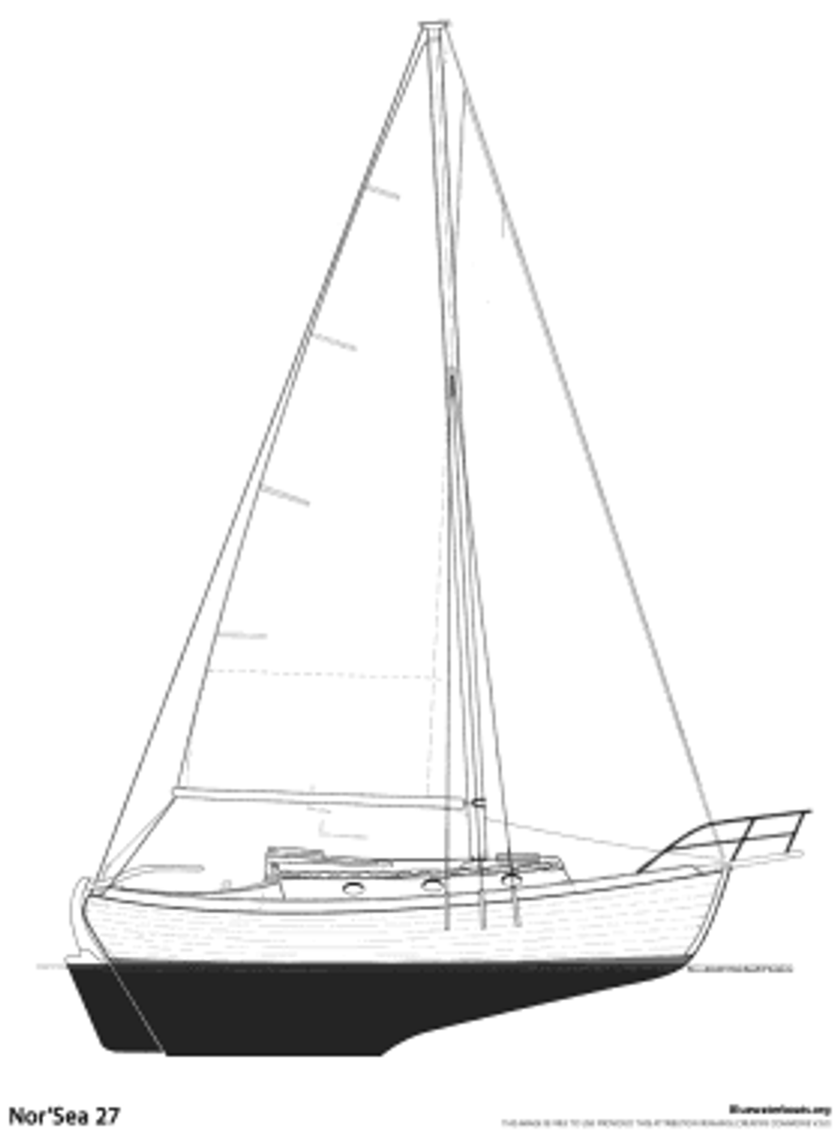
Hess drew the double-ended hull form from the Norwegian Spitzgatter, with a curvy canoe stern and a sweet, springy sheer, but departed from that tradition below the waterline with a full keel and cutaway forefoot that sails considerably better than the traditional lines above it suggest. SpinSheet’s reviewer called her one of the most stoutly built 27-footers around: a solid, hand-laid lapstrake hull in alternating mat and woven roving, laminate ranging from 5/16 inch at the sheer to 3/4 inch at the keel, with interior plywood bulkheads and a partial molded liner adding further structure. The plywood-cored deck is through-bolted to an inward flange on 6-inch centers, and hardware is oversized and backed with stainless plates throughout. The distinctive center-cockpit layout, unusual on a boat this small, outsells the traditional aft-cockpit option roughly nine to one, prized for the private aft cabin it creates and the extra protection it gives the cockpit itself.
Under Sail
She’s stiff, sea-kindly, and genuinely quick for her size and weight, and owners regularly report overtaking longer, lighter boats. She tracks well to windward and moves nicely in light air, but the helm, while light, is not particularly well balanced and shouldn’t be left untended for long, a real consideration for singlehanded passage-making without a wind vane. The offshore record speaks for itself: four circumnavigations and more than 160 Pacific and Atlantic crossings, independently confirmed by SpinSheet as “proven capable on many offshore passages.”
Buyers Notes
Narrow side decks and a tight cockpit are real, known tradeoffs for the boat’s trailerable proportions, worth experiencing in person before buying if crew size matters to intended use. Engine access is constrained; factor that into routine maintenance expectations. Confirm which rig height (30.5 ft standard or 34.5 ft tall) and ballast package (2,500 or 3,000 lb standard/heavy on pre-1980 boats, 3,100 lb lead on all boats after) a specific hull carries, since all three vary meaningfully across the production run.