Overview
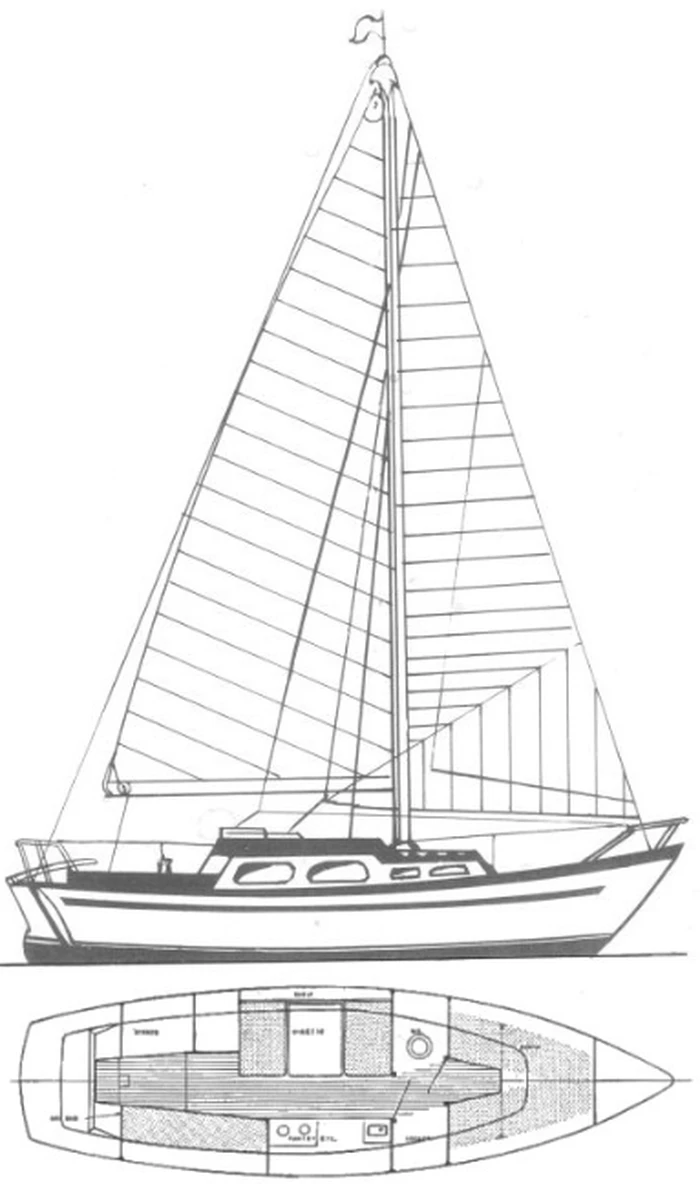
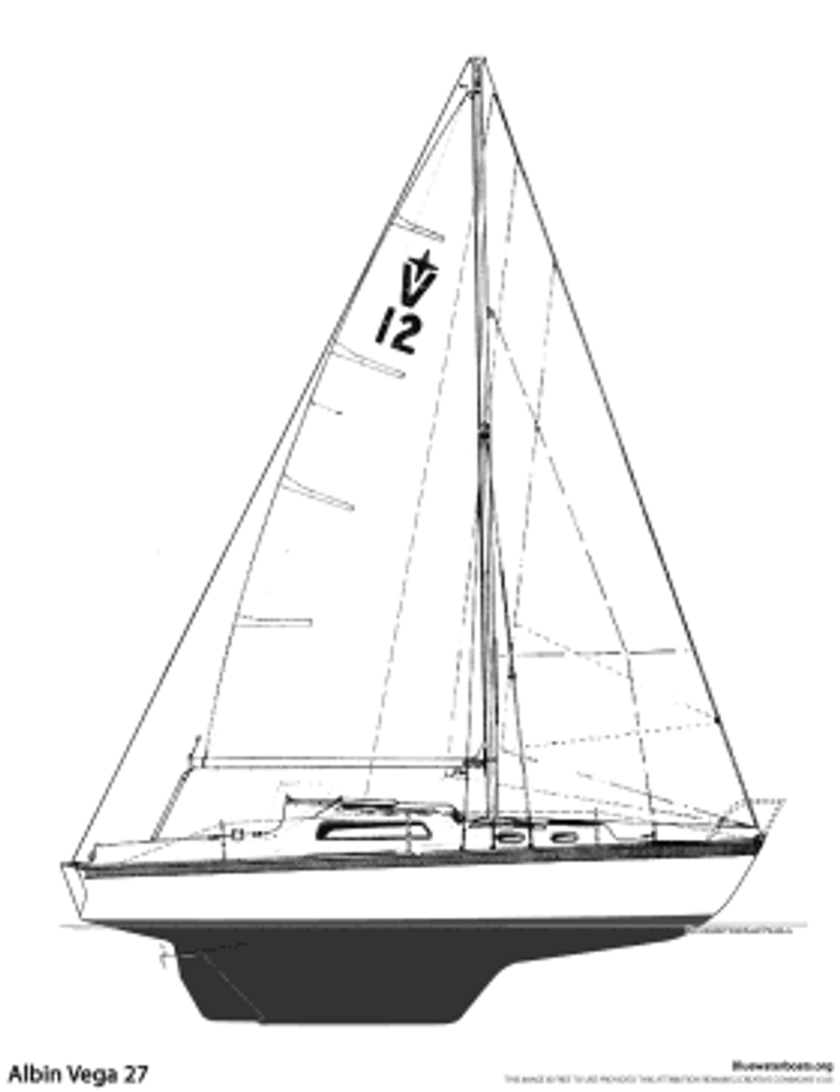
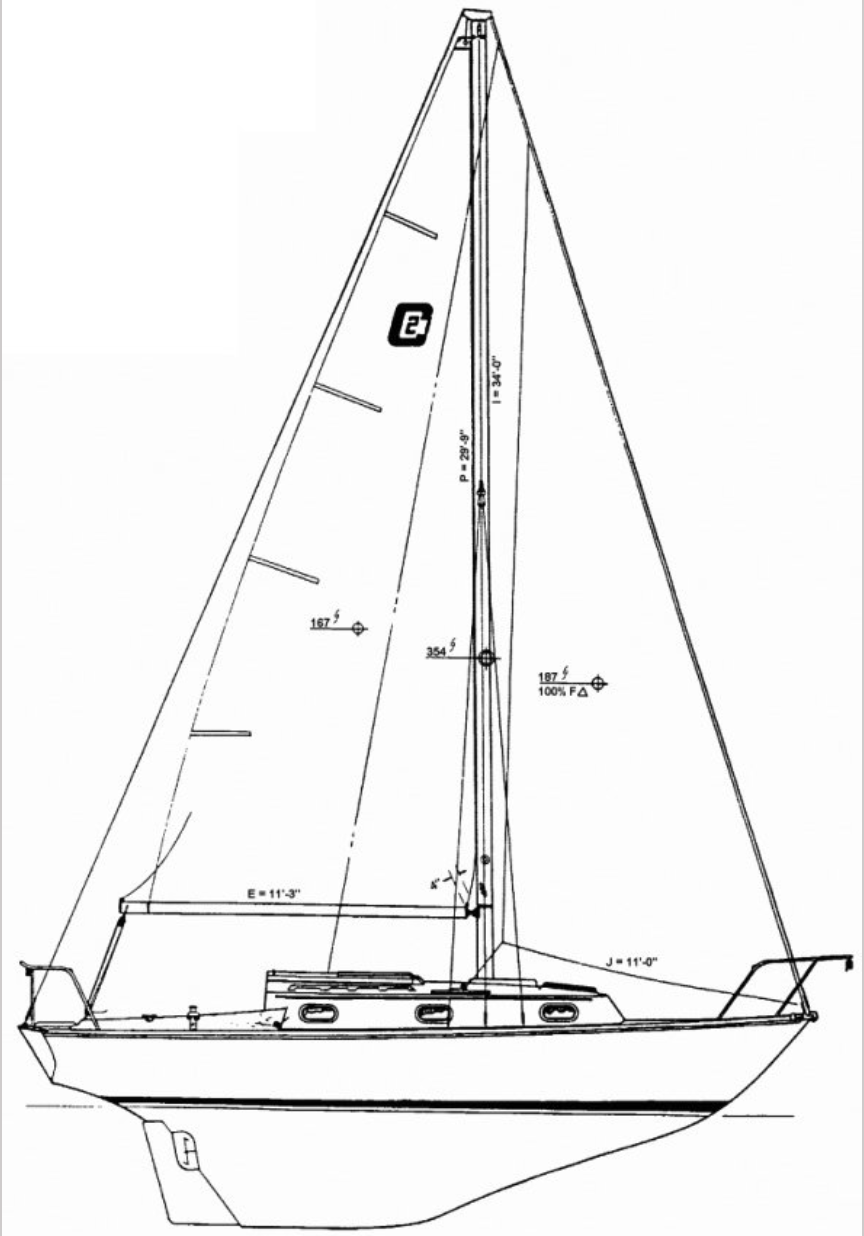
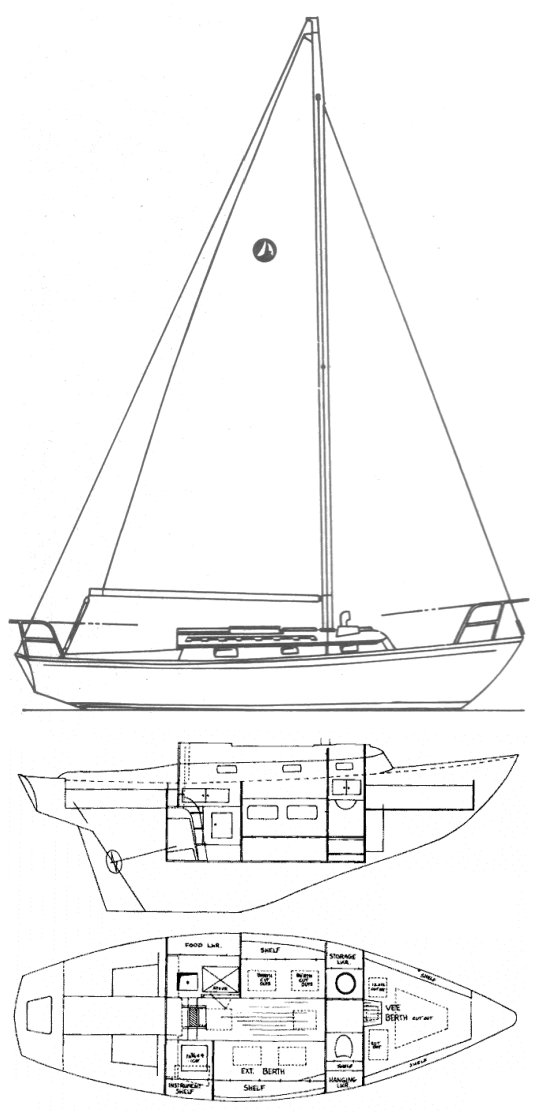
The Sea Sprite 27 is a Bill Luders design that spent a quarter century in production at a single small Rhode Island yard, C. E. Ryder of Bristol. It carries a full keel, a keel-hung rudder, and the kind of raked stem and rounded counter stern that mark it as a traditional cruiser rather than anything drawn to a racing rule, a good-humored, seaworthy boat for its size.
History
C. E. Ryder built the Sea Sprite 27 (also cataloged as the Sea Sprite 28, and occasionally the Luders 27 or Luders 28) from 1960 to 1985, a 25-year run confirmed independently by both sailboatdata.com and a Wikipedia summary of the same boat. Good Old Boat’s own saildata page tells a narrower story, describing production running “from 1974 to the early 1980s,” a single conflicting account against the two sources that agree on the longer span; this entry uses the longer, better-corroborated range and simply notes the discrepancy here rather than resolving it with false confidence. C. E. Ryder itself, best known for this boat and its larger Southern Cross line, closed in 1990.
Construction
The hull is fiberglass on a long, full keel with a keel-hung rudder, a configuration confirmed by both sailboatdata.com’s classification and Good Old Boat’s prose description. Ballast is the one figure genuinely in dispute: sailboatdata.com’s current live page gives 3,000 lb, a 39.5 percent ballast ratio on the boat’s 7,600 lb displacement, a figure Wikipedia matches exactly, while Baldwin’s own list records 3,600 lb, which would put the ratio closer to 47.4 percent. Both numbers describe a stiff boat either way; this entry uses the two agreeing sources’ figure as the traceable value and flags Baldwin’s higher number as a real, unresolved conflict rather than picking one silently. The auxiliary was a small Universal diesel, 11 hp, standard equipment from the factory.
Under Sail
At 340 sq ft of sail on a 20 ft waterline, the Sea Sprite 27 is set up for steady, moderate-air sailing typical of a full-keel cruiser of its generation, a fractional sloop rig rather than the more common masthead arrangement of its contemporaries. Baldwin’s notes are brief but specific: 6 ft headroom, generous for a boat this size and era, a real point in its favor for anyone planning to live aboard for extended periods.
Buyers Notes
Baldwin records no specific pluses or minuses of his own for this boat beyond the headroom note above, an unusually thin entry compared to some others on his list. In the absence of first-hand owner commentary from Baldwin, a buyer should lean on the active Sea Sprite Association, which documents builder history and hull-number ranges across the whole Sea Sprite lineage (C. E. Ryder alone built the 27/28, 30, and 34-footers, while a separate and unrelated Sea Sprite 23 had a more tangled multi-builder history). Given the boat’s long production run, expect meaningful differences between an early-1960s hull and one built closer to 1985, particularly around deck coring, tankage, and whatever auxiliary has replaced or preserved the original small diesel.