What sailing channels say about the Cape Dory 28, quoted from video transcripts with a link to the exact moment. Opinions belong to the speakers; the written review above stays independent of them.
discusses
The presenter, who is looking at the boat to buy, says what was really wanted was headroom and that it has six foot two standing headroom, while the presenter is only five ten.
warns⚙ steering⚙ rudder
The owner notices while motoring that the tiller is held over to port to keep the boat straight and that the rudder's center pivot looks off center. He ties this to heavy weather helm on port tack and suspects rudder alignment, but says he does not yet know how to check it and will look when the boat is hauled.
discusses
Running downwind in about 15 knots of wind and about 6 knots of boat speed with some surf behind, the owner uses mostly the main and sheets in a little jib so that it "acts like a stabilizer." He says this significantly reduces the bathtub rolling but does not stop it.
discusses
On the first day of an eight-day Chesapeake trip the owner beats to windward in what he estimates as 3 to 4 foot swells. He says the boat is "getting picked up and slapped down" and that each wave "arrests our forward momentum," so she averages about four knots. Cushions, bowls and speakers slid around the cabin and he broke the autopilot in the chaos.
warns⚙ steering⚙ sail balance
The owner reports "significant weather helm" on port tack that he does not see on starboard. When he ran downwind under main alone the boat kept turning into the wind, and it stopped once he set the jib. He suspects the full keel puts the lateral resistance aft, so the main alone twists the bow up, but he does not understand why only port tack shows it.
warns
Beating north up the Chesapeake in about 15 knots of wind and sizeable waves, the owner reports only 4 and a half knots with the outboard on full throttle into the wind and waves, the bow stuffing into the seas and the boat being blown further away from Annapolis.
discusses
Under outboard with the jib partly out the owner thinks the rudder is not getting enough flow to steer properly at low speed, and says that at about six knots it would. After raising the main, double reefed, he reports about 6 knots under sail with the motor off, then heeling well over in a gust.
repairs⚙ fuel tank
The owner found diesel in the bilge of his Cape Dory 28 and traced it to a leak at the bottom of the aluminum tank. He says it is "kind of well known on these old Cape Dorys that the aluminum tanks are rested onto... a piece of wood and that wood in constant contact with the aluminum tank just eventually corrodes it." He replaces it with a plastic composite tank.
repairs⚙ fuel tank
Fitting the replacement tank, the owner cuts out part of the old tank box on the port side so the new tank slides in. He leaves at least a half inch of gap on all sides because the plastic tank expands, and lashes it down with a strap board and metal brackets, with an old battery strap where the aft side is hard to reach.
discusses⚙ rudder
A rebuilder of a Cape Dory 28 says the rudder is fiberglass, not wood, and heavy: it "feels real close to solid fiberglass," with a bronze rod running up the middle and a large pivot at the bottom that angles up into the keel, fiberglassed and pinned in.
warns⚙ rudder⚙ rudder bottom bracket
The presenter says the Cape Dory 28's bottom rudder bracket, held by four pins and epoxied and faired into the keel, makes the shoe a "much more involved and destructive job" to remove than on the Alberg 30. He calls it a much beefier design but says the boat is "not designed to be serviced."
discusses
After his first test sail the owner says the deck hardware is very stout, the sails slid up nicely, and the boat sailed well even as the wind lightened. He finds the full keel makes her harder to turn under power, so he needs to practice maneuvering, but says she tracks really well under sail.
discusses
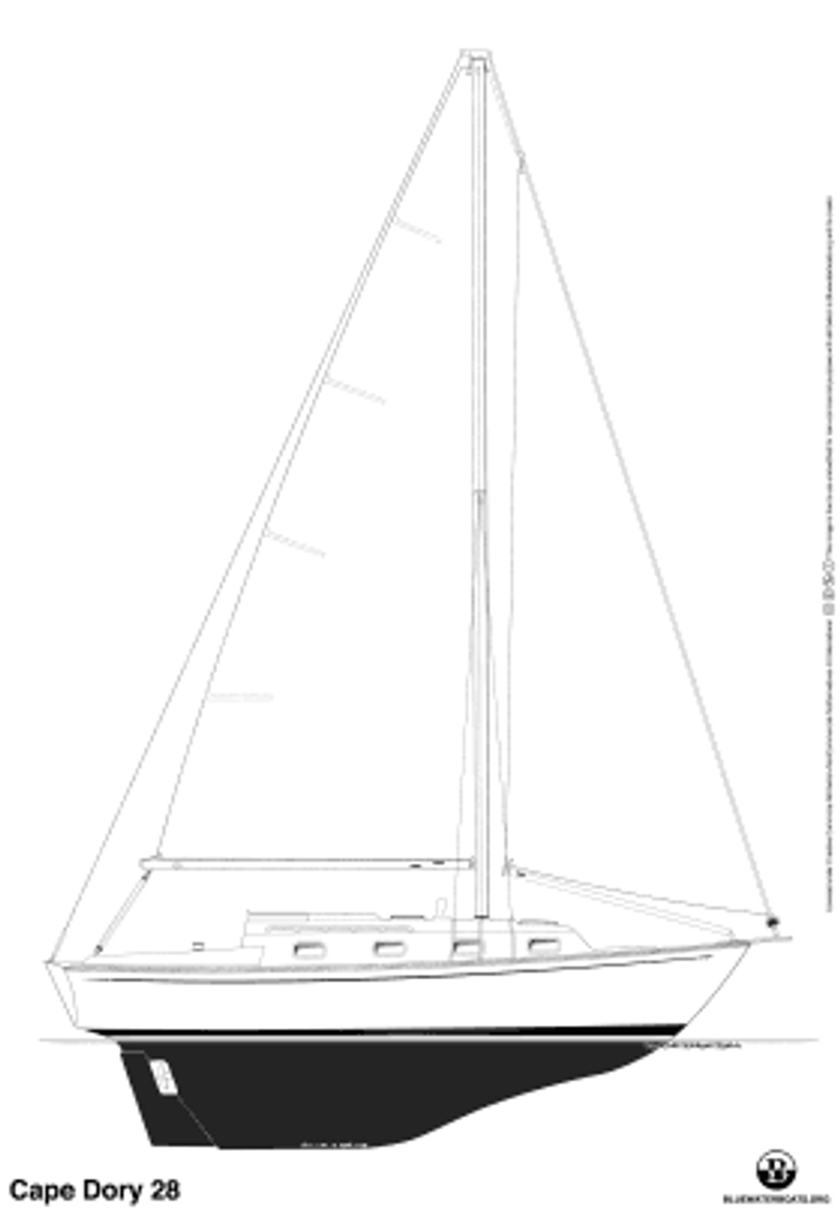
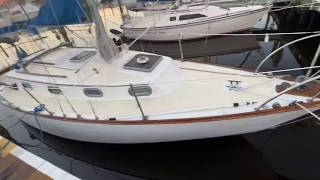
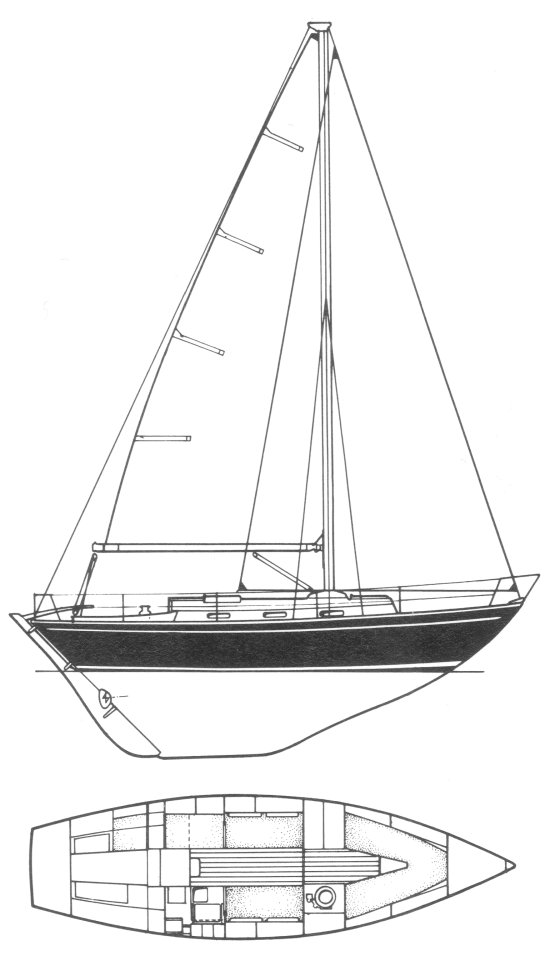
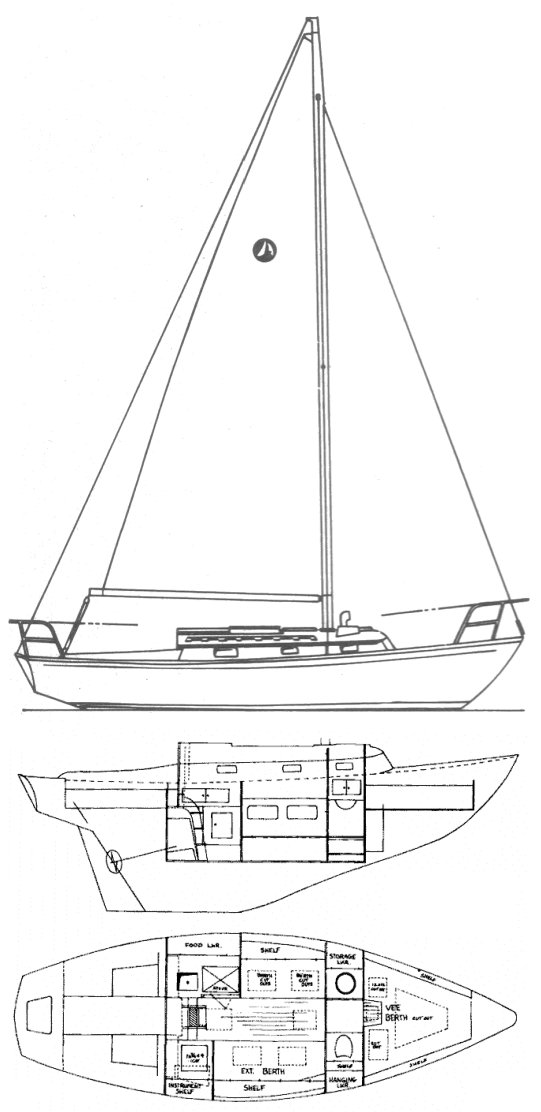
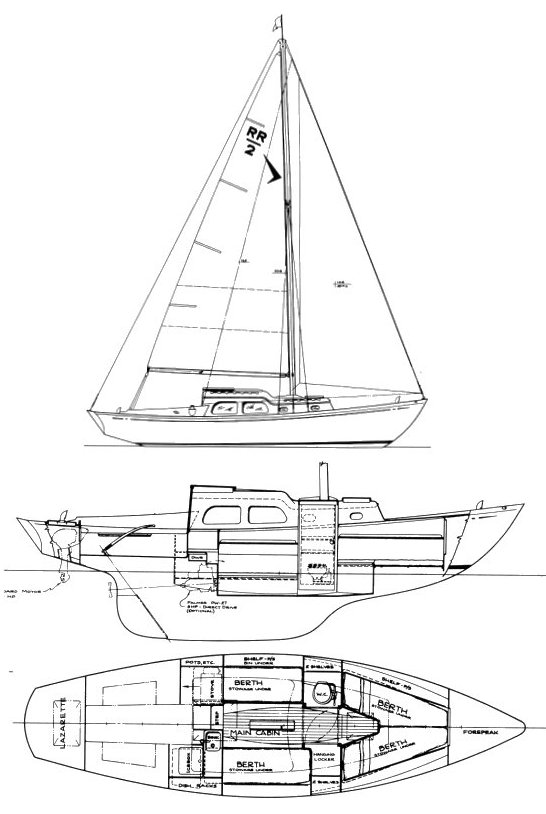
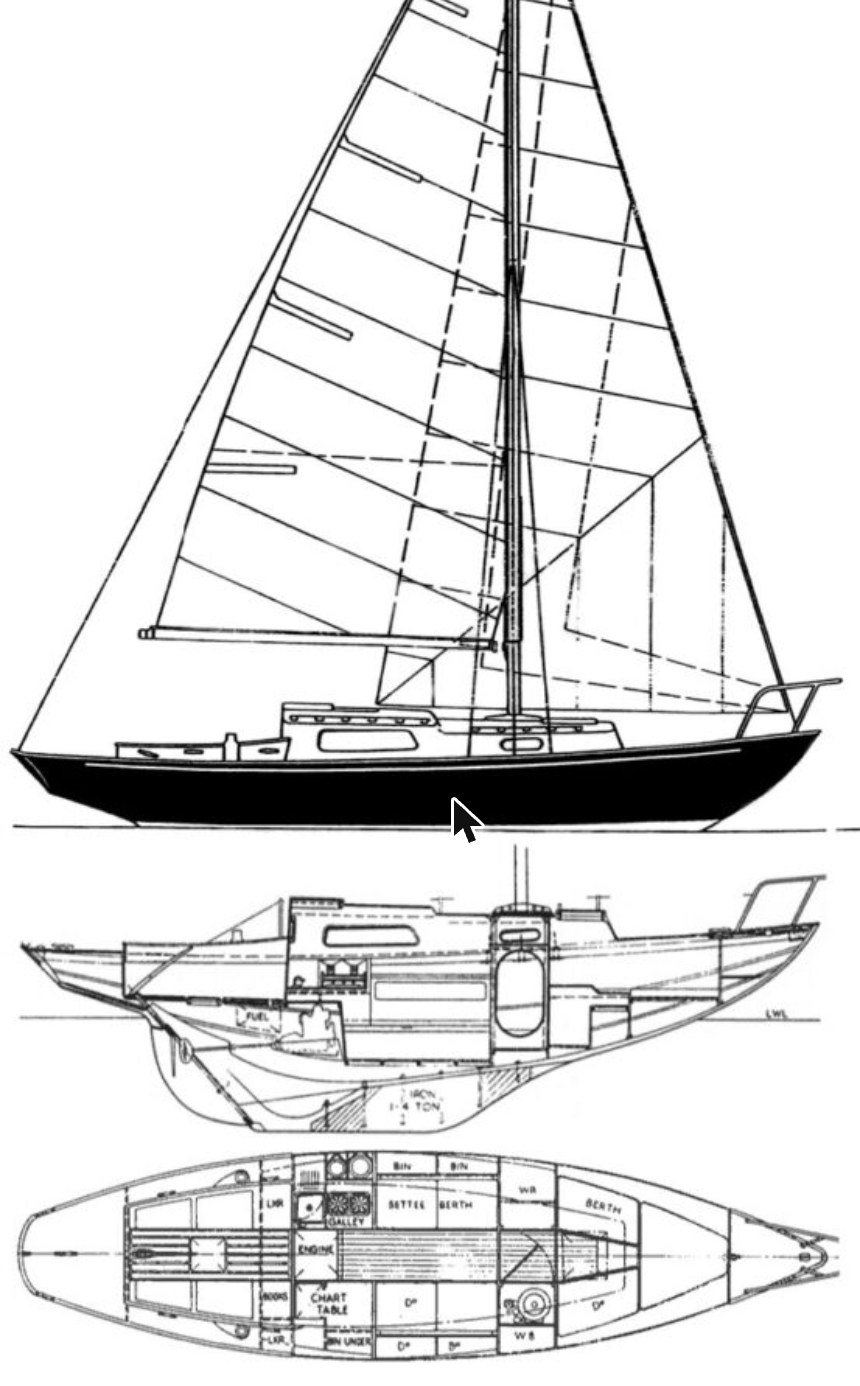
Walkaround of a 1977/78 boat. The hosts describe a full long keel with a cutaway forefoot and a keel-hung rudder, a draft of four feet, a beam of almost nine feet, just over 28 feet overall and just over 22 feet on the waterline. They put production at almost 400 in the 28, with some reports of 500.
warns⚙ chain plates
A rust spot on the topsides is believed to come from an internal chain plate, which the host says may be iron: "that is an issue with these boats and it can be remedied."
warns⚙ fuel tank
Looking at the fuel tank in the port cockpit locker, a host says it is something to keep an eye on because these boats are known to have issues with them, though this one looks okay.
discusses⚙ engine
The older Universal diesel turns over but does not fire. The owner believes the fuel injector pump is at fault, and the hosts suggest a diesel mechanic or an outboard on the existing bracket. They call the boat very stiff and very seaworthy and say there is "not a lot to dislike about these."
repairs⚙ engine controls⚙ throttle
The owner, moving his boat to a yard, finds the lever that takes the boat out of gear is seized, so he has to start the engine in gear. He adds an extension to a throttle that is also seizing and has a replacement ready.
repairs⚙ toe rail⚙ deck fittings⚙ deck-hull joint
The owner says the toe rail leaks pretty bad, as do a lot of the deck fittings, so they will come out and be rebedded, and he may add a layer of glass over the deck-hull joint. He also notes a Dorade vent box was installed backwards, with the wire going straight through to the cabin.
repairs⚙ chainplates⚙ backing plates
Below, the owner shows the old backing plates, which are mild steel and in really rough shape, and says he will be happy to swap them for new ones behind the planned bronze strap chainplates.
discusses
The broker rates this 1983 Cape Dory 28 above average condition for her age and "turnkey" for a buyer who wants no projects. He notes the main and genoa are only 5 years old, the bottom paint and prop look good (it needs a new zinc before launching), and says of the full keel, "these full keels they just track so well." These are the broker's sales observations of one boat.