Overview
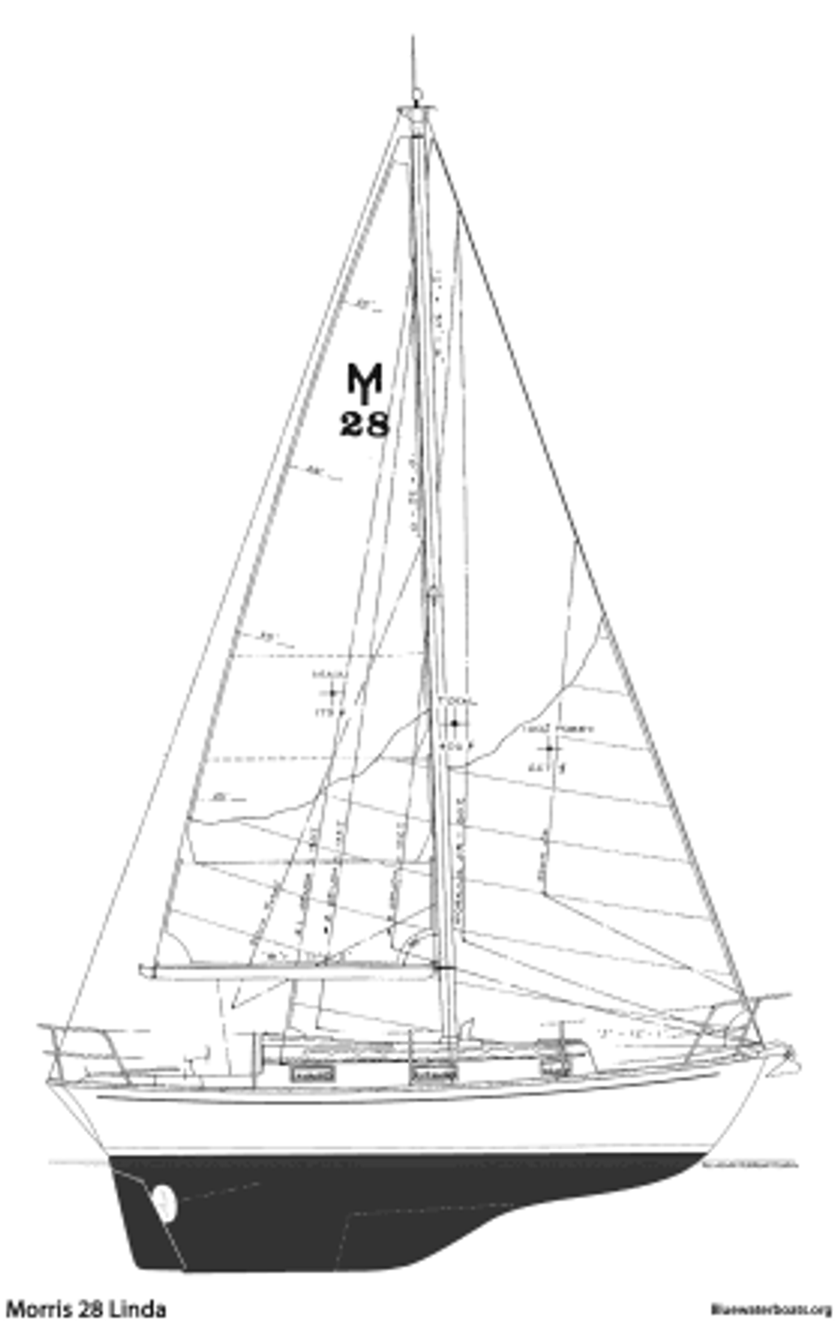
The Morris 28 Linda began with Allan Stern’s 1980 request for a small cruiser between the Frances 26 and Morris’s 30-foot designs. Stern wanted good sailing performance for Long Island Sound and travel beyond it. Chuck Paine developed a compact full-keel boat, named for Stern’s wife, and Morris built 16 examples beginning in 1985.
Paine describes Linda as a proper small yacht rather than a stripped daysailer. The design offers four-person accommodation in a narrow 28-foot hull, with the finish and semi-custom attention associated with Morris. That quality does not make every owner-finished or heavily modified example equal.
Dimensions and Conflicting Records
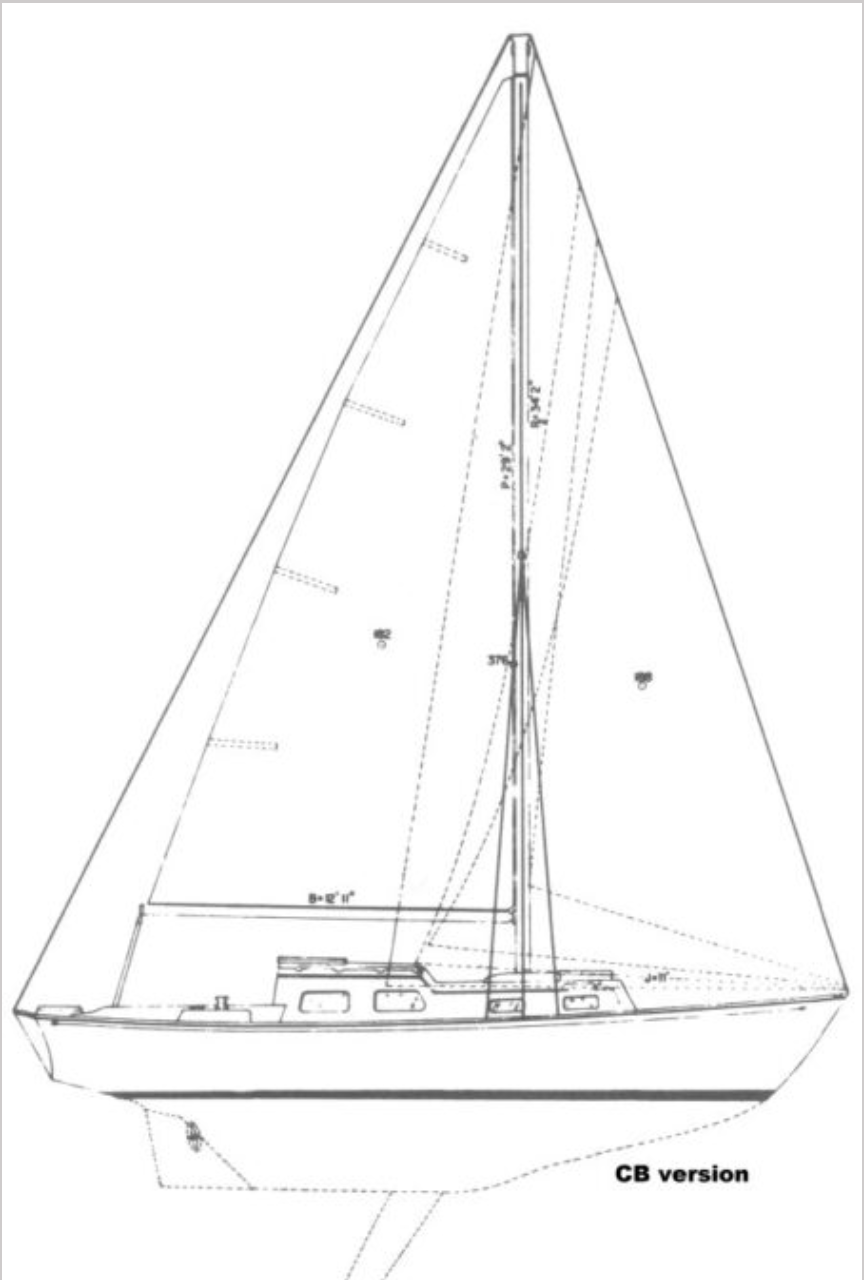
The designer’s published figures are 28 feet 2 inches overall, 22 feet 9 inches on the waterline, 9 feet 2 inches of beam, and 4 feet 4 inches of draft. Half-load displacement is 8,297 pounds with 3,900 pounds of lead ballast and 410 square feet of sail. Those figures are now used in the main specification because they come directly from Paine.
SailboatData instead gives 28 feet overall, a 23.33-foot waterline, 8,300 pounds displacement, 3,600 pounds ballast, and 378 square feet of sail. The variation likely combines drawing convention, load condition, and sail-area convention. Both records remain cited rather than blending them into a false precision.
SailboatData dates production through 1991. Paine says Morris built the 16 boats during the 1980s and 1990s without naming a final year. The 1991 endpoint is retained with that distinction.
Hull, Keel, and Trim
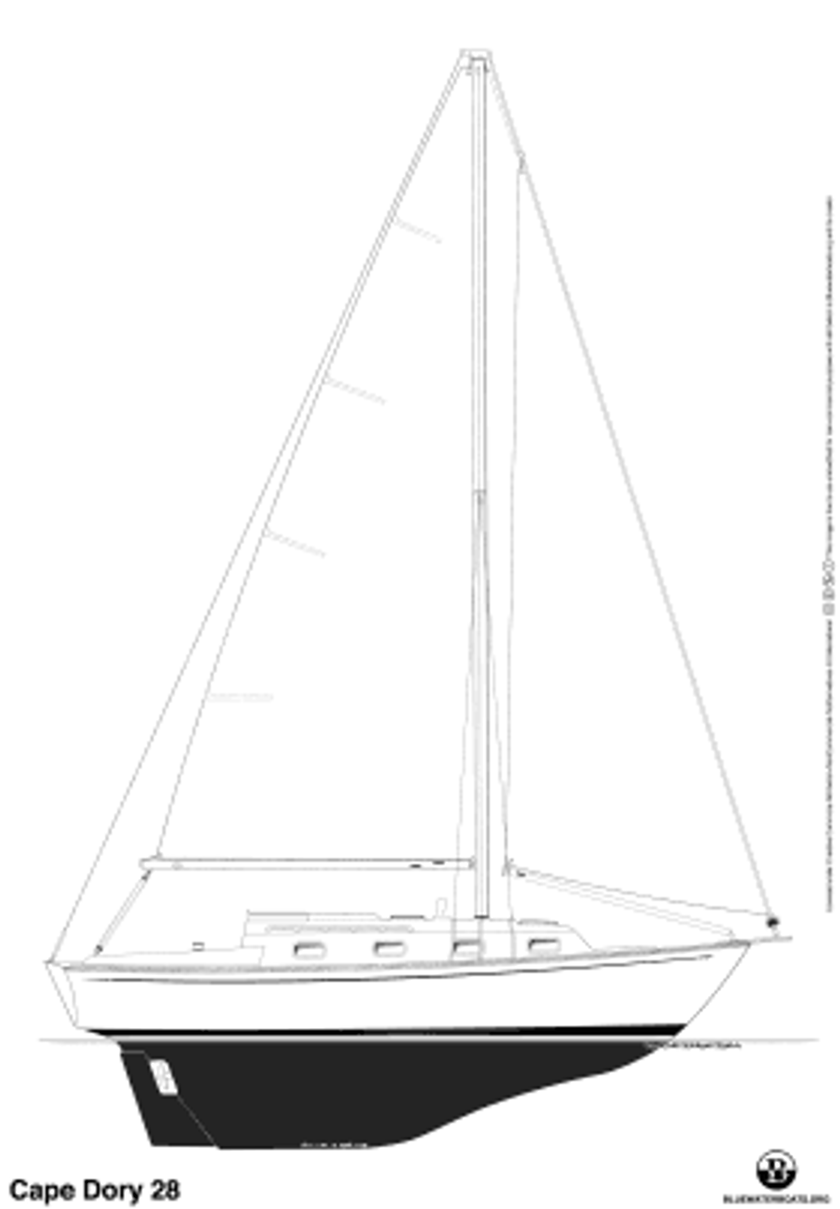
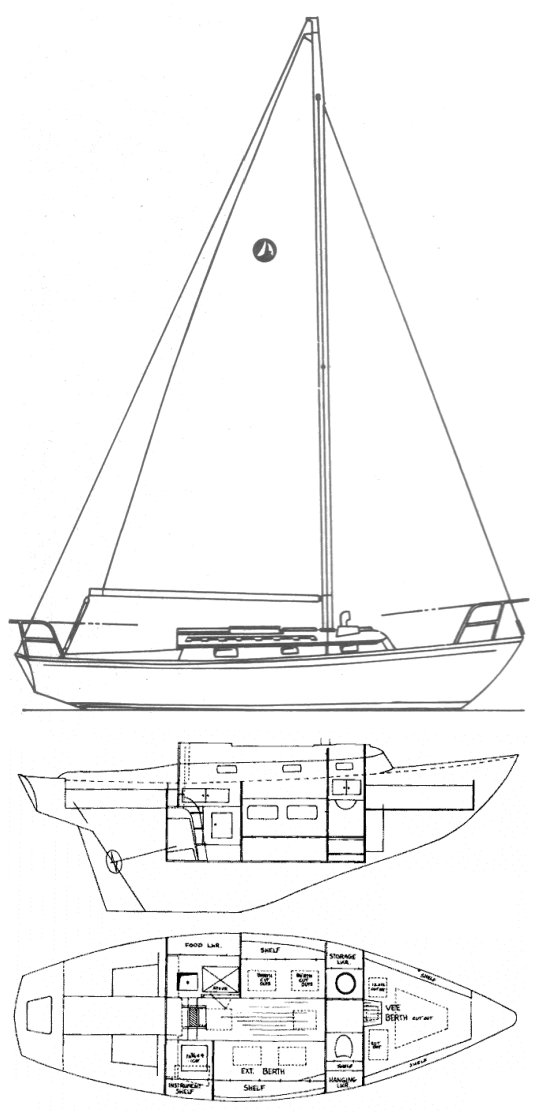
Linda has a cutaway full keel with external lead ballast bolted to the keel stub. Paine says he may have cut the forefoot away too aggressively. That moved the leading edge of the ballast aft, and some boats settled by the stern after owners added equipment under the cockpit. Lightly equipped boats did not show the same problem.
This is a valuable design-specific warning. Check actual flotation with tanks and cruising gear aboard. Batteries, stern anchors, spare parts, an enlarged fuel system, and a heavier replacement engine can all compound the original tendency. Moving weight forward may help, but the survey should first establish whether water ingress or structural change also affects trim.
Under Sail and Cruising Use
Paine calls the performance predictable and describes the boat as a full-keel yacht with a relatively cutaway forefoot. The keel should track steadily, while the cutaway shape reduces some wetted surface and turning resistance. The high ballast ratio supports sail carrying, but the short waterline and cruising displacement limit light-air pace.
Mahina rates Morris designs 4/5 and identifies the yard as one of the higher-quality American builders of the period. That is a builder-level assessment, not passage evidence for Linda. No named ocean crossing is currently attached, so the offshore rating remains unverified.
Interior and Build Variation
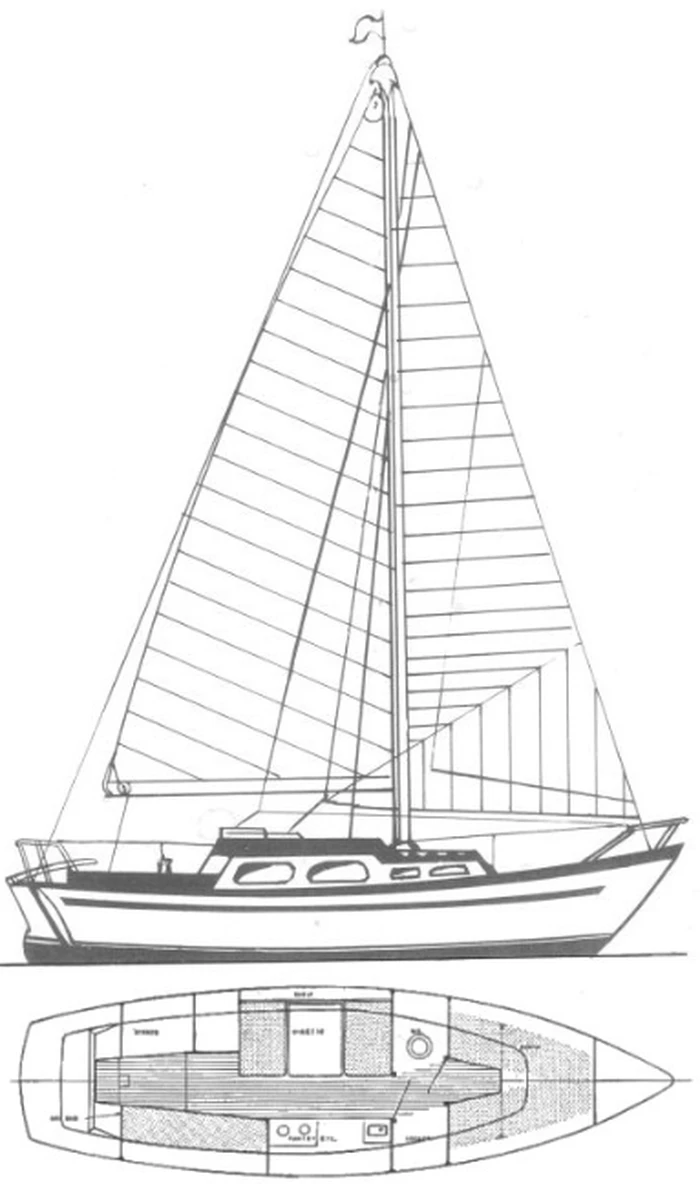
Paine’s arrangement supports four people in compact quarters. The archived review describes solid fiberglass below the waterline, a cored deck, keel-stepped mast, and substantial timber finish. Some boats were sold partly complete or finished by owners. Confirm those details from the individual hull instead of treating the historical review as a build sheet.
What to Inspect
Inspect keel bolts and the keel joint, grounding damage, rudder and steering, mast support, chainplates, deck core, hull-to-deck joint, bulkhead bonds, cockpit drainage, tanks, and engine installation. Check fore-and-aft trim under realistic load. On owner-finished boats, trace electrical, fuel, plumbing, and structural work without assuming Morris completed it. A clean varnished interior can coexist with hidden deck moisture or stern-heavy systems, so condition and weight distribution should drive the decision.