Overview
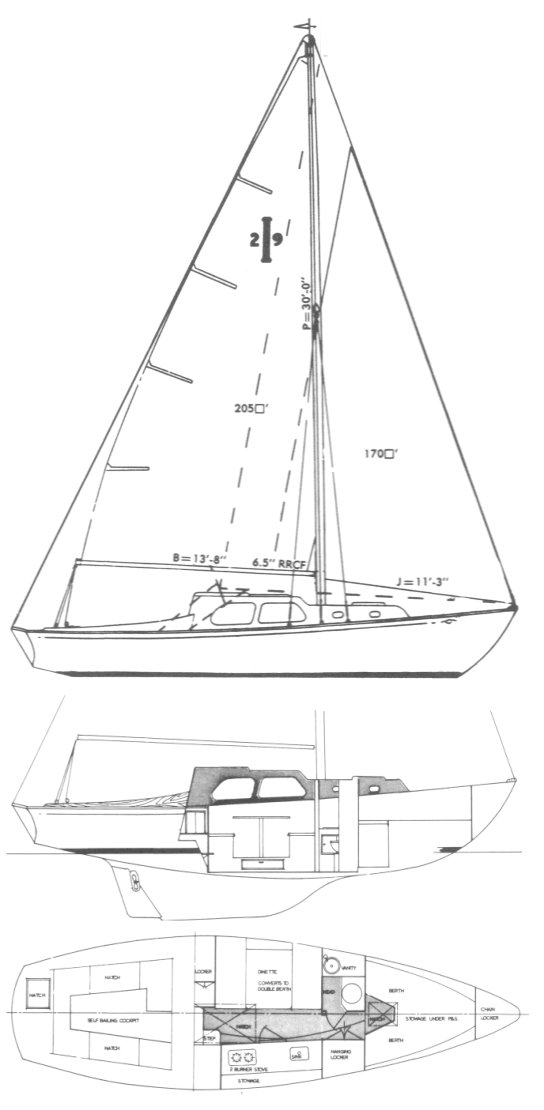
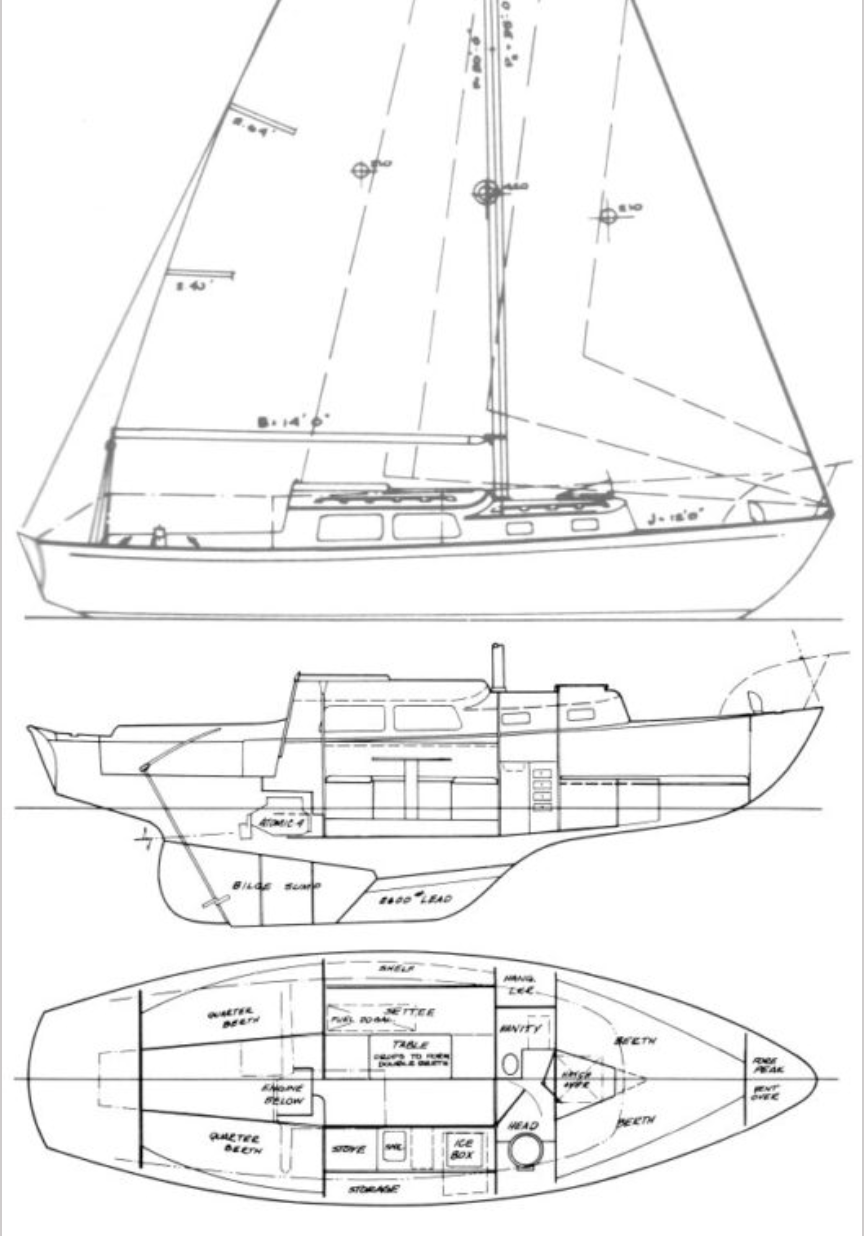
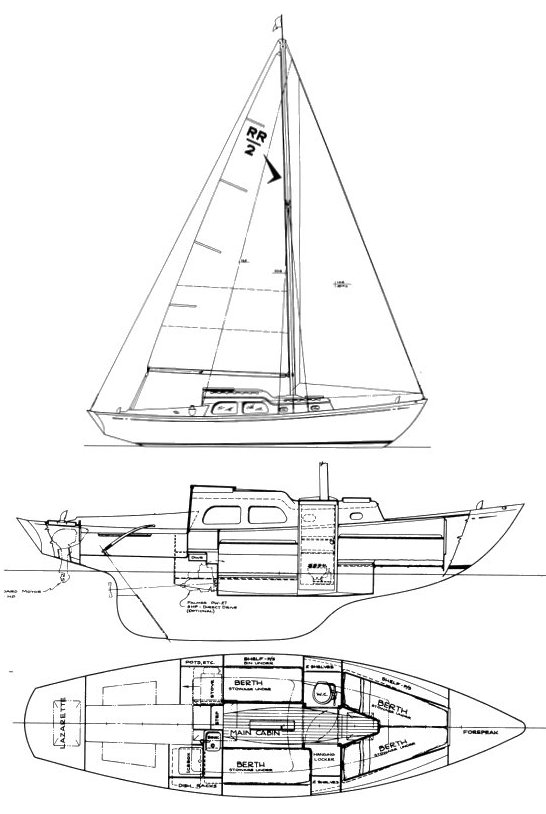
The Rhodes Ranger 29 is another of Philip Rhodes’s Dutch-built designs, Design #437, constructed at the de Visser shipyard in Holland and brought into the US market by Seafarer Yachts starting in 1960. It shares a family resemblance and an importer with the smaller Meridian 25, and like that boat it was also built overseas under a second name, sold in the UK as the Santander 28.
History
De Visser built the Ranger 29 through the 1960s and into the early 1970s, with roughly 200 hulls completed by the time production ended around 1973. Seafarer Fiberglass Yachts of Huntington, New York handled US import and distribution, the same role it played for the Meridian and Swiftsure lines, all Rhodes designs from the same Dutch source. Baldwin’s list entry, filed jointly under “Rhodes Ranger 28/29,” specifically warns not to confuse it with the later Gary Mull-designed Ranger 28, an unrelated boat that shares only a name.
Construction
The hull is fiberglass with wood trim. Sources disagree on keel shape: sailboatdata.com and sailboat.guide both classify the underbody as a fin keel, while Wikipedia describes “a fixed modified long keel with a cutaway forefoot.” Standard ballast was 1,900 lb of iron, but sailboatdata.com lists an optional 2,750 lb lead package, nearly 1,000 lb heavier, which materially changes the boat’s stiffness (34.5 percent ballast ratio with the lead option, well under 24 percent with the standard iron). A buyer should find out which ballast a specific hull carries.
Under Sail
With 328 sq ft of sail on a 20 ft waterline, the Ranger 29 carries a moderate sail plan for its length, in keeping with a masthead sloop rig meant for coastal and offshore family cruising. Baldwin’s recorded pluses point to a livable boat below: 5’10” headroom and, on some hulls, an optional outboard well built into the lazarette, a practical touch for owners who wanted to avoid an inboard.
Buyers Notes
Baldwin’s one recorded minus is a maintenance issue rather than a design flaw: “many have wooden spars that require more vigilance and maintenance than aluminum.” Any Ranger 29 still carrying its original wooden mast and boom should be surveyed accordingly, with particular attention to the areas most prone to rot, mast step, gooseneck fittings, and spreader bases. Given the boat’s age and split identity across two names (Ranger 29 in the US, Santander 28 in the UK), confirming hull number and original configuration against sailboatdata’s record is worth doing before assuming a given boat matches the specs here exactly, especially the ballast question above.