Overview
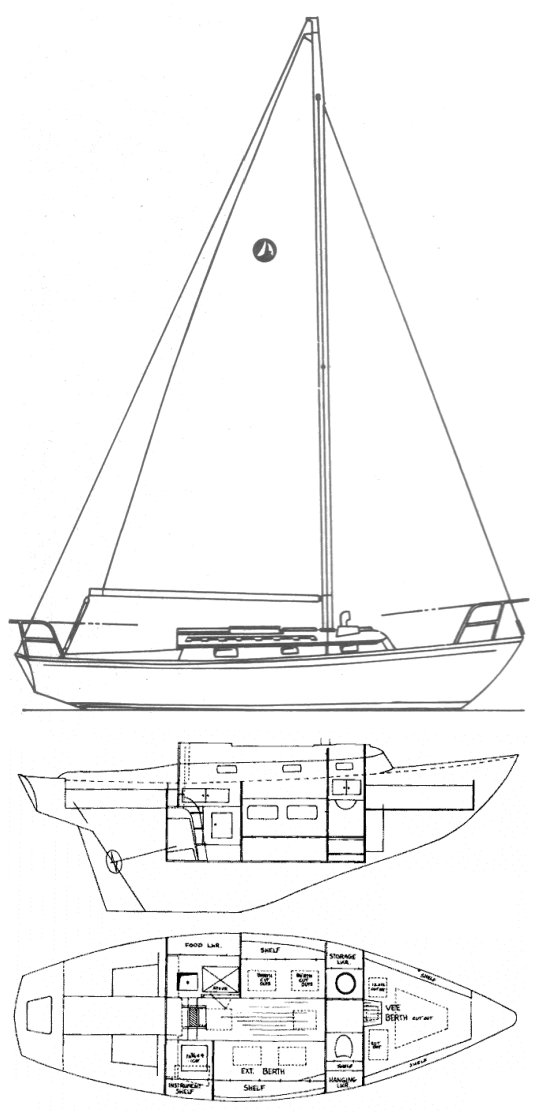
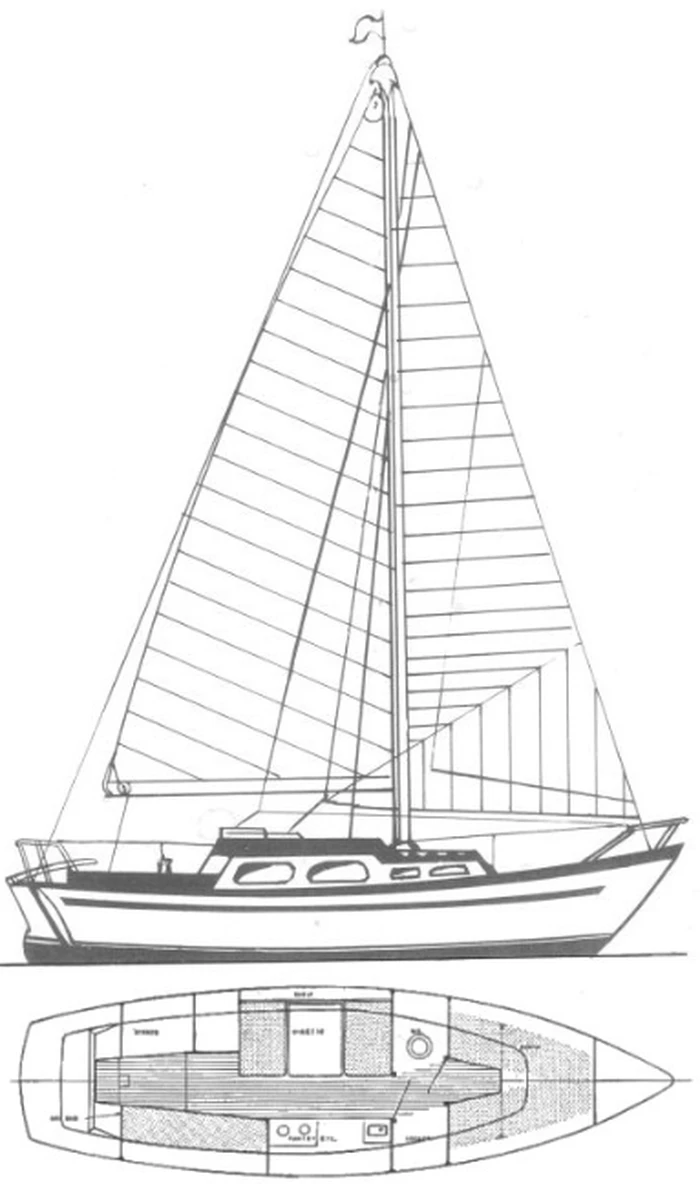
The Great Dane 28 is a Danish full-keel cruiser with a direct lineage to the Nordic Folkboat, a cutaway-transom development of that classic double-ended shape rather than a clean break from it. Built in fiberglass from the mid-1960s, it built a solid reputation both at home in Denmark and abroad as a small, seaworthy cruiser capable of offshore passages, with a low, sleek profile that hides genuinely usable headroom below.
History
Klaus Baess, a 1948 Olympic bronze medalist in the Dragon class, wanted a cutaway-transom evolution of the double-ended Folkboat shape and persuaded Aage Utzon, father of Sydney Opera House architect Jorn Utzon and a designer more accustomed to drawing traditional Scandinavian double-enders, to draw the hull. Utzon shaped the hull while Baess handled the deck and interior fit-out. The boat launched onto the UK market at the 1967 London Boat Show through the Carl Ziegler Agency, and Baess himself won the 1969 Yachting World One-of-a-Kind Rally sailing one. Roughly 250 to 300 were built in total. Sources disagree on when production ended: one owners’-history account says the moulds were destroyed around 1980, while spec aggregators give a last-built year of 1989; the later date is used here, but a buyer relying on a very late-production hull should treat that date as less firmly established than the 1965 start.
Construction
The hull is fiberglass over a long keel with a transom-hung rudder, a straightforward and durable arrangement typical of Scandinavian full-keel designs of the period. Ballast of 3,900 lbs on an 8,500 lb displacement gives a ballast ratio just under 46 percent, high for a 28-footer and a real contributor to the boat’s reported stiffness under sail.
Under Sail
The masthead sloop rig and high ballast ratio combine to make this a boat that carries sail well for its size, standing up to a breeze rather than laying over early the way many lighter, beamier boats of the same era do. The long keel and transom-hung rudder trade some maneuverability for the straight-tracking, forgiving-helm behavior typical of the type, well suited to standing watches on a passage rather than close-quarters racing.
Buyers Notes
James Baldwin’s recorded plus was specific: the boat “boasts 6’ headroom despite her sleek low profile,” a genuine point in its favor given how little freeboard the hull carries. He recorded no minuses. Given the design’s Folkboat ancestry and the age of the hulls, a survey should focus on the usual full-keel-boat concerns: keel bolts and the surrounding laminate, the condition of the transom-hung rudder fittings, and deck coring, along with confirming which era of production a given hull comes from given the uncertainty around the exact end of the model’s run.