Overview
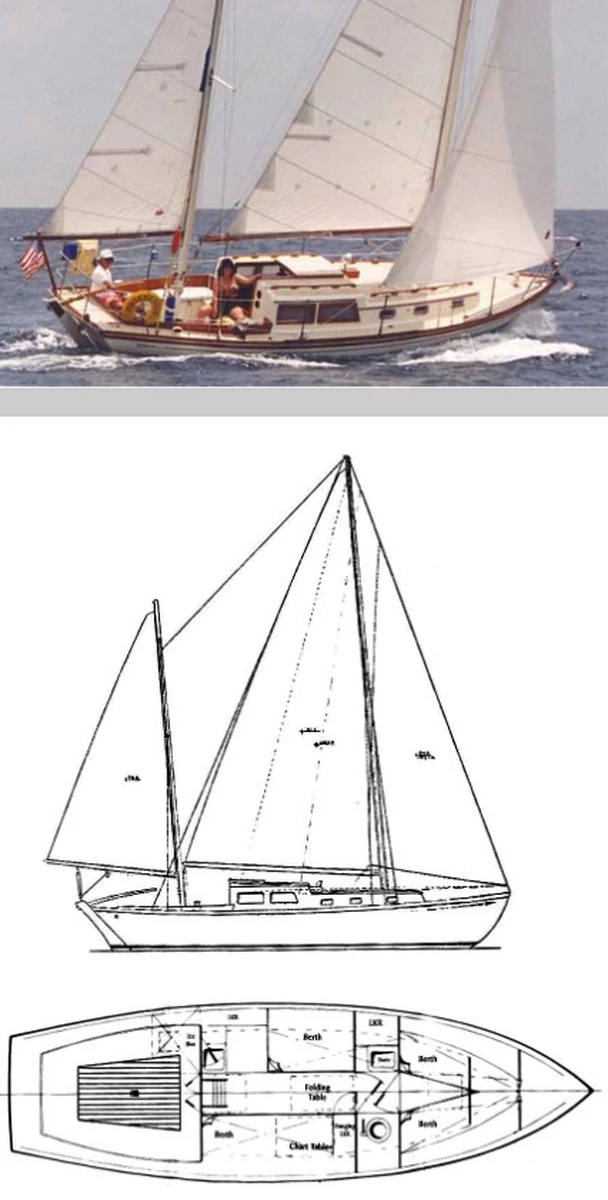
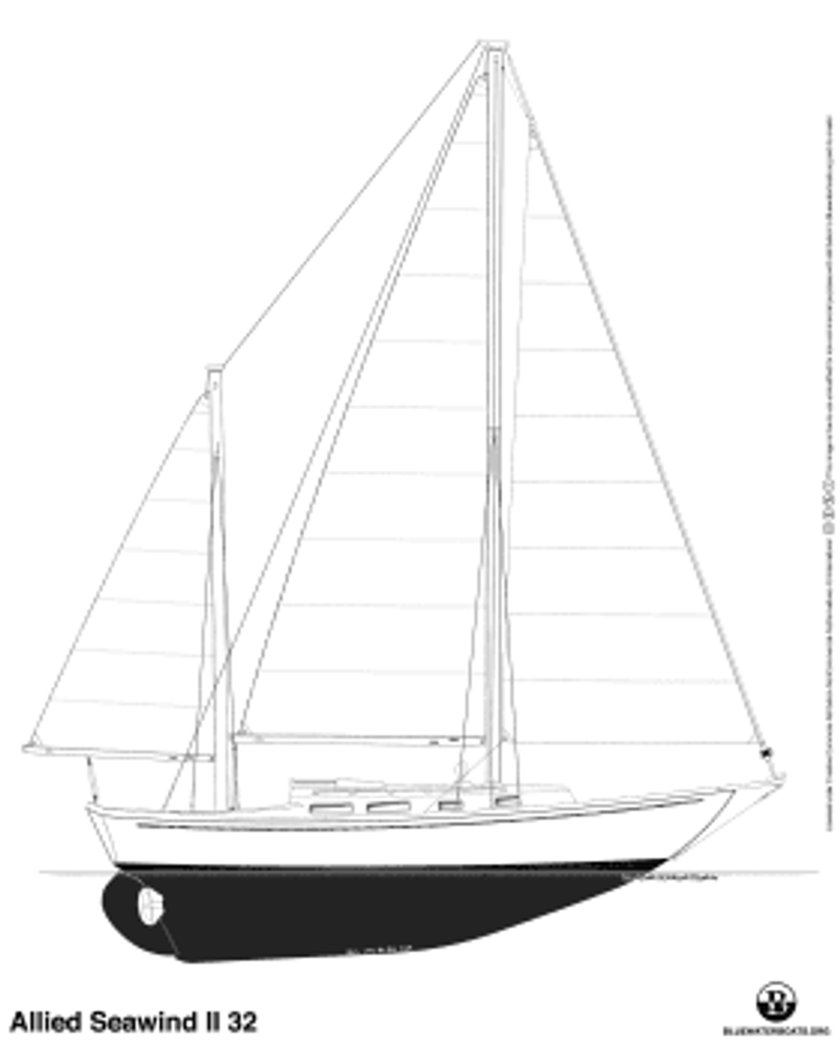
The Seawind II descends directly from Tom Gillmer’s original Seawind, a 30’6” ketch whose claim to fame was becoming the first fiberglass boat ever sailed around the world. Allied Yachts stretched and widened that formula into a bigger, more livable boat launched in 1975: 13 inches longer overall, 13 percent beamier, and 23 percent heavier displacement, trading some of the original’s austerity for real interior volume. Construction stayed solidly built throughout the run, though interior finish quality varied and got noticeably better on later hulls. Allied itself struggled financially for most of its history, going out of business four separate times before a fifth and final closure in 1981 ended Seawind II production for good.
Allied Yachts got its start in 1962 in Catskill, New York, a Hudson River town roughly a hundred miles north of Manhattan, formed as a partnership among fiberglass builder Lunn Laminates, the yacht brokerage Northrop and Johnson, and racing sailor Thor Ramsing. The 30’6” Seawind ketch was the new company’s first design, and it sold well enough to keep them busy from the outset.
Fiberglass construction was still a novelty when the Seawind launched, treated with real skepticism by a sailing world used to wood, and builders of the era compensated by laying up hulls conservatively thick. New Yorker Alan Eddy did more than anyone to settle the argument: setting off in 1963, he sailed his Seawind, Apogee, around the world, the first circumnavigation ever completed in a fiberglass boat. The voyage cemented Allied’s name for building genuinely seaworthy boats.
Capable as the original Seawind was offshore, her accommodations were tight even by the standards of the day. After a decade of steady sales, Allied went back to Gillmer to draw a roomier successor. The resulting Seawind II kept the same DNA in a noticeably larger package, with real gains in living space below.
Construction
Allied carried real improvements into the new hull. It was hand-laid and substantially thick, with well-supported bulkheads glassed directly to the hull. The hull-to-deck joint, a known weak point on the original Seawind, got particular attention: both hull and deck carried outward flanges at the sheerline, sealed and separated by a teak batten, then through-bolted vertically with stainless steel fasteners. Once the sealant cured over several days, the joint was ground flush and heavily glassed over on the interior, while outside a heavy aluminum extrusion, bedded and capped over the flange, was screwed horizontally into the teak batten. Labor-intensive to build, but strong.
Deck and cabin are fiberglass cored in balsa, with hardware through-bolted onto fiberglass backing plates to spread the load. The mast steps on deck, carried by a substantial oak compression frame running down into the bilge, and ballast is internal lead cast in and glassed over inside the keel. Exterior wood is almost nonexistent, even the dorado boxes are molded in, which keeps maintenance low at the cost of a somewhat plain look.
Under Sail
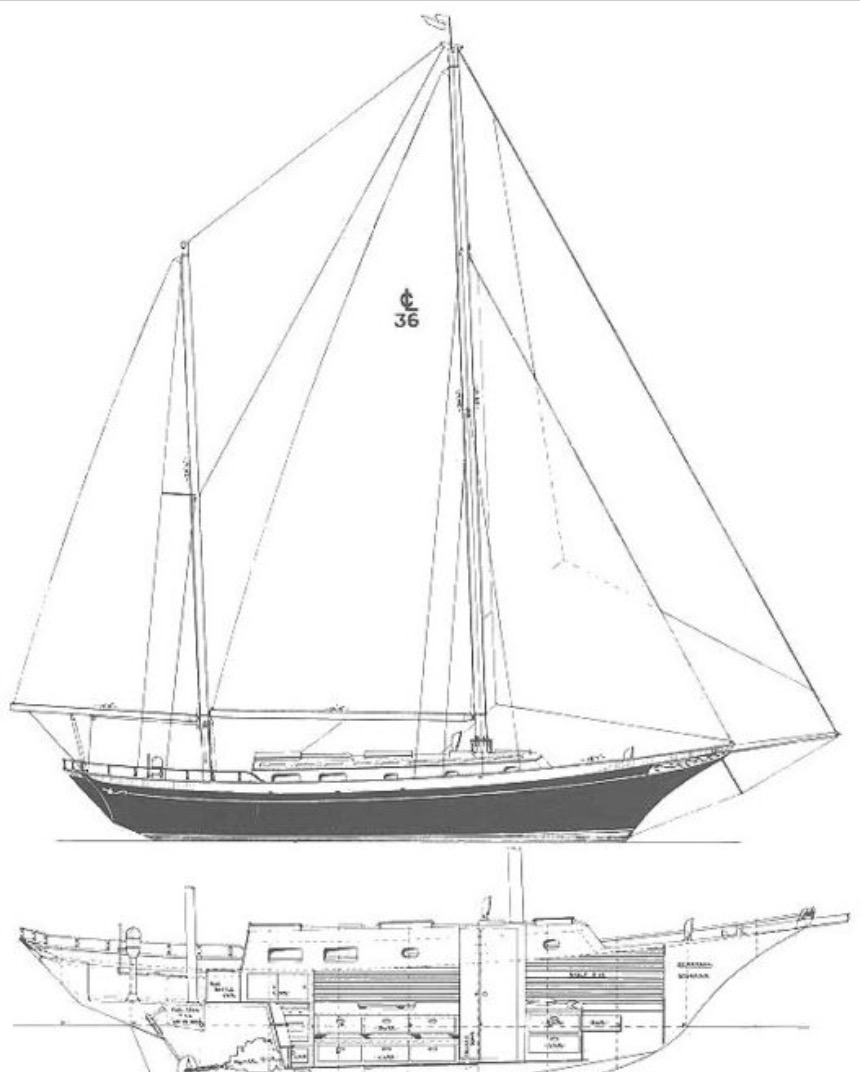
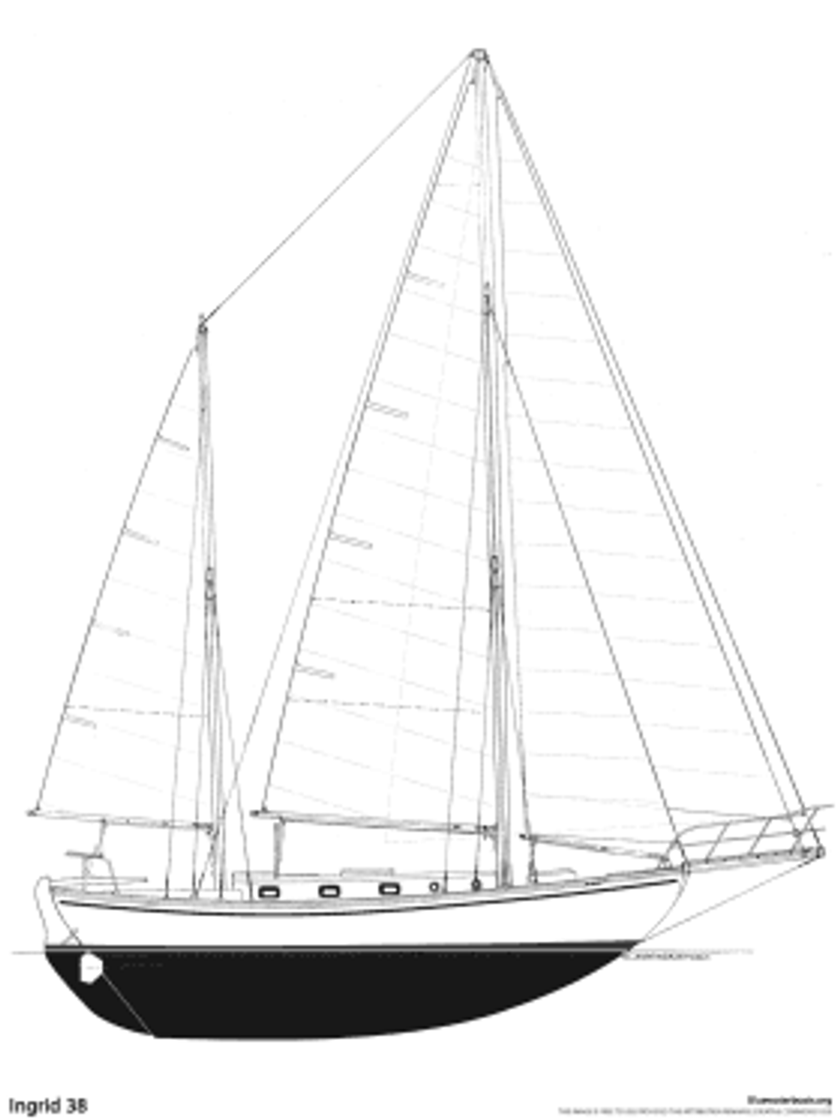
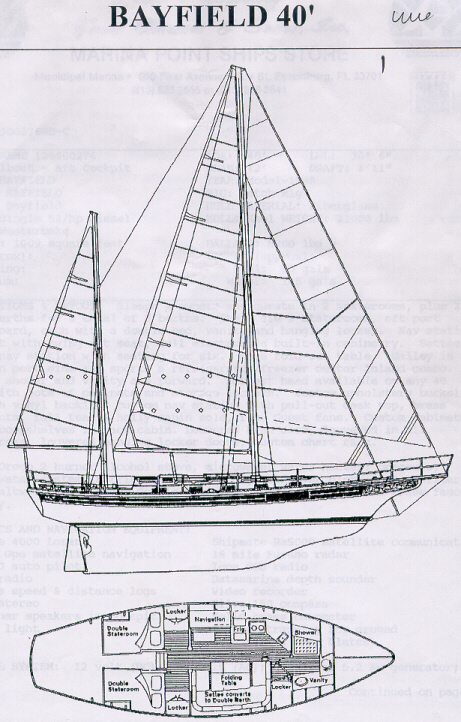
A ketch rig came standard on a boat this size, unusual for the era. Of the 130 Seawind IIs built, most carried that standard rig, but Allied also built 11 as cutters and 5 as sloops, both sharing the ketch’s mainmast shifted about a foot aft rather than stepping a dedicated spar. Those single-masted versions carried slightly less sail than the ketch but performed similarly, and the sloop in particular opens up the cockpit with no mizzen in the way.
She handles heavy weather about as well as her reputation suggests, and does better in light air than her displacement would predict. The motion at sea is genuinely comfortable, she’s well balanced, and weather helm stays minimal across conditions.
Overall she’s a strong, honest go-anywhere cruiser rather than an overbuilt one. Most surviving examples have held up well, and later hulls generally offer better-finished interiors than the early ones.
Buyers Notes
On survey, focus on three things: standing rigging (older stainless steel should be replaced on a schedule regardless of apparent condition), through-hulls (original bronze fittings hold up well, but aftermarket plastic replacements are worth swapping out), and the engine (the original Atomic 4 gas auxiliary is serviceable, though many owners have since converted to diesel, a worthwhile upgrade for anyone planning to take the boat offshore).
Links, References and Further Reading
» Seawind II owners association website» Sailing Magazine, Feb 1999, Used Boat Notebook by John Kretschmer» Practical Sailor, Capable Cruiser: The Seawind II» Practical Sailor, Seaworthy and Solid: Seawind II