offshoreshoal-draft

Allied Princess 36

Allied Boat Company / Wright-Allied Yachts · 1972–1982 · Ketch rig

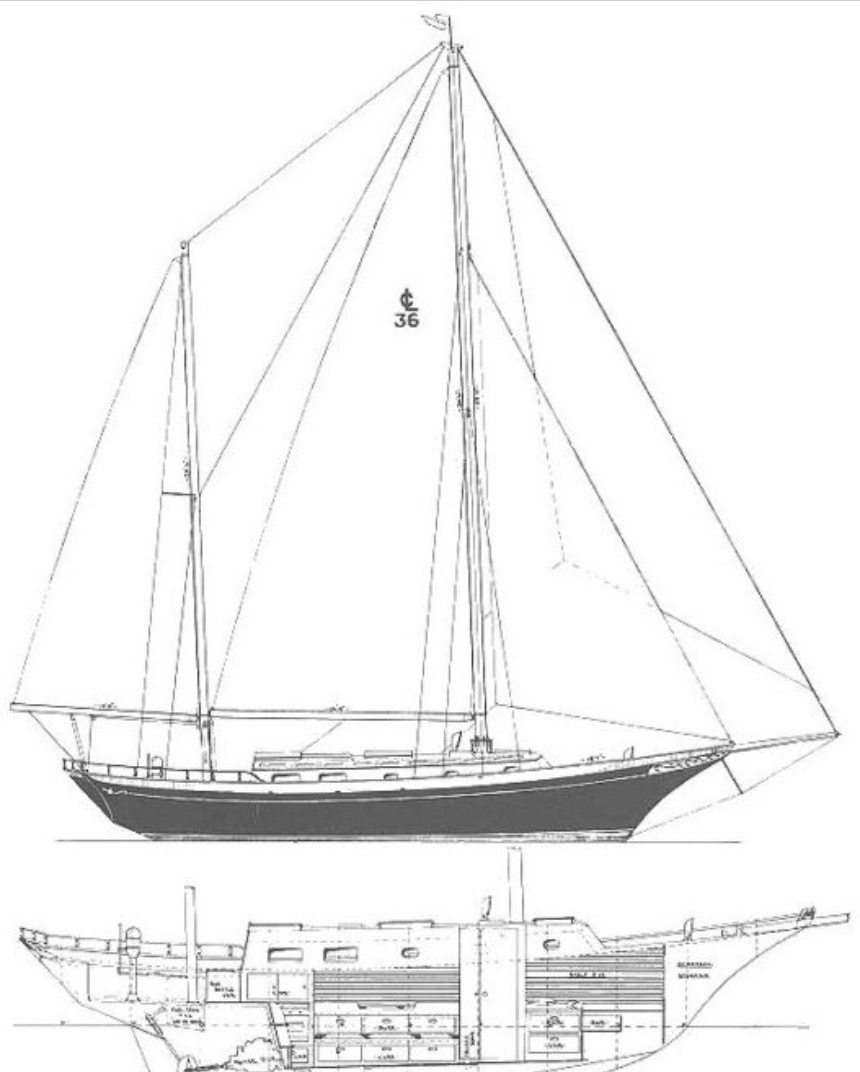
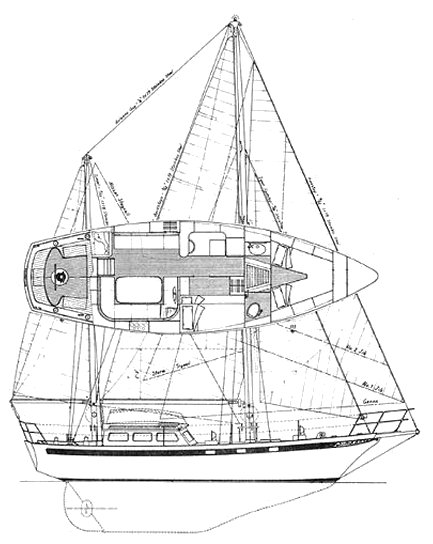
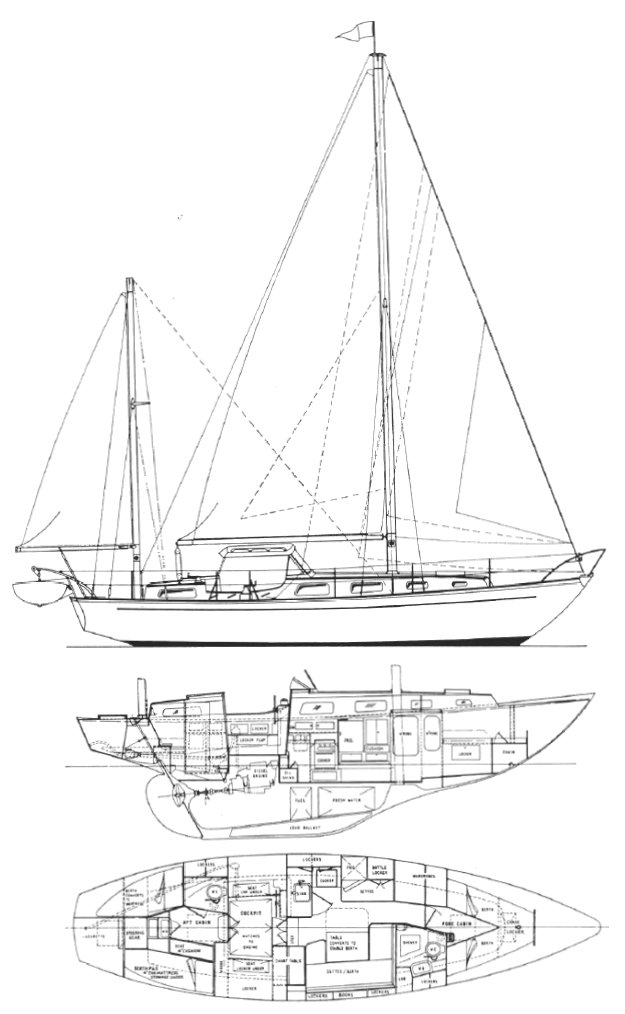
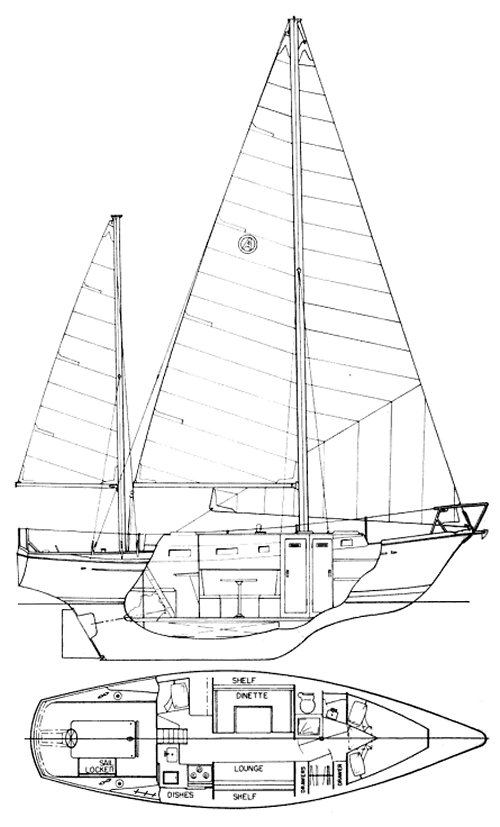
Allied Princess 36 profile drawing
LOA36'
Beam11'
Draft4.5'
Displ.7.2t
Rigketch
HullFiberglass

Bluewater Evidence · Ocean Proven

95% confidence

Gregg Nestor includes the Allied Princess 36 in Twenty Affordable Sailboats to Take You Anywhere. In a Practical Sailor letter, owner Tom Hails reports a 46,000-mile, nine-and-a-half-year circumnavigation in Princess, a 1978 Allied Princess 36 ketch, returning in 1992. John Neal's Boats to Consider for Ocean Cruising lists the model but rates it 1 of 5: 'Functional, practical but truly ancient and likely not cost effective to refit.'

Overview

The Allied Princess 36 is an Arthur Edmunds cruising design introduced in 1972. Most examples are ketches, though sloop versions also exist. Its 4-foot-6-inch draft, full keel, and attached rudder suit shoal-water cruising while retaining the directional stability of a traditional underbody.

Published sources agree on 36 feet overall, 27 feet 6 inches on the waterline, 11 feet of beam, and 5,000 pounds of ballast. Displacement figures vary in secondary records. Practical Sailor’s 14,400-pound figure is used here.

Construction and layout

The hull is hand-laid solid fiberglass. Lead ballast is encapsulated inside the keel. The deck is balsa-cored, and structural bulkheads are tabbed to the hull. The Princess was offered through several changes in ownership at Allied, so equipment and finish can vary between production periods. Practical Sailor describes the layup as 24-ounce woven roving and mat with a final layer of cloth, all laid up by hand, with no hull cores. The magazine liked the all-wood interior, with no fiberglass cabin sole or bunk foundations. Steering is an Edson worm gear (chain-driven or rack and pinion, depending on model), which Practical Sailor calls practically bombproof and easy to steer upwind, though it is non-reversing and gives the helmsman no feedback.

The interior follows a conventional cruising plan with a forward berth, enclosed head, saloon, L-shaped galley, and quarter berth or navigation area aft. The 11-foot beam gives useful volume without the proportions of later wide-stern designs. Practical Sailor lists headroom at 6 feet 4 inches. Freshwater capacity is reported at 80 to 90 gallons in a stainless steel tank under the main cabin sole, and fuel at 40 gallons, first in a black iron tank and later in Corten steel, which the magazine considers preferable. A number of owners told Practical Sailor the engine is too small for the boat in head seas, and the magazine suggests about 40 hp if repowering.

Under sail

The long keel favors tracking and makes quick tacks or reverse maneuvering less direct. Practical Sailor’s owner reports describe good balance when the correct combination of sails is set. On ketches, the mizzen can help tune balance, though it adds rigging and maintenance. Owners responding to Practical Sailor’s questionnaire rated upwind speed average to below average. Several owners call the boat initially tender but say she settles in nicely and seldom puts the rail under. The magazine’s reviewer lists an unusually springy sheer, shoal draft, a large cockpit and tenderness as drawbacks but still calls the boat an exceptional value. Owners with steering vanes report that they work well, and the magazine notes the mizzen may cause weather helm upwind and is often struck.

Buyers notes

Identify whether the boat is an original Princess 36 or the later Mk II, then check which factory changes or owner modifications are present. Early cockpit drains, lifeline height, and fuel-tank material deserve specific attention. Survey the balsa deck around fittings and inspect the encapsulated-keel laminate for grounding repairs. Cruising World reports Allied built about 100 Princesses between 1972 and 1982, and that the boats differ in detailing and interior appointment. Good Old Boat’s Rob Mazza notes the bowsprit did not become standard until the Princess II in 1980. Practical Sailor gives the introductory price as $25,995 for the ketch or sloop.

The book chapter is evidence for shortlisting the design. Full technical detail should come from the purchased book, cited reviews, and the records for the individual hull.
Passage records

Princess· Tom Hails1992

Circumnavigation

Owner reports 46,000 miles over nine and a half years, returning in 1992.

Source: Practical Sailor, Mailport: How Old For Offshore?

Known Issues

Original fuel tankseriousPassageBoats editorialEarlier boats

Early boats used a black-iron fuel tank beneath the cockpit, and later boats used Corten steel. Corrosion is a known inspection concern.

Inspection: Identify the tank material, inspect every accessible surface, pressure-test when appropriate, and review replacement records.

Source: Sailing Magazine, Allied Princess 36

Cockpit drains and lifelinesmoderatePassageBoats editorialEarlier boats before Mk II changes

Reviews identify small cockpit drains and low lifelines on early boats. The Mk II addressed both items.

Inspection: Measure drain capacity and lifeline height, then verify any modification against current offshore use.

Source: Sailing Magazine, Allied Princess 36

Recommended In

As an Amazon Associate, PassageBoats earns from qualifying purchases.

Documented repairs and system-specific fixes reported for the Allied Princess 36, drawn from known-issue write-ups and video transcripts.

Repairs Documented on Video

⚙ cabin sole

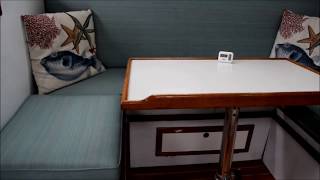
"Originally the Allied had a plywood cabin sole with a very thin layer of teak veneer... that got pretty ratty over the 40 years since the boat was built, and about ten years ago I ripped that out and built a completely new cabin sole out of cherry and white maple. This sole is not veneer, it's three-quarters of an inch thick, all laminated together and then varnished with eight coats of two-part urethane varnish."

⚙ fuel tank

Dunn says Seaquestor's original black iron fuel tank sat under the engine, with its top forming the bottom of the bilge, and had already been abandoned when he bought the boat in 1996. About eight years before this May 2022 tour, he removed it, reglassed and sealed the area, and filled the void with closed-cell urethane foam. He now uses a 12-gallon plastic tank in the aft lazarette.

⚙ standing rigging

Dunn says the lower shrouds are the only standing rigging he has not replaced on Seaquestor. He replaced the cap stays and turnbuckles on both sides the year before this May 2022 tour.

Todd Dunn

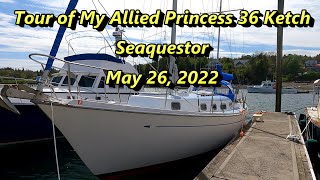
Tour of My Allied Princess 36 Ketch Seaquestor - May 26, 2022

▶ watch at 6:38

What sailing channels say about the Allied Princess 36, quoted from video transcripts with a link to the exact moment. Opinions belong to the speakers; the written review above stays independent of them.

discusses

"Seaquester is a 1972 Allied Princess 36 ketch. The hull was originally laid up in November of 1972... the Allieds were built in Catskill, New York, up on the Hudson River, and this boat is number eight of 140 Allied Princesses built."

repairs⚙ cabin sole

"Originally the Allied had a plywood cabin sole with a very thin layer of teak veneer... that got pretty ratty over the 40 years since the boat was built, and about ten years ago I ripped that out and built a completely new cabin sole out of cherry and white maple. This sole is not veneer, it's three-quarters of an inch thick, all laminated together and then varnished with eight coats of two-part urethane varnish."

discusses

Todd Dunn describes Seaquestor's bronze worm-gear steering as difficult to break. He says the wheel stays where it is set, but gives no feedback from water flowing over the rudder, unlike cable steering.

repairs⚙ fuel tank

Dunn says Seaquestor's original black iron fuel tank sat under the engine, with its top forming the bottom of the bilge, and had already been abandoned when he bought the boat in 1996. About eight years before this May 2022 tour, he removed it, reglassed and sealed the area, and filled the void with closed-cell urethane foam. He now uses a 12-gallon plastic tank in the aft lazarette.

repairs⚙ standing rigging

Dunn says the lower shrouds are the only standing rigging he has not replaced on Seaquestor. He replaced the cap stays and turnbuckles on both sides the year before this May 2022 tour.

Todd Dunn

Tour of My Allied Princess 36 Ketch Seaquestor - May 26, 2022

▶ watch at 6:38
warns⚙ engine

Dunn says he has done major service on Seaquestor's Westerbeke diesel. He reports some smoke when it first starts, which disappears once it is under load.

discusses

The owner, who has sailed his ketch for 27 years, gives the rig dimensions: deck-stepped masts, a main mast 40 feet long with the masthead about 46 feet off the water (about 48 feet of bridge clearance with antennas), a 135 percent genoa of roughly 300 to 335 square feet, a 250 square foot main and a 95 square foot mizzen, about 680 square feet in all. He says deck-stepped masts are a little heavier aloft and make the boat slightly more tender.

discusses

On handling: "because of the long keel the boat tracks quite well", but with the attached rudder it is not as responsive as a fin keel and spade rudder boat. When tacking he lets the jib fill and push the bow across before casting off the sheet, otherwise the boat can stall and end up in irons, and in heavy air he sometimes has to cast off the mizzen to get through the wind. "These boats don't tack fast, they don't turn fast."

discusses

The owner says the full keel's wetted surface makes the boat slow in light air, especially downwind. Hull speed on the 27-and-a-bit-foot waterline is about seven knots, which he reaches easily, with peaks of about 7.8. Weight runs between 14,500 and 15,500 pounds depending on vintage, and boats built after about 1978 are heavier because they carry an additional thousand pounds of ballast.

discusses

The owner says the boat is initially tender, heeling to about 15 degrees in around 10 knots before it firms up, and that he has had it over almost 40 degrees in big puffs. Because of the high freeboard at the bow it is dry, and in 27 years he has never put the rail down. He reefs the main between 12 and 15 knots and in short steep seas of four to five feet it pitches and almost stops.

warns⚙ engine⚙ steering

On maneuvering under power: in reverse "the boat pretty much goes where it wants not where you want", so backing into a slip is tricky and he wants someone on the finger pier to take lines. The original engine was a 27 horsepower diesel, which he calls a bit underpowered for the weight; he now runs a 46 horsepower engine and burns just under half a gallon an hour at about six knots.

discusses

The presenter describes the 1970s Princess 36 as a full-keel cruising boat with a ketch rig and a big, friendly interior for its era, aimed at couples. He calls it a small traveling house with sails and ballast rather than a fast boat, suited to the Chesapeake, Bahamas, Florida and the ICW.

Lady K Sailing

Allied Boat Company: The Fiberglass Sailboat That Changed Everything

▶ watch at 9:44
discusses

Walkthrough of an Allied Princess 36 that a boat recycler is parting out because it has reached the end of its life. The presenter finds the layout very roomy and open for 36 ft and can stand fully upright in every section of the boat, including the V-berth. A rusty toolbox leads him to say the boat has been underwater or at least sunk on land.

Josh Davidson - Boat Slayer

Allied Princess 36 Walk thru Being Parted Out - sailboat recycler

▶ watch at 0:27
discusses

Reading the numbers off sailboatdata, the presenters give 36 ft overall with no bowsprit, 27 ft on the waterline, "14,000lb displacement" and a maximum draft of 4 and a half feet. They say about 140 were built, and that the shallow draft is "a very nice Bahama boat".

discusses

Andy, who grew up aboard one, notes there is no wood on deck, "which is really surprising given the age of this boat", apart from what looks like a wooden cockpit coaming backrest, so it is "going to be very easy to maintain".

warns⚙ rig

Andy says living with the mizzen mast in the cockpit is "not the best" and that he remembers it "always in the way". Cruisers get lazy and often do not set the mizzen, he says, so small ketches tend to be annoying, though the three-sail rig looks good.

discusses

Andy points out the unusual hull-to-deck joint: an outward-facing flange that is bolted together and covered with heavy aluminum, so the joint doubles as a rub rail. He says it has aged well and that modern boats no longer have rub rails.

recommends

Andy sees this size and type of boat as a gap-year cruiser, "a very capable, stout, awesome little cruising boat for not a lot of money", and says the low price of the example in the listing reflects a lack of demand rather than poor condition.

Tour of the Interior of my Allied Princess 36 Sailboat
0:20
Repair · cabin sole

Tour of the Interior of my Allied Princess 36 Sailboat

Todd Dunn

"Seaquester is a 1972 Allied Princess 36 ketch. The hull was originally laid up in November of 1972... the Allieds were built in Catskill, New York, up on the Hudson River, and this boat is number eight of 140 Allied Princesses built."

+1 more indexed moment in this video

Tour of My Allied Princess 36 Ketch Seaquestor - May 26, 2022
12:28
Repair · fuel tank, standing rigging, engine

Tour of My Allied Princess 36 Ketch Seaquestor - May 26, 2022

Todd Dunn

Todd Dunn describes Seaquestor's bronze worm-gear steering as difficult to break. He says the wheel stays where it is set, but gives no feedback from water flowing over the rudder, unlike cable steering.

+3 more indexed moments in this video

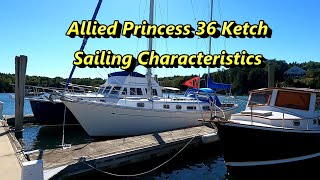
Allied Princess 36 Ketch - Sailing Characteristics
2:35
Known issue · engine, steering

Allied Princess 36 Ketch - Sailing Characteristics

Todd Dunn

The owner, who has sailed his ketch for 27 years, gives the rig dimensions: deck-stepped masts, a main mast 40 feet long with the masthead about 46 feet off the water (about 48 feet of bridge clearance with antennas), a 135 percent genoa of roughly 300 to 335 square feet, a 250 square foot main and a 95 square foot mizzen, about 680 square feet in all. He says deck-stepped masts are a little heavier aloft and make the boat slightly more tender.

+4 more indexed moments in this video

Allied Boat Company: The Fiberglass Sailboat That Changed Everything
9:44

Allied Boat Company: The Fiberglass Sailboat That Changed Everything

Lady K Sailing

The presenter describes the 1970s Princess 36 as a full-keel cruising boat with a ketch rig and a big, friendly interior for its era, aimed at couples. He calls it a small traveling house with sails and ballast rather than a fast boat, suited to the Chesapeake, Bahamas, Florida and the ICW.

Allied Princess 36 Walk thru Being Parted Out - sailboat recycler
0:27

Allied Princess 36 Walk thru Being Parted Out - sailboat recycler

Josh Davidson - Boat Slayer

Walkthrough of an Allied Princess 36 that a boat recycler is parting out because it has reached the end of its life. The presenter finds the layout very roomy and open for 36 ft and can stand fully upright in every section of the boat, including the V-berth. A rusty toolbox leads him to say the boat has been underwater or at least sunk on land.

Allied Princess 36 // Boat Shopping
15:16
Known issue · rig

Allied Princess 36 // Boat Shopping

59 North Sailing

Reading the numbers off sailboatdata, the presenters give 36 ft overall with no bowsprit, 27 ft on the waterline, "14,000lb displacement" and a maximum draft of 4 and a half feet. They say about 140 were built, and that the shallow draft is "a very nice Bahama boat".

+4 more indexed moments in this video

  1. [1]MagazineGood Old Boat: Allied Princess 36 (Tom Wells)- water tankage: "Pressure water for the sink is drawn from an 80-gallon tank beneath the sole."
  2. [2]MagazineGood Old Boat: The Allied Princess 36 (Rob Mazza, 2018)- Model-specific review used for page detail.
  3. [3]MagazineCruising World: Allied Seabreeze, Mistress, and Princess- Model-specific review used for page detail.
  4. [4]ReviewPractical Sailor, Allied Princess 36- Model history, specifications, construction, sailing behavior, and owner-survey findings. Confirms the full keel and ketch/sloop rig in its own words; mentions one unnamed circumnavigation second-hand, not a primary voyage record.
  5. [5]Owner ReportPractical Sailor, Mailport: How Old For Offshore?- Tom Hails's first-person letter identifies Princess as his 1978 Allied Princess 36 ketch and reports 46,000 miles on a nine-and-a-half-year circumnavigation ending in 1992. Single-source owner testimony.
  6. [6]Specificationssailboatdata.com - Princess 36 (Allied)- Direct structured-data cross-check 2026-09-12: confirms LOA/LWL/beam/draft/displacement/ballast/year range exact; source of the sail_area_sqft precision correction (604 to 603) and the '# Built: 140' figure (single-sourced, not yet added to body prose). Its own notes field says the boat was sold as a cutter or ketch, conflicting with Practical Sailor's 'ketch or sloop'; sloop kept per the more detailed primary source.
  7. [7]MagazineGood Old Boat, Allied Princess 36- Design comparison and independent dimensional cross-check.
  8. [8]ReviewSailing Magazine, Allied Princess 36- Construction summary and specific inspection points for early boats and the Mk II.
  9. [9]BookTwenty Affordable Sailboats to Take You Anywhere by Gregg Nestor- Bibliographic and contents-page evidence. The full chapter remains in the copyrighted book.
  10. [10]EditorialMahina Offshore Services - Boats to Consider for Ocean Cruising (John Neal, v4.26)- Rated 1/5 by offshore consultant John Neal, updated April 2026. Considers these functional but very old, and likely not worth a full refit.
See something wrong? Suggest a correction

Corrections need evidence: a link or citation we can check. Sourced suggestions get reviewed and credited in the entry's change notes if applied.

Owner knowledge counts: name the boat and year so we can attribute it.