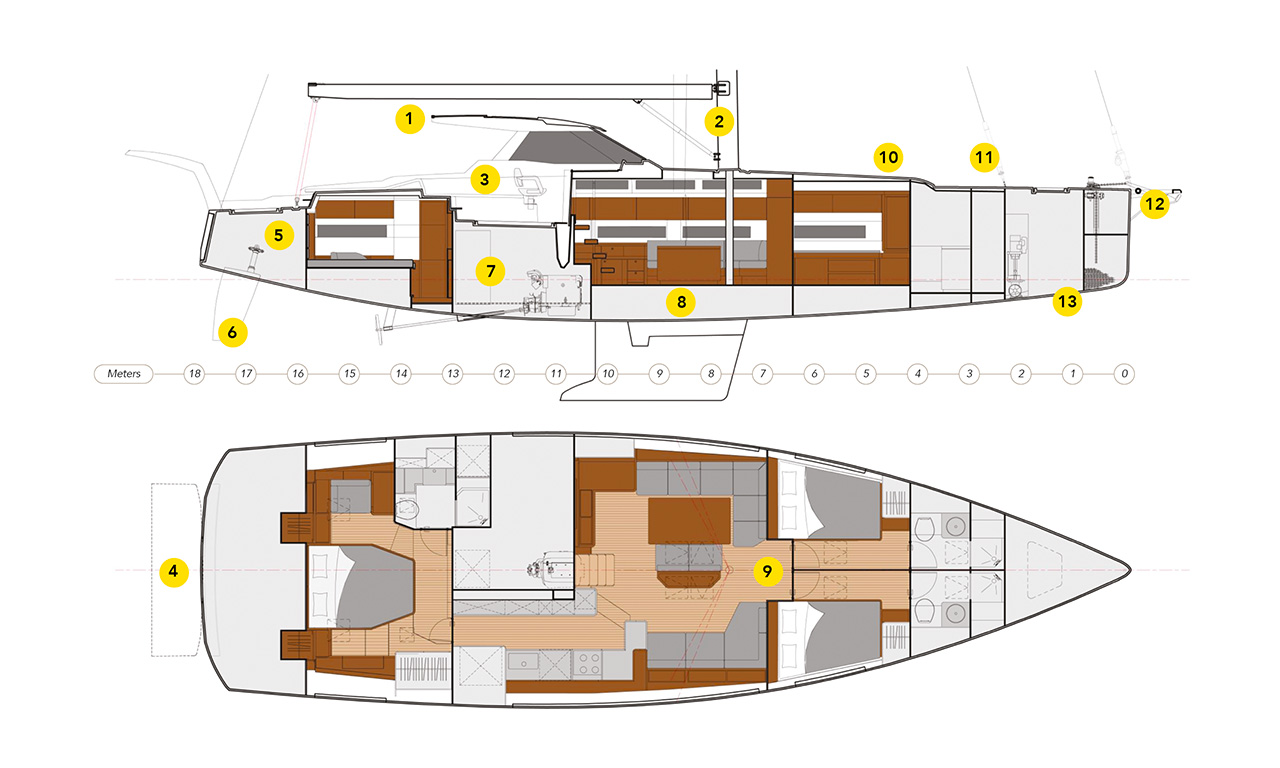
Overview
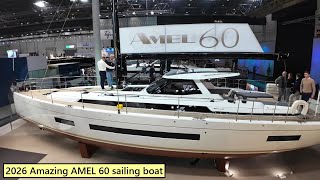
The Amel 60 is Chantiers Amel’s flagship, launched in 2019 as a larger sibling to the Amel 50’s sloop-and-cutter departure from the builder’s traditional ketch rigs. Berret-Racoupeau’s design carries the same twin-rudder, enclosed-doghouse philosophy at a bigger scale, aimed at a couple cruising long distance with occasional guest crew.
Design and Construction
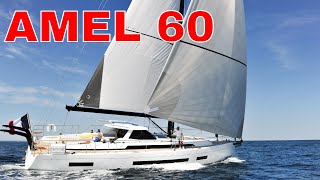
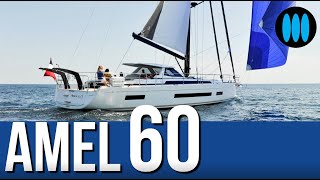
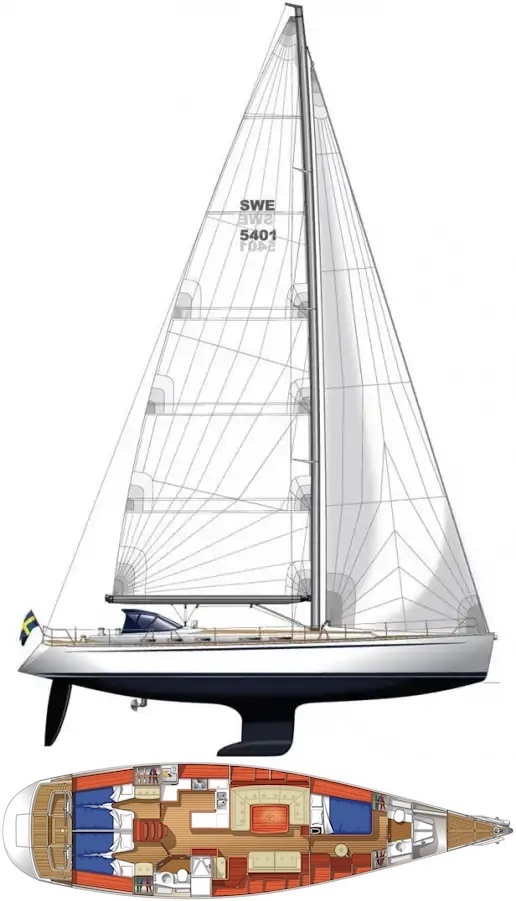
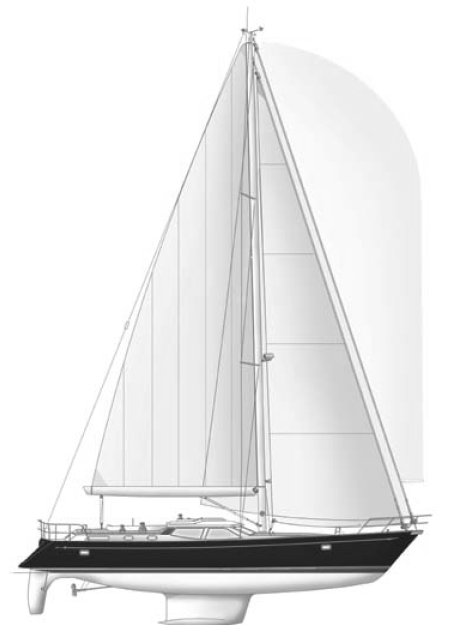
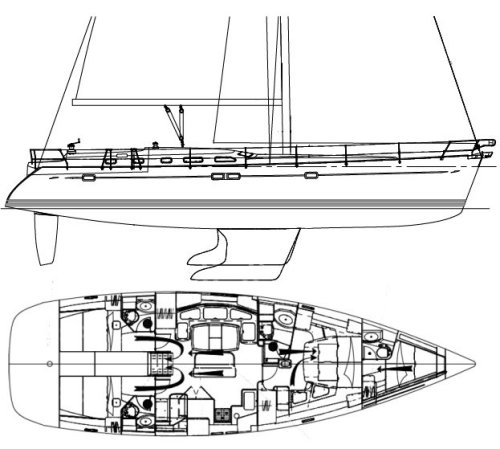
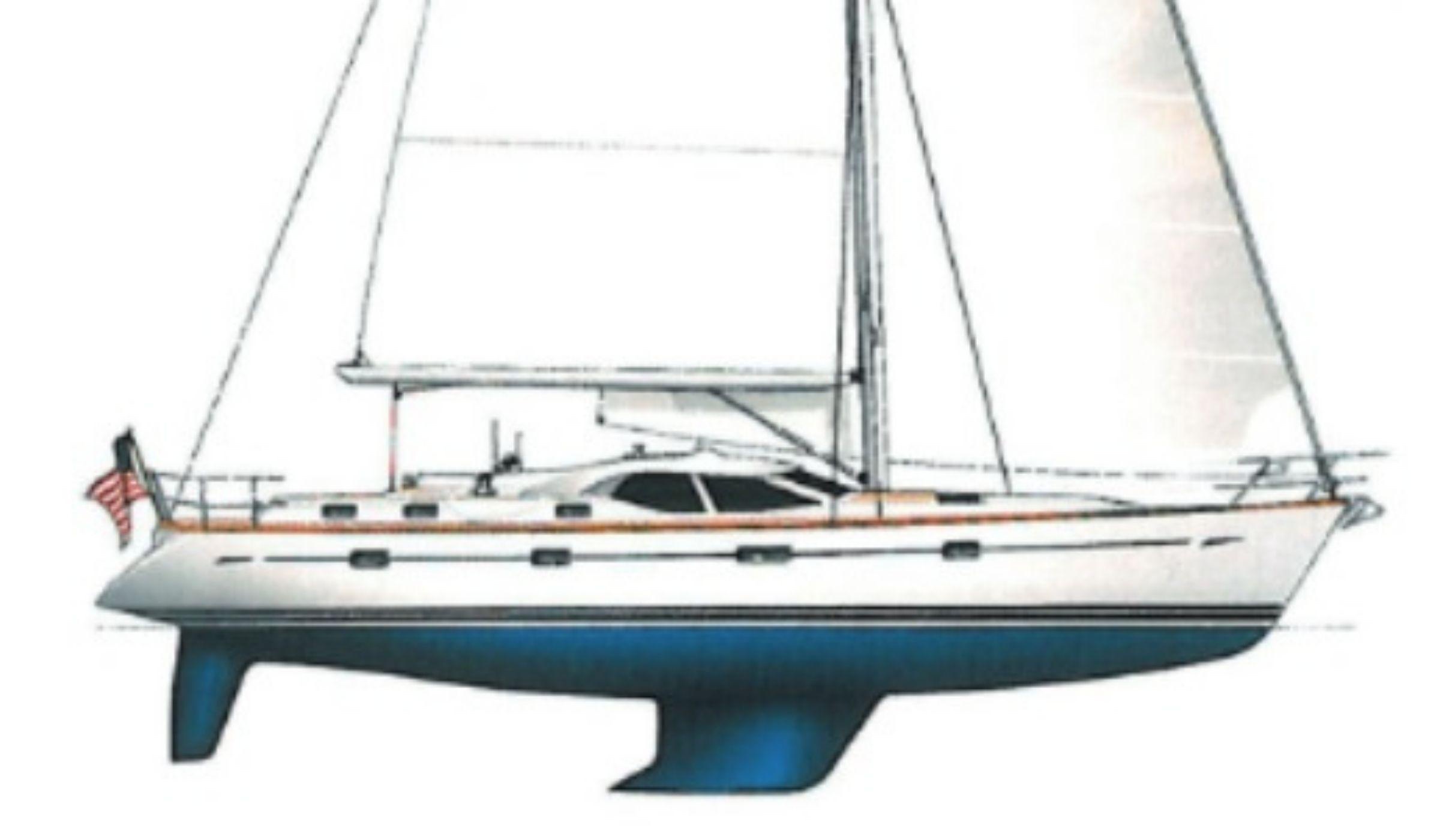
At just under 60 ft on deck and roughly 57,300 lb displacement, the Amel 60 carries a fin keel with a bulb and twin spade rudders on a sloop rig, with a self-tacking cutter rig offered as an option. Ballast comes in at just under 28 percent of displacement. Yachting World’s sea trial found the boat surprisingly capable in light air for her size, holding 5.4 knots in 6-7 knots of true wind and flat water, “impressive stuff for a 26 tonne boat.” A same-model handling caveat carries over from the smaller Amel 50: “the lack of propwalk makes it difficult to turn tightly in a small space,” a consequence of the twin-rudder arrangement rather than a defect. Yachting World reports the hull and deck are resin infused, solid laminate below the waterline and PVC foam sandwich above it, a technique introduced with the Amel 50. A carbon mast is standard, and a furling Code 0 (about €18,000 extra on the test boat) gave the reviewer extra light-air upwind performance.
Under Sail
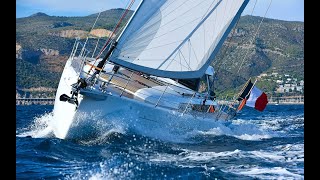
Reviewer Matthew Sheahan called the Berret-Racoupeau hull “clearly on trend” for its shape, and found the boat delivered genuine sailing performance rather than just comfortable motoring under sail. His verdict: “this is a genuine go-anywhere cruiser for two from a company with a pedigree and popularity to back up such claims and a price tag to make others draw breath.” That pedigree has a real, current example: Entropie, sailed by Jeremie Dubois-Lacoste and Deanna, crossed the Atlantic from La Rochelle to the Caribbean in the 2023 ARC in just under 12 days. The Yachting World reviewer had reservations about the long steering cable runs to the twin rudders, guessing that finger-light feel is not her strongest card. He was also uneasy about driving electric sheet winches from a helm station with the winches behind the helmsman, but liked the mainsheet winch to starboard of the companionway within the helmsman’s reach.
Buyers Notes
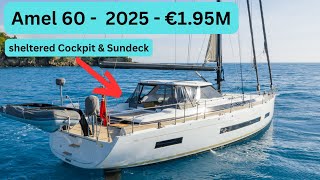
Confirm which displacement and engine figures a specific hull’s paperwork actually shows: Amel’s own marketing materials and independent sea-trial data disagree on both (see this catalog’s sourcing notes), and the independently-verified figures are used here rather than the builder’s own page. As with the Amel 50, the twin-rudder steering gives quick response but limited feedback, and low-speed maneuvering in tight marinas benefits from the bow thruster given the hull’s windage. A retractable stern thruster is available in addition to the standard bow thruster and makes her nimble under engine. The cockpit floor lifts on permanently fitted gas struts, and the reviewer called the resulting engine access the best you can imagine.