Overview
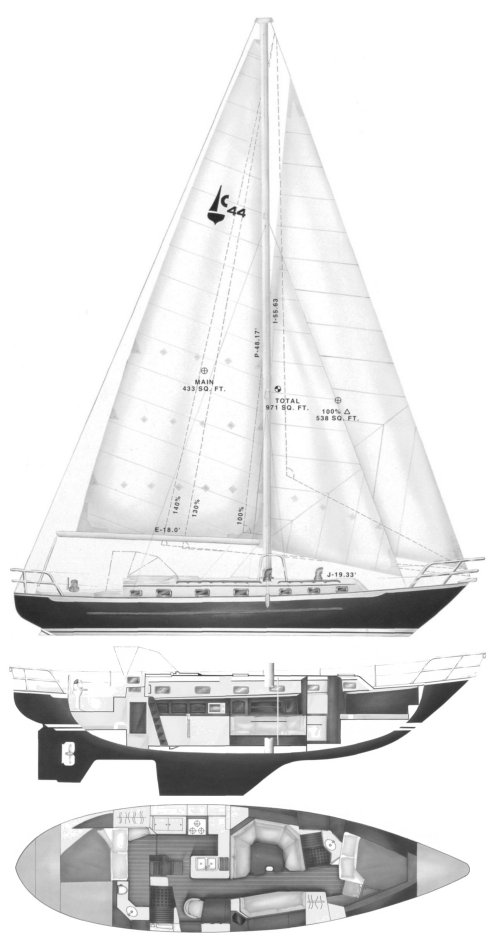
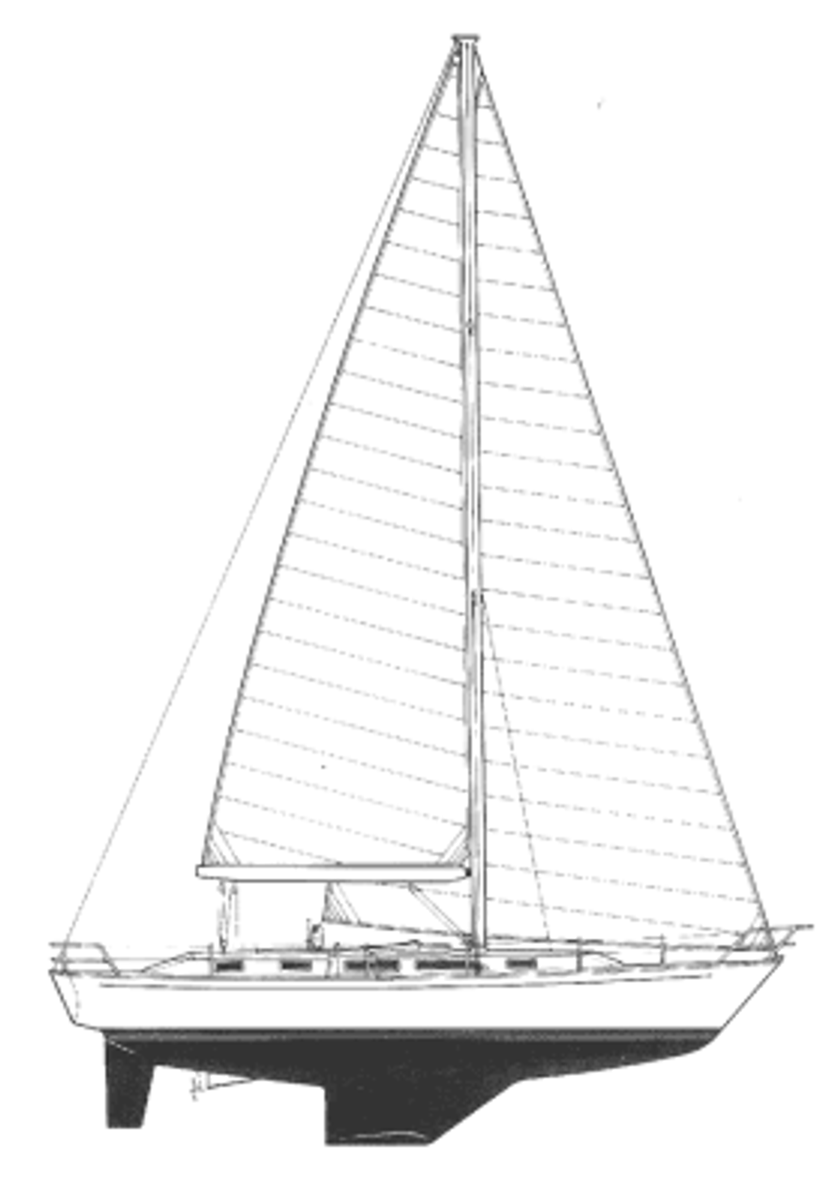
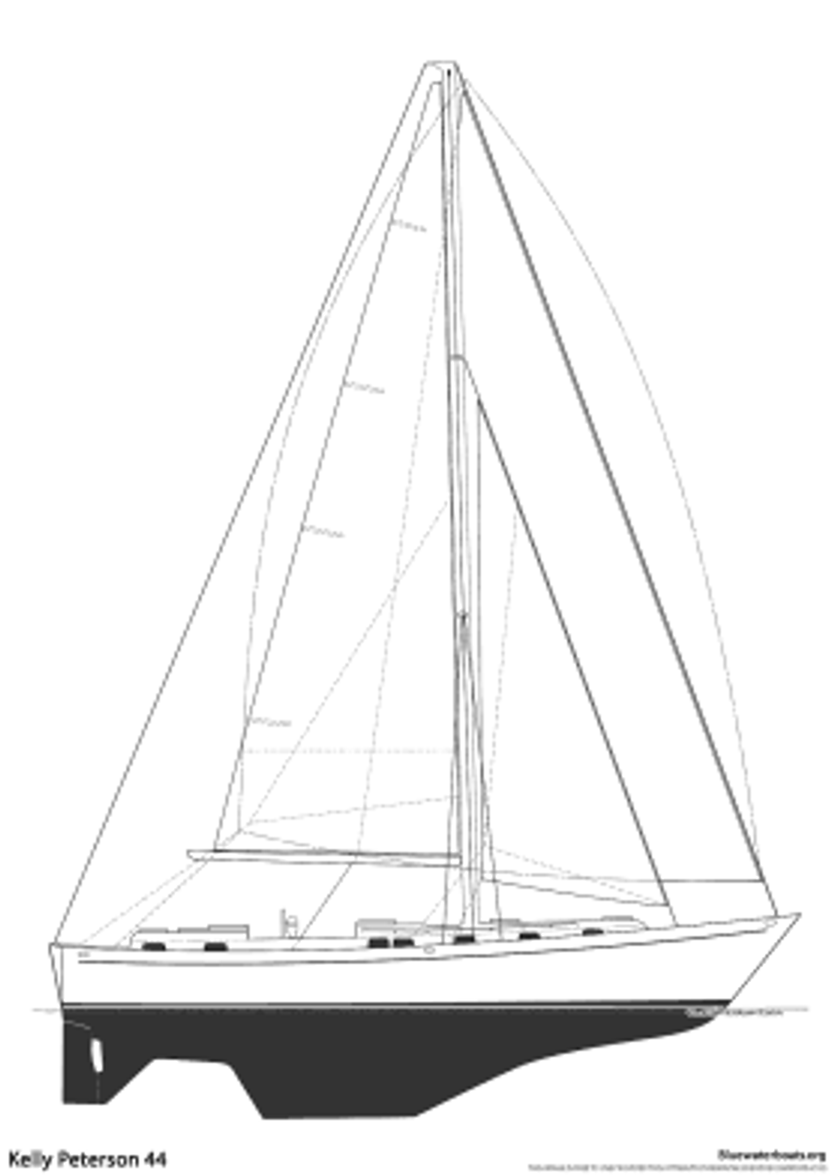
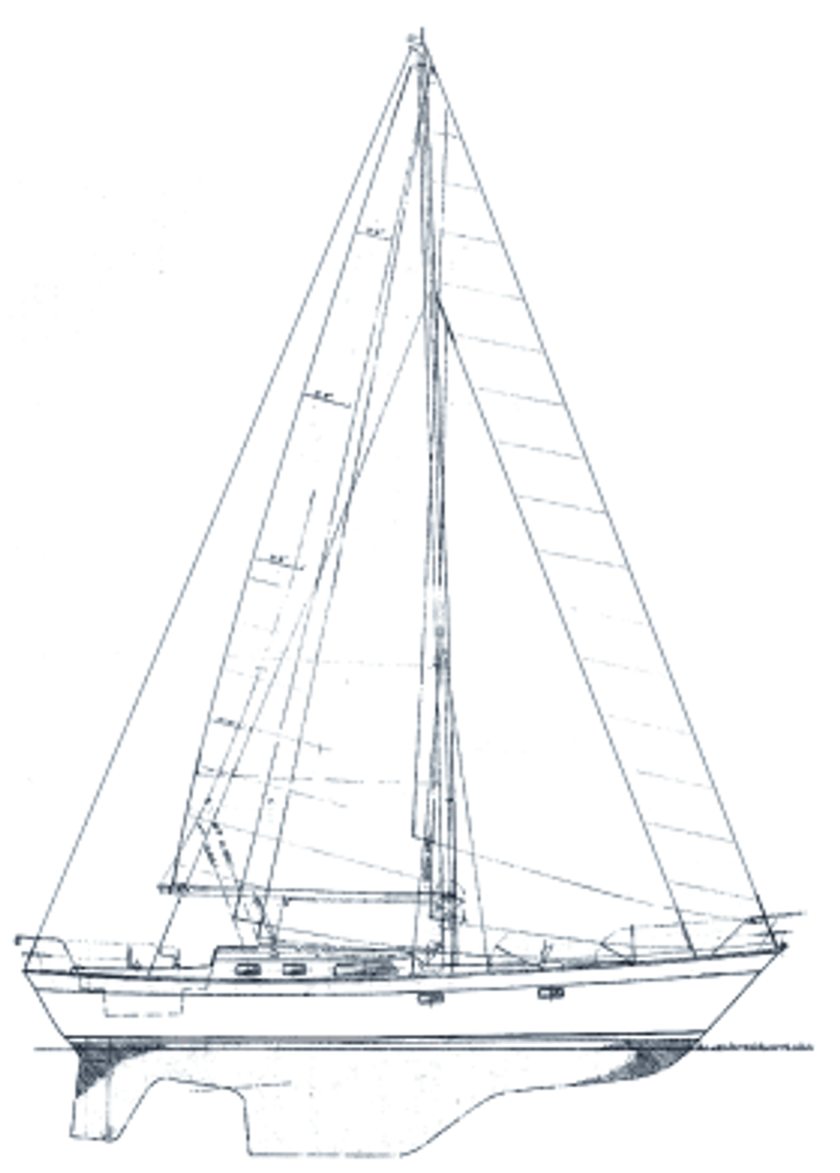
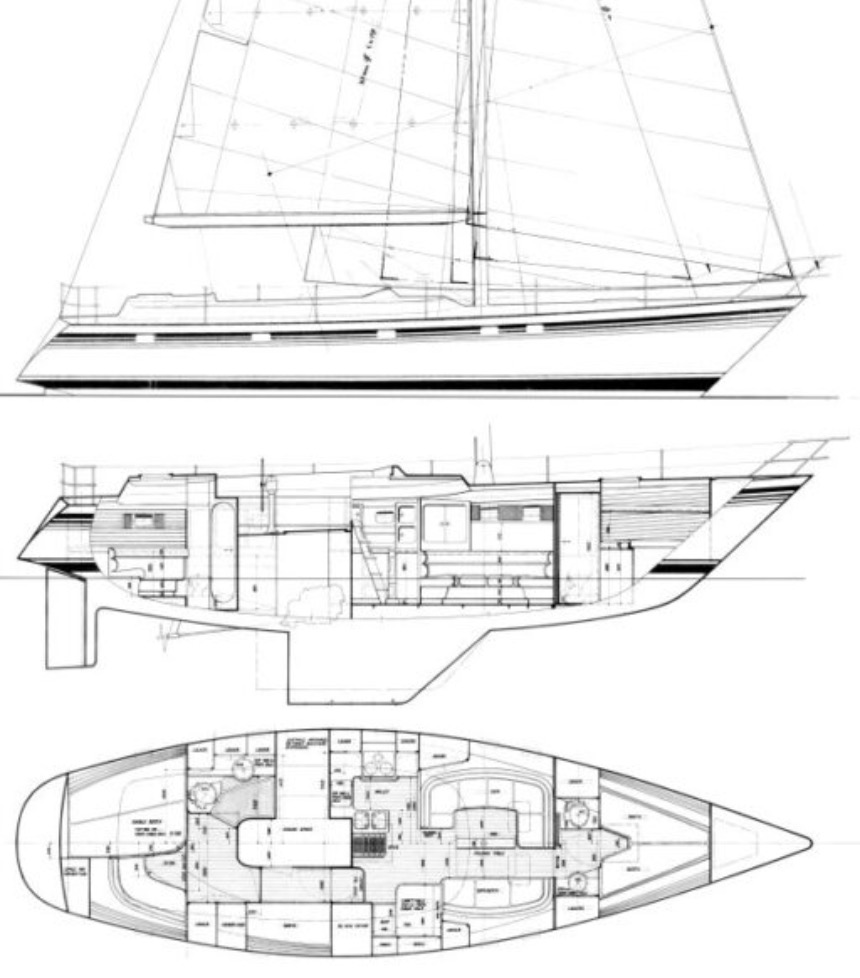
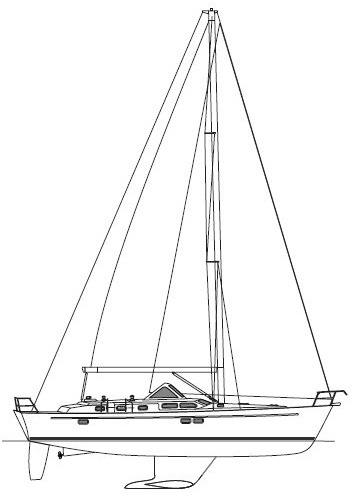
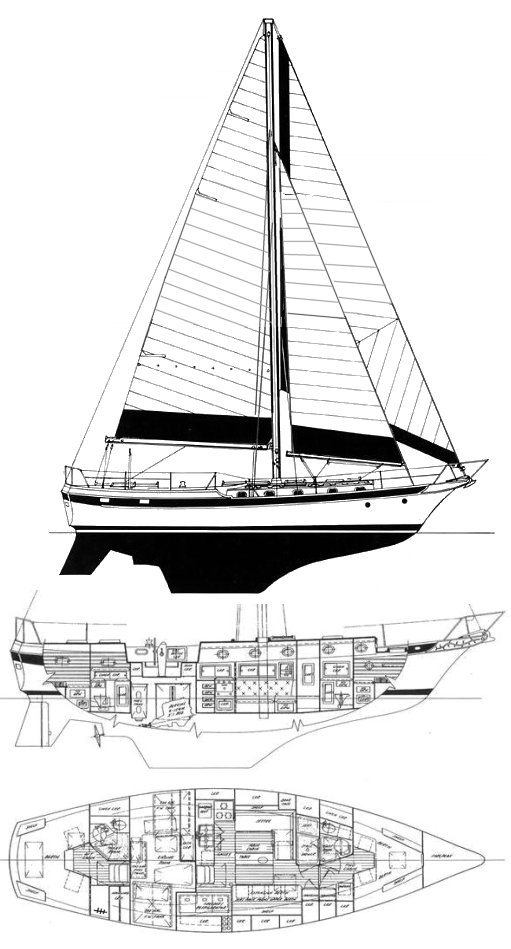
The CSY 44 is a cutter designed by Frank Hamlin and Peter Schmitt and built by Caribbean Sailing Yachts from 1977 to 1980, originally for the company’s charter fleet. Its rugged build drew traditional cruisers too. It was a mid-cockpit cutter also built in a pilothouse version, and it could be bought ready to cruise or in kit form. Cruising World includes it in its list of the 40 Best Sailboats of All Time.
Design and Construction
Cruising World describes a hefty lay-up schedule, a bulletproof rub rail, a clipper bow with molded trailboards, solid bronze ports and a keel and ballast arrangement designed to handle a grounding. The rudder hangs on a skeg. Keels were deep (6 ft 6 in) or shoal (4 ft 11 in), and Cruising World recommends the deep version for long-distance passages; the shoal boat suits the Bahamas, the Keys and the Intracoastal Waterway. Ralph Naranjo writes that the hull form was tank tested, with a cut-away forefoot, longish keel and skeg-hung rudder. The shoal version is the deep boat with the bottom two feet and 2,000 pounds of ballast removed, which in his words significantly reduces the ultimate righting moment. Brought up on the retro look, he notes that the clipper bow, raised deck aft and high freeboard give the boat extra windage but plenty of room for gear. Factory options included less water tankage and an Onan diesel generator, watermaker and air conditioning; solid bronze ports, a Paul Luke stove and Edson rack-and-pinion steering mark a boat built to last.
Under Sail
The underbody gives good directional stability, and the boat performs reasonably well on and off the wind. The main is under 400 sq ft and easy to reef, and the 200 sq ft inner forestaysail is a useful heavy-weather sail. With a low sail area for its weight it needs a breeze. The single-spreader cutter rig is supported by 1x19 wire attached to formidable chainplates. The high-cut overlapping jib topsail can be roller furled, tips in at just under 500 square feet and gives good visibility to leeward. The forestaysail is flown from a self-tending club-foot boom, and the main’s long foot makes it a strong driver on and off the wind. Power is a Perkins 4-154 diesel, with 100 gallons of fuel, which Naranjo calls a sensible balance with 400 gallons of water for tropical trade-wind cruising.
Buyers Notes
Water tankage is large at 400 gallons. Boats are now old, as Neal notes, so survey thoroughly; check which keel and which cockpit layout a boat has.