offshore

Falmouth Cutter 22

Sam L. Morse Yard, California. / Cape George Marine, Washington. · 1980–2008 · Cutter rig

Falmouth Cutter 22
Falmouth Cutter 22
LOA30.5'
Beam8'
Draft3.5'
Displ.3.7t
Rigcutter
Hullfiberglass

Bluewater Evidence · Bluewater Capable

55% confidence

Shares Lyle Hess's Bristol Channel Cutter design lineage and construction standards, and is featured alongside the BCC in Ferenc Mate's The Best Sailboats in the World. No specific named ocean crossing is documented in current sources for this exact model.

Overview

When talking about the feisty wee Falmouth Cutter, it’s hard to be objective, especially with owners who are universally admiring of their boats. Ferenc Matte in his book The Best Sailboats in the World remarked “the Bristol Channel Cutter and the Falmouth Cutter are the most beautiful 28 and 22 foot fibreglass sailboats in the world”. Well that tells you something.

Both of these designs came from Lyle C. Hess who had something of a love affair for the old British working boats around Falmouth, Cornwall. He took some of their best traits of load carrying ability, speed and seaworthiness while applying a few modernising tweaks to gain a notch in close windedness.

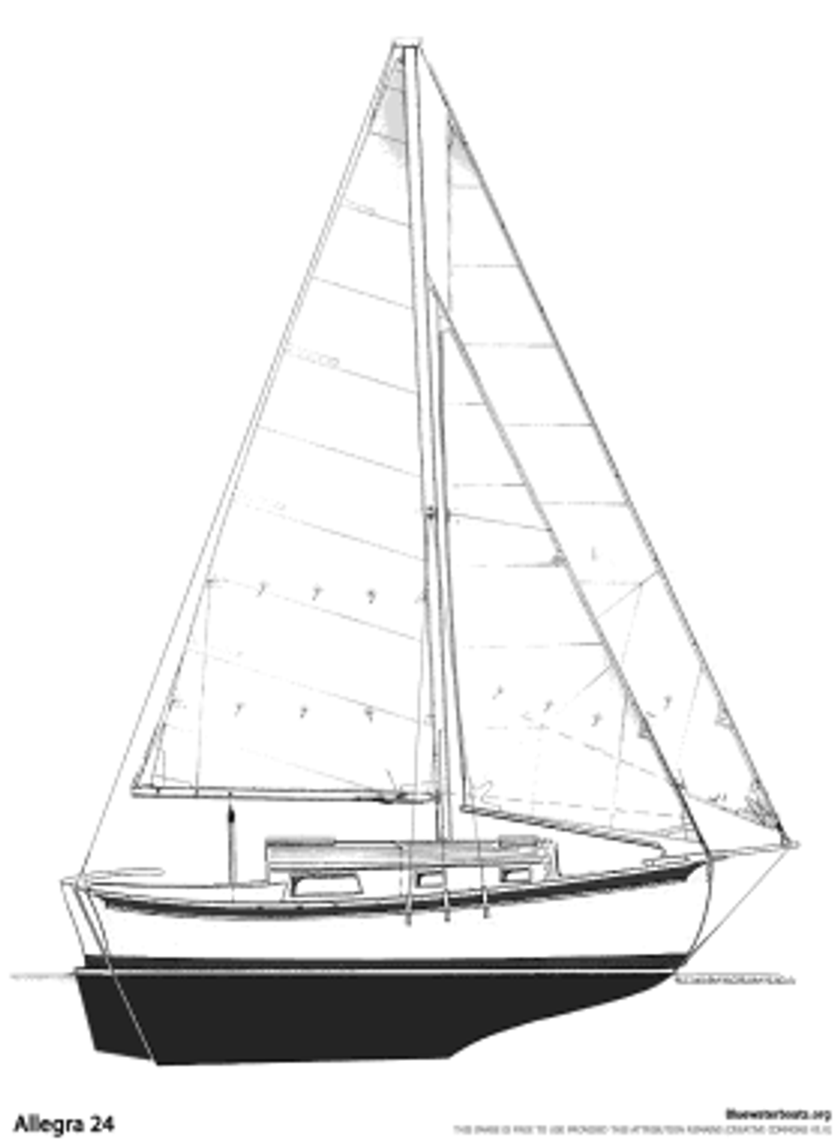
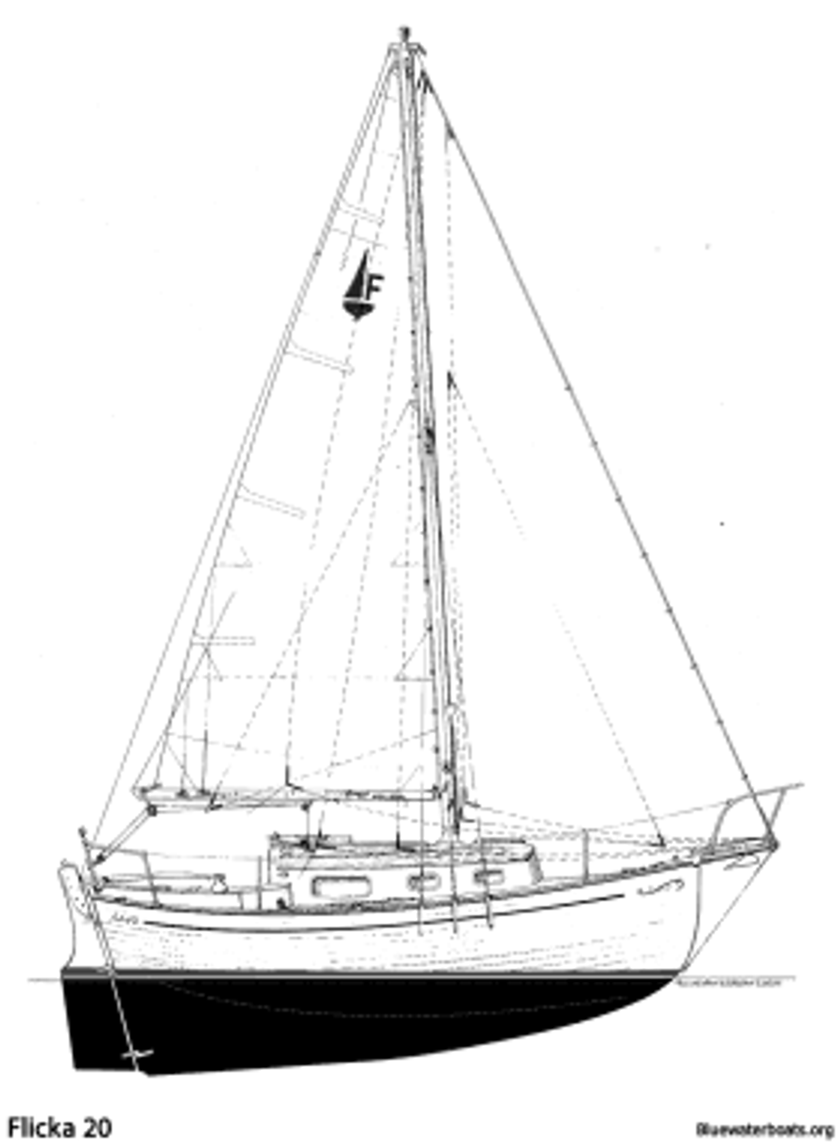
At a dinky 22 feet in length, it stands alongside a select few production pocket cruisers capable of offshore work, immediately we can think of the Dana 24, the Allegra 24 and of course the famous wee Flicka. Like all of these boats, the Falmouth Cutter also has the ability to go to windward at 50 miles an hour up the Interstate on the back of a trailer.

Sailboat writer John Vigor described her as “a very modern old fashioned boat”. She combines contemporary construction with established traditional design traits. Few examples come onto the market.

History

The Falmouth Cutter follows a lineage back to the 19th century workboats of England. These pilot boats would carry heavy loads in all manner of sea conditions with a good turn of speed, exactly the kind of traits needed today for long distance voyaging.  Hess had a lifetime affinity with these boats and for years he visited used book stores and libraries to absorb as much knowledge on them as he could. In all probability it wasn’t only the practicalities of the design that wooed Hess, they are remarkably charming in a husky, old-world  kind of way.

His first interpretation of the pilot boat came in 1950 with a 24 foot gaff rigger called the Renegade of Newport which was designed for a friend. The boat caught the interest of one Larry Pardey who had Hess design his marconi rigged version named Seraffyn which was launched in 1968. Fifty thousand copies of the book Cruising in Seraffyn later, Larry and his new wife Lin had made Hess’ designs famous, spurring strong demand for a production boat of that ilk.

The Sam L. Morse Company in California answered the call by introducing Hess’ 28 foot fiberglass Bristol Channel Cutter in 1975. By 1978 the company was working on a smaller version but could still carry two people across ocean stretches in safety. When Hess had completed the design for the Falmouth Cutter, all her numbers indicated that she could be trailered. This added a new unexpected dimension to how the boat could access new cruising grounds.

The boats were built to exacting standards by Sam L. Morse Co. with every aspect of construction screaming quality. In 2007 Cape George Marine, based in Washington were given the rights and the molds to produce the boat. Sam L. Morse stayed in operation through until August 2008, helping Cape George build its first Falmouth Cutter (along with two Bristol Channel Cutters). The last owner of Sam L. Morse Co., Sumio Oya, tells us his company built a total of 39 hulls, the last hull was semi-complete to be finished by its owner.

Since then, Cape George continue to offer the boat at the same price but have yet to produce any additional boats but we are informed they’re considering building a simplified version as a weekender/daysailer with a larger cockpit, cuddy-cabin, and an optional gaff rig.

Layout and Configuration

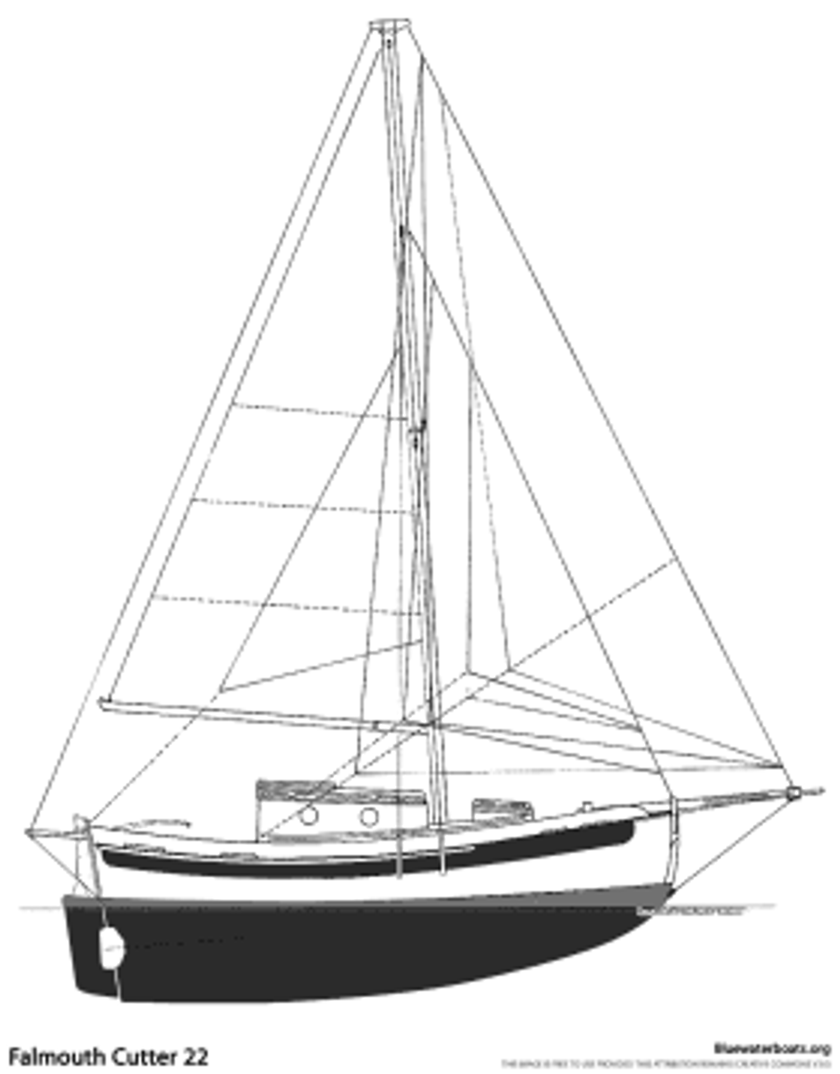
Despite the traditional pilot boat design’s numerous competencies, Hess managed to improve it with tweaks of his own. Notably he substituted the full length keel with a swept back design that reduced wetted area. He also refined the underbody by introducing more hollow to the garboard area. Both of these changes improved windward ability and speed.

To reduce hobby horsing, the foot of the keel was widened to allow sufficient lead ballast to be concentrated at the center of the keel rather than being distributed along the length, while a wide 8 foot beam gave her better form stability. This was a good thing as Lyle drew a cutter rig that can carry a massive amount of canvas spread out on her lengthy bowsprit and bumpkin. It’s this sail area that helps the wee cutter gain a good turn of speed despite being a boat with only twenty one feet at the waterline.

Going below, the most notable thing is that she’s all wood down there. No plastic hull liners or molded furniture feature in this traditional boat. Owners get access to every part of the hull and being hand built, customers have flexible options. There’s been mention that the factory may be able to build it your way sometimes without costing any extra.

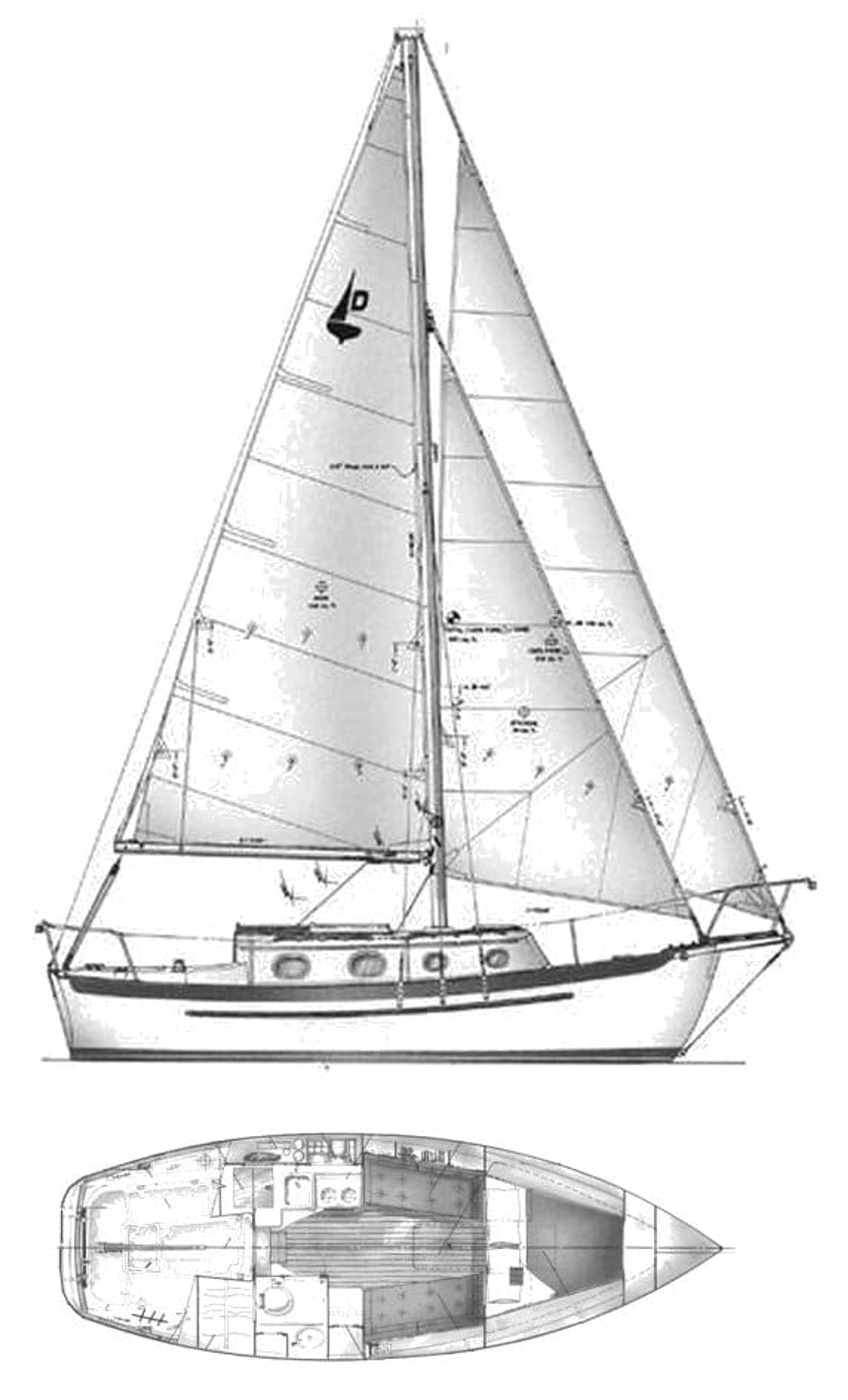
The design was to accomodate two, and indeed there is room for two, but only if you like each other. There’s 5’ 11“ of headroom in the area under the forward hatch and also in the saloon but ducking is required to go between the two. The forward cabin contains a head, a hanging locker, and a double berth to port. Further aft is the galley to port, with a two burner stove and a stainless sink, and on the opposing side an icebox and chart table. There’s two settees in the saloon area and stowage space is surprisingly good.

An inboard engine is standard, but some opt for an outboard which opens up space for a large oversized bed and much more storage.

Under Sail

It’s said the best way to describe the performance of this diminutive cutter is to prepare yourself for a vessel that’s only 21 feet on the waterline, then be pleasantly surprised by the relative turn of speed, with the key word being “relative”.

True to design her seaworthiness in a blow is remarkable and, like most heavy displacement boats, she retains a slow easy motion in trade wind type sailing. She’ll also track well down the face of large swells. In lighter conditions, the bowsprit can be used to fly a cruising spinnaker or a large genoa which gives this tradition boat a surprising performance in light airs.

Finally it’s worth a mentioning that with a draft that measures only 3’ 6“ there’s a certain degree of confidence to be had when exploring coastlines riddled with shallow bays.

» Falmouth Cutter Discussion Forum hosted by the Sam L. Morse Company.» The official Falmouth Cutter layout on the official Cape George Marine site.

Recommended In

As an Amazon Associate, PassageBoats earns from qualifying purchases.

  1. [1]SpecificationsWikipedia - Falmouth Cutter 22- 40 examples completed, now out of production
  2. [2]EditorialSoundings - Goodbye to the Bristol Channel Cutter- Sam L. Morse Co. of Costa Mesa closed its doors in August 2008 after completing 41 Falmouth Cutter 22s; Cape George Marine Works took over the molds and BCC production but the Falmouth Cutter 22 itself was not put back into production
See something wrong? Suggest a correction

Corrections need evidence: a link or citation we can check. Sourced suggestions get reviewed and credited in the entry's change notes if applied.

Owner knowledge counts: name the boat and year so we can attribute it.