Overview
The Mauritius 43 is a Bruce Roberts design first drawn in 1969, sold as a set of plans for owner-builders rather than built by a single production yard, and by most accounts the single most-built Roberts design: close to 2,000 examples have been completed worldwide, independently confirmed by two separate sources. That scale puts it among the most prolific owner-built bluewater cruiser designs of any era, closer in spirit to a folk-built movement than a conventional production run. A flush-deck variant sharing the same hull and rig options is sold as the Norfolk 43.
Bruce Roberts designed the boat for construction in several materials: round-bilge hulls in fiberglass or wood-epoxy, or a multi-chine hull form in welded steel or aluminum plate. This catalog lists it under steel, the material most associated with the design’s distinctive multi-chine construction and the reason it belongs to this initiative’s metal-hull research, but any individual hull could genuinely be built in any of the four materials Roberts offered plans for, so a buyer should confirm a specific boat’s actual construction rather than assume it from the model name alone.
Design and Construction
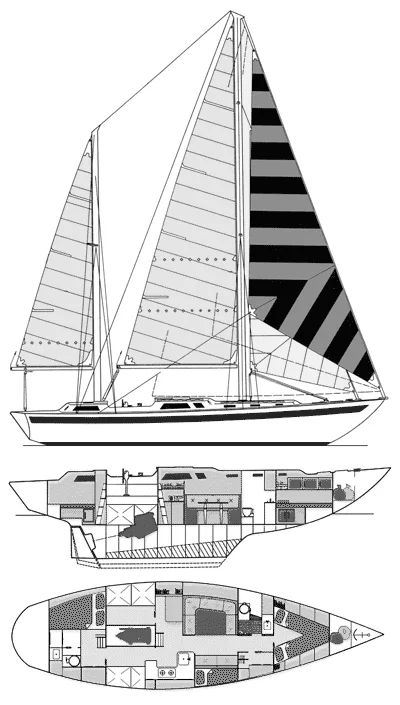
A center-cockpit layout with a long fin keel, moderate overhangs, and a full bow and stern gives a buoyant motion in a seaway, at just under 27,000 lb displacement and a 29 percent ballast ratio. Early ketch-rigged examples reportedly had some downwind steering quirks, addressed later with modification drawings Roberts made available to existing owners rather than left unaddressed, a real point in favor of the design’s ongoing support even decades after the plans were first drawn. Rig options included cutter (the most common choice), ketch, and sloop, all sharing the same hull.
Under Sail
No specific named Mauritius 43 completing a documented ocean passage was found in this research pass. The design’s five-decade production run and near-2,000-hull count are themselves a meaningful, independently-verified data point about durability and owner satisfaction, but they describe the design’s popularity and longevity rather than a specific hull’s specific voyage.
Buyers Notes
Because this was sold as owner-builder plans rather than built to a single yard’s quality standard, construction quality varies enormously hull to hull: confirm actual build quality, welding (on metal hulls), and any amateur modifications directly rather than assuming consistency across examples. Confirm the actual hull material of any specific boat under consideration; despite the model’s strong association with steel, fiberglass, wood-epoxy, and aluminum examples all exist under the same name. On a steel or aluminum example, a metal-specific survey (coating condition, plate thickness readings, and on aluminum hulls specifically, electrolysis history) matters more than it would on a factory-built fiberglass boat of similar vintage, precisely because construction quality was never standardized across builders in the first place.