Overview
Francis S. Kinney conceived the Pipedream 37 in 1960 as a teaching example rather than a production design, drawn while he worked in the Sparkman and Stephens offices. He built her from the ground up through the pages of Skene’s Elements of Yacht Design, a standard naval architecture textbook, walking readers through every drawing and calculation behind a complete cruising sloop. That unusual origin means she never went into large-scale production. Most surviving examples were built one at a time by owners working directly from the book’s plans, pairing a genuine design pedigree with the trials of home construction in far-flung corners of the world.
She carries a generous, well-mannered cockpit that comfortably seats a large crew for daysailing and coastal cruising, and the same timeless proportions Kinney drew make her a capable choice offshore.
History
Oscar W. Schelin of Kungsörs Yacht Yard in Sweden built the first two boats, in 1961 and 1962: Southerly, featured extensively in Kinney’s book, and her sister Avocet. Both were carvel-planked in mahogany. Kittery Point Boat Builders in Maine later produced four hulls in GRP under Kinney’s own consultation, finishing three of them themselves, the only fiberglass examples of the design known to exist.
Owner-builders elsewhere worked straight from the book’s plans. In Cape Town, South Africa, a builder named Misplon carvel-planked two sister boats near what’s now Marina Da Gama on the Cape Flats: Allegra, launched around 1969-70 for owner Seddon Cripps and racing under skipper Harold Sender by 1973, and Andante, built for a Durban owner named Angus. Which of the two, if either, sailed in the Cape to Rio ocean race is inconsistent even between contemporary accounts of their own history, so it’s noted here rather than settled.
Configuration and Layout
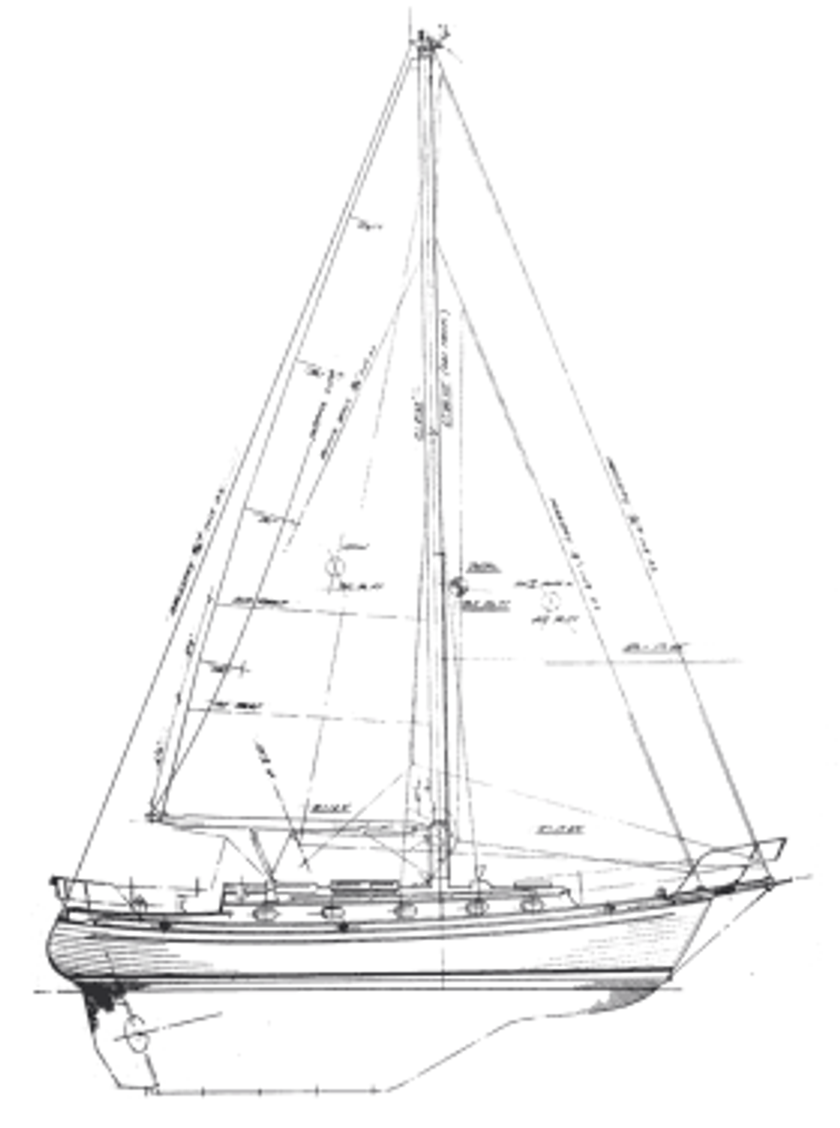
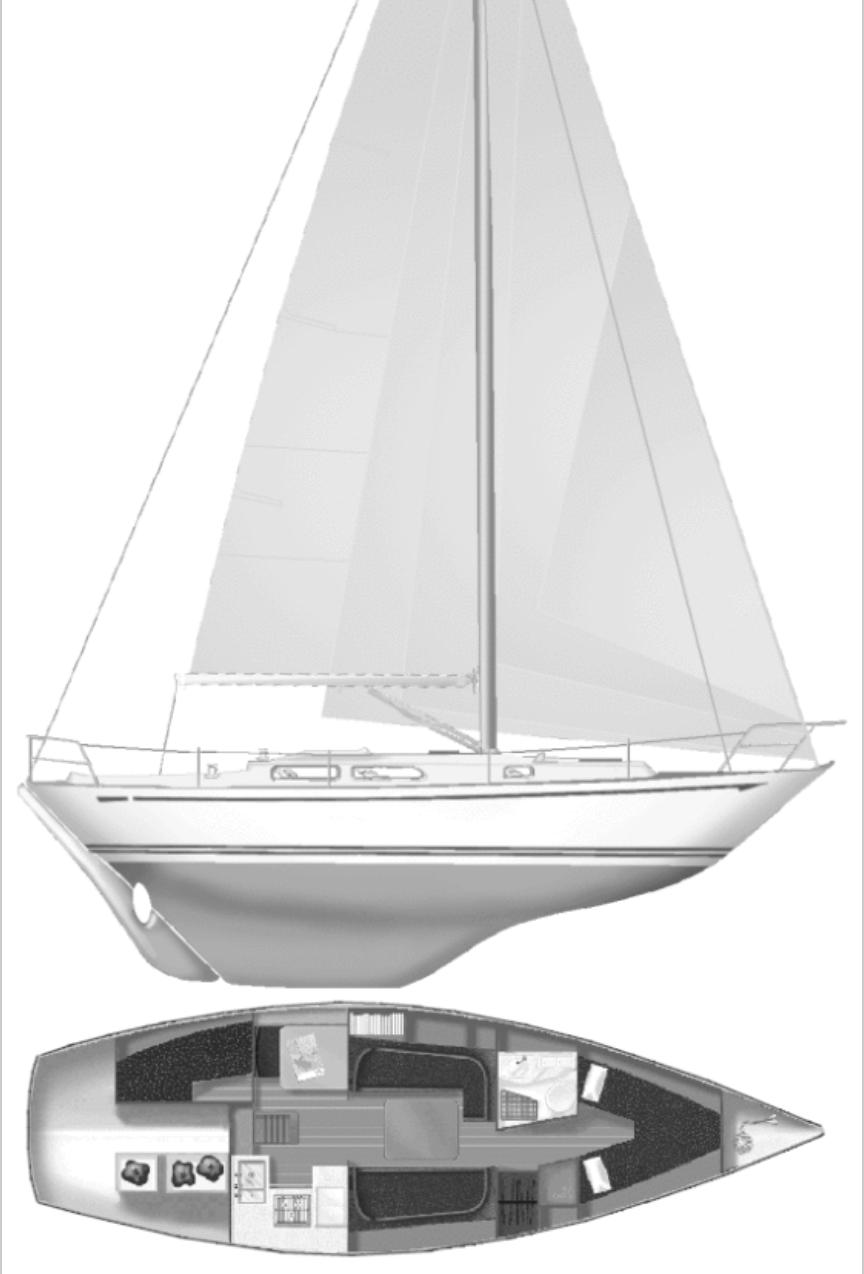
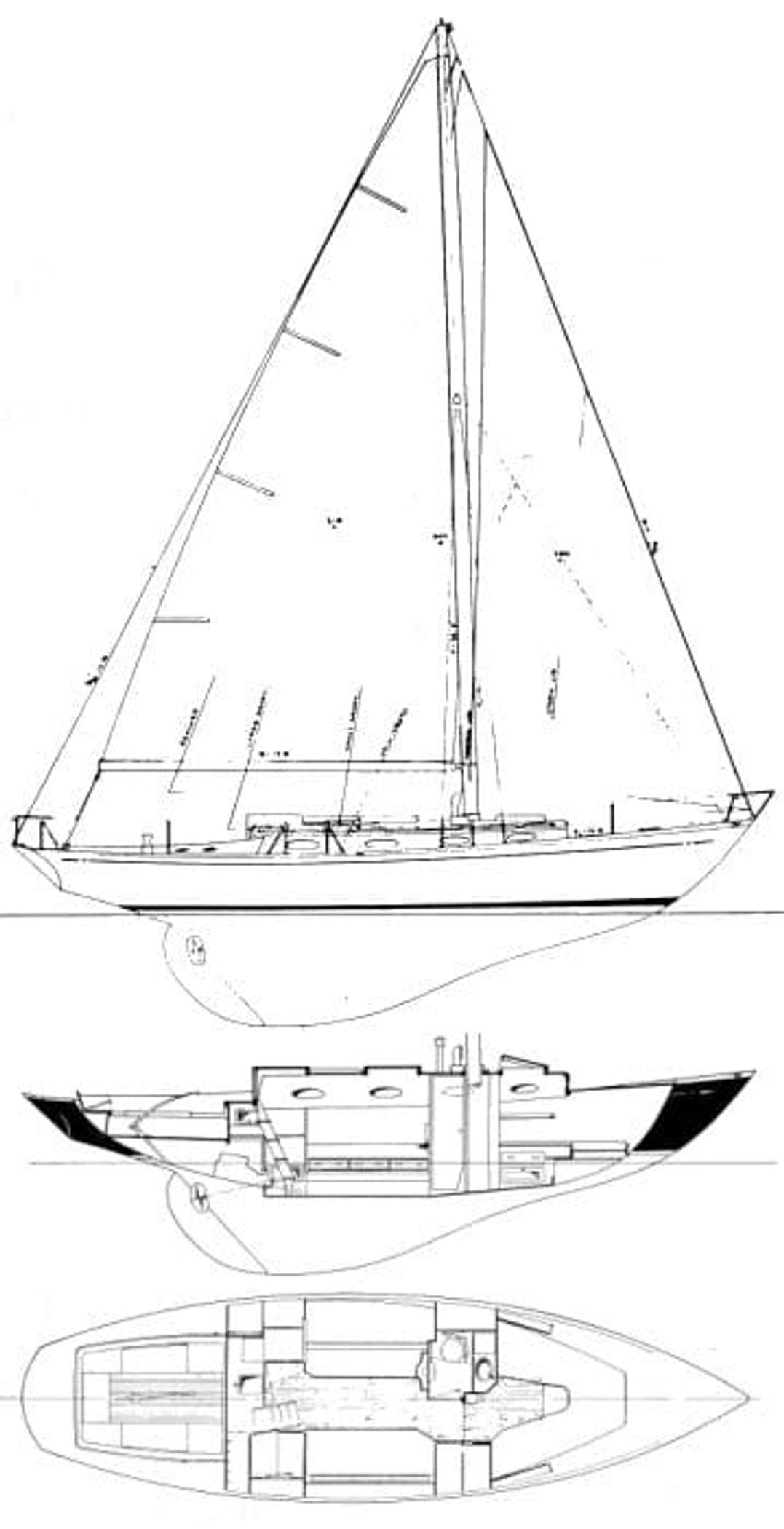
She shows all the pleasing lines of a classic early-1960s sloop: generous overhangs, low freeboard, and a sweet sheer. Below the waterline a cutaway keel and rudder combination trades some of the pointing ability of a modern fin-and-skeg layout for excellent tracking and structural simplicity, a fair bargain for a conservative offshore cruiser.
The cockpit is genuinely spacious, seating ten at a stretch for daysailing, though that comes at the cost of interior volume, worth weighing for anyone planning extended passages. Kinney’s original drawings show berths for six: four in the saloon split between settee and pilot berths, plus two singles forward in the V-berth. Given how many boats were built and finished individually by their owners, expect real variation from one hull to the next.
Under Sail
She’s no laggard despite her age and her short waterline for the type, helped along by the increased wetted area and classic wineglass sections of her modified full keel. Owners describe her as genuinely fun to sail, well balanced and light on the helm, tracking true with barely any input needed at the tiller. She heels early, which lengthens her waterline and gets her moving briskly once she settles into it. In 10 knots of breeze she’ll comfortably hold 4 to 6 knots on most points of sail; in a stronger blow, 7.5 knots is about her ceiling outside of surfing downwind under spinnaker. Like most Sparkman and Stephens designs of her era, she’s a wet ride, her low freeboard means the rail often goes under in a good breeze, and her full keel brings some hobby-horsing in a seaway.
Buyers Notes
Few examples exist, and because so many were owner-built, construction quality and detail vary considerably from boat to boat. Track down each hull’s specific builder and build history before comparing one against another.
Links and Further Reading
» CKD Boats, accounts and photos of two custom built Pipedream 37s in Cape Town South Africa, [1] [2] » Kittery Point Boat Builders, built 4 GRP hulls » Skene’s Elements Of Yacht Design , the classic naval architecture book.