Overview
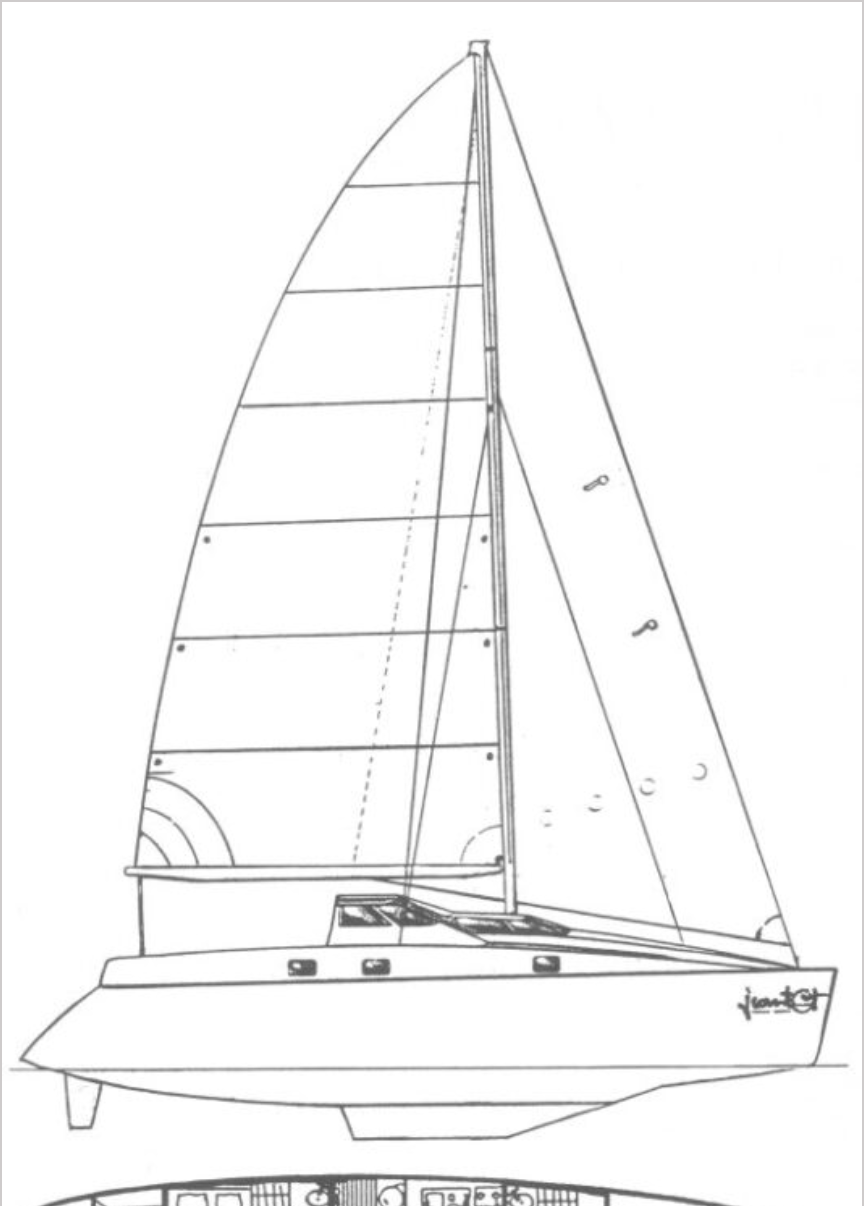
Philippe Jeantot, winner of the first BOC solo round-the-world race, founded Jeantot Marine with Rene Bernard in 1985 with an explicit goal: build a genuine bluewater cruising catamaran, one the founders themselves intended to sail around the world as a family. The Privilege 39, designed by Eric LeFevre, was the result, built at Les Sables d’Olonne through the late 1980s and into the mid-1990s before production shifted to Alliaura. It is also sold under the names Privilege 12 and Alliaura 39.
Design and Construction
At 14,000 lb displacement on a 21 ft beam, the hull is composite construction, cored from the waterline up and solid below, with a distinctive full solid bridgedeck forward rather than netting, adding rigidity and a secure working deck at the cost of some weight. Interior joinery uses hand-cut wooden bulkheads and furniture facings rather than molded liners, a genuinely semicustom approach among catamaran builders of the era. Rigging is heavier than typical for a catamaran this size, deliberately built toward offshore duty, with both upper and lower shrouds supporting the mast and a heavy-gauge aluminum forward crossbeam on a universal joint. Sailing Magazine’s reviewer notes that the deck is cored throughout except in areas of high loading, and that the hull-and-deck joint incorporates the bridgedeck on a flange. The review credits the solid forward bridgedeck with carrying the staysail chainplate and the ground tackle: the chain locker sits in the bridgedeck, so the anchor rode does not need to be led a long way aft as it does on cats without a solid forward section. The shallow fixed keels give a draft of 3 ft 6 in.
Under Sail
Most Privilege 39s are rigged as cutters with a furling staysail and headsail. The boat reaches at double-digit speeds in trade wind conditions but is more modest upwind, around 7 to 8 knots, with a smoother motion than lighter, faster catamarans of similar length. This is real offshore pedigree, not marketing: nearly every Privilege 39 on the used market in sailingmagazine.net’s own account has crossed the Atlantic under its own power, and multiple examples have completed full circumnavigations, consistent with the boat’s original design brief. The reviewer calls the cockpit huge even by catamaran standards, with a T-shaped helm station aft on the port side that feels more like the helm of a twin-wheel monohull, though it is often exposed to sun and spray. Sail controls are led to sailing stations on either side, and the mainsheet traveler runs the length of the cockpit. Most boats carry davits for a dinghy and an array of solar panels above them, and storage on deck and below is described as a Privilege trademark.
Buyers Notes
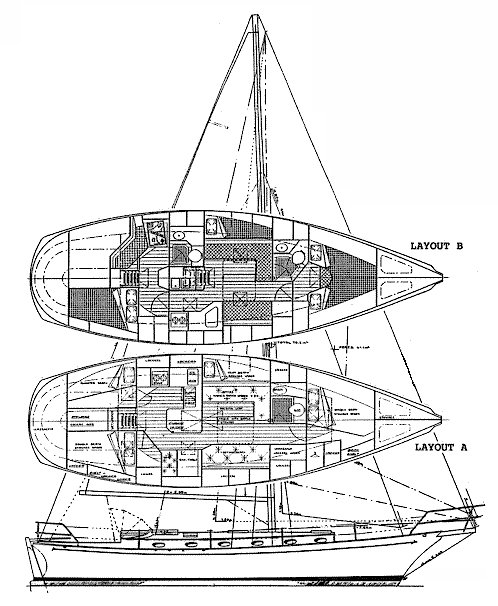
Repowering means replacing two engines, not one, a real cost factor to budget for on a design now three to four decades old. Former charter-fleet boats may carry lower purchase prices but can need costly refits; confirm a specific hull’s charter history before buying. Swim steps are small by modern standards. Confirm whether a specific hull is a pre-1996 Jeantot-built boat or a later Alliaura-built example, since the two runs differ in some equipment and finish details. The 39 has a four-cabin layout and many boats went into charter fleets. Sailing Magazine’s reviewer finds the cherry or mahogany interior handsome and the joinerwork excellent, but does not favor the layout. The 395, a later Marc Lombard design built after the company was sold in 1996, is an extension of the Privilege 37 and a different boat.