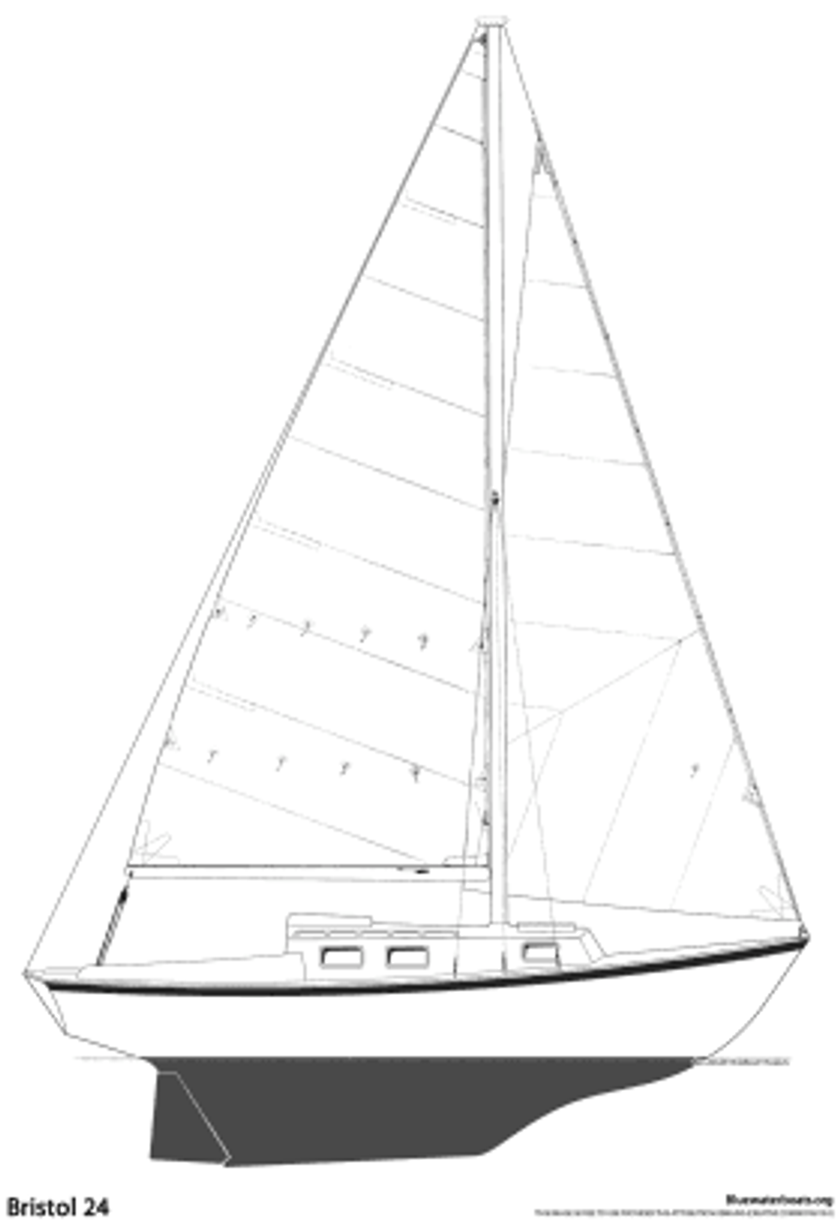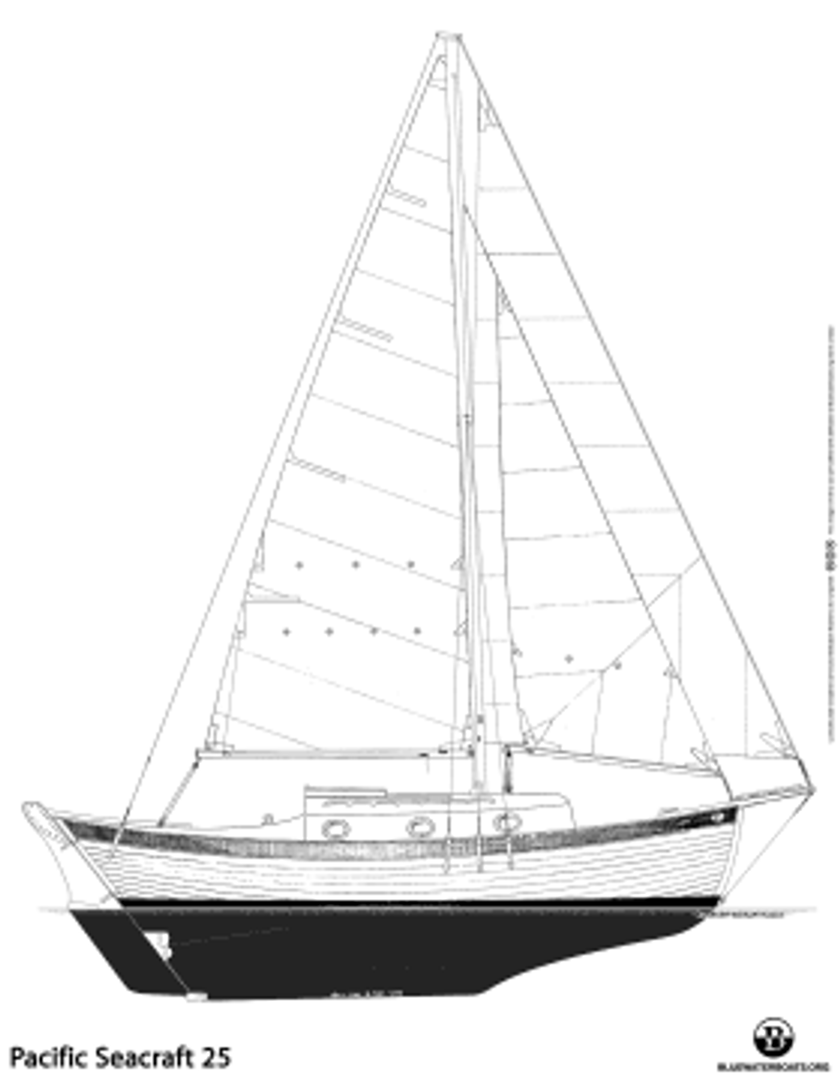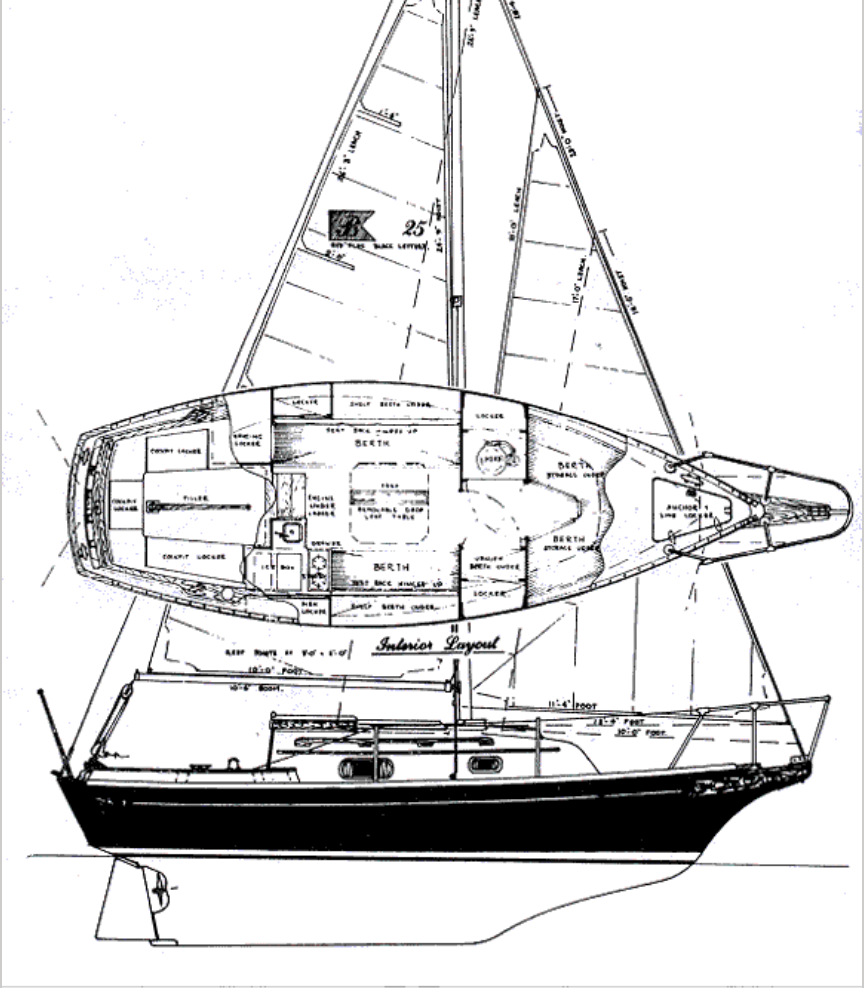
Overview
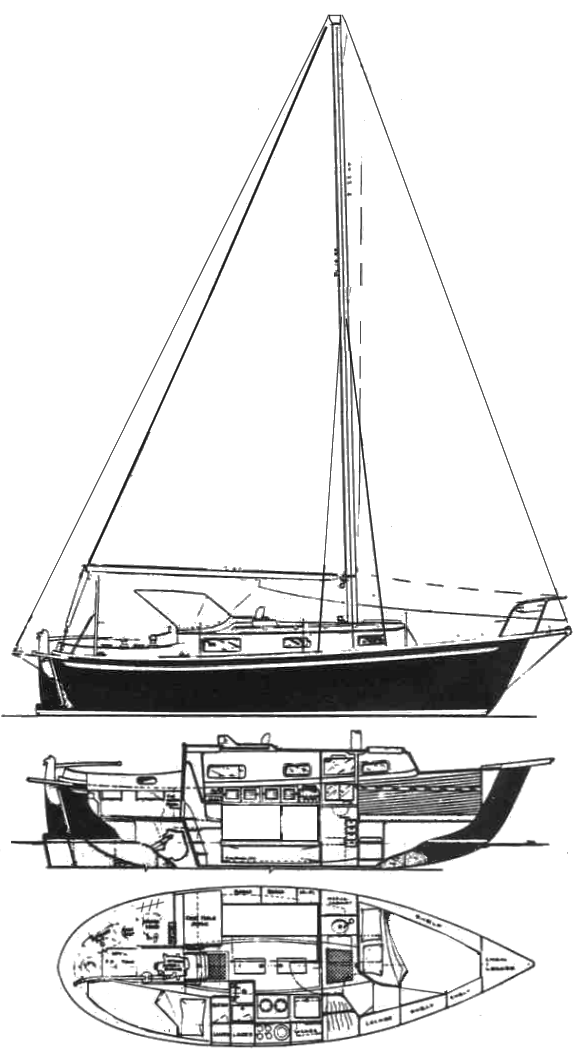
The Bayfield 25 is the smallest boat of Ted Gozzard’s Bayfield line, a 25-footer with a clipper bow, decorative trailboards, a molded-in bowsprit, and a long shoal keel drawing just 2’11”. It looks like a miniature tall ship and draws less water than most trailer-sailers, which makes it a singular thing on Baldwin’s list: a full-keel pocket cruiser that can sneak into anchorages nothing else on the list can touch.
History
The design began life as the Bayfield 23 in the early 1970s, was marketed as the 23/25 in 1975, and settled into production as the Bayfield 25 through 1984 at the Bayfield Boat Yard in Bayfield, Ontario. Gozzard, who later founded Gozzard Yachts, gave the whole Bayfield range its signature period styling; the 25 wears it at the smallest scale. Note that the 25-foot length includes the molded bowsprit. Baldwin points out the hull is “closer to 24 feet on deck.”
Construction
The hull is solid fiberglass with the long keel molded in and 1,300 lbs of lead inside, about 37 percent of the boat’s light 3,500 lb displacement. The rudder hangs off the keel’s trailing edge. The look-at-me details, trailboards and the clipper bow, are trim rather than structure. Down below, the payoff of the boxy hull is real: 6 feet of headroom in a 25-footer, which Baldwin flags as a plus, along with a V-berth, twin settees, and a small galley. A Petters diesel was a factory option; many boats carry outboard or repowered auxiliaries.
Under Sail
Physics is honest about a boat like this. At 240 sq ft of working sail on 3,500 lbs of displacement, the SA/D is unremarkable, and the long shallow keel and 8-foot beam produce a boat Baldwin describes as “relatively slow in light airs.” Off the wind and in a working breeze it is steady and predictable, and the full keel makes it track well and heave-to willingly. The capsize screening number sits around 2.1, on the wrong side of the conventional 2.0 offshore threshold, which is unusual for this list and worth understanding before drawing conclusions from the boat’s presence on it.
Buyers Notes
Baldwin’s caveats are unusually direct for a boat he still chose to include: the shallow draft “would seem to indicate less resistance to capsize in storm conditions compared to most other boats on this list,” and he does not consider it a great choice for long exposed passages. Read the endorsement narrowly: this is a proven coastal and island cruiser with genuine thin-water superpowers, not a storm-country boat. On survey, look at the keel’s grounding history (a 2’11” draft invites hard use), the deck around the bowsprit and trailboards, and the usual core and chainplate checks. For ICW work, Bahamas banks, and lake sailing, the draft is the whole argument, and it is a good one.