Overview
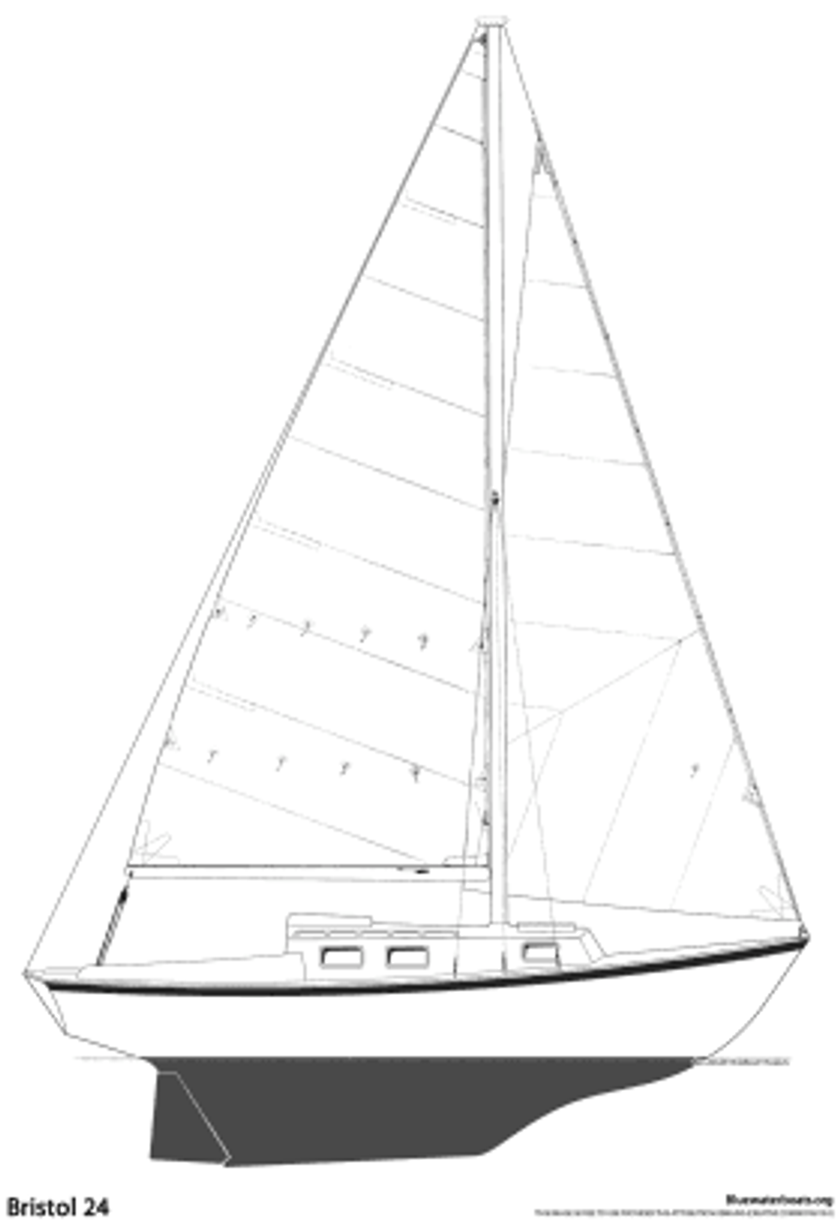
The Bristol 24, originally sold as the Corsair, is a solidly built pocket cruiser designed by Paul Coble and introduced at the 1964 New York Boat Show, where the debut design drew 120 orders on the spot. Hundreds followed over a 17-year production run split between Sailstar Boat Company and, from 1966 onward, Bristol Yachts.
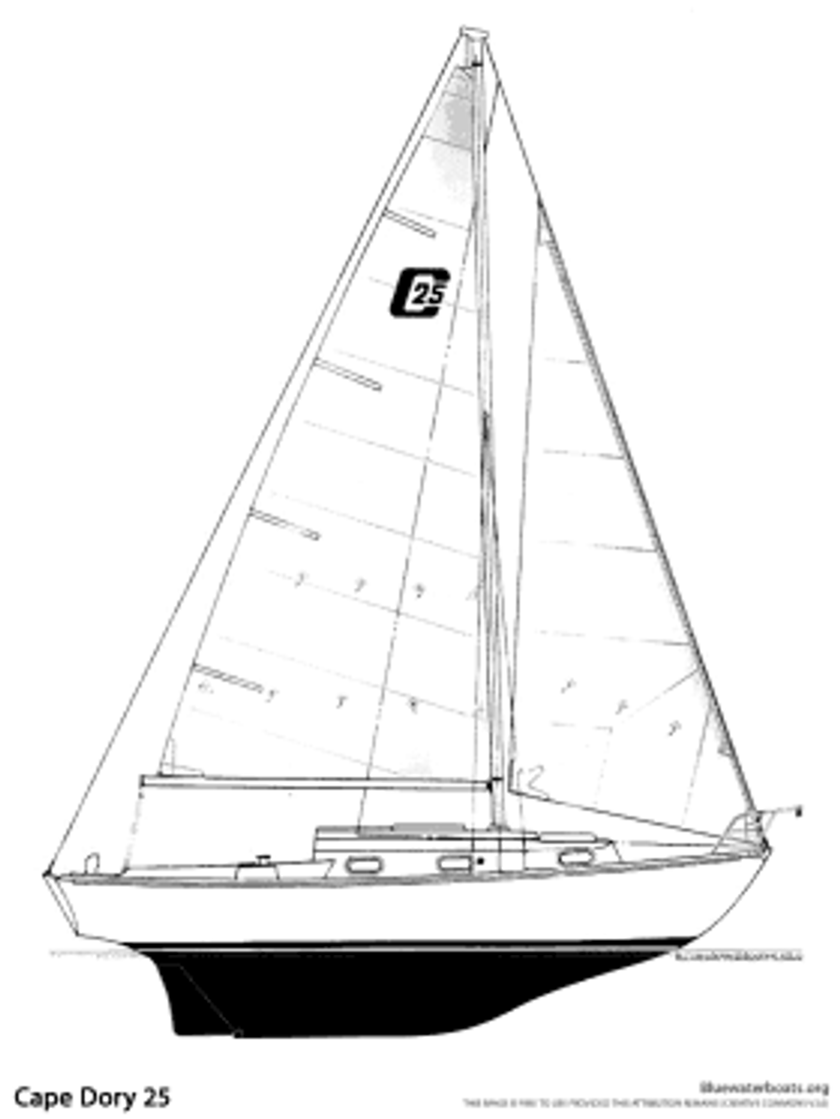
Like most designs of its era, the hull is long-ended and narrow with a short waterline relative to its overall length, riding on a full keel with a cutaway forefoot drawing 3 ft 5 in. At nearly 6,000 lb displacement, motion comfort runs closer to what’s typical of boats several feet longer, at the cost of outright speed against contemporaries like the Pearson Ariel or Cape Dory 25.
History
Sailstar, the original builder in West Warwick, Rhode Island, was in financial trouble when its bank brought in Clint Pearson, already known for founding Pearson Yachts, to take over operations in 1964. Pearson commissioned Paul Coble for a 24-footer to sleep four; Coble is said to have carved the initial half-hull model on a ferry ride to meet with Pearson. By 1966 Pearson had renamed the company Bristol Yachts and relocated to Bristol, Rhode Island, phasing out the Sailstar name. Total production reached roughly 750 hulls before the model was discontinued in 1983.
Design and Construction
Ballast construction changed more than once across the production run as a cost-saving measure: the earliest Corsairs used lead ballast, Sailstar later switched to lead shot set in concrete, and Bristol switched again to iron boiler punchings in concrete (with lead-shot still available as an option). Because these mixtures were measured by eye rather than weighed precisely, stiffness varies noticeably between individual boats of the same nominal spec. Bulkhead material also changed over time, from mahogany marine plywood on early boats to formica-faced plywood on later ones (more prone to hidden rot or delamination under the formica), with some final boats returning to solid teak or mahogany-faced ply as an option.
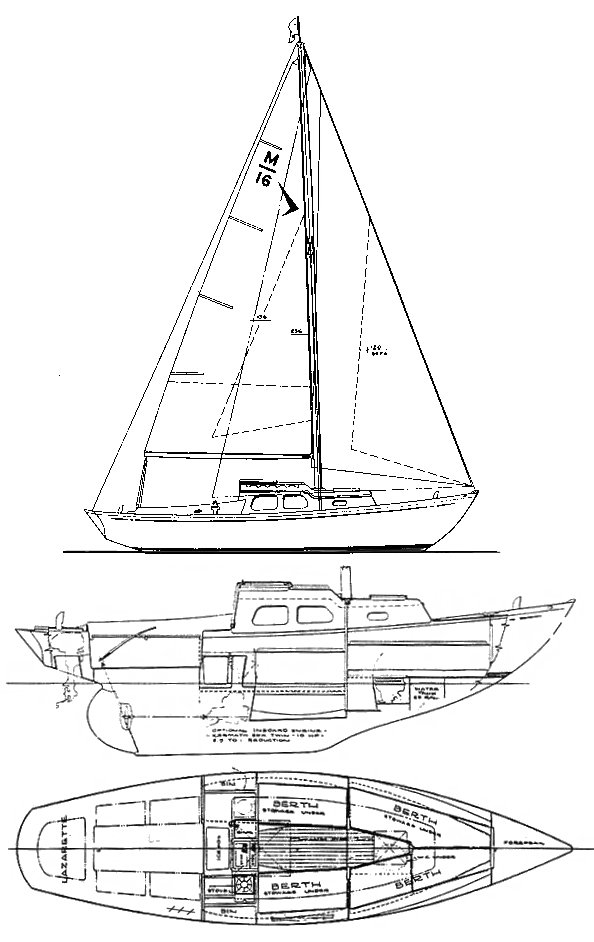
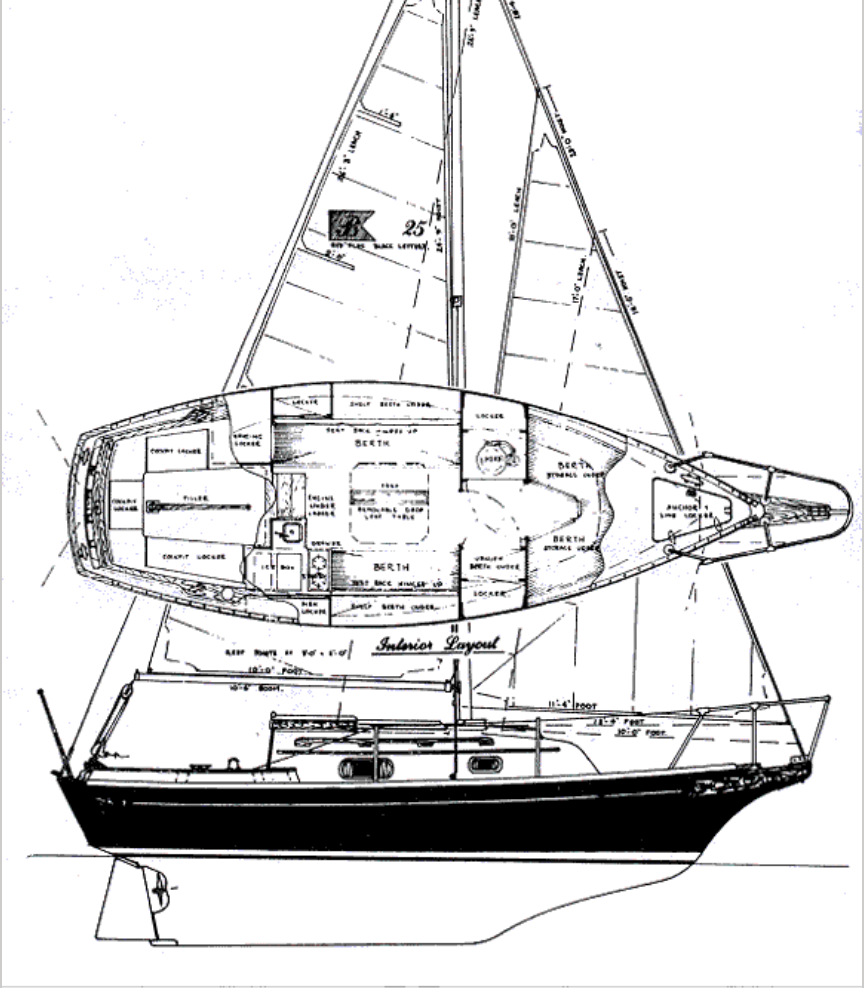
Most boats were powered by an 8-9 hp outboard in a well, though an inboard diesel, or occasionally an Atomic 4 gasoline engine, was optional. Two interior layouts were offered, both sharing the same V-berth forepeak and head arrangement but differing in saloon configuration and berth count.
Under Sail
No named ocean passage or circumnavigation is documented in current sources for this model. Reviews (Ted Brewer in Good Old Boat, and Sailing Magazine) describe the boat as a solid, heavy-displacement pocket cruiser capable of coastal work, with an editorial hedge that she “can be made suitable for ocean voyaging with the right equipment” rather than a documented account of that actually happening. Owners report an initially tender boat that lengthens its effective waterline and stiffens as it heels, holding sail longer than lighter contemporaries in a breeze despite a reputation for being slower in light air.
Buyers Notes
Given the ballast-material history above, checking bilge depth is a commonly cited (if imperfect) way to estimate whether a specific hull has lead or concrete-and-metal ballast: owners report lead-ballasted examples typically show a bilge around 12 in deep, while concrete-ballasted boats often have a bilge filled to the sole, though some hulls have extra lead added that changes this picture. Bulkhead condition, particularly on formica-faced boats where rot can hide beneath the surface, is worth a close look on survey.