Overview
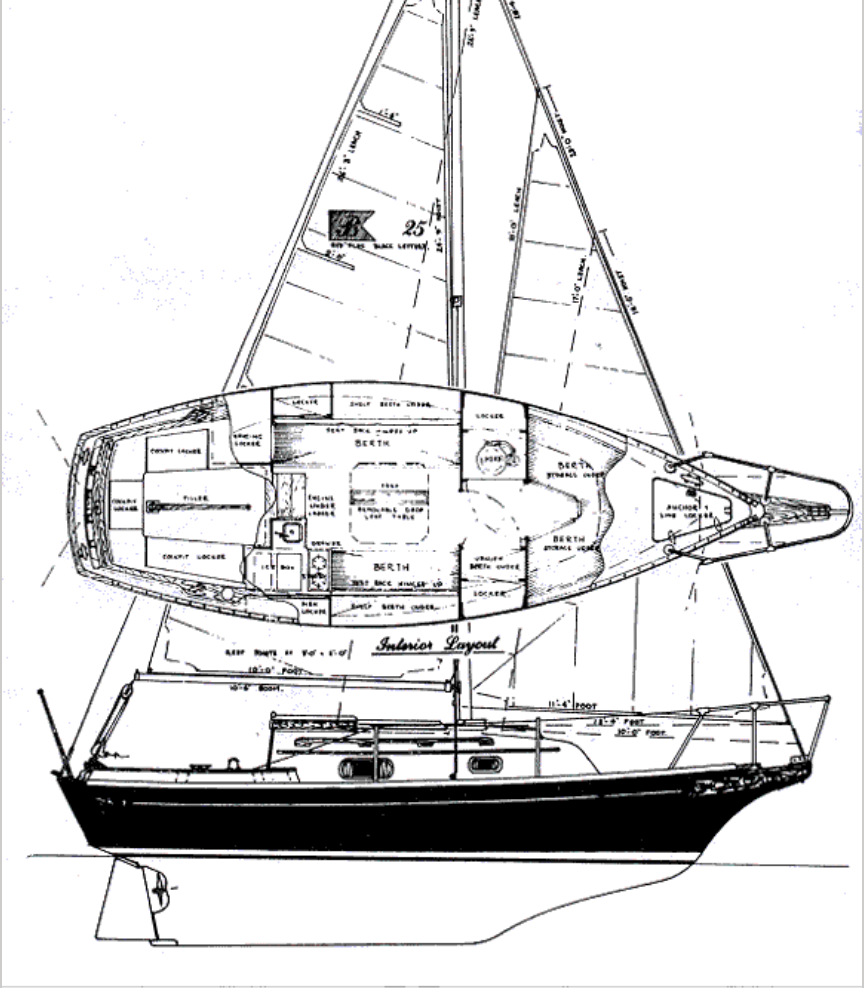
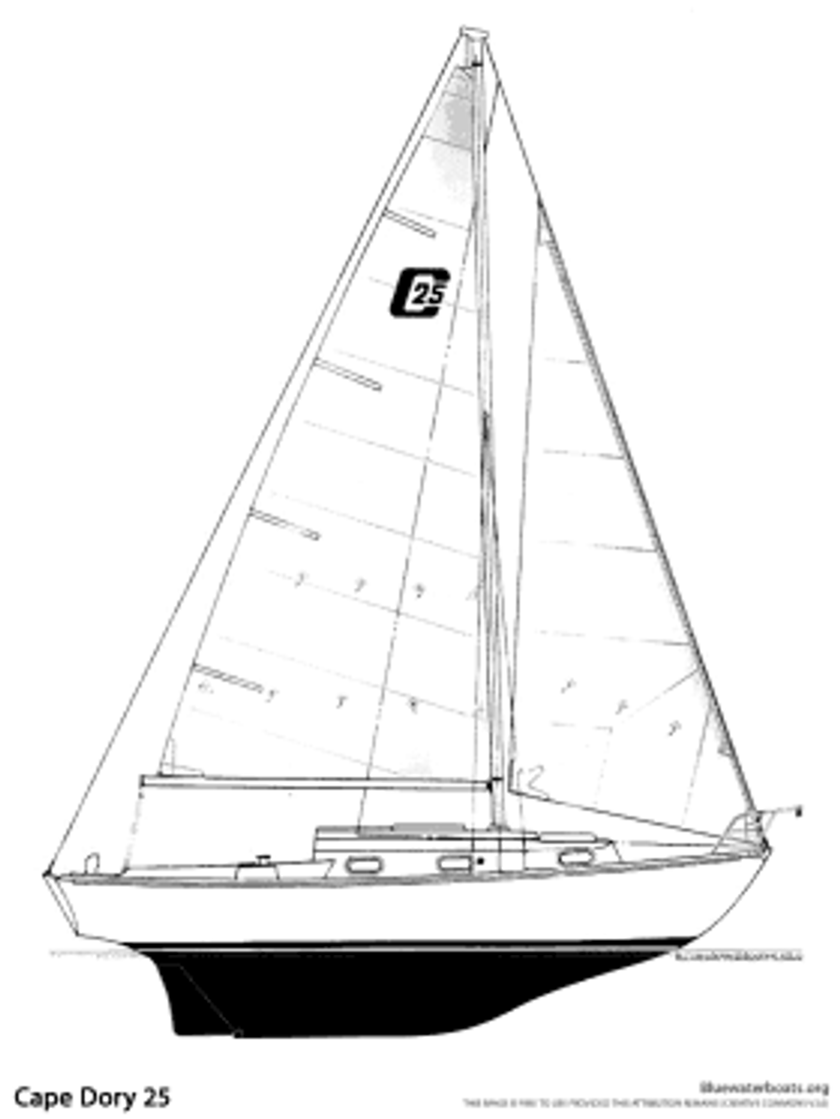
The Cape Dory 25 began production in 1972 and remained in the catalog through 1982. It is a George Stadel design derived from the earlier Allied Greenwich 24. Cape Dory raised the freeboard and revised the accommodation, producing a boat that is 24 feet 10 inches overall with only 5 feet of standing headroom below. Sources consistently report 846 boats built.
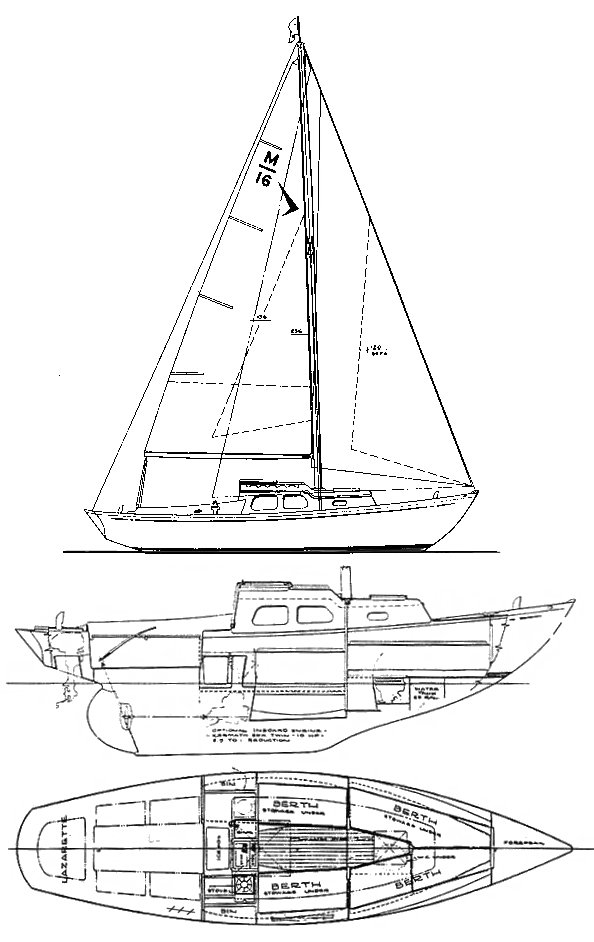
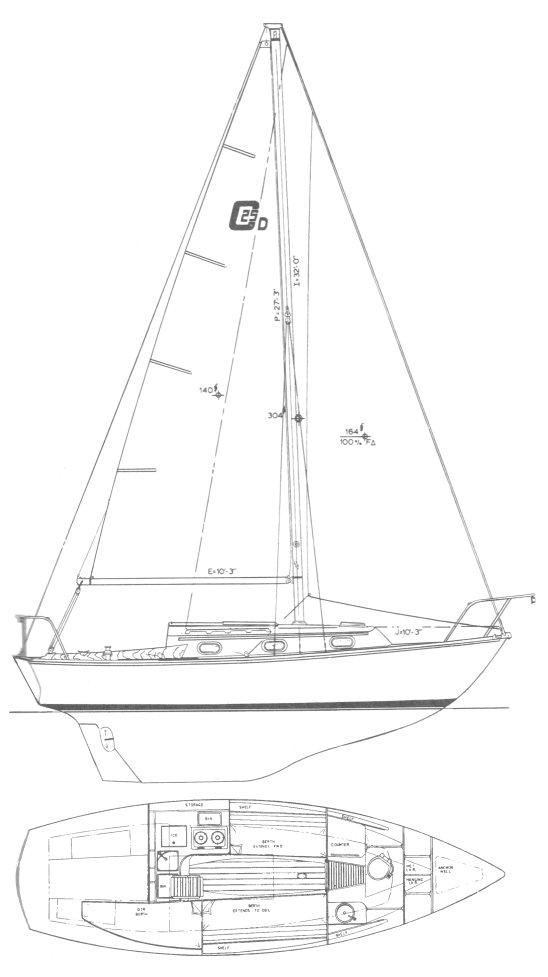
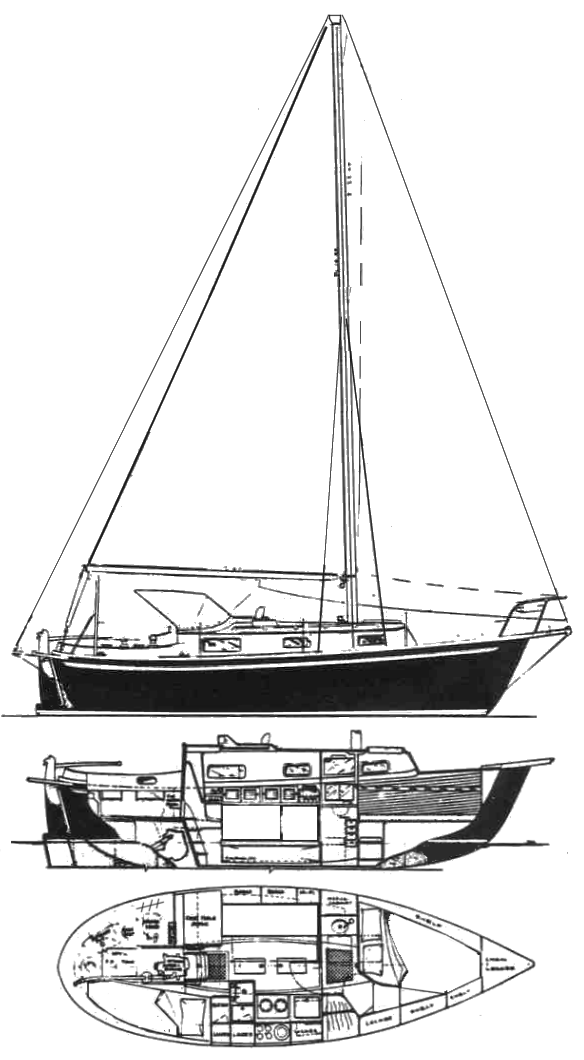
This boat is easy to confuse with the Cape Dory 25D. The 25D is a different Carl Alberg design with more beam, displacement, headroom, and an inboard diesel. The original 25 is narrower, uses an outboard well in the lazarette, and has a lower, shorter cabin. A listing that uses only the model length can therefore point to the wrong design.
Construction and systems
The 25 has a full keel, 3-foot draft, and 1,700 pounds of ballast within a 4,000-pound displacement. The mast is stepped on deck and its compression is carried by the main cabin bulkheads. Practical Sailor regarded Cape Dory’s support for this type of mast as a strong part of the original construction. That does not remove the need to check the bulkheads, deck, chainplates, and tabbing after four or five decades of leaks and repairs.
Practical Sailor’s refit boat also provides concrete inspection leads. The publication reported poor ventilation in the outboard well, leaks at the ports, limited icebox insulation, original bronze gate valves in place of seacocks, and old wiring that needed renewal. Its example had accessible chainplates in serviceable condition, so chainplate access is an inspection advantage rather than proof that every boat is sound. Early boats had fixed ports; later production used opening bronze ports.
Under sail and offshore limits
The narrow hull, shallow full keel, and low-aspect rig make this a conservative small cruiser. Practical Sailor’s owner material describes average speed for the size and calls for a large genoa in light air. The 42.5 percent ballast ratio adds stiffness, but the short waterline and modest sail plan set a clear pace. An outboard in a well also needs airflow while running and can be awkward in a seaway.
The sources do not treat the stock Cape Dory 25 as a purpose-built ocean voyager.
Atom Voyages recommends reducing cockpit footwell volume and changing the
companionway boards so they cannot escape when partly raised. Those are material
offshore-preparation warnings, not cosmetic upgrades. The archived BlueWaterBoats
review reports Gulf Coast and Bahamas cruising by author Ed Campbell, but this pass
did not locate a primary voyage account with dates and route details. The evidence
supports cautious offshore potential after preparation, not a proven passage
record.
Accommodation
The cabin provides an enclosed head, basic galley space, berths, and about 5 feet of headroom. That is weekender scale even though the hull carries cruising-boat features. Practical Sailor distinguishes it sharply from the roomier 25D and describes the 25 as better suited to daysailing and short cruising. Two people can use the boat for longer periods if they accept the low cabin and limited stowage, but safety gear, water, and provisions will consume much of the available volume.
Buyers Notes
Confirm that the boat is the Stadel 25, then inspect the mast-support bulkheads, deck around the mast and hardware, chainplates, portlights, cockpit drains, and outboard well. Replace gate valves that still serve as through-hull closures and assess old wiring as a system rather than repairing isolated ends. Check that the engine well has safe ventilation and that the companionway can be secured in a knockdown.
The cockpit-volume concern deserves a direct calculation by a surveyor before offshore work. Any reduction should preserve drainage and access. The Cape Dory 25 can be a simple, manageable coastal cruiser, but its small size does not excuse weak closures, tired rigging, or accumulated water intrusion.